The art of Sascha Schneider, 1870–1927

schneider1.jpg

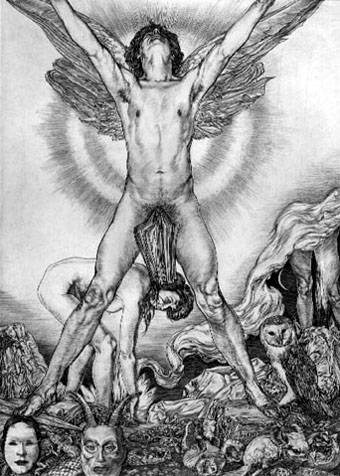
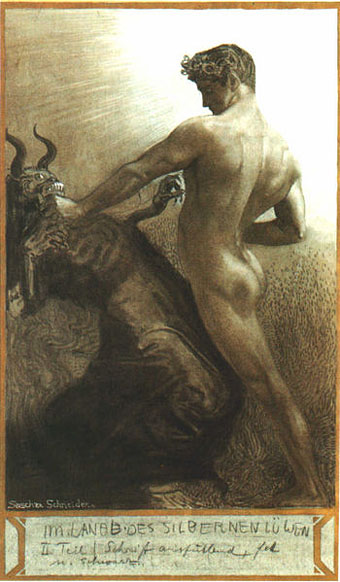
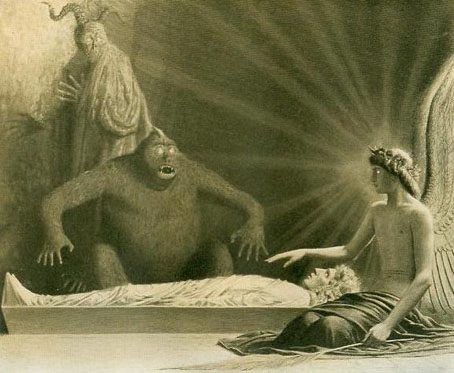
I first came across Sascha Schneider’s art some years ago when reading about German writer Karl May (1842–1912), and it was as May’s illustrator that Schneider initially gained recognition. May was one of Germany’s most popular novelists, his Western adventures about Old Shatterhand and Winnetou the Warrior sold millions of copies and numbered Albert Einstein and Adolf Hitler among their enthusiasts. Schneider’s work struck me as unusual compared to other illustrators of the period; there was a curious quality which seemed to owe more to Symbolist painting than book illustration and the few examples I saw were distinctly homoerotic at a time when homosexuality was regarded with suspicion or downright hostility. Sure enough it turns out that Schneider was openly gay and that May had no problem with this. It also transpires that the Symbolist tone which seemed so unsuited to a writer of Western pulp fiction complemented the content of some of May’s later works which weren’t Westerns at all but were Orientalist fantasies with a metaphysical inclination. The publisher wasn’t too happy with the ambivalent nature of these pictures, however, and they were replaced in later editions.
schneider14.jpg

For once I don’t have to complain about a lack of website examples, Schneider’s connections with May have at least ensured his work is still being written about even if it seems overlooked by gay art histories. This latter circumstance is unusual since he was a contributor to Der Eigene, the world’s first gay periodical, founded by Adolf Brand in 1896.

I’ve taken the liberty of posting more samples than usual here and you’ll have to forgive the lack of information about titles and dates. Many of the pictures are quite bizarre for the way they’re continually juxtaposing naked figures with angels, demons or monsters. Even the Winnetou illustrations, which should be depicting Native Americans, look more suited to the wall of a salon in fin de siècle Paris than stories of the Wild West. Links to various galleries follow.

Schneider’s Karl May frontispieces
An extensive Russian gallery
A smaller Schneider gallery

Continue reading “The art of Sascha Schneider, 1870–1927”

Engelbrecht again

engelbrecht.jpg

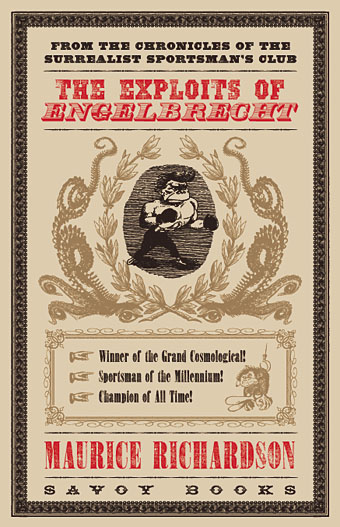
I’m surfacing this week from a busy couple of months having finished (more or less) two substantial book designs. I mentioned the redesign of The Exploits of Engelbrecht a couple of weeks ago and it’s been a pleasure to have another bash at this. The original design wasn’t bad as such, especially compared to the rudimentary first edition from 1950, it’s more that the production standards were raised so much by the Savoy titles which followed that I frequently felt dissatisfied with it. You can see the new cover above and I’ll post some additional examples nearer publication (ETA for that is still vague).

Maurice Richardson’s tales of the dwarf surrealist sportsman are classics of eccentric comedy and it’s been a privilege having the opportunity to reintroduce them to a new audience. I intended the new dust jacket to be reminiscent of an old theatre or boxing poster and the brown and red design will be printed on uncoated textured paper to augment that effect. In addition to this volume I’ve also designed an edition of Jeff VanderMeer‘s Ambergris novel Shriek: An Afterword for Wyrm Publishing. Once again, I’ll post more details of that closer to release.

So now I take a deep breath and see what’s next. There’s another book project imminent but I’ve been asked not to say anything about that for the time being (don’t you love a mystery?). In spare moments such as these I’ve been trying to keep working on the collected edition of the Reverbstorm comics I created with Dave Britton for Savoy. That series has always been an important part of my work, more important in many ways than The Haunter of the Dark, and it’s frustrating to have over 250 pages of some of my best artwork sitting around virtually unseen. I was supposed to have the book finished off last year but other projects kept intervening. One of the resolutions for this year has been to at least complete the scanning and re-lettering, then we’ll see where it fits into Savoy’s schedule. Watch this space.

Dorian Gray revisited

dg1.jpg

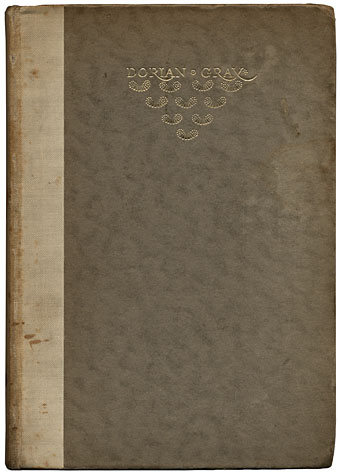
Today’s book purchase was an edition of The Picture of Dorian Gray published in 1945 by the Unicorn Press, London. It’s rather battered and the spine is stained by some unknown brown fluid that may be blood (which would suit a sanguinary tale such as this) but which is most likely something less dramatic.

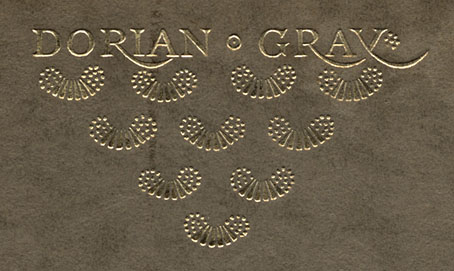
The cover is a cropped version of the design drawn by the wonderful Charles Ricketts (1866–1931) for the original Ward, Lock & Co edition of 1891. More about his work below. Ricketts designed and illustrated a number of Wilde’s books and was far closer to Wilde than Aubrey Beardsley, despite the latter’s permanent association with the writer via Salomé. Ricketts’ title design for Dorian Gray was originally lettered in full and the pattern beneath it extended further down the board. The reversed “y” is a unique touch, something I don’t think I’ve seen anywhere else.

dg2.jpg

Continue reading “Dorian Gray revisited”

1st Ballardian Festival of Home Movies

ballardian_films.jpg

Via Ballardian:

In 1984 J.G. Ballard called for a ‘Festival of Home Movies’ and 24 years on we’re happy to oblige: announcing our latest competition, to promote JGB’s forthcoming autobiography, Miracles of Life. Presented by ballardian.com and HarperCollins UK, the competition will utilise ‘modern electronics’ as specified above, of an especial type that Ballard with his prodigious clairvoyant powers came close to envisaging: the mobile phone (or cell phone, for our North American cousins).

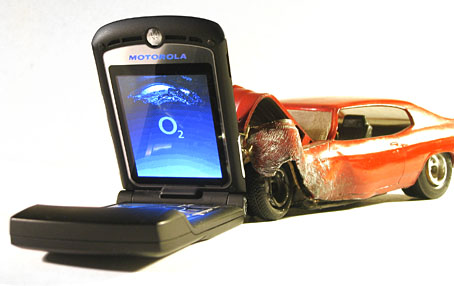
The requirement is that you shoot a one-minute film on a Ballardian theme using your mobile phone’s video camera only, no post-production allowed. That’s too much for my Motorola (above) which has never proved itself able to record more than a few seconds of continuous video for reasons unknown. The competition prize is a copy of Miracles of Life along with the forthcoming HarperCollins reissues of Ballard’s Millennium People, The Drought, The Crystal World, The Drowned World and The Unlimited Dream Company.

The constraints for this are pretty tough if all the editing has to be done in camera. I anticipate a lot of entries showing static shots of motorway traffic, windswept concrete vistas or imitations of CCTV. Anyone wishing for some offbeat inspiration can go and watch the One Minute Movies made by The Residents to accompany their Commercial Album in 1980.

Previously on { feuilleton }
JG Ballard book covers

William Blake in Manchester

blake.jpg

Europe: A Prophecy by William Blake (1794).

Two exhibitions based around the work of William Blake open today at Manchester’s Whitworth Art Gallery, Mind-Forg’d Manacles, “organised to coincide with the 250th anniversary of Blake’s birth as well as the 200th anniversary of the Parliamentary abolition of the transatlantic slave trade” and Blake’s Shadow: William Blake and his Artistic Legacy. The latter seems to be the more interesting of the two.

Blake’s Shadow: exhibition summary

This exhibition explores Blake’s continuing fascination for artists, filmmakers and musicians. It features around sixty watercolours, prints and paintings in addition to numerous illustrated books and a range of audio-visual material. Blake is a unique figure in British visual culture, attracting both academic and popular interest. In the years since his death in 1827, Blake has continued to influence the world of creativity and ideas. He has inspired people with such wide ranging interests as literature, painting, book design, politics, philosophy, mythology through to music and film making. Alongside works by Blake—prints, watercolours, engravings and book illustrations—the exhibition spans two centuries of his influence.

• His contemporaries in the late 18th and early 19th century are represented with works from John Flaxman, Edward Calvert, Samuel Palmer, J.H. Fuseli and Thomas Stothard
• Blake’s influence on artists in the Victorian period is explored through works by Ford Madox Brown, Walter Crane, Frederic Shields, John Everett Millais, Dante Gabriel Rossetti, Simeon Soloman and G.F. Watts.
• British artists working in the 20th and 21st century include Cecil Collins, Douglas Gordon, Paul Nash, Anish Kapoor, David Jones, Ceri Richards, Patrick Proctor, Austin Osman Spare and Keith Vaughan. This section of the exhibition features photographs and original works.
• From the 1960s onward, writers, musicians, film makers like Allen Ginsberg, Bob Dylan, Jim Morrison of The Doors and John Lennon have adopted Blake as a mystical seer and anti-establishment activitist. More latterly, as British musicians and activists like Billy Bragg and Julian Cope have grappled with notions of national identity, Blake has enjoyed something of a renaissance. Blake’s Shadow examines this more recent influence as evidenced in work by the filmmakers Jim Jarmusch and Gus Van Sant, and various musicians, notably Patti Smith and Jah Wobble.

spare.jpg

The Dawn by Austin Spare (no date).

It’s good to see Austin Spare being included in something like this. He always referred to Blake as an influence but, as I’ve mentioned before, he’s frequently been treated disrespectfully by an art establishment that doesn’t know what to make of the occult basis of his work.

Mind Forg’d Manacles runs to 6 April 2008, Blake’s Shadow to 20 April.

Elsewhere on { feuilleton }
The illustrators archive

Previously on { feuilleton }
Austin Spare in Glasgow
Tygers of Wrath
Austin Osman Spare