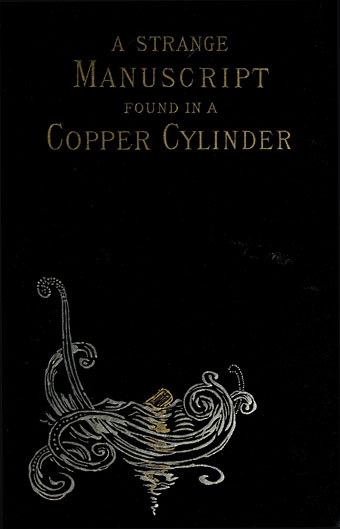
A Strange Manuscript Found in a Copper Cylinder

strange01.jpg

A great title. As usual I came across this whilst searching for something else. Something about this was familiar but I haven’t read the book, and I suspect it will be one of those where the title proves a lot more evocative than the narrative. The author was a Canadian writer, James De Mille (1833–1880), and this novel of all his works is the most well-known for its predating more famous fantasy novels by H. Rider Haggard. Wikipedia has a précis:

The satiric and fantastic romance is set in an imaginary semi-tropical land in Antarctica inhabited by prehistoric monsters and a cult of death-worshipers called the Kosekin. Begun many years before it was published, it is reminiscent of Edgar Allan Poe’s The Narrative of Arthur Gordon Pym of Nantucket and anticipates the exotic locale and fantasy-adventure elements of works of the “Lost World genre” such as Arthur Conan Doyle’s The Lost World, Edgar Rice Burroughs’ The Land That Time Forgot, as well as innumerable prehistoric world movies based loosely on these and other works. The title and locale were inspired by Edgar Allan Poe’s Ms. Found in a Bottle.
strange02.jpg

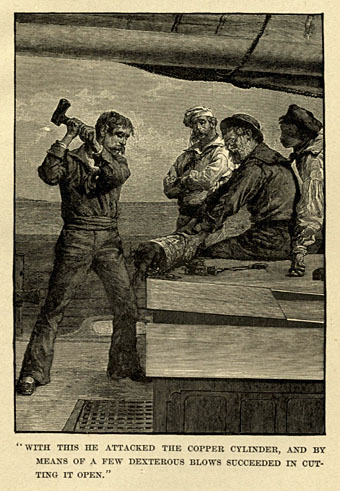
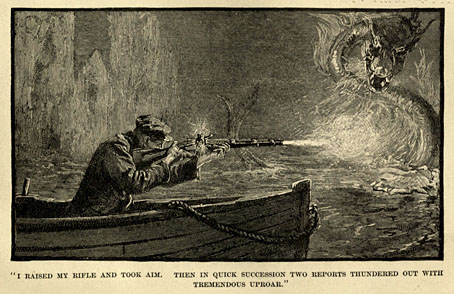
The illustrations are by Gilbert Gaul from the story’s serialisation in Harper’s Weekly in 1888. The best one shows a ride on a huge pterodactyl-like creature called an athaleb that makes me think of the ride on the shrowk in David Lindsay’s A Voyage to Arcturus, albeit without the erotic fervour of Lindsay’s episode. Fervour or no, the road to Lindsay’s philosophical weirdness begins with early novels such as this. De Mille’s book may be browsed here or downloaded here.
strange03.jpg

strange04.jpg

Continue reading “A Strange Manuscript Found in a Copper Cylinder”
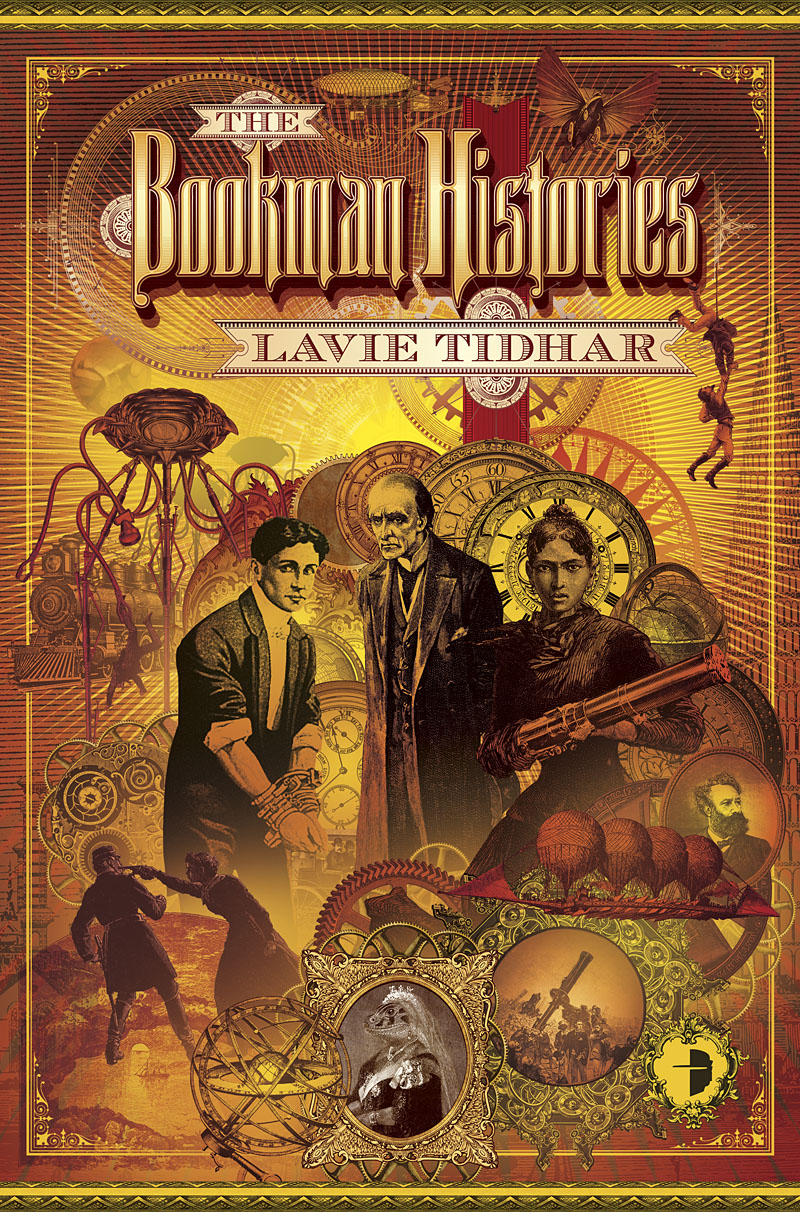
The Bookman Histories

bookman.jpg

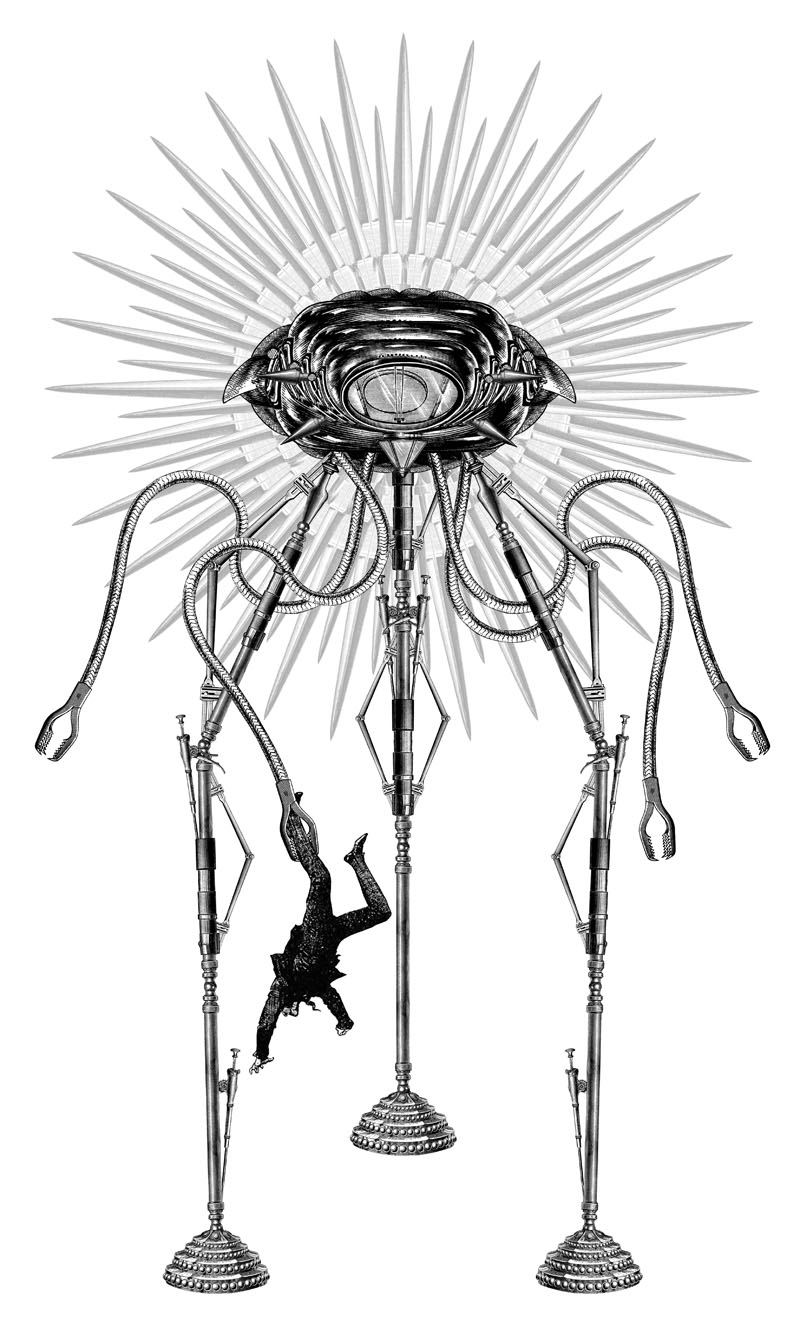
Now that Angry Robot books has revealed the cover design which kept me busy throughout July I can do the same here. The Bookman Histories is an omnibus reprinting of Lavie Tidhar‘s steampunk trilogy which comprises The Bookman, Camera Obscura and The Great Game. The stories are frenetic, crowded with incident and feature a huge range of characters that find real people such as Jules Verne and Harry Houdini encountering contemporaries—both human and non-human—from the fiction of the late 19th century. All the requisite steampunk boxes are ticked. David Icke will be thrilled to know that in these books the British royal family are a bunch of lizards from space…

My initial impulse when faced with far too much material was to cram every square centimetre of the cover with detail but if I’d have done that I’d probably still be working on it, and would also have run the risk of it turning into an incoherent mess. So this layout, which is crowded enough, is something of a compromise. I also wanted to save some space for the title design.

bookman2.jpg

The main body of the title isn’t a font but was created from scratch based on letterforms and decorative elements from this fantastic set of fire insurance title pages. I’d been wanting to try something based on these hand-drawn designs ever since Mr Peacay posted them at BibliOdyssey last year. This particular design provided the basic letter shapes although I had to invent several of missing characters.

bookman3.jpg

In the third part of the trilogy the Martians from HG Wells’ War of the Worlds invade, so I spent rather too much time fashioning a Martian tripod from lots of tiny bits of machinery. This is one of the earlier drafts. It was an odd thing finishing this cover (which includes the planet Mars in the background) whilst the world was getting excited by the real landing on Mars of the Curiosity Rover.

The Bookman Histories will be published in March next year. Meanwhile there’s more steampunk design on its way. Watch this space.

Previously on { feuilleton }
Aether Cola
Crafting steampunk illustrations
SteamPunk Magazine
Morlocks, airships and curious cabinets
The Steampunk Bible
Steampunk Reloaded
Steampunk overloaded!
More Steampunk and the Crawling Chaos
Steampunk Redux
Steampunk framed
Steampunk Horror Shortcuts

Raymond Bertrand paintings

bertrand19.jpg

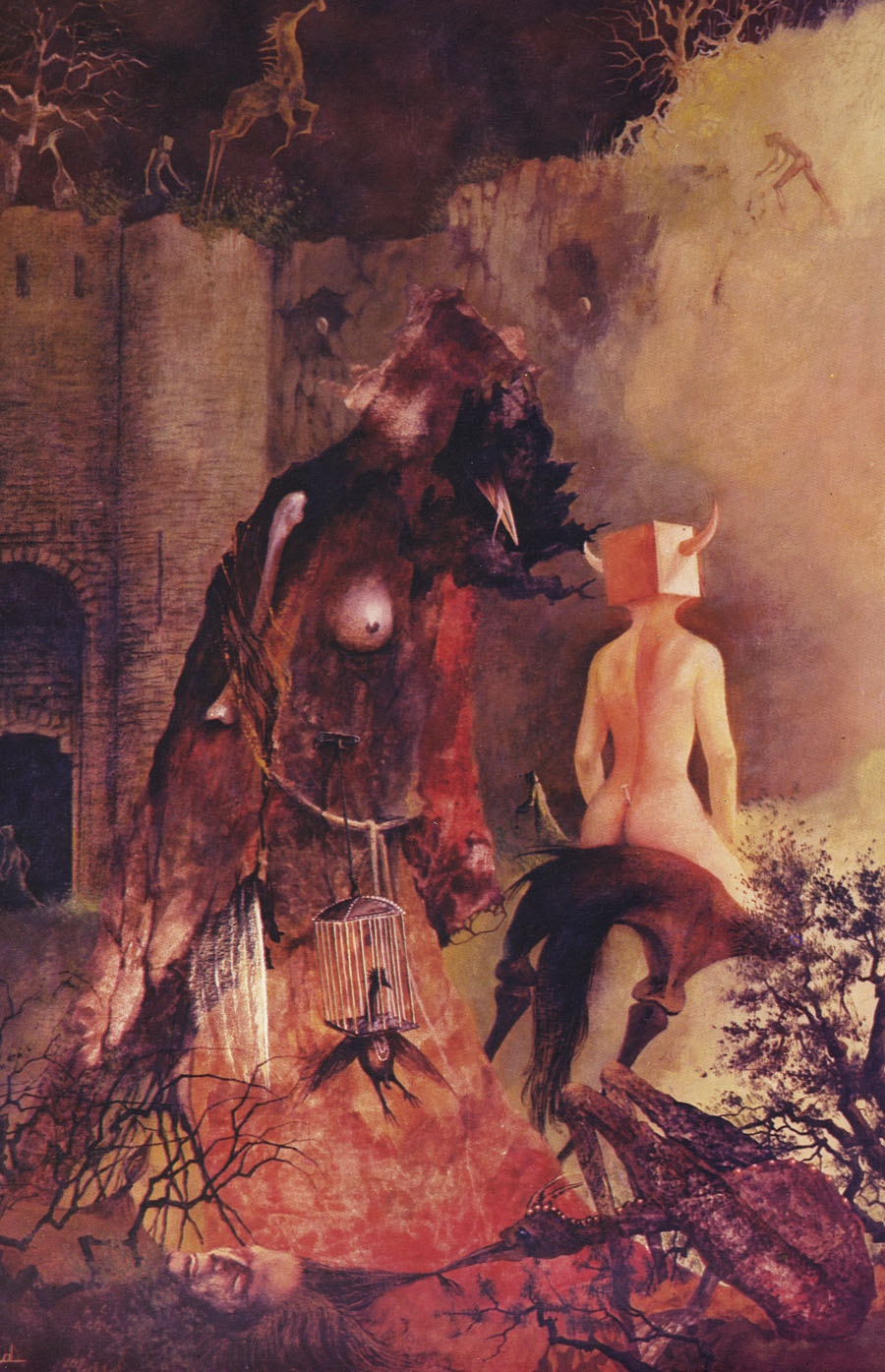
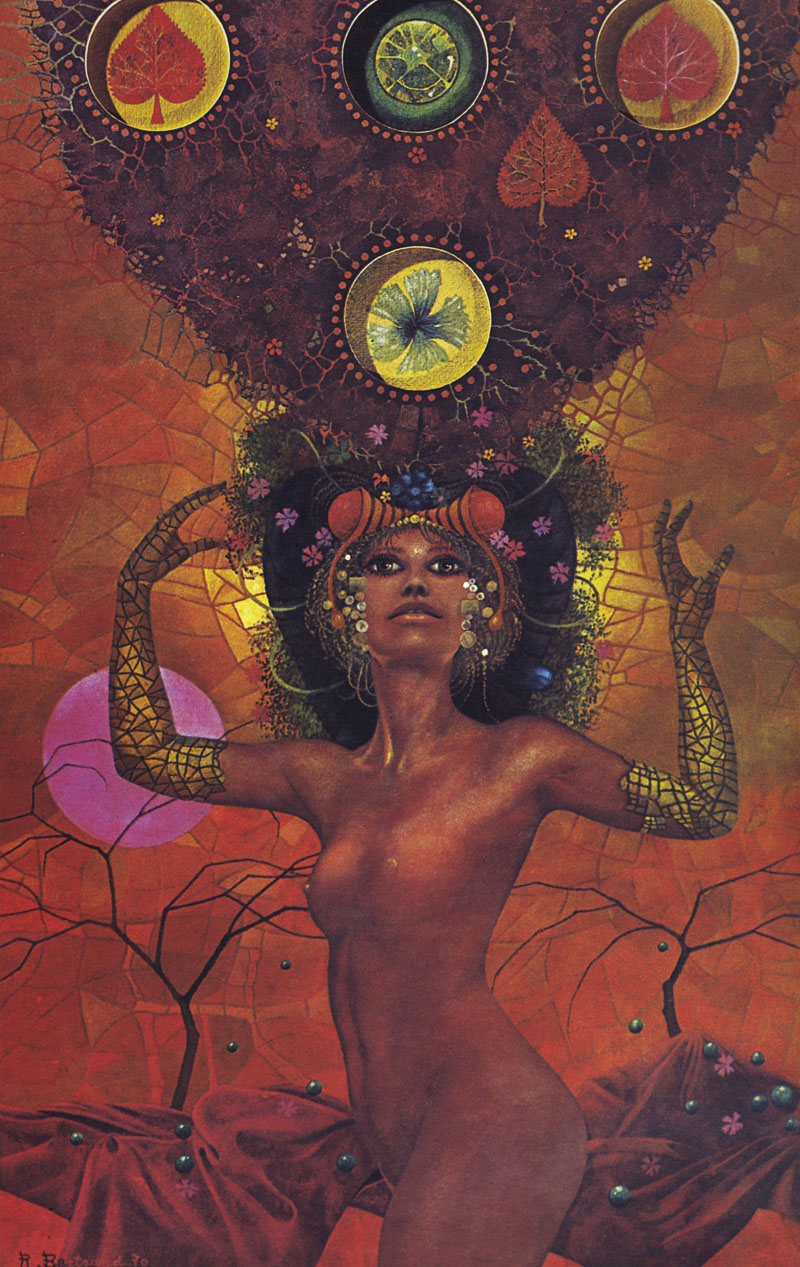
Scanning some of my work today I thought I’d follow yesterday’s post with a few scans of the colour plates in the second Eric Losfeld volume of Bertrand’s work, Dessins Erotiques II (1971). None of the pictures in the book are titled, and there’s little detail either about their production. Among the colour works is the Boschian piece above which for once doesn’t have one of the artist’s strange women as its sole subject. A few more scans from the same book can be seen at this earlier post.

bertrand16.jpg

bertrand17.jpg

Continue reading “Raymond Bertrand paintings”

Weekend links 123

niceron.jpg

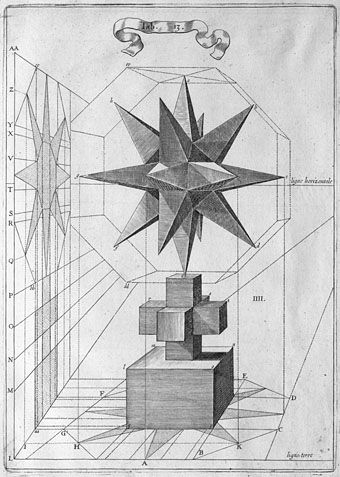
La Perspective Curieuse (1663) by Jean François Nicéron. From Curious Perspectives at BibliOdyssey.

1612 Underture is a forthcoming album by The Eccentronic Research Council and Maxine Peake which extends the electronics + occult concept to encompass Kraftwerk and the Pendle Witches. The Quietus has a review of their album, and an interview and report about a recent live performance (I missed the latter, unfortunately), while the Guardian’s interview with the splendid Ms Peake reveals that “musically, her tastes range from Japanese black metal, garage rock and folk, to techno and psychobilly.” The famous Lancashire witches also happen to be the subject of Jeanette Winterson’s latest novel, The Daylight Gate.

• Yet more Marker: The Owl’s Legacy: Chris Marker’s 13-Part Search for Western Culture’s Foundations in Ancient Greece, and J. Hoberman on The Lost Futures of Chris Marker.

Dr Oliver Sacks talks about how hallucinogenic drugs helped him empathize with his patients.

Paulo Coelho’s ill-judged Joyce-bashing has made him a butt of scorn this week, but he’s a safe target because, with books that multitask a little too openly as self-help manuals, he’s not so clubbable. Unlike, say, Ian McEwan, who not-that-differently declared against “the dead hand of modernism“, for all the world as if the dominant literary mode in post-war England was Steinian experimentation or some Albion Oulipo, against which young Turks hold out with limpidly observed interiority, decodable metaphors, strained middle-class relationships and eternal truths of the human condition(TM).

China Miéville on the always contentious future of the novel.

The Foliate Head: a new book by Marly Youmans with illustrations by Clive Hicks-Jenkins.

Hysterical Literature: Session Two: Alicia reads from Leaves of Grass by Walt Whitman.

Dreaming in Dirigibles: The Airship Postcard Albums of Lord Ventry.

The Art of the Literary Fake (with Violin) by Jeff VanderMeer.

RIP Neil Armstrong, first human on the Moon.

Macho Man: Morgan Meis on Robert Hughes.

• Book covers by Hannes Bok.

This Is Now!

Squid Moth

Lunar Rhapsody (1947) by Dr Samuel J. Hoffman | Lunar Musick Suite (1976) by Steve Hillage | Back Side Of The Moon (Steve Hillage’s Under Water Deep Space Remix) (1991) by The Orb.

Chute Libre science fiction

chutelibre01.jpg

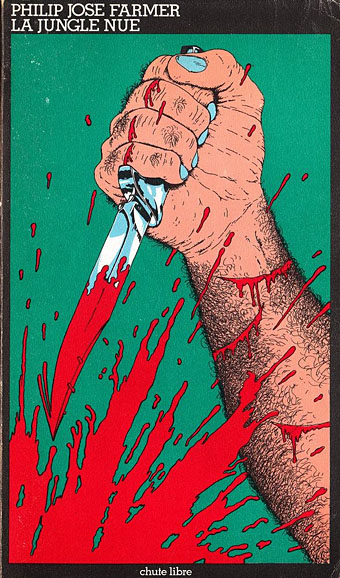
La Jungle Nue (A Feast Unknown, 1974). Illustration de Alain Le Saux.

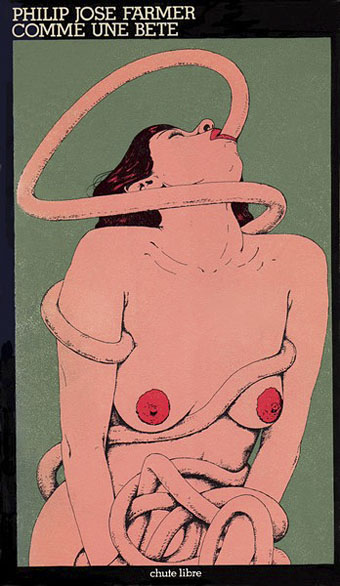
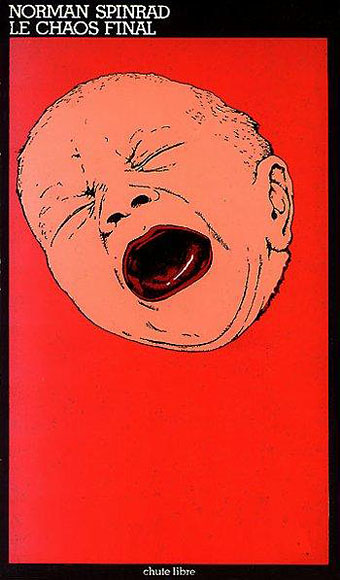
Chute libre means “free fall” in French, and here refers to an imprint of French publisher Champ Libre that from 1974 to 1978 reprinted a series of science fiction titles under that name. The imprint is notable for a number of reasons, not least the striking covers which impress with their uniform design and bold imagery. The combination of black cover with vivid artwork is very similar to the covers Penguin were producing for their SF titles a few years earlier but since there’s little written anywhere about the French books I can’t say whether this was an influence or merely coincidence. I’ve not been able to find a complete list of all the illustrators either. At least two of the covers are the work of Moebius, rare examples of him being commissioned outside the comics medium.

The other notable aspect of the imprint is the books themselves which are an odd mix of the outrageous and sexually provocative end of SF spectrum, together with more usual fare. Some of the covers play to the provocation more than is necessary: Michael Moorcock has always been pleased by the attention his work receives in France but I’ll bet he hates that cover. Several of these titles appeared as SF in the 1970s because of other work by their authors despite there being nothing overtly science fictional about The Atrocity Exhibition or Breakfast in the Ruins. Farmer’s A Feast Unknown and The Image of the Beast/Blown are violent and sexually excessive, and feature little genre material, but managed to slide onto the SF shelves for the same reason. Every so often I wonder whether any of these books (or books like them) would be offered to, or accepted by, genre publishers today.

As usual, if anyone can supply information about the missing illustrators then please leave a comment.

chutelibre02.jpg

Comme une Bête (Image of the Beast, 1974). Illustration by Moebius.

chutelibre03.jpg

Les Culbuteurs de l’Enfer (Damnation Alley, 1974). Illustration by Jean-Claude Castelli.

chutelibre04.jpg

Le Chaos Final (The Men in the Jungle, 1974).

Continue reading “Chute Libre science fiction”