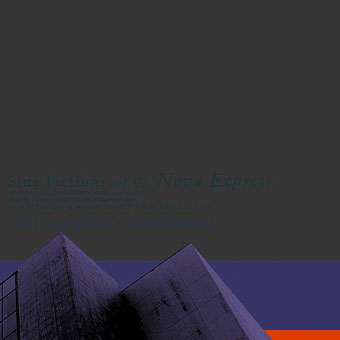
Sine Fiction

sine6.jpg

Sine Fiction VI: Nova Express (2003) by Eucci.

More Burroughsian music, and a selection that includes another interpretation of The Ticket That Exploded. Sine Fiction is a music project curated by Aimé Dontigny that commissions electronic artists to provide soundtracks to science fiction novels. The project has been running since 2000, and has so far managed twenty releases, the most recent of which—Dontigny’s own music for Ballard’s The Drowned World—appeared in 2011. In addition to three Burroughs titles there’s another work with considerable cult status, the Strugatsky Brothers’ Roadside Picnic, which Jos Smolders accompanies in a very minimal fashion. I’d still go for the gloriously doomy atmospheres of Stalker (1995) by Robert Rich & B. Lustmord but there’s room in the world for multiple interpretations.

All the Sine Fiction releases are available as free downloads at the No Type site or (if you prefer) at the Internet Archive.
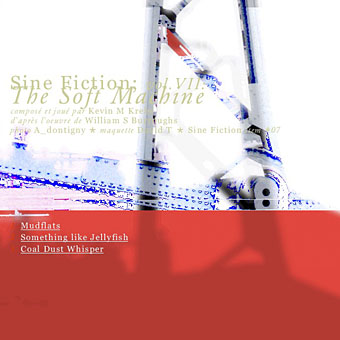
sine7.jpg

Sine Fiction VII: Soft Machine (2003) by Kevin M Krebs.
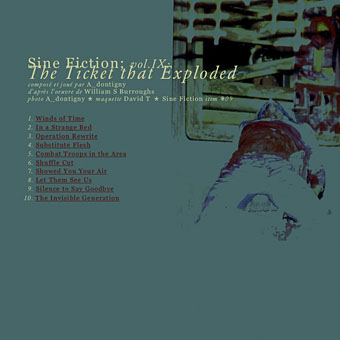
sine9.jpg

Sine Fiction IX: The Ticket That Exploded (2003) by A_Dontigny.
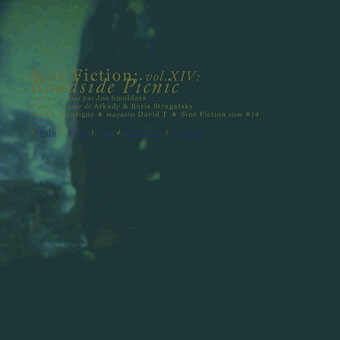
sine14.jpg

Sine Fiction XIV: Roadside Picnic (2004) by Jos Smolders.

Elsewhere on { feuilleton }
The William Burroughs archive

Previously on { feuilleton }
A playlist for Halloween: Drones and atmospheres
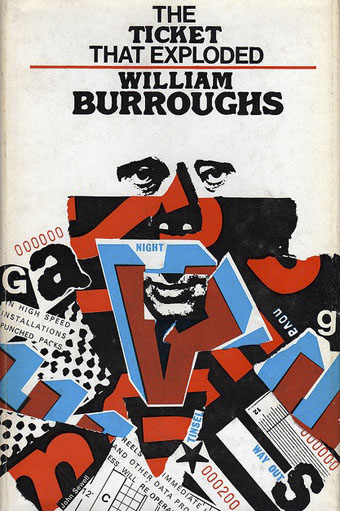
The Ticket That Exploded: An Ongoing Opera

ticket1.jpg

The book that made my head explode when I was 16. Calder & Boyars edition, 1968; design by John Sewell.

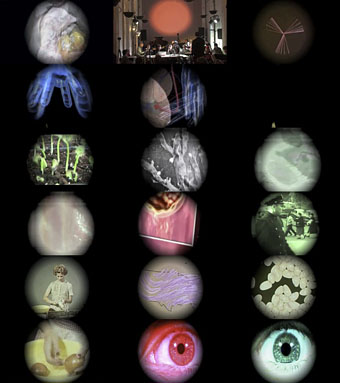
Years ago the idea of an opera based on The Ticket That Exploded would have been a wry joke: a novel brimming with text that’s fragmented even by Burroughs’ standards, as well as the usual preoccupations with spurting cocks, alien sex, parasitic invasion and erotic asphyxia. That said, if you can swallow the content (so to speak) a libretto is no doubt easy to create from all those sentence fragments, and there’s no worry about anyone complaining that you’ve missed some crucial part of the story. James Ilgenfritz’s The Ticket That Exploded: An Ongoing Opera attempts just this in an extract which can be seen on YouTube:

Premiered at Issue Project Room while I was Artist in Resident in 2011, and based on William S. Burroughs’ 1962 novel of the same name, The Ticket That Exploded takes all its text directly from the novel. I wrote the libretto and composed the music, which was then exquisitely interpreted by some of the greatest musicians in the New York area. Jason Ponce collected a massive array of bizarre visual materials and innovative digital processing programs to perform the visual component of this work live onstage at the premiere.

There’s more from Jason Ponce at Vimeo. A DVD of the complete work is planned in 2014. Via Supervert.

ticket2.jpg

Elsewhere on { feuilleton }
The William Burroughs archive

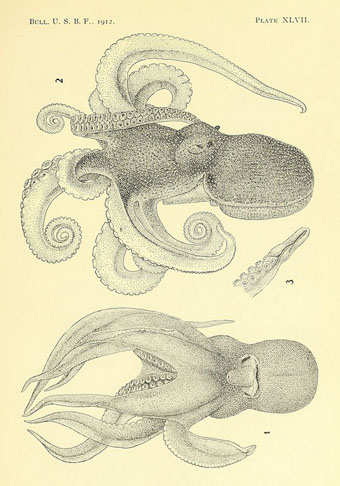
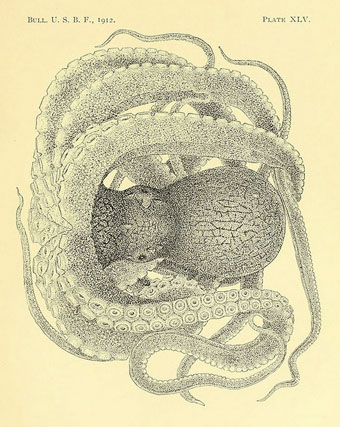
The Cephalopoda of the Hawaiian Islands

cephalopoda1.jpg

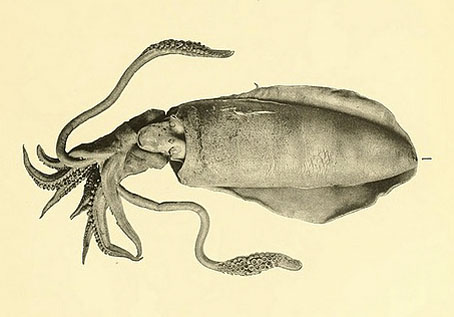
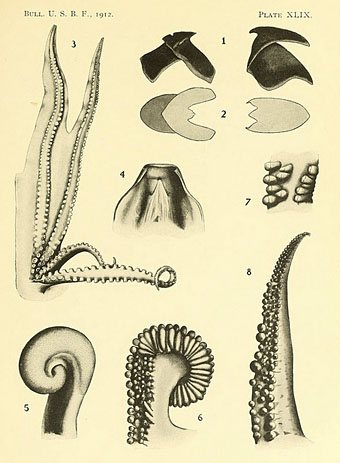
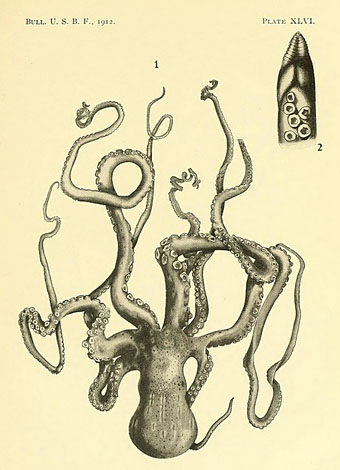
A little something for Darwin Day, and a collection of illustrations I hadn’t seen before. The Cephalopoda of the Hawaiian Islands (1914) is another title in the splendid (and huge) collection of the Biodiversity Heritage Library whose Flickr sets have been linked here before. Some of those prior examples have ended up being collaged into Lovecraftian entities so there’s always the possibility of that happening to one or two of these illustrations in the future.

cephalopoda2.jpg

cephalopoda3.jpg

cephalopoda4.jpg

cephalopoda5.jpg

Previously on { feuilleton }
Vampyroteuthis Infernalis by Vilém Flusser
Le Poulpe Colossal
Fascinating tentacula

Weekend links 146

snake.jpg

A Chinese postage stamp celebrating the Year of the Snake.

Cyclopean is a collaboration from Burnt Friedman, Jono Podmore and Can founding members Jaki Liebezeit, and Irmin Schmidt. The Quietus has a preview of all the tracks from their forthcoming EP. Great stuff.

Ten Things You (Possibly) Don’t Know About Kraftwerk. Related: a Speak & Spell emulator, and Atomium, a new single by Karl Bartos.

• In 1975 Barney Bubbles designed an inner sleeve for Hawkwind’s Warrior on the Edge of Time album, and this scarce recipe booklet.

• “We should all use language carefully. That is an obligation on the literate. But carefully doesn’t mean fearfully,” says Jenny Diski.

• Faber’s car-crash of a cover design for the 50th anniversary edition of The Bell Jar by Sylvia Plath caused an outbreak of parodies.

• At Strange Flowers: Ancient dreams and antique corruptions, Salomé via Gustave Moreau and Huysmans.

• FACT Mix 368 is a very varied collection of recent music and older pieces curated by Holly Herndon.

• At Ubuweb: eleven out-of-print recordings of Harry Bertoia’s sound sculptures.

Laurie Anderson and Brian Eno in conversation at Interview magazine.

Michael Chabon on Wes Anderson’s Worlds.

Snake Rag (1923) by King Oliver’s Creole Jazz Band | Rattlesnake Shake (1969) by Fleetwood Mac | Snakes Crawl (1980) by Bush Tetras | Ananta Snake Dance (1980) by Suns of Arqa | Snakeblood (2000) by Leftfield

Escher and Schrofer

schrofer5.jpg

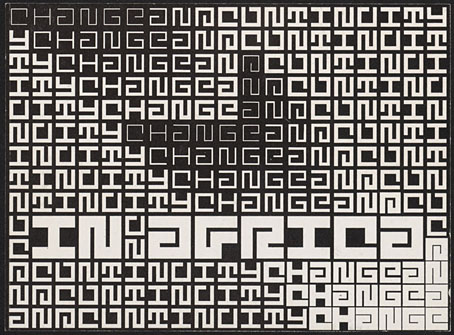
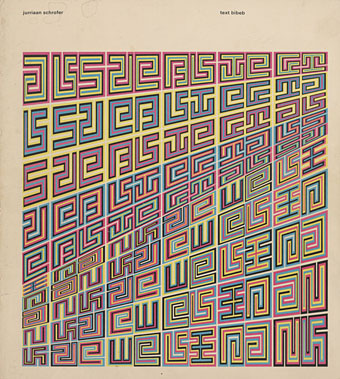
Design by Jurriaan Schrofer.

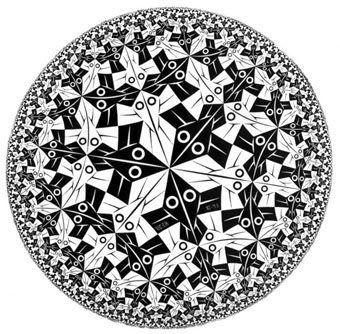
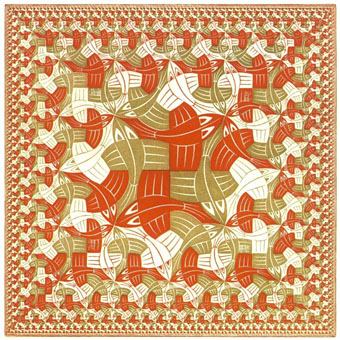
That’s Maurits Cornelis Escher (1898–1972), the Dutch artist, and Jurriaan Schrofer (1926–90), the Dutch typographer and graphic designer. Aside from a shared nationality the pair had a similar interest in periodicity and incremental metamorphosis, something that’s strikingly apparent when you compare their works. I don’t know much about Schrofer so I can’t say whether he was consciously following Escher’s example or whether this is coincidence. Some of the gradations and distortions also bear comparison with the Op Art paintings of Bridget Riley, Victor Vasarely and others.

escher8.jpg

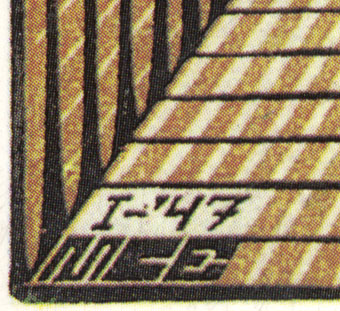
MC Escher signed most of his works with three square “MCE” letters which are remarkably similar to Schrofer’s type designs.

There’s an opportunity to find out more about Schrofer’s distinctive approach to graphic design in a forthcoming book from Unit Editions (currently available at a reduced pre-order price). More of his work can be seen at But Does It Float and scattered around Tumblr. MC Escher is well-represented on the web; I’d suggest starting at WikiPaintings.

escher1.jpg

Circle Limit I (1958) by MC Escher.

schrofer1.jpg

Design by Jurriaan Schrofer.

escher2.jpg

Square Limit (colour, 1964) by MC Escher.

Continue reading “Escher and Schrofer”