Weekend links 568

gekko.jpg

Dragon Rising to the Heavens (1897) by Ogata Gekko.

• “Electronic music of the past is often portrayed in a dreamy, magical light—a hazy historical landscape filled with misty, otherworldly sounds. But while the music of a bygone era may seem ineffable, it is not inaccessible.” Geeta Dayal reviews Reminded by the Instruments: David Tudor’s Music by You Nakai.

• Modular Therapy: Mute Records boss Daniel Miller and former snooker champ turned kraut-psych powerhouse Steve Davis discuss their love of modular synthesisers, ill-fated Jools Holland collaborations, commandeering Elton John’s ARP 2600 and more.

• “Some contemporary art is a little bit like an intellectual game…I’m not a big fan of this kind of stuff, because I’m a musician.” Ryoji Ikeda presents: point of no return.

One of the tunnels that Turrell has completed is 854 feet long. When the moon passes overhead, its light streams down the tunnel, refracting through a six-foot-diameter lens and projecting an image of the moon onto an eight-foot-high disk of white marble below. The work is built to align most perfectly during the Major Lunar Standstill every 18.61 years. The next occurrence will be in April 2025. To calculate the alignment, Turrell worked closely with astronomers and astrophysicists. Because the universe is expanding, he must account for imperceptible changes in the geometry of the galaxy. He has designed the tunnel, like other features of the crater, to be most precise in about 2,000 years. Turrell’s friends sometimes joke that’s also when he’ll finish the project.

Wil S. Hylton on an exclusive visit to James Turrell’s astronomical art complex at Roden Crater, Arizona. Related: 147 Orbiting 1 Through 6 for 5, Music for Roden Crater by Paul Schütze (with free download of an excerpt from the 5-hour piece)

• New music: The Black Mill Tapes, Volume 5 by Pye Corner Audio, and Interreferences by Richard Chartier.

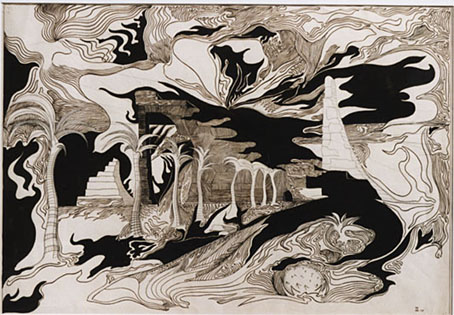
• At Spoon & Tamago: Dense pencil drawings of retro-future worlds by Yota Tsukino.

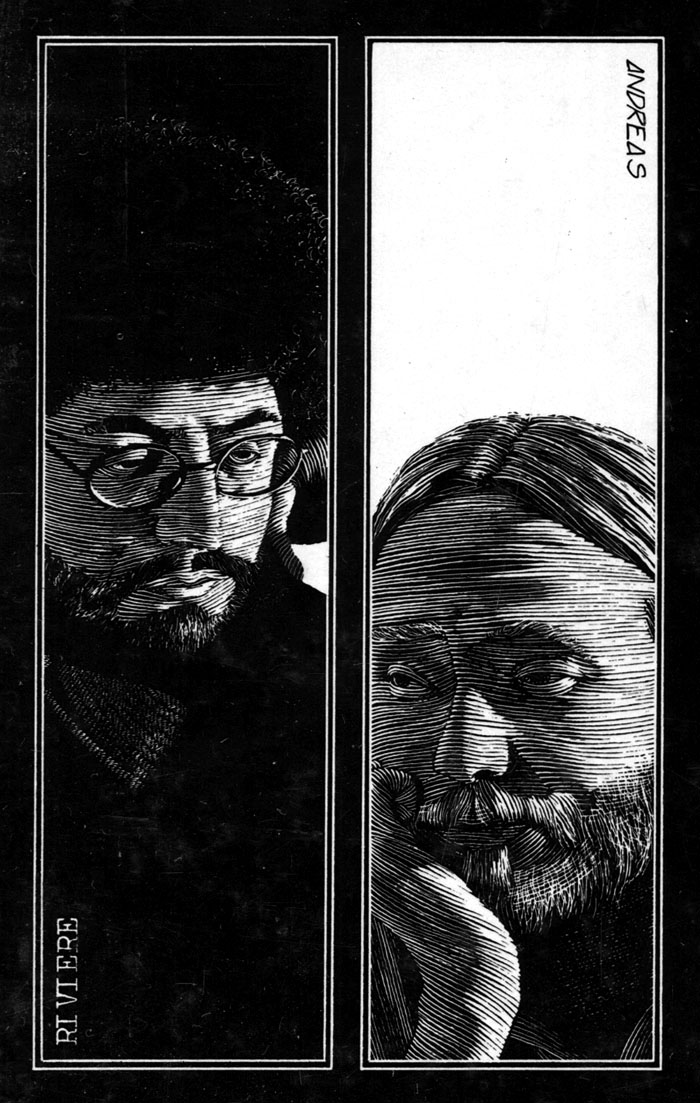
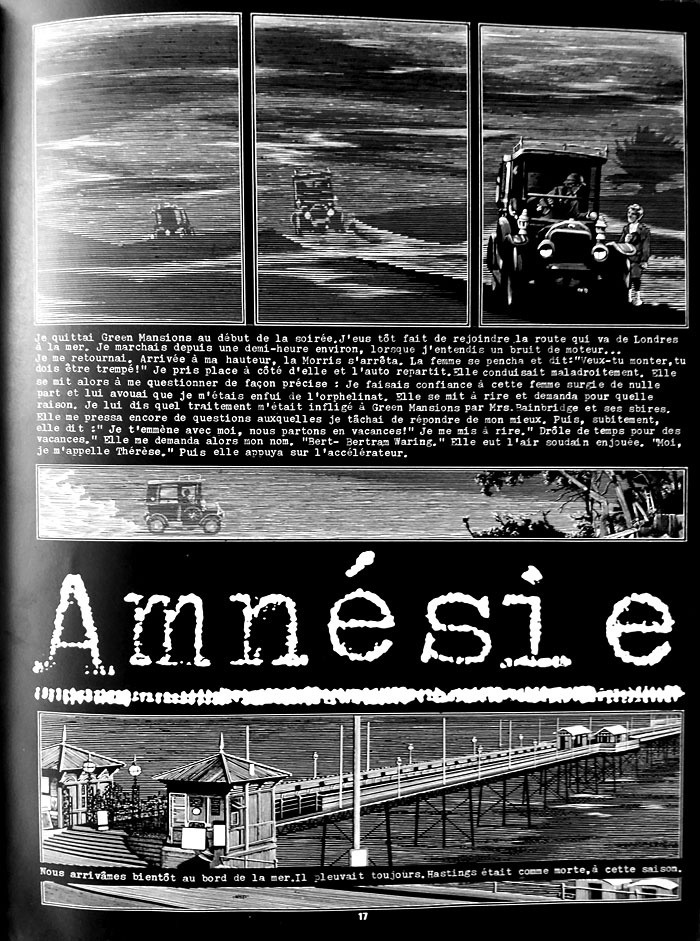
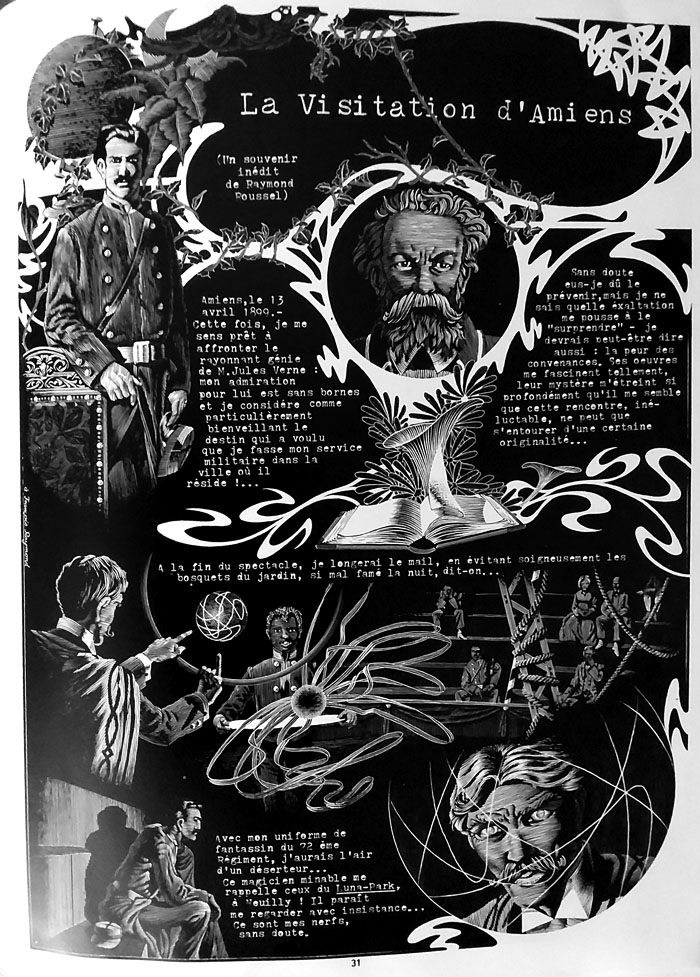
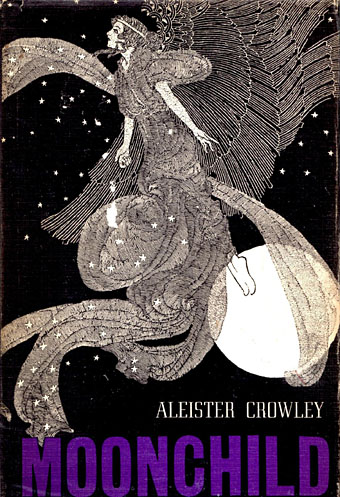
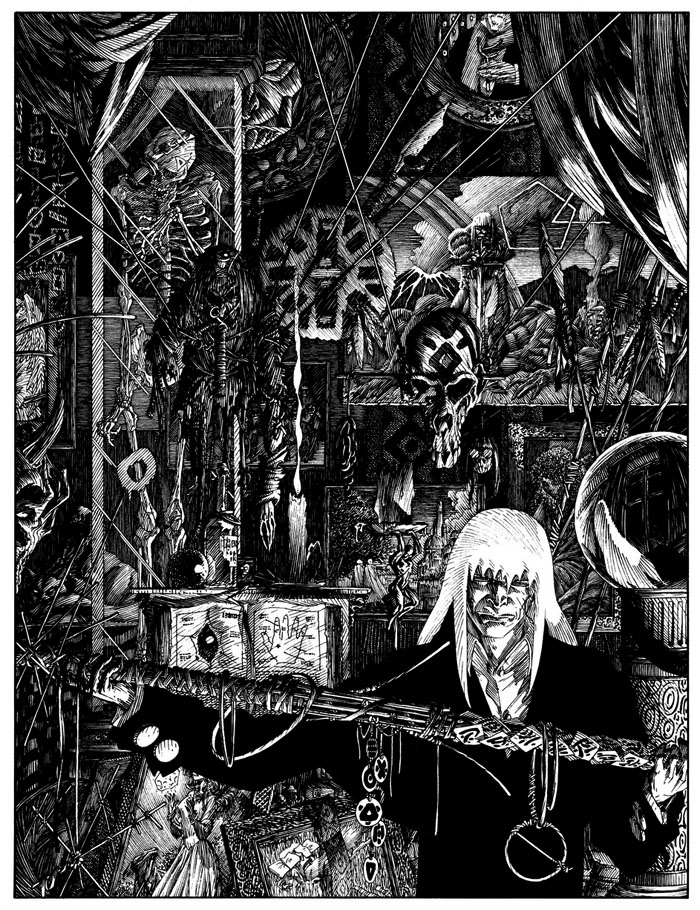
“‘I’m bursting with fiction’: Alan Moore announces five-volume fantasy epic”.

• At Dennis Cooper’s: Lindsay Anderson Day.

Beverly Glenn-Copeland’s favourite music.

Volcano Diving (1989) by David Van Tieghem | Crater Scar (1994) by Main | Eye Of The Volcano (2006) by Stereolab

Pynchon and Varo

varo.jpg

Bordando el Manto Terrestre (Embroidering the Earth’s Mantle) (1961) by Remedios Varo.

Re-reading The Crying of Lot 49 by Thomas Pynchon, this passage near the end of the first chapter stood out:

In Mexico City they somehow wandered into an exhibition of paintings by the beautiful Spanish exile Remedios Varo: in the central painting of a triptych, titled “Bordando el Manto Terrestre,” were a number of frail girls with heart-shaped faces, huge eyes, spun-gold hair, prisoners in the top room of a circular tower, embroidering a kind of tapestry which spilled out the slit windows and into a void, seeking hopelessly to fill the void: for all the other buildings and creatures, all the waves, ships and forests of the earth were contained in this tapestry, and the tapestry was the world. Oedipa, perverse, had stood in front of the painting and cried. No one had noticed; she wore dark green bubble shades. For a moment she’d wondered if the seal around her sockets were tight enough to allow the tears simply to go on and fill up the entire lens space and never dry. She could carry the sadness of the moment with her that way forever, see the world refracted through those tears, those specific tears, as if indices as yet unfound varied in important ways from cry to cry.

My earlier reading was in the mid-1990s, remote enough to have forgotten that Remedios Varo is mentioned twice (there’s another brief reference later on) in a novel otherwise unconcerned with painting. I didn’t remember much at all of the narrative, come to that, apart from the long description of a Jacobean revenge play, and all the post horn business. (And by coincidence—or is it? etc—I was amused to encounter a description of James Clerk Maxwell’s famous demon of entropy only a few days after reading this.) I did know who Varo was but at the time had only seen a couple of her paintings. She turns up in the better books on Surrealist art—one of mine has her filed under “Remedios”—but she didn’t have the connections or the longevity of her friend Leonora Carrington so any mention tended to be brief. In the 1990s it wasn’t possible to easily find a picture of a painting like Bordando el Manto Terrestre unless you worked in a major library or collected exhibition catalogues. Many complaints may be levelled against the internet but I never tire of having instant access to the entire history of art, so of course I had to stop reading for a moment to look for a copy of the picture. If I hadn’t done so I wouldn’t have discovered this lengthy discussion by Bill Brown of both novel and painting, and of the connections between the two. The Crying of Lot 49 is a slight work by Pynchon standards, one that the author disparages in his introduction to Slow Learner. In the same introduction he mentions Surrealism being an important factor in his literary evolution although he doesn’t name any specific influences. Pynchon’s Surrealism is like Varo’s, not the poetry of haphazard collisions but a thing of stylised figures in a world where hidden meanings may be present but also reluctant to reveal themselves. No wonder he liked the painting.

Previously on { feuilleton }
Remedios Varo’s recipe for erotic dreams
Thomas Pynchon – A Journey into the Mind of [P.]

Weekend links 567

dean-osibisa.jpg

Cover art by Roger Dean for Woyaya (1971), the second album by Osibisa. Dean’s flying elephants made their first appearance on the group’s debut album, and have been an Osibisa emblem ever since.

• Many of Roger Dean’s early album covers are better creations than the music on the albums they decorate. This isn’t the case with Osibisa, however, a Ghanaian group based in London whose discography includes (uniquely, I think) two covers by Dean together with one by Mati Klarwein. The group’s first two albums, Osibisa and Woyaya, are exceptional blends of Ghanaian music with rock, funk and jazz whose omission from the generally reliable Kozmigroov list is a serious error. Garth Cartwright talked to Teddy Osei and Lord Eric Sugumugu about Osibisa past and present.

• “The antiheroes of Angry Young Men cinema railed against the limited life opportunities available to them. Wired and frustrated, they especially chafed against girlfriends, wives, domesticity. Yet they never questioned heterosexuality itself. Not, at least, until The Leather Boys (1964), a relatively little-known film directed by Canadian expatriate Sidney J. Furie.” Sukhdev Sandhu on a film about gay life in pre-decriminalisation Britain that offered a slightly more positive view of its subject than the justifiably angst-ridden Victim (1961).

• “Brian Aldiss once confided to me that the big problem with American science fiction writers was that they loved to write about Mars but knew nothing about Indonesia.” Bruce Sterling on the attractions of being an expatriate writer who adopts a foreign persona, as he did for the stories collected in Robot Artists and Black Swans.

• New music: Fire Tower by The Grid / Fripp. Dave Ball, Richard Norris and Robert Fripp have been collaborating on and off since The Grid’s 456 album in 1992. Fire Tower is a preview of Leviathan, a new album out in June on CD/DVD and double vinyl.

• RIP Michael Collins, the astronaut who orbited the Moon alone, listening to Symphonie Fantastique by Berlioz in the Command Module of Apollo 11 while Neil Armstrong and Buzz Aldrin were walking on the satellite’s surface.

• “‘Walking with a thesis’ could easily function as the subtitle for a significant number of Iain Sinclair’s books.” Tobias Carroll on Iain Sinclair and the radical act of walking through a city.

• “‘Plain speaking, like plain food, is a puritan virtue and thus no virtue at all,’ Meades pronounces.” Steven Poole reviews Pedro and Ricky Come Again by Jonathan Meades.

• Building a panorama: Clive Hicks-Jenkins‘ latest progress report on his Cocteau-inspired illustrated edition of Beauty and the Beast.

• At Unquiet Things: Groovy Goddesses From Dimension X: Gene Szafrans’ Kaleidoscopic Book Covers.

• From leather boys to leather men: Miss Rosen on the little-known photography of Tom of Finland.

Alexis Petridis attempts the impossible again, with a list of Grace Jones’ best songs.

• At Dennis Cooper‘s: Cars.

I’m A Leather Boy (1967) by The Leather Boy | Warm Leatherette (1980) by Grace Jones | Leather Bound (2017) by Patrick Cowley

Fire works

votf.jpg

Glowing in the intermittent spring sunshine, the new hardback, paperback and bonus postcard of Alan Moore’s Voice of the Fire from Knockabout. The postcard is signed by the author, and only available with the hardbacks which are a limited run of 300 copies. Top Shelf will be publishing the book in the US (and also using my cover art) but I don’t know whether they’ll be following suit with signed cards. Anyone wanting more information about both editions is advised to check the publishers’ websites.

Previously on { feuilleton }
Voice of the Fire by Alan Moore

Weekend links 566

hokusai.jpg

The Amida Falls in the Far Reaches of the Kisokaido Road. From the series A Tour of Waterfalls in Various Provinces (c. 1832) by Hokusai.

• New music: In Love With A Ghost by Kevin Richard Martin (aka Kevin Martin, The Bug, etc), a preview from his forthcoming alternative score for Andrei Tarkovsky’s Solaris (1972). In other hands I’d probably dismiss a further addition to the trend of creating new scores for films that don’t require them. Tarkovsky’s film certainly doesn’t need any new music, and we’ve already had an album-length homage from Ben Frost & Daníel Bjarnason. But I like Martin’s sombre atmospherics so he gets a pass with this one.

• “[Pauline] Oliveros wrote a piece for the New York Times in 1970 titled And Don’t Call Them Lady Composers, focusing on the difficulties of women being noticed and taken seriously in her field. It’s still online and could have been written yesterday.” Jude Rogers on Sisters With Transistors, a documentary about women in electronic music. Madeleine Siedel interviewed Lisa Rovner, the film’s director. Watch the trailer.

Submissions to the 16th number of Dada journal Maintenant will be open at the beginning of October, 2021, following an announcement of the theme of the new issue in September. All you would-be (or actual) Dadaists out there have the summer to plot your potential contributions.

Our reverence for originals takes an absurdly extreme form in the recent craze for NFTs (non-fungible tokens), where collectors and traders spend huge sums of money on unique ‘ownership’ of a digital artwork that anyone can download for free. Since there’s no such thing as the original of a digital file, the artist can now certify the file as the one and only ‘original copy’, and make a fortune. Time will tell whether this is a transient fad or a new way of establishing the feeling of a relationship to the mind of the digital artist.

But our reverence for originals isn’t universal. Treating the original as special and sacred is a Western attitude. In China and Japan, for example, it’s acceptable to create exact replicas, and these are valued as much as the original—especially because an ancient original might degrade over time, but a new replica will show us how the work looked originally. And, as mentioned, there are studios in China where artists are employed to create fakes. Perhaps our culture teaches us to respond to artworks by inferring the mind behind the art.

“Works of art compel our attention—but can they change us?” asks Ellen Winner

• “What Don basically did here is find a series of one or two bar riffs, or parts, that he liked, have me write them down, and then say, in essence, ‘make something out of this’.” John French (aka Drumbo) recalls the making of Trout Mask Replica.

• From 1988 (and relevant this week because I’m reading a Pynchon novel): Thomas Pynchon’s review of Love in the Time of Cholera.

• Andy Thomas on fusion legend Ryo Kawasaki, pioneer of the synth guitar.

• At Dennis Cooper’s: Dimitri Kirsanoff Day.

Gareth Jones’ favourite music.

• RIP Monte Hellman.

The Sea Named “Solaris” (1978) by Tomita | Solaris (2014) by Docetism | Solaris Return (2019) by Jenzeits