Weekend links 423

howe.jpg

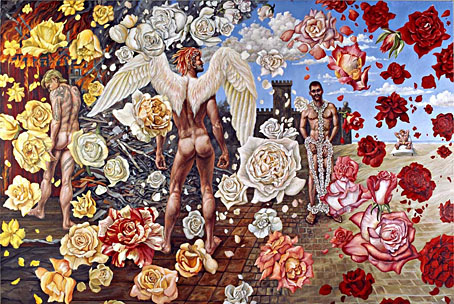
The Miracle (Genet’s Dream) (2001) by Delmas Howe.

• “Zachary Lipton, an assistant professor at the machine learning department at Carnegie Mellon University, watched with frustration as this story transformed from ‘interesting-ish research’ to ‘sensationalized crap’.” Oscar Schwartz on how the media gets AI alarmingly wrong.

• The Aesthetics of Science Fiction: what does SF look like after cyberpunk? Very Brutalist if you ask Rick Liebling, although the first example shown in his piece—the Brunel University Lecture Centre—appears briefly as future architecture in A Clockwork Orange.

• At Expanding Mind: Erik Davis talks with philosopher and religious studies professor Dustin Atlas about ancient skepticism, Madhyamaka Buddhism, the taste of honey, Montaigne, Robert Anton Wilson, and the path of doubt.

• At Muddy Colors: Part 1 of their choices for best fantasy book covers of the year so far, a list which includes my cover for Moonshine by Jasmine Gower. Thanks!

• Soundtracking with Edith Bowman, episode 84: director Todd Haynes on the music of Wonderstruck, I’m Not There, Carol and Far From Heaven.

• Mixes of the week: FACT mix 663 by Space Afrika, Secret Thirteen Mix 262 by Mieko Suzuki, and Black Minimalism, a playlist by David Toop.

• Two minutes, eight barrels: drone and GoPro footage of surfer Koa Smith riding the waves of the Namibia shoreline.

• David Lynch’s Sacred Clay: Shehryar Fazli reviews Room to Dream by David Lynch and Kristine McKenna.

Charlotte Higgins on myths, monsters and the maze: how writers fell in love with the labyrinth.

• Monstrous Geometries in the Fiction of HP Lovecraft by Moritz Ingwersen.

Listen to the mournful wails of planets and moons.

• A Peel Session by Laika

Surf Ride (1956) by Art Pepper | Surf (1976) by Tim Blake | Surfside Sex (1982) by Patrick Cowley
The art of Antoon van Welie, 1866–1956

vanwelie1.jpg

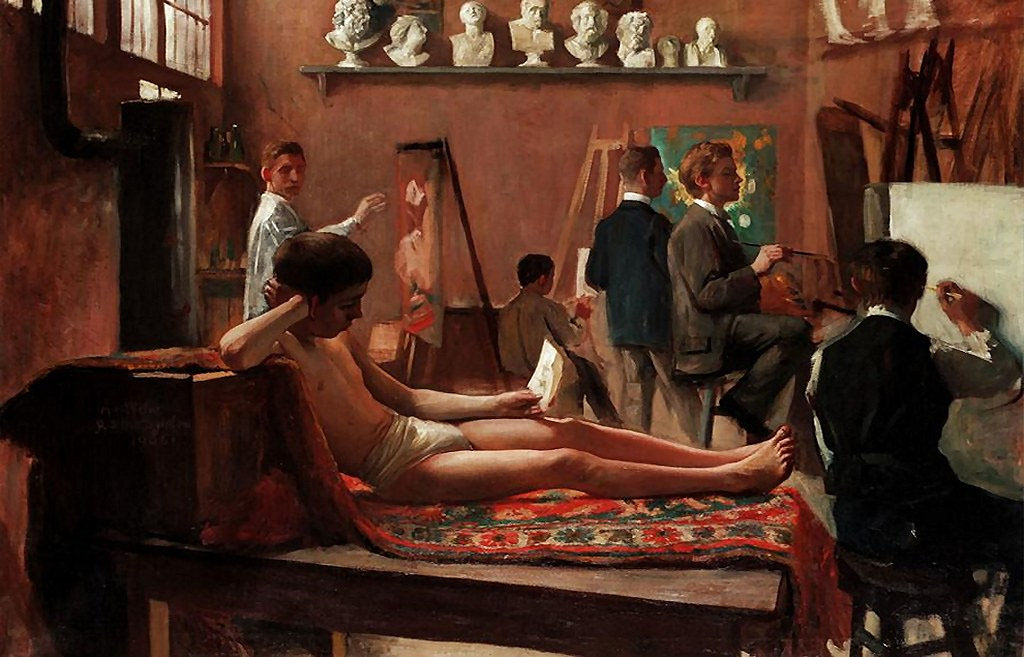
The Artists’ Studio (1906).

This week’s post is another by Sander Bink about a neglected artist of the Dutch fin de siècle. There’s no need for me to add a great deal to Sander’s appraisal below other than to point out the evident debt that Antoon Van Welie seems to owe to the Pre-Raphaelites for whom Ophelia was a popular subject. British artists of the 19th century have often been criticised for adding little to the evolution of Continental art but the influence of the Pre-Raphaelites and the Arts and Crafts movement pervades European Symbolism. My thanks again to Sander for the post.

* * *

Antoon van Welie (Dutch Wikipedia only) was a Dutch painter known mainly for his portraits of the rich and famous. Around 1900 his work was praised by writers and critics such as Camille Mauclair, Jean Lorrain and Anatole France. He had studios in The Hague, London, Paris and The Vatican. There’s not much information about him in English, and for a long time there wasn’t a great deal in Dutch either, since during his lifetime he was already more or less forgotten. His being openly gay could have been one of the reasons. Male beauty is one of his subjects, as illustrated by The Artists’ Studio. His preference for depicting Catholic priests and flamboyant society ladies might also have been a little too extravagant for Dutch artistic standards of the period. The influence of Symbolism and mysticism on his work sets him a little apart from the crowd as well. All this does make him somewhat of a “decadent” or fin de siècle artist. What surely did not help his posthumous fame was a portrait of Mussolini he painted in 1921, and apparently he later also made one of Hitler. But in 2003 he was rescued from art-historical oblivion by the good people of the Louis Couperus Museum in The Hague. An exhibition there was followed in 2007 by a larger one at Museum Het Valkhoff in Nijmegen: The Last Decadent Painter. The book published for the occasion gives an extensive overview of Van Welie’s life and oeuvre but is unfortunately only available in Dutch.

The portraits which made him famous in his day are, in my opinion, technically not that great and sometimes tend toward kitsch. More subtle and beautiful are his early Symbolist works which, like those by Simon Moulijn, are strongly influenced by Maeterlinck’s neo-mystical writings.

vanwelie2.jpg

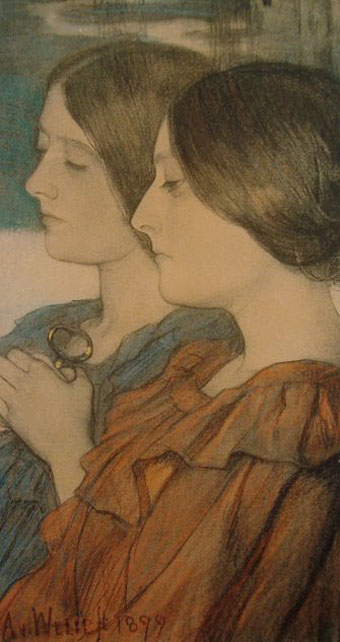
Aglavaine en Sélysette (1899).

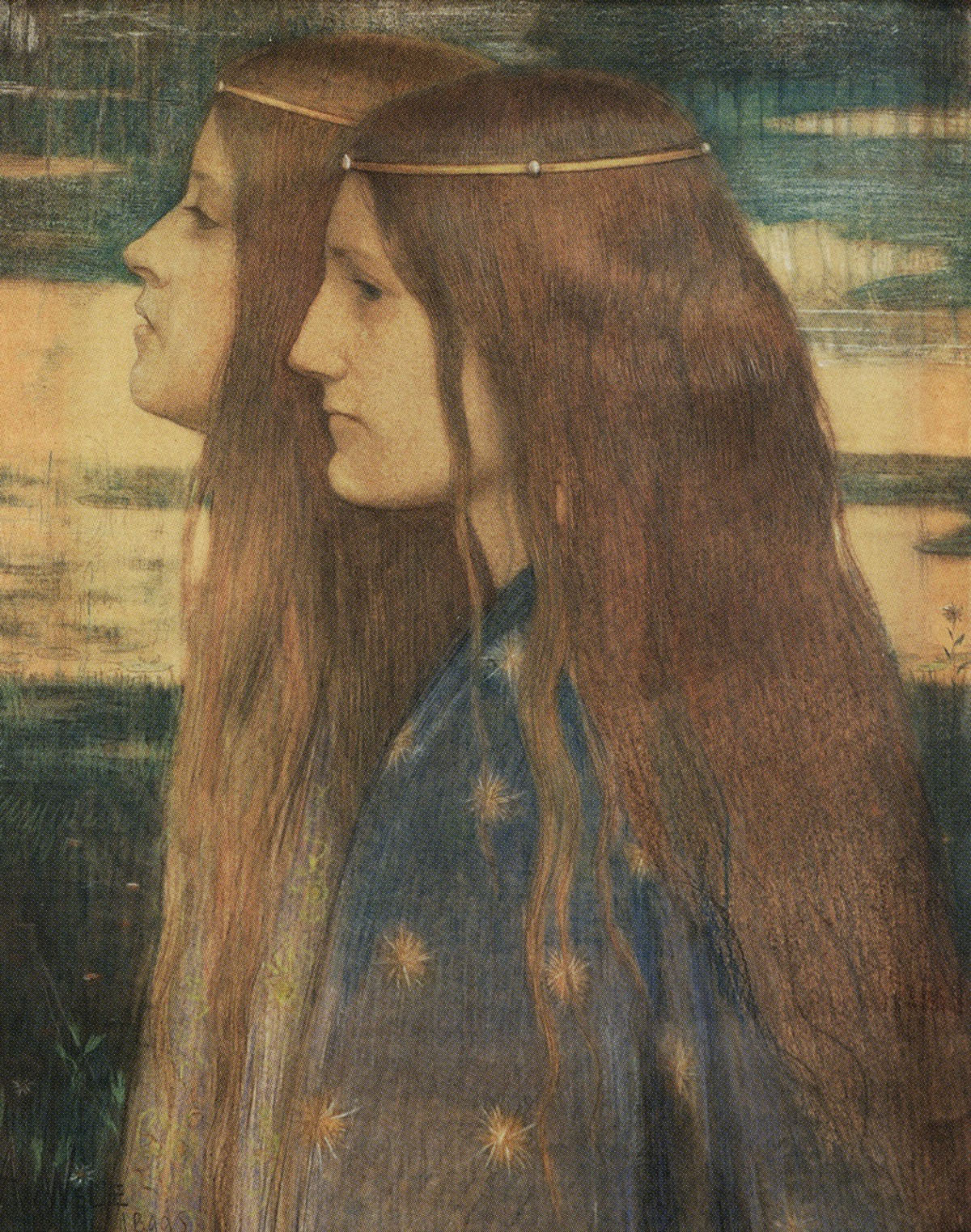
Some quite refined examples are the lithograph Aglavaine en Sélysette and the pastel Les Princesses de Légende, both directly inspired by Maeterlinck’s plays.

vanwelie3.jpg

Les Princesses de Légende (1899).

vanwelie4.jpg

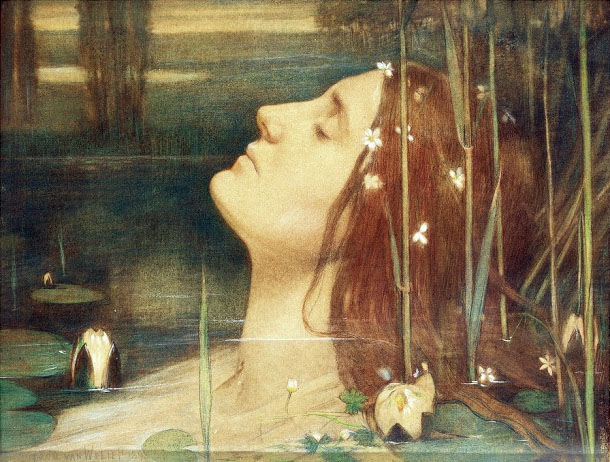
Ophelia.

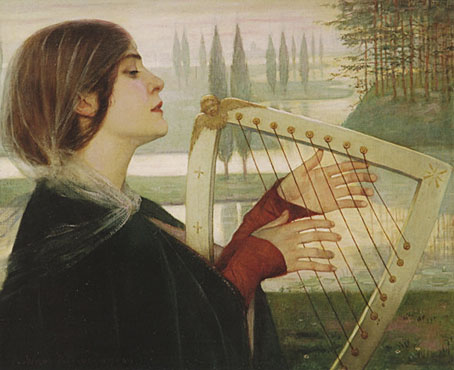
Literature was an important influence, as it was for many other Symbolist painters, and Van Welie duly produced the pastel Ophelia in 1898–’99. The same goes for musical themes, an example of which is the serene pastel Holy Cecilia with Lyre.

vanwelie5.jpg

Holy Cecilia with Lyre (1899).

vanwelie6.jpg

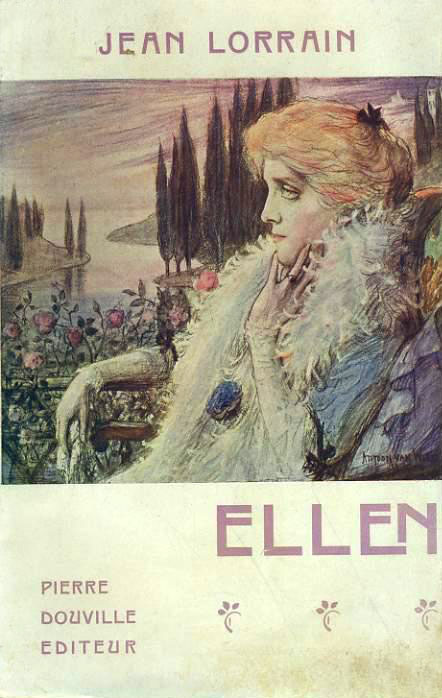
He also designed book covers like the one for Jean Lorrain’s novel Ellen from 1906.

vanwelie7.jpg

La Douleur (1895).

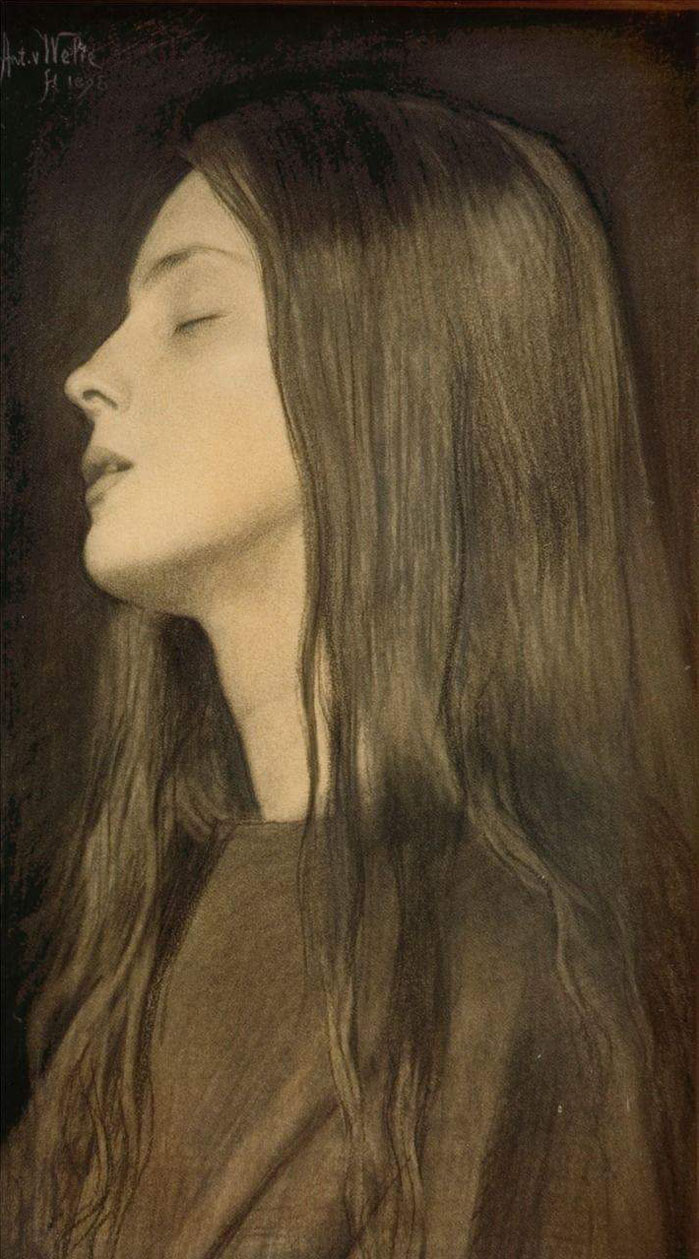
But his most attractive work and as far as I am concerned one of the finest works of 1890s Dutch art is the chalk drawing La Douleur. Although the title emphasizes the young lady’s suffering, she also seems to be in a (sexual) ecstasy. A paradoxical beauty like Baudelaire’s femmes damnées: “de terribles plaisirs et d’affreuses douceurs”.

Sander Bink

Elsewhere on { feuilleton }
The gay artists archive

Previously on { feuilleton }
The art of Simon Moulijn, 1866–1948
René Gockinga revisited
Gockinga’s Bacchanal and an unknown portrait of Fritz Klein
More from the Decadent Dutch

Weekend links 421

wojnarowicz.jpg

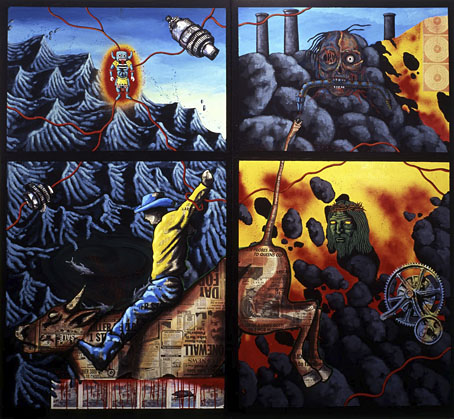
The Death of American Spirituality (1987) by David Wojnarowicz.

Dau: “Art imitating life on an unprecedented scale”. Siddhant Adlakha on a colossal Russian feature-film project that sounds like a real-life equivalent of Synecdoche, New York. Adlakha’s piece, which claims that Dau is finished, was written a year ago but there’s still no sign of the film itself. Wikipedia has more details and links.

Metropolis Magazine from Phantasm Press is a facsimile republication of the 32-page theatre programme produced for the UK premier of Fritz Lang’s feature film.

Children Of The New Dawn is a preview of the score for Mandy by the late Jóhann Jóhannsson. From last year: The Drowned World (live) by Jóhann Jóhannsson.

Grand Panorama of a Whaling Voyage ’Round the World (1848) by Benjamin Russell & Caleb Purrington is the longest painting in North America.

• “This summer, there is only one book to take to the Terminal Beach”: Applied Ballardianism: Memoir from a Parallel Universe by Simon Sellars.

• “La série des Fredi en trois volumes est une étude sincère et consciencieuse de l’inversion sexuelle.”

• “The Book was Mallarmé’s total artwork, a book to encompass all books,” says Sylvia Gorelick.

• At BLDGBLOG: Graphic Inferno, art by Rico Lebrun based on Dante’s Divine Comedy.

• Mixes of the week: XLR8R Podcast 549 by Hólmar, and FACT Mix 661 by Kelly Lee Owens.

• “Dealing with creative block? A deck of cards might help,” says Abigail Cain.

The Instagram account archiving exquisite interiors from vintage porn.

Polish composers report from Outer Space

Wind From Nowhere (1994) by Uzect Plaush | Slolooblade : The Drowned World (1994) by Mo Boma | Inner Space Memorial for JG Ballard (2014) by Janek Schaefer

Weekend links 417

coil.jpg

Cover of How To Destroy Angels (Remixes And Re-Recordings) (1992) by Coil. Artwork: Fine Balance (1986) by Derek Jarman.

• It’s that man again: “According to the late great short story writer Robert Aickman, the problem with our excessively modern world is not that it is strange, but that it is not strange enough.” Scott Bradfield on a writer who can no longer be described as neglected or overlooked.

• Coil may have expired over a decade ago after the death of John Balance but the posthumous releases persist. Latest of these is How To Destroy Angels, an album-length presentation of music (or audio) by Coil and Zos Kia (John Gosling) from 1983/84.

• “Two decades ago, a renowned professor promised to produce a flawless version of one of the 20th century’s most celebrated novels: Ulysses. Then he disappeared.” The Strange Case of the Missing Joyce Scholar.

• At Dangerous Minds: The Fool: The Dutch artists who worked for The Beatles (and made their own freak folk masterpiece). Previously here: The art of Marijke Koger.

• RIP Nick Knox. The Cramps were always best when playing live, as here in 1986 when they performed songs from A Date With Elvis on Channel 4’s The Tube.

• “The McKenzie Tapes is a collection of live audio recordings from some of New York City-area most prominent music venues of the 1980s and 1990s.”

• Beyond the veil: two extracts from Death by Anna Croissant-Rust, one of two new books from Rixdorf Editions.

• Impulse Responses: composer Deru on scoring with the Cristal Baschet.

Fleshback: Queer Raving in Manchester’s Twilight Zone Chapter 1–3.

• “Puzzler says he has cracked code to stolen Belgian masterpiece.”

• Mix of the week: FACT mix 657 by Beatrice Dillon.

Jenzeits

Death Have Mercy (1959) by Vera Hall | Oh Death (1964) by Dock Boggs | Oh Death (1967) by Kaleidoscope

Weekend links 415

varo.jpg

The Creation of the Birds (1957) by Remedios Varo.

• “I think my music is very modern and very old. Together.” Sandy Robertson interviewed Popol Vuh’s Florian Fricke for Sounds in 1981. The Fricke-directed Sei Still Wisse ICH BIN referred to in the feature may be viewed here. Further Vuh-ing: Popol Vuh on Beat Club, 1971; a news clip of the group from the same year; a filmed improvisation from around the same time (Florian still had his Moog); and the group miming to recorded music from a year or two later.

• More Rammellzee (see last week): Gothic Futurism, a video collage based on Rammellzee’s treatise of the same name. Probably the only place you’ll ever see Rammellzee, the late Glenn Branca and art historian Kenneth Clark thrown together.

• After releasing 5 albums, Disjointed Oddities And Other Such Things is the first EP of “odd strange electronics, psych, Radiophonics, drone and quirky folk” by Keith Seatman.

Alina Cohen on Remedios Varo, a Spanish Surrealist painter whose work has been receiving increased attention in recent years but whose life remains under-examined.

• More German music: “I grew up in total ruins”—Irmin Schmidt of Can on LSD, mourning and musical adventures.

• Mixes of the week: FACT mix 655 by Matthewdavid, and The Monday Is Okay mix by JQ.

Olivia Laing, Sarah Wood and Philip Hoare discuss Modern Nature by Derek Jarman.

National Geographic has digitized its collection of 6,000+ vintage maps.

• At Bandcamp: The Transcendental Sound of Moroccan Gnawa Music.

Joe Fletcher on the nightmarish dream logic of Bruno Schulz.

Levi Stahl on the mind of Donald E. Westlake.

Affenstunde (1970) by Popol Vuh | Toy Planet (1981) by Irmin Schmidt & Bruno Spoerri | Adithaim (2005) by The Cracow Klezmer Band