Franz von Bayros’s Inferno

bayros01.jpg

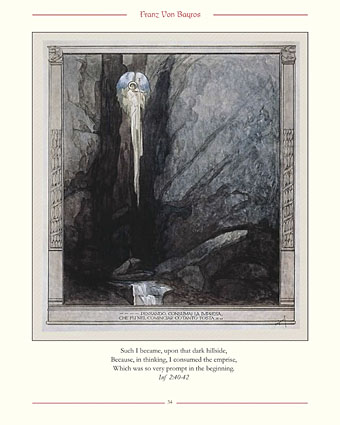
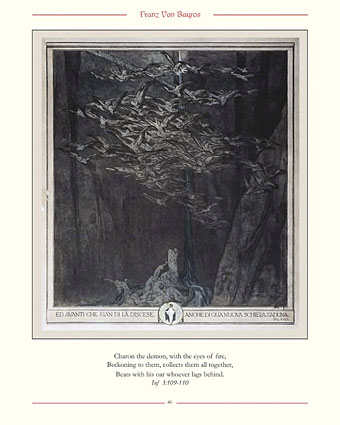
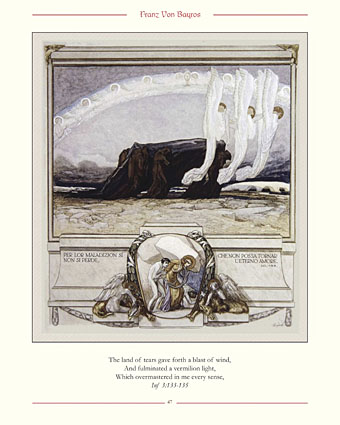
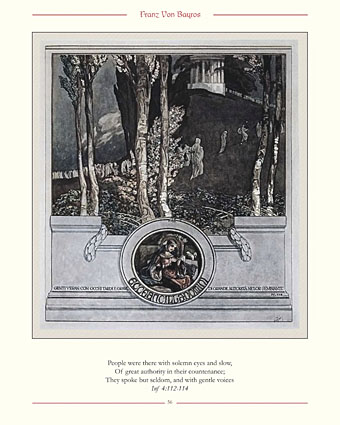
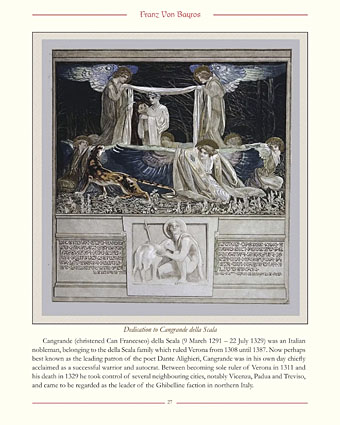
Viennese artist Franz von Bayros (1866–1924) is unusual among illustrators in that his erotic art tends to be easier to see today than his less scandalous commissions. Such is the case with his illustrations for Dante’s Inferno, some of which I’d seen before but never as many as in a book which arrived recently at the Internet Archive. This is a home-made presentation that uses the Longfellow translation of the Inferno for the text. Bayros can’t compete with the sombre spectacle of Gustave Doré’s illustrations but he depicts some of the less dramatic moments that Doré’s full-page engravings avoid, while also placing a number of his drawings in the same monumental frames he liked to use for his pornographic art.

bayros02.jpg

bayros03.jpg

bayros04.jpg

bayros05.jpg

Continue reading “Franz von Bayros’s Inferno”

Weekend links 680

wijdeveld.jpg

15 Miles into the Earth (1944) by Hendrik Wijdeveld.

• “He realized that there were individuals around him who had never appeared in the great altarpieces and frescoes, individuals who had been marginalized by the cultural ideology of the previous two centuries. And there were hours of the day—transient, yet unequivocal in their lighting—which had never been reproduced, and which were pushed so far from habit and use that they had become scandalous, and therefore repressed.” Pasolini on Caravaggio.

• “Reading Albert Camus and Mikhail Bulgakov by day, by night, crucially, they were listening to Chic, Kraftwerk, Donna Summer, Michael Rother and Grace Jones in the clubs.” Graeme Thomson on the atmosphere and influences that helped create my favourite album by Simple Minds, Empires And Dance. Borges was also a minor influence, apparently, which wasn’t something I knew until this week. I like it when your favourite things join up this way.

• “This being England, a ‘tea shop’ is not a shop that sells tea. That would be a tea merchant. A tea shop serves tea.” Mark Valentine on the perennial connections between rambling and tea-drinking.

Talking about generations as if they really existed and had sway over people is much more respectable and widespread than the belief that events and personalities are governed by the movements of the planets. But is there really much more substance and reality to “generations”? If not “a bunch of bullshit”, the discourse of generations is certainly generative of bullshit: tenuously grounded overviews and opinion pieces, specious analysis and analogies, platitudes and truisms. And yet, like astrology, it is a fun game to play along with. And far more than astrology, it’s a mode of talk that partially constitutes its object: generalizing about a generation actually brings it into semi-existence, shaping how people perceive themselves and how they are perceived by earlier or later generations. What may just be an illusion, a shaky set of alleged affinities, becomes a social fact.

Simon Reynolds analyses the generation game

• More Milton Glaser: PDFs of the Glaser Gazette, a memorial publication in three parts: Vol 1 | Vol 2 | Vol 3

• New music: Tractatus Lyra-Organismus by Lyonel Bauchet, and Grounded Rectangle by Ambidextrous.

• “A digital archive of graphic design related items that are available on the Internet Archives.”

• DJ Food found a handful of psychedelic posters by Nicole Claveloux.

• “Rights to Jorge Luis Borges’s work go to his wife’s nephews.”

• “Is this the earliest known phallic art?

Young Generation Dub (1976) by Augustus Pablo | Chile Of The Bass Generation (1990) by Mental Cube | Invisible Generation (1992) by Cabaret Voltaire
Fender guitar catalogue, 1976

fender01.jpg

Another post prompted by 70s Sci-Fi Art, and a publication that’s very typical of its decade. The Fender guitar catalogue for 1976 showcases its product range with a series of illustrations that carefully pastiche the kind of art you’d find in books of fairy tales. Selling rock’n’roll equipment in this manner wasn’t a trend-setting step by 1976, not with the punk hordes on the march, but corporations are seldom ahead of the general culture. The cover art by Ruby K. Lee is a copy of one of Kay Nielsen’s drawings for East of the Sun and West of the Moon. Lee also provides one of the interior drawings, with the rest of the art being the work of Bruce Wolfe. (There may be another artist involved since one of the illustrations lacks a credit.) This looks like a huge amount of effort for a small product catalogue but the illustrations were also part of an ad campaign with accompanying storybook copy. It’s good to see Busorama being used for all the headings. I’ve been using this font myself for its associations with the 1970s.

fender02.jpg

Since I keep borrowing tips from 70s Sci-Fi Art I’ll note again that Adam Rowe’s Worlds Beyond Time: Sci-Fi Art of the 1970s will be published by Abrams next month.

fender03.jpg

fender04.jpg

fender05.jpg

Continue reading “Fender guitar catalogue, 1976”

Weekend links 679

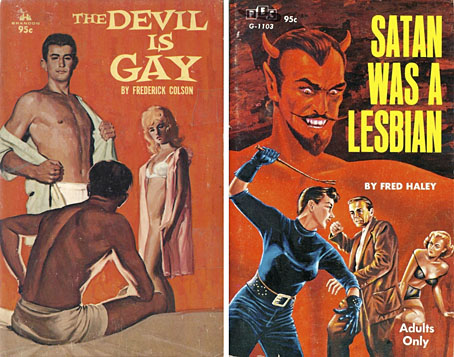
gay.jpg

All this and the best tunes. Via.

• As noted last month, Space Ritual by Hawkwind turned 50 this year so here comes the inevitable reissue which in its most lavish edition will run to 11 discs. This isn’t as immediately attractive for me as the recent Calvert-era collection—I already own four different copies of Space Ritual, including the original vinyl—but I may feel differently a few months from now.

• At Wormwoodiana: Mark Valentine explores The Prophecies of N’Gai, something which sounds like a story from Weird Tales but isn’t.

• “Is function in the eye or mind of the beholder?” Steven Heller on Jacques Carelman’s Catalogue of Impossible Objects.

• At Spoon & Tamago: Yoko Tada began painting in her 80s. At 100 she’s publishing her first book.

• “The Magnificent Ambersons: rebirth for ruined Orson Welles masterpiece that rivalled Citizen Kane.”

At Wyrd Daze: Disco Rd 3: 23 pages 23 minutes. Free PDF, music mix, Discordianism, etc.

• A (brief) conversation with Milena Canonero, Wes Anderson’s costume designer.

• At Public Domain Review: Specimens of Fancy Turning (1869).

• New music: Móatún 7: Tetsu Inoue by Various Artists.

Arik Roper’s favourite album artwork.

• RIP Peter Brötzmann.

Table Turning (1973) by The Upsetters | Forever Turning (1995) by Scorn | Turning Towards Us (2008) by Redshift

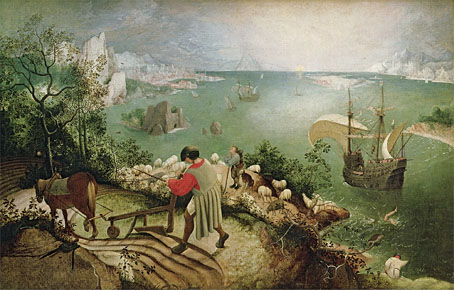
Landscape with the Fall of Icarus

1: Landscape with the Fall of Icarus, c.1560

bruegel.jpg

A painting (or a copy of the same) by Pieter Bruegel the Elder.


2: Musée des Beaux Arts, 1938

auden.jpg

A poem by WH Auden.


3: Landscape with the Fall of Icarus, 1962

A poem by William Carlos Williams.


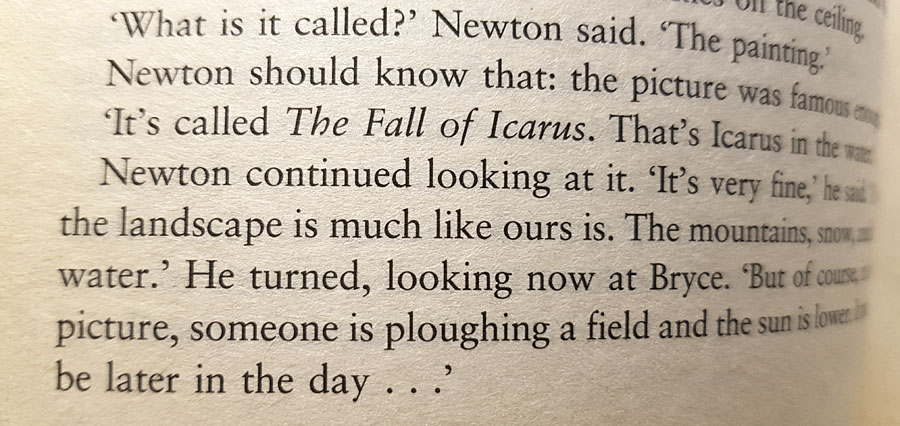
4: The Man Who Fell to Earth, 1963

tevis.jpg

A novel by Walter Tevis.


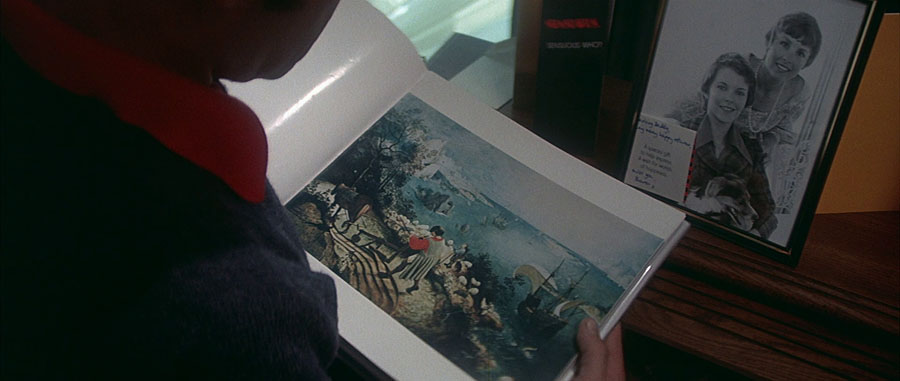
5: The Man Who Fell to Earth, 1977

mwfte.jpg

A feature film written by Paul Mayersberg and directed by Nicolas Roeg.


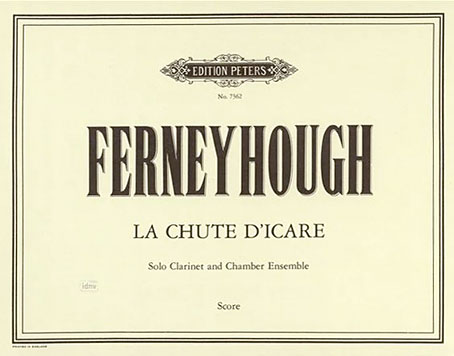
6: La Chute d’Icare, 1988

ferneyhough.jpg

A composition by Brian Ferneyhough.


7: Upon Viewing Bruegel’s “Landscape With The Fall Of Icarus”, 2007

A song by Titus Andronicus.

Previously on { feuilleton }
The Fall of the Magician
Bruegel’s sins
Proverbial details
Babel details
Three stages of Icarus