
A conversation with Rick Veitch, with an introduction by Alan Moore | An exclusive interview/feature at Arthur.
Category: {art}
Art
Naked furniture
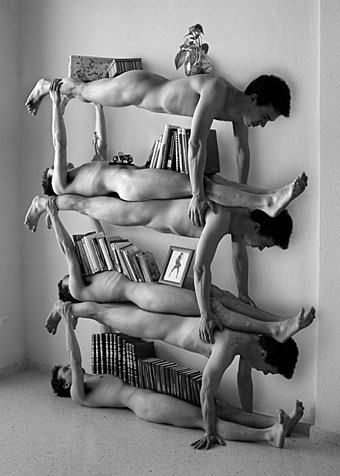
Taking a break from the psychedelic overload today with a return to (what else?) black and white photographs of naked men. The subjects this time are from Mobilario Humano, fanciful suggestions for furniture designs by David Blázquez which use the photographer himself as the subject, collaged into a series of pliable clones. Allen Jones produced similar work with female figures in the 1960s—and Stanley Kubrick borrowed Jones’ idea for A Clockwork Orange—but this is the first time I’ve seen male figures used this way.
Thanks to Carmine for the tip!
Paula Nadelstern’s kaleidoscope quilts
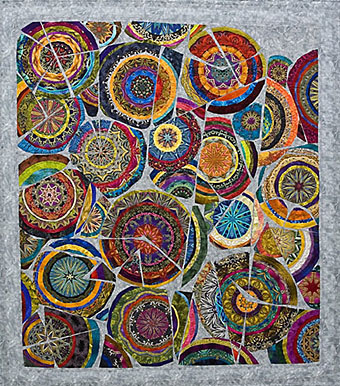
Kaleidoscopic XXXIII: Shards (2008).
More kaleidoscopes, the sewn variety this time, from New York quilt maker Paula Nadelstern. Amazing work, especially in the detailed views. An exhibition, Kaleidoscope Quilts: The art of Paula Nadelstern, opens at the American Folk Art Museum, NYC, on April 21st.
Via DO.
Previously on { feuilleton }
• Deluxe kaleidoscopes
• The Kaleidoplex
Arthur Tress’s Hermaphrodite

Hermaphrodite behind Venus and Mercury (1973).
We had Austin Spare and absinthe yesterday. Looking at some of Arthur Tress‘s photographs today I was reminded me of one of Spare’s hermaphrodite studies (below). The photo is from a series, Theater of the Mind, which Tress created during the 1970s.
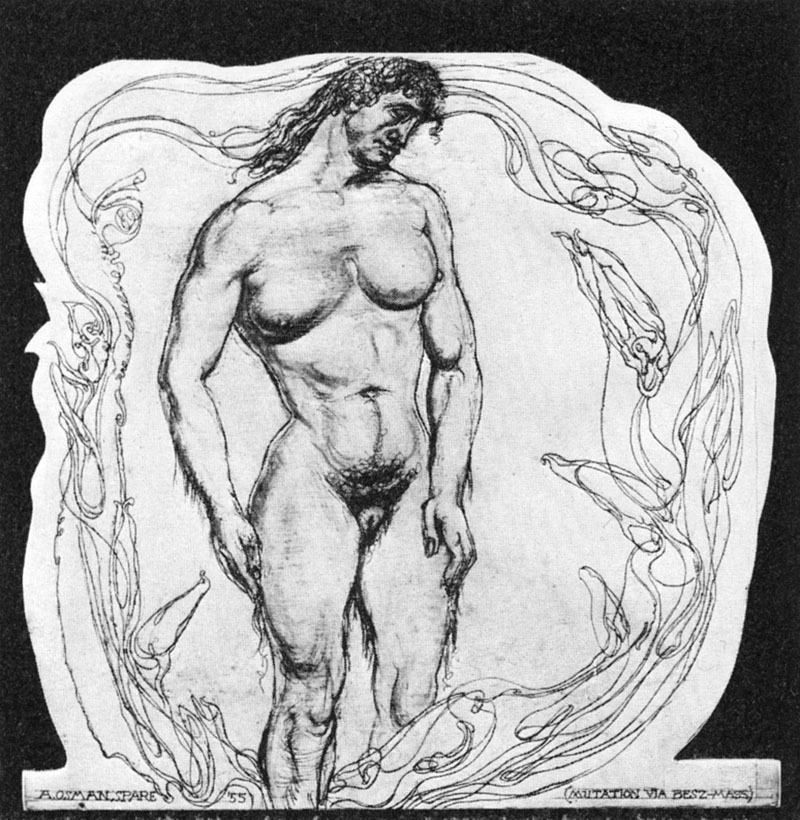
Gynander: Mutation by Besz-Mass (1955).
Previously on { feuilleton }
• Czanara’s Hermaphrodite Angel
Austin Spare absinthe
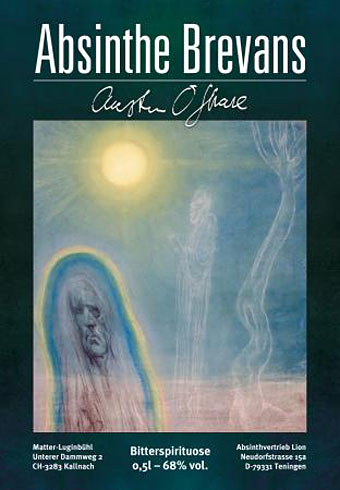
An Austin Spare pastel (?), Astral Body and Ghost, from the collection of Cyclobe‘s Ossian Brown adorns the label of this edition of Absinthe Brevans. Would the artist approve? Do we have to ask? He spent much of his life haunting pubs and I’d be very surprised if he hadn’t tried absinthe when he was a young Decadent. Absinthe Brevans A.O. Spare is €35 from Absinthe.de.
Via Further.
Previously on { feuilleton }
• Fata Morgana: The New Female Fantasists
• Absinthe girls
• Austin Spare’s Behind the Veil
• 8 out of 10 cats prefer absinthe
• Austin Osman Spare