Edward William Lane’s Arabian Nights Entertainments

an1.jpg

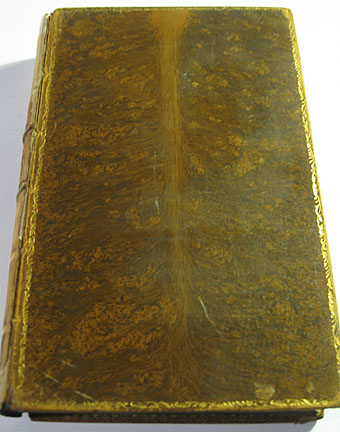
This weekend’s book purchase looks like an expensive volume but was actually pretty reasonably-priced for a book that’s 126 years old. This is no. III of a three-volume set of the Thousand and One Nights translated by Edward William Lane, published by Chatto & Windus in 1883. I bought it mainly for the copious wood engraving illustrations by William Harvey although the book itself is a beautiful, if battered, work of art: gold edging on the boards, marbled endpapers (something we did at Savoy for Lucy Swan’s novel) and marbling on the paper edges (Lucy’s book had gold edging). Like many fine old books the heavy boards and thick paper stock means it’s very heavy and it’s these quality materials which have helped it survive this long.

I wasn’t going to put this through the flatbed scanner so a few photo snaps follow.

Continue reading “Edward William Lane’s Arabian Nights Entertainments”

Fata Morgana: The New Female Fantasists

foerester.jpg

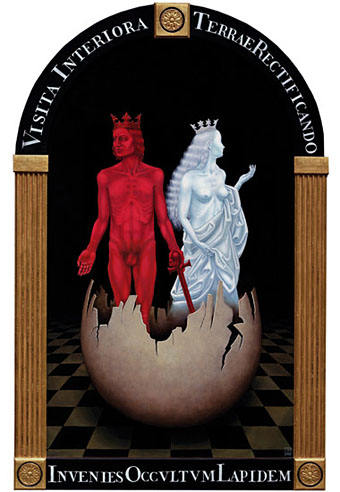
The Chemical Wedding by Madeline Von Foerster (2008).

Art lovers in the NYC area are advised to get down to the Saturday opening of this exhibition at the Dabora Gallery in Greenpoint, Brooklyn, for some great paintings and a free glass of absinthe. Fata Morgana: The New Female Fantasists is curated by Pam Grossman who runs one of my favourite art sites, Phantasmaphile. Further details can be found at the gallery pages which include links to the artists’ websites.

Dabora Gallery and Phantasmaphile’s Pam Grossman are proud to usher in the spring season with the group show “Fata Morgana: The New Female Fantasists,” on view from March 14th through April 12th, 2009. It features fourteen of the most vital and visionary women artists working in the US today.

In literal terms, a fata morgana is a mirage or illusion, a waking reverie, a shimmering of the mind. Named for the enchantress Morgan le Fay, these tricks of perception conjure up a sense of glimpsing into another world, whether it be the expanses of an ethereal terrain, or the twilit depths of the psyche. The artists of “Fata Morgana: The New Female Fantasists” deftly utilize the semiotics of mysticism, fantasy, and the subconscious in their work, thereby guiding the viewer through heretofore uncharted realms – alternately shadowy or luminous, but always inventive.

Yoko Ono recently said, “I think all women are witches, in the sense that a witch is a magical being.” Each artist in this show is a sorceress in her own right. Endowed with fecund imaginations and masterful craftsmanship, their work transforms the viewer: we become spellbound, bearing witness to their attempts to reconcile the desire for a diurnal beauty with the lure of a lush and riotous inner wilderness. The fantastical is counterpoint to the ferocious, the monstrous to the marvelous. Allusions to myth and metamorphosis abound, as these works channel their own heroine spirits and tell their own secret tales. Here, frame is magic threshold, bidding us to take a breath, and cross over.

Elsewhere on { feuilleton }
The fantastic art archive

Antonio Gaudí by Hiroshi Teshigahara

gaudi.jpg

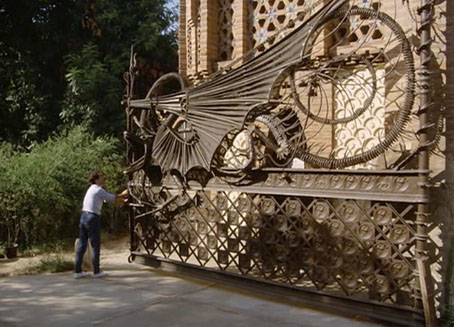
A largely-wordless tour of Gaudí’s architecture by the director of Woman in the Dunes (1964). Like that earlier film this also features a score by the composer Toru Takemitsu. I hadn’t realised before that the famous dragon gate (above) at the entrance to the Parc Güell, Barcelona, was as large as it is.

Teshigahara’s documentary is another film available at Ubuweb.

Previously on { feuilleton }
Atelier Elvira

Infinite reflections

fireflies.jpg

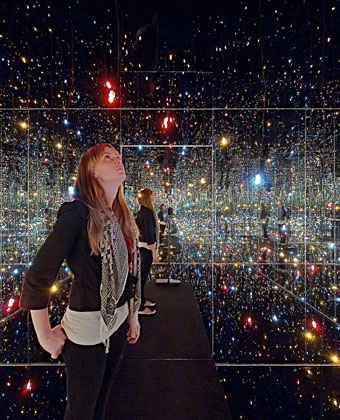
Fireflies on the Water by Yayoi Kusama (2002).

One of my favourite contemporary artworks, Fireflies on the Water by Yayoi Kusama, receives a new showing at Sydney’s Museum of Contemporary Art. Her mirrored room features 150 lights and a pool of water and while most photos show an impressive work, none of them can match this fantastic 360º panorama by Australian photographer Peter Murphy. Kusama isn’t the only artist to use mirrors this way but mirror rooms and reflective surfaces have become as much a recurrent feature of her work as her trademark spots.

Fireflies on the Water is being shown as part of the Yayoi Kusama: Mirrored Years exhibition and can be seen until June 8th, 2009. (Via Nevertheless.)

samaras.jpg

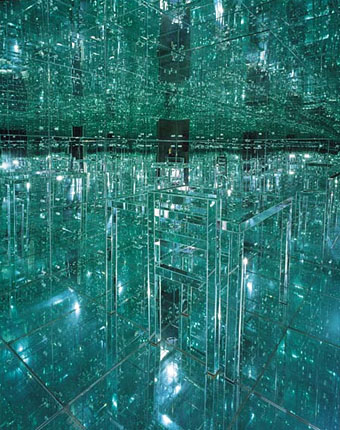
Mirrored Room by Lucas Samaras (1966).

I’ve often wondered how far back the invention of the fully-mirrored room can be traced. Halls of mirrors are historically common but the mirrors tend to be on the walls only. American artist Lucas Samaras produced his Mirrored Room (with mirrored chair and table) in 1966, something which fascinated me when I first encountered it in art books.

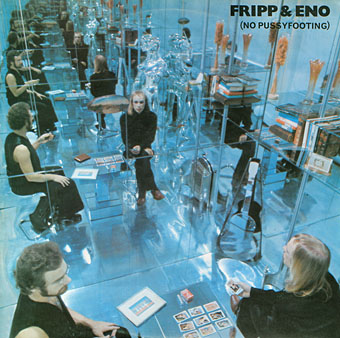
frippandeno.jpg

It evidently fascinated ex-art student Brian Eno who I’m sure must have borrowed the idea for the cover of his collaboration with Robert Fripp, (No Pussyfooting), in 1973. I’ve always assumed this was a room in Eno’s home at the time but never seen that confirmed. Anyone know whether this is the case?

Elsewhere on { feuilleton }
The panoramas archive

Previously on { feuilleton }
The art of Josiah McElheny
Yayoi Kusama
The art of Yayoi Kusama
Exposure by Robert Fripp

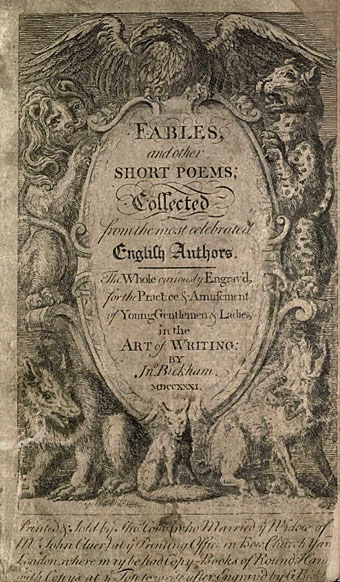
John Bickham’s Fables and other short poems

bickham1.jpg

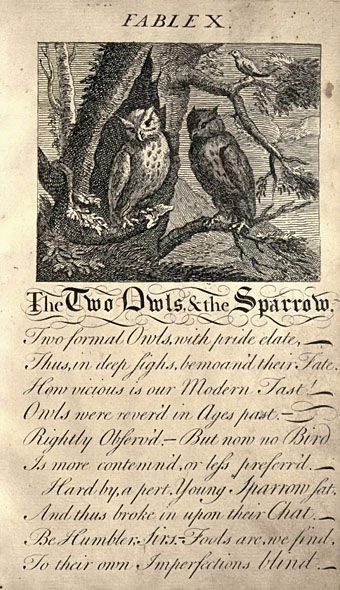
Or Fables and other short poems : collected from the most celebrated English authors : the whole curiously engrav’d for the practice & amusement of young gentlemen & ladies in the art of writing to give its full title, a children’s primer from 1731 and another free title available at the Internet Archive. John Bickham was one of the famous family of engravers among whom George the Elder is particularly celebrated for his own stunning penmanship in The Universal Penman (1740), a book which is still in print. The moral fables here are mostly single-page verse pieces with titles such as The Lady and the Wasp or The Spaniel and the Camelion. One short piece, On Liberty, is especially pertinent following the weekend when the Convention on Modern Liberty declared its mission to resist the rise of the Total Surveillance State.

Oh Liberty! thou Goddess heav’nly bright,
Profuse of bliss, and pregnant with delight;
Eternal pleasures in thy presence reign,
And smiling Plenty leads thy wanton train.
Eas’d of her Load, Subjection grows more light,
And Poverty looks chearful in thy Sight.
Thou mak’st the gloomy face of Nature gay,
Giv’st Beauty to the Sun, and pleasure to the Day.

bickham2.jpg

Elsewhere on { feuilleton }
The illustrators archive
The etching and engraving archive

Previously on { feuilleton }
Letters and Lettering
Studies in Pen Art
Flourishes