Weekend links 573

strutt.jpg

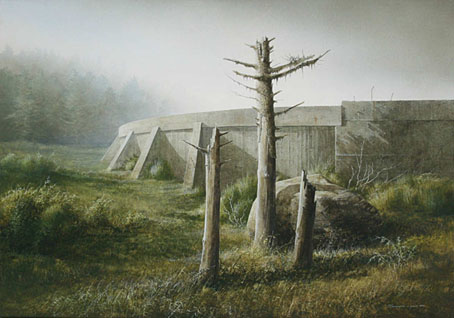
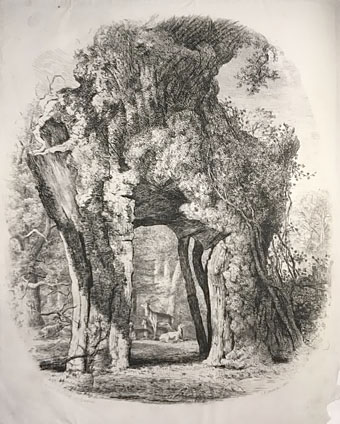
The Greendale Oak, Welbeck, Nottinghamshire, from Joseph George Strutt’s Sylva Britannica (1822/1830).

• “…a single page from Max Ernst’s collage novel Une semaine de bonté (A Week of Kindness, 1934) uncovers the weird brooding threat in Tenniel’s image of Alice in the railway carriage.” Mark Sinker reviewing the Alice: Curiouser and Curiouser exhibition at the Victoria and Albert Museum, London. I don’t know what Ernst page Sinker is referring to but I made the connection between an Ernst collage and Tenniel’s drawing here in 2010.

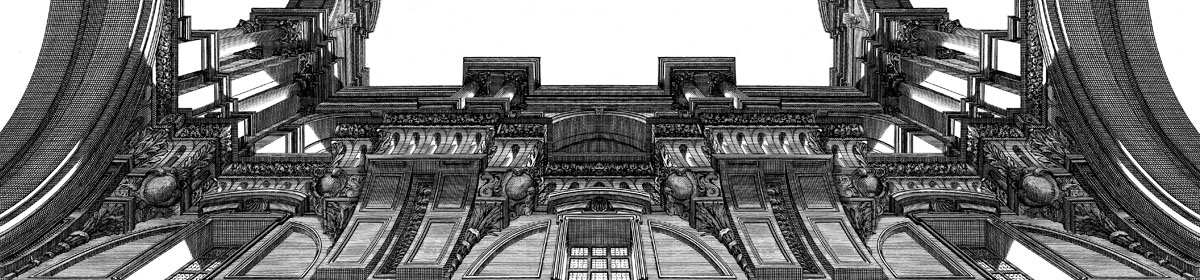
• At Wormwoodiana: “Calum Storrie’s 36 Elevations is a book of drawings of imaginary architecture, with the emphasis on towers, stairs, ladders, globes, oblique angles, gantries, finials etc.”

• At The Quietus: Jennifer Lucy Allen on The Strange World of…Don Cherry, and Dustin Krcatovich on Don and Moki Cherry’s Organic Music Theatre.

Call it the new orthodoxy of the digital middlebrow, “the rise of safely empowering stories with likeable protagonists who move through short sentence after short sentence towards uplifting conclusions in which virtue is rewarded.” The laudable goal of increasing the diversity of literary voices has somehow morphed into a series of purity tests designed to ensure that any artistic representation ticks the same boxes as its ostensible author. “On this,” Tyree writes, “conservative religious evangelicals secretly agree with their puritanical secularist enemies on a censorious attitude and checklist approach to art as either ‘acceptable’ or ‘offensive’ to whatever program one happens to prefer for cleansing all vileness from the world.” The result?

[A]rt is increasingly viewed by both the right and the left as a sub-branch of medicine, therapy, hygiene, or good manners. Art is no longer that which tells us the truth but rather that which makes us feel better—a deflated ideology that is spawning a sort of unofficial school of palatability.

And this, I fear, is what’s afflicting many of my students…

Justin St. Clair reviewing The Counterforce: Thomas Pynchon’s Inherent Vice by JM Tyree. Since I’m currently in the midst of a Pynchon reading binge this is all very timely

• “Researchers create self-sustaining, intelligent, electronic microsystems from green material“.

• From 2018: Ryuichi Sakamoto and David Toop live at The Silver Building.

• New weirdness: Catwalk Of The Phantom Baroque by Moon Wiring Club.

• Mix of the week:Episode #391 of Curved Radio by radioShirley & mr.K.

• At Dennis Cooper’s: Illegible autographs.

Elevation (1974) by Pharoah Sanders | Elevation II (1997) by Vainqueur | Elevations And Depths (2010) by Locrian


Barazoku covers

barazoku001.jpg

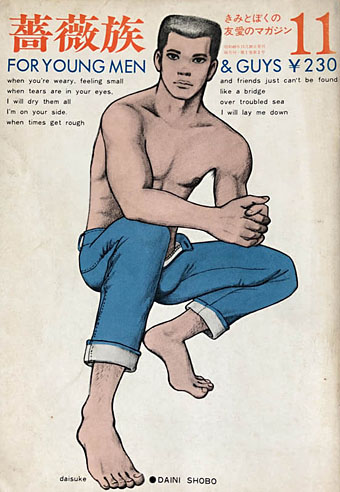
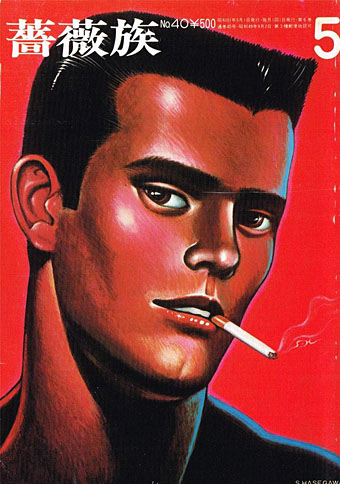
Barazoku (“The rose tribe”) wasn’t the first Japanese magazine for gay men but it was the first such title with a general circulation, as well as the longest running. 400 issues were published from 1971 to 2008. I wasn’t aware until I started reading about the history of this magazine that bara (“rose”) was originally a pejorative term like “pansy”. As with many slang terms, not least “gay”, the meaning and application has evolved over time. Use of “bara” today is confused by its application in the West to almost any form of gay manga that isn’t yaoi, a utilization that some Japanese artists take issue with.

barazoku007.jpg

For Western viewers, the most immediately striking thing about the covers of Barazoku is their reliance on drawings or paintings rather than photographs. This isn’t entirely unprecedented—Physique Pictorial and Fizeek in the US used drawn covers from time to time—but making artwork a consistent cover feature is very unusual. (The first few covers also feature extracts from the lyrics of Bridge Over Troubled Water…) Some of the men who provided covers or interior art have appeared here in the past, among them Ben Kimura, Go Mishima and Sadao Hasegawa. The covers signed “Rune” are the work of Rune Naito (1932–2007), an artist better known in Japan for having popularised the kawaii aesthetic with his drawings of large-eyed girls and panda bears.

barazoku011.jpg

barazoku027.jpg

barazoku040.jpg

Continue reading “Barazoku covers”

Weekend links 572

poumeyrol.jpg

L’Insolite (1980) by Jean-Marie Poumeyrol.

• “As we move down the ladder of prestige into the world of unvetted tweets, we observe an increasing difficulty, among people with very strong opinions, in exercising that basic critical competence of distinguishing between the authorial creation of a character, and the author’s affirmation of that character’s every moral trait and political view.” Justin EH Smith on the HR managers of the human soul.

• “When is a Didone not a Didone? How far must an exemplar Didone, like a Didot or a Bodoni, be altered before it loses its ‘Didoneness’?” John Boardley on the vexed question of font classification, and the need for an alternative to the present system.

• “Birds with Human Faces and Birds with Human Souls share shelf space with The Book of Owls and Expert Obedience Training for Dogs…” Joanna Moorhead visits the Casa Estudio Leonora Carrington in Mexico City.

“Indolent” is a funny way to characterize her natural state, which seems more like “incisive” to me, but I also have the unshakable sense—for myself—that writing can’t or shouldn’t look like staring into space or feel like not wanting to move from the couch. “A fraud is being perpetrated: writing is not work, it’s doing nothing,” she states in that first essay, from 1992. But she immediately counters with, “It’s not a fraud: doing nothing is what I have to do to live.” Listing a few more pertinent existential options, Diski ends with, “Or: writing is what I have to do to be my melancholy self.” The protoplasmic, chattering, melancholic “I” of these essays is, of course, the collection’s constant, its true subject. I can commiserate with her on every page even if emulation is out of reach.

Johanna Fateman on the incisive long-form criticism of Jenny Diski

• At Spine: Vyki Hendy identifies sunburst as a new trend in book cover design. I often think I overuse these things in my own cover designs which means I may be inadvertently (and fleetingly) trendy.

• At the Magnum Gallery, London: Metamorphoses, photographic studies by Herbert List of male bodies and Greek statuary.

• At Spoon & Tamago: A butterfly sipping moisture from puddles, sculpted entirely in wood by Toru Fukuda.

• At Dangerous Minds: Joseph Lanza on the easy listening side of psychedelic pop.

• At CounterPunch: Louis Proyect on thinking like an octopus.

• Mix of the week: Fact Mix 510 by Britton Powell.

Bye Bye Butterfly (1965) by Pauline Oliveros | Butterfly Mornings (2001) by Hope Sandoval & The Warm Inventions | Butterfly Caught (2003) by Massive Attack

Peter Haars book covers

haars20.jpg

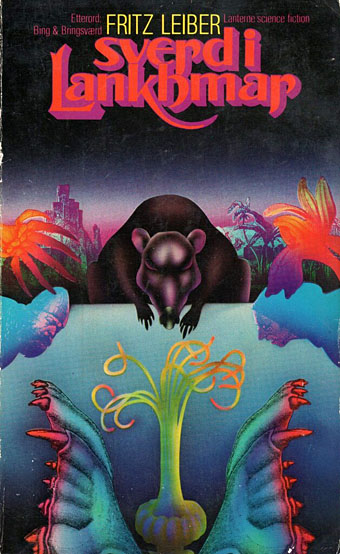
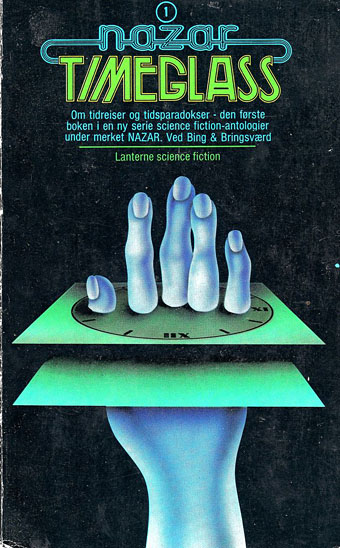
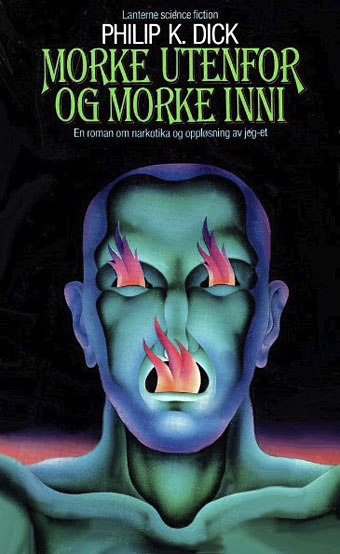
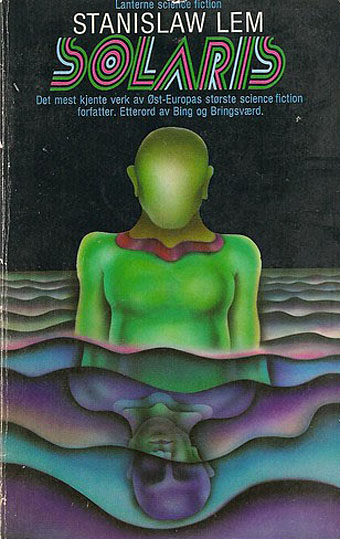
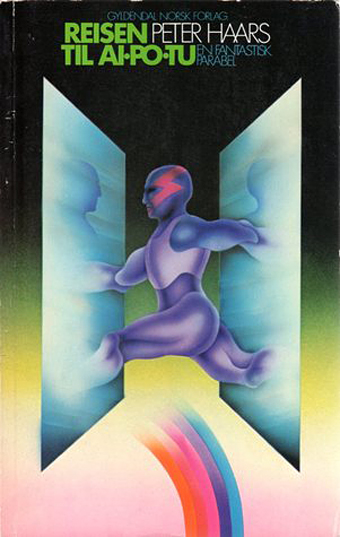
Peter Haars (1940–2005) was born in Germany but moved to Norway in the 1960s where he worked as a graphic designer, art director and illustrator. He also wrote fiction and created Prokon (1971), a one-off publication that looks like a designer’s take on underground comics. Most of the covers that turn up when you search for his work are science fiction, and all painted in that bold airbrush style that was common in the 1970s. Documentation is scarce, unfortunately, ISFDB only lists two titles, so I’ve no idea about the dates, but the Lanterne SF imprint was active throughout the decade.

haars01.jpg

haars21.jpg

haars15.jpg

haars08.jpg

Continue reading “Peter Haars book covers”

Paul Delvaux ou les Femmes Défendues

delvaux1.jpg

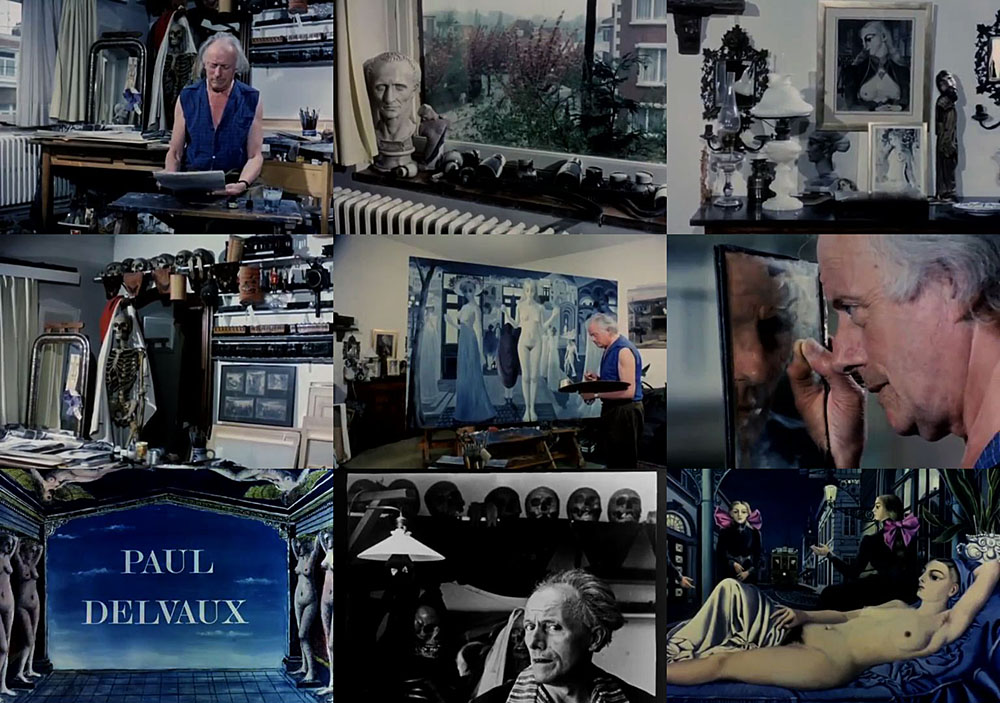
Henri Storck’s short film from 1971 is mostly an overview of Paul Delvaux’s irreducibly mysterious paintings but the first 7 minutes are invaluable for the views they give of the artist at work. I’m always interested in the technical details of painting but these are seldom mentioned in art books which tend to be more concerned with discussions of meaning and artistic intent. So here we see Delvaux sketching, then leafing through a collection of preliminary studies before finally dabbing at a figure on a large canvas in his skull-filled studio.

delvaux2.jpg

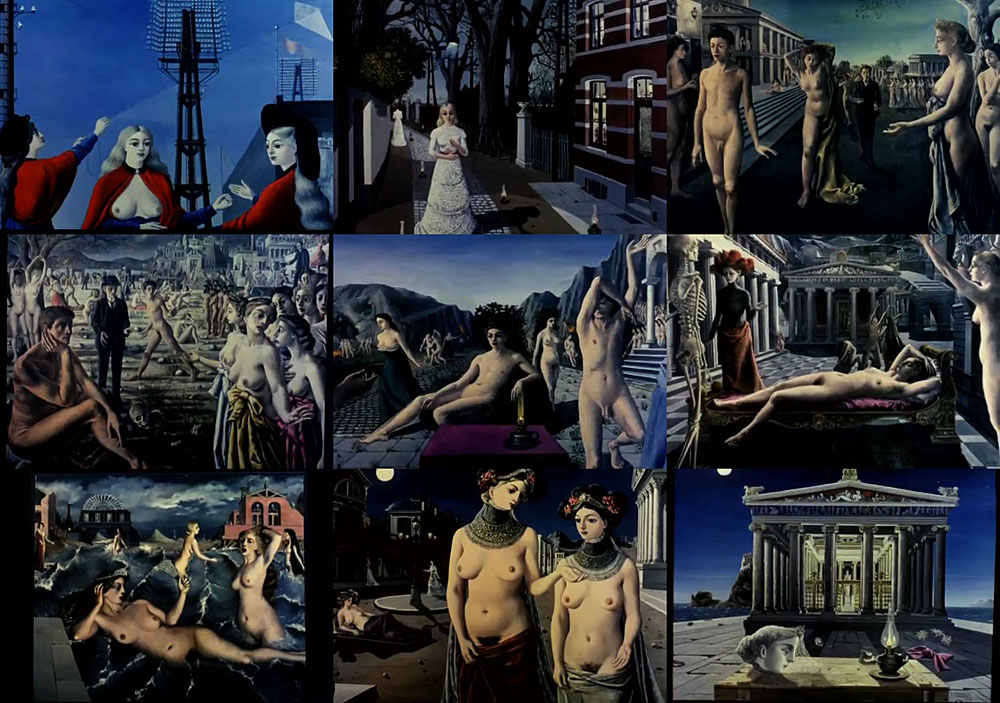
The rest of the film is taken up with shots that roam over many of the artist’s earlier paintings. I don’t have any books about Delvaux so there are more of his pictures here than I’ve seen in one place, all of them displaying the familiar nocturnal enigmas: somnambulist nudes, trains, moonlight, Classical architecture and so on. The voiceovers, including that of the artist, are in unsubtitled French but the film is available with subtitles as part of a DVD collection of films about Belgian artists and cultural figures directed by Storck and others. One for the shopping list.

Previously on { feuilleton }
Raoul Servais: Courts-Métrages
The mystery of trams
Temptations
Papillons de Nuit, a film by Raoul Servais
Paul Delvaux: The Sleepwalker of Saint-Idesbald
Ballard and the painters
Taxandria, or Raoul Servais meets Paul Delvaux