Louis Rhead’s peacocks

rhead1.jpg

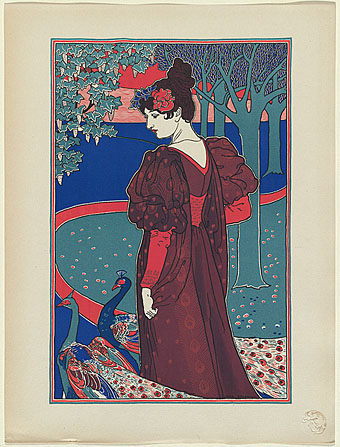
La femme au paon (Woman with peacocks): from L’Estampe Moderne (1897).

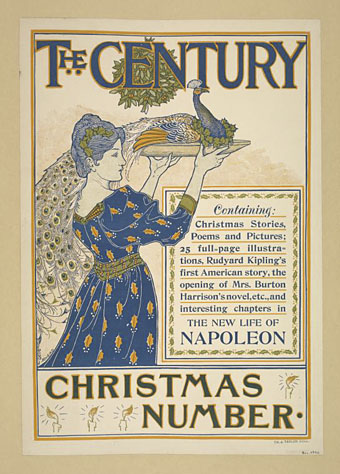
Two works by British Art Nouveau poster artist and illustrator, Louis Rhead (1858–1926). The first of these is very typical and resembles many of his magazine covers of the period. The cover illustration for The Century, meanwhile, must count as the only time I’ve seen a peacock presented as a possible Christmas dish.

rhead2.jpg

The Century Christmas Number (December 1894).

Previously on { feuilleton }
Peacocks
Rene Beauclair
Whistler’s Peacock Room
Beardsley’s Salomé

Samuel Beckett and Russell Mills

beckett1.jpg

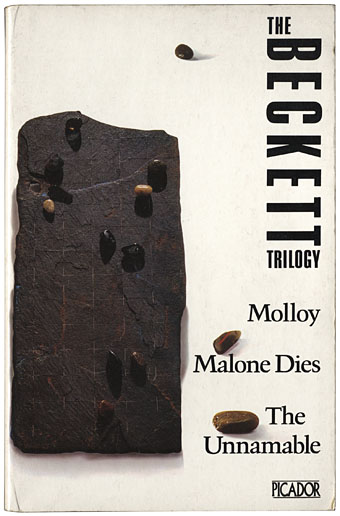
This 1979 Picador edition of The Beckett Trilogy is one of my favourite paperback cover designs. The “illustration” (as it’s described on the back) is a photograph of an artwork by artist/designer Russell Mills and the minimal credit gives no indication as to whether it was Mills who was responsible for the striking type layout. I’ve noted previously the equally striking Picador designs by the Quay Brothers who were responsible for both art and layout on their covers. Mills extended his work into graphic design later with album cover designs (and some book design) for Brian Eno, David Sylvian, David Toop and others so I’ll give him the benefit of the doubt in this case.

beckett2.jpg

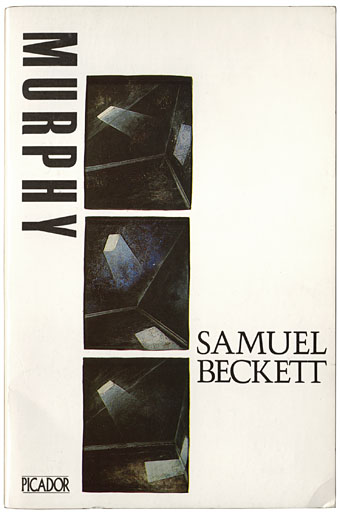
The Picador edition of Murphy was published in 1983 and comprises part of this week’s book haul. The three small Mills paintings suit the novel but I prefer his sculptural and collage works. I’ve taken to collecting more of these older Picador editions in recent years since they don’t turn up secondhand as often as they used to. As with the Quay Brothers and Italo Calvino, I wonder now how many Beckett covers Mills produced for Picador. The books list More Pricks than Kicks and Company in addition to these titles. He was still working for them up to 1986 when he and Brian Eno collaborated on the graphics for Don DeLillo’s White Noise. Unlike the world of Penguin collecting, this area lacks adequate documentation; further investigation is required.

Elsewhere on { feuilleton }
The book covers archive

Previously on { feuilleton }
Thursday Afternoon by Brian Eno
Crossed destinies revisted
Beckett directs Beckett
Crossed destinies: when the Quays met Calvino
The art of Shinro Ohtake
Not I by Samuel Beckett
Film by Samuel Beckett

Demon rum leads to heroin

demon_rum.jpg

Or the temptations of Uncle Sam… An editorial cartoon from 1919 by Oliver Herford (1863–1935) showing how the nonsense argument of “X leads to Y” goes back a long way. These imps are more silly than frightening, Herford should have used this as the starting point for a comic strip: Rum Demon and the Narcotics.

Previously on { feuilleton }
Smoke
Seamen in great distress eat one another
Hep cats
German opium smokers, 1900

Pite’s West End folly

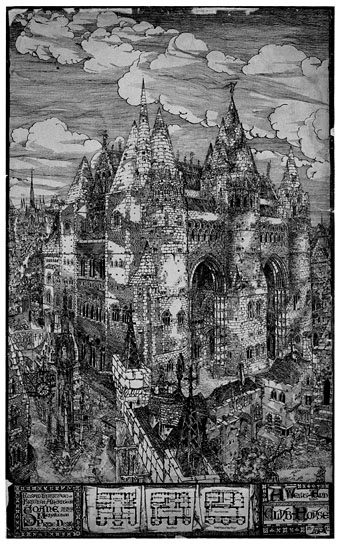
pite.jpg

An architectural rendering by Arthur Beresford Pite (1861–1934) whose proposal for a West End club house after the style of Viollet-le-Duc’s Gothic revivalism induced howls of outrage from the architectural establishment when it won the RIBA’s Soane Medallion in March, 1882. I know this drawing solely from an appearance in Felix Barker & Ralph Hyde’s London as it might have been (1982) where it fascinates not only for being one of the least likely proposals in the entire book but also for its vision of Georgian London as some kind of medieval throwback closer to Carcassonne than Cavendish Square. This copy is from a splendid Flickr set which features a wealth of fanciful architecture, real and imagined. Lots of favourites there, including the great Hugh Ferriss.

Elsewhere on { feuilleton }
The illustrators archive

Previously on { feuilleton }
Viollet-le-Duc
Hugh Ferriss and The Metropolis of Tomorrow
Architectural renderings by HW Brewer

Gandharva by Beaver & Krause

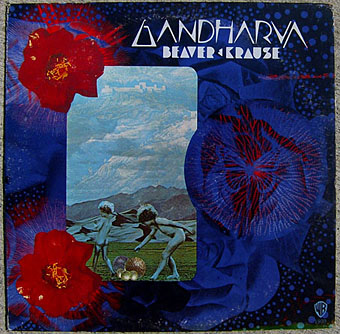
gandharva.jpg

I mentioned Wilfried Sätty’s collage work last week and this album sports one of his few cover designs. A cult object for several reasons, not least Sätty’s involvement. The title lettering was by fellow psychedelic artist David Singer who I had the good fortune to meet in California in 2005 whilst researching Sätty’s career. That chunky Seventies lettering style now looks distinctly contemporary having come back into fashion over the past couple of years.

Beaver & Krause were among the pioneers of Moog-based electronic music in the 1960s and notably provided the throbs and drones which Jack Nitzsche mixed into the soundtrack for Donald Cammell & Nicolas Roeg’s Performance. Gandharva was released in 1971 and one of the few all-electronic pieces on the album, Nine Moons in Alaska, is an outtake from those sessions. The first side is very uneven, with a blues jam and a gospel piece that don’t sit well with each other, never mind with the Moog tracks. Side two, however, is a far more successful suite of improvisations with organ, electronics, guitar, harp and saxophone (played by Gerry Mulligan) recorded live in Grace Cathedral, San Francisco.

Cover photo from the Psychedelic Music Flickr pool which features many fine examples of cover design from the late Sixties on.

Elsewhere on { feuilleton }
The illustrators archive

Elsewhere on { feuilleton }
The album covers archive

Previously on { feuilleton }
Ginsberg’s Howl and the view from the street
Further back and faster
Quite a performance
Borges in Performance