Weekend links 8

adur.jpg

Another label design of mine for the Adur Brewery. Much as I like Otto Weisert’s Arnold Böcklin typeface it’s something I’ve been reluctant to use in the past due to its lazy deployment by UK shop sign makers. The ribbon motifs and the hops are adapted from one of my Art Nouveau reference books, however, so it seemed appropriate in this case.

Dead Fingers Talk: The Tape Experiments of William S. Burroughs, a forthcoming exhibition at IMT, London, “presenting two unreleased tape experiments by William Burroughs from the mid 1960s alongside responses by 23 artists, musicians, writers, composers and curators.” Related: get a Naked Lunch t-shirt (or another cover design) at Out of Print clothing.

Ronald Clyne: American folk modernist. Rediscovering the album and book cover designer.

Better Things: The Life and Choices of Jeffrey Jones. A documentary about the work of artist Jeffrey Jones. Related: Mike Kaluta appears in the trailer and Golden Age Comic Book Stories has pages from Kaluta’s illustrated Metropolis (1988), a novel by Thea von Harbou.

• “I imagined myself as a giant penis launching off from earth like a spaceship.” WFMU’s Beware of the Blog explores Cary Grant’s use of LSD. Related: Orange Sunshine – The Brotherhood of Eternal Love and Its Quest to Spread Peace, Love, and Acid to the World, a book by Nicholas Schou.

• Britain’s armed forces have a lesson for the US: “Only 10 years ago, the Army was expelling soldiers for homosexuality. Now gay weddings get the regimental blessing.” A very modern military partnership.

Cassette tapes and their growing curiosity/fetish value. Related: Michael Stipe and Maison Martin Margiela’s sterling silver microcassette charm.

• Another week, another theremin link: Detergent bottles become theremins.

• “Edinburgh is a city built on the production of books”.

The National Archives UK’s photostream at Flickr.

Typographic playing cards.

• A song for Cary Grant: The Trip by Park Avenue Playground, an obscurity from 1967. And These New Puritans have a new video for Attack Music.
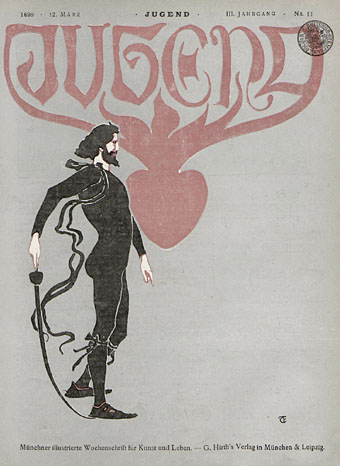
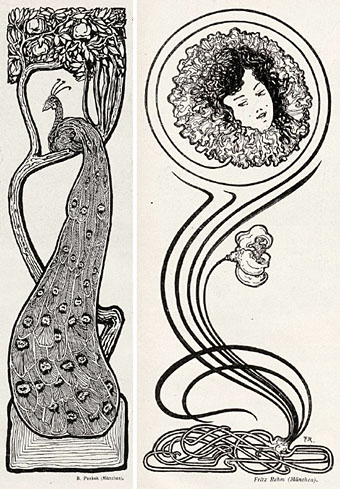
Jugend, 1898

jugend-98-01.jpg

Continuing the delve into back issues of Jugend magazine, the German fin de siècle periodical of “art and life”, this post covers the year 1898. As before, Jugend was so copiously illustrated that the selection here can only scratch the surface. Anyone wanting to see more of these graphics is advised to explore the bound volumes at the Heidelberg University archive. The two books for 1898 can be found here and here.

jugend-98-02.jpg

Continue reading “Jugend, 1898”

Weekend links #7

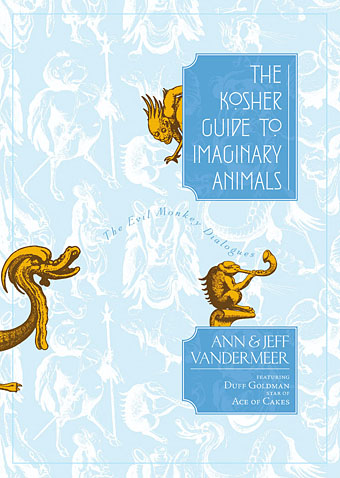
The Kosher Guide to Imaginary Animals by Ann and Jeff VanderMeer (and sporting my design inside and out) is now in print. The grotesque creatures on the jacket and inside are from a celebrated set of prints by Arent van Bolten.

• More VanderMeeria: my cover for Jeff’s novel Finch continues to garner attention. Artist John Picacio selected it as part of his contribution to this discussion of genre cover designs (thanks John) and io9 followed up by choosing it from SF Signal’s selection.

• Graphic design: the Ballets Russes at BibliOdyssey; Julian Montague’s “books from an invented intellectual history” at A Journey Round My Skull; Women, Snakes and Stalkers, book covers from the PK (Indo-Iranian languages and literatures) section of the University of Chicago’s Regenstein library (also here); I want this book: Arabesque – Graphic Design from the Arab World and Persia.

• Photography: Richard Davies’ documenting of Russia’s wooden churches; Dave Walsh’s fata morgana mirages in the Arctic.

• Illustration: Jacob Escobedo at Sci-Fi-O-Rama; Mahlon Blaine reprinted.

• The gays: Oliver Frey (aka Zack) has originals of his erotic art for sale; 100 is the third book of erotic portraits from photographer Dylan Rosser.

Silent Porn Star is back. Related: Susie Bright praises sexual expression.

• The Libel Reform Campaign is trying to reform England’s egregious libel laws. Sign their petition here.

• RIP: Victor Arwas, art collector, writer and scholar; Alex Chilton, musician and record producer.

• The record sleeve that’s also the record player.

• Song of the week: Guess I Was Dreaming by The Fairytale (1967).

Dugald Stewart Walker revisited

dsw5.jpg

The Golden Porch (1925).

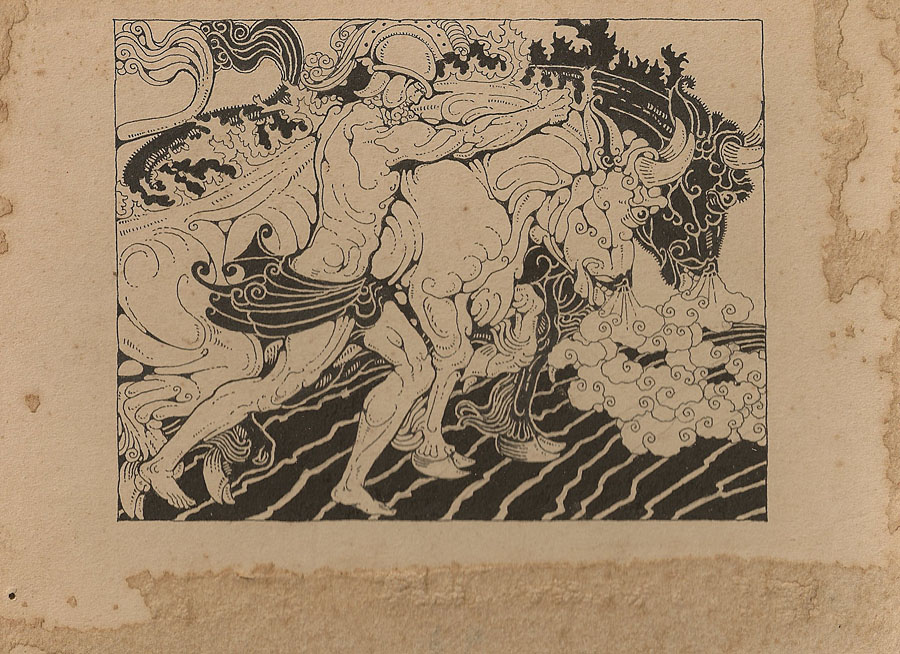
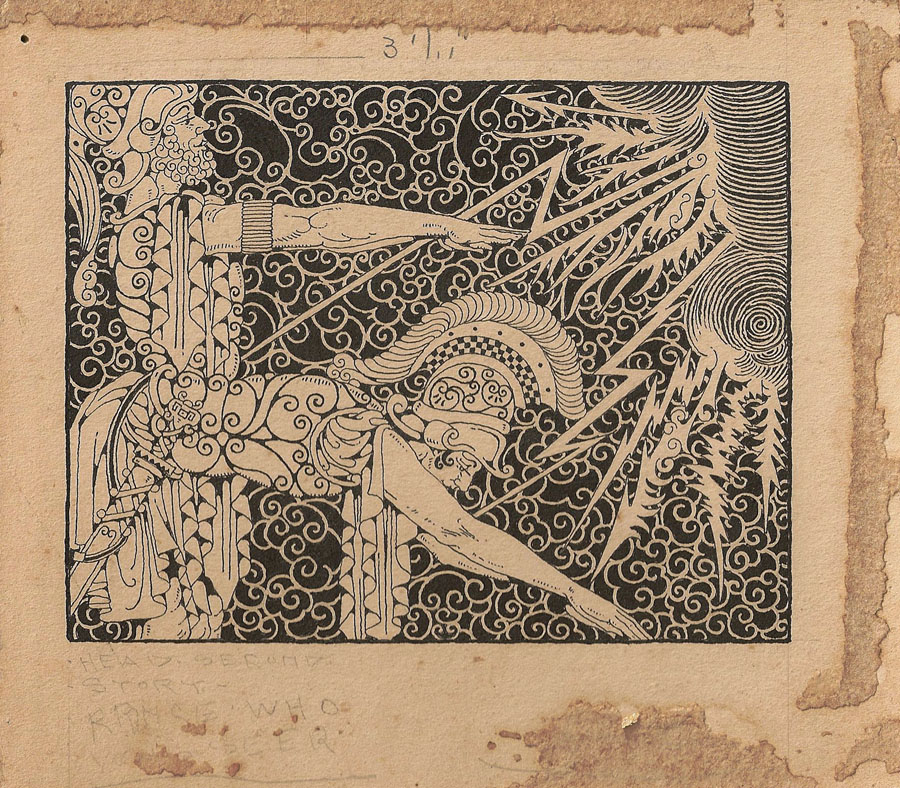
A post prompted by an email from Deborah Hirsch who wrote to tell me about some original works she’d found by American illustrator Dugald Stewart Walker (1883–1937), scans of which are shown here with her permission. This has made me take another look at Walker’s drawings, many of which I’d overlooked during earlier searches. His body of work runs from the usual fairy-tale illustration to some very fine renderings of tales from Ancient Greece. He was also an excellent peacock illustrator although you’ll have to look elsewhere for those; Golden Age Comic Book Stories has made several postings of his book plates. The drawings shown here are from Snythergen (1923) by Hal Garrott, The Golden Porch (1925) and Orpheus with His Lute (1926), both by WML Hutchinson.

dsw6.jpg

The Golden Porch (1925).

Every so often an artist’s work sets me wondering about their sexuality, a consideration which agitates some, especially surviving relatives, who find such speculation to be unwarranted or vulgar. The matter is relevant for two reasons: firstly, if an artist turns out to be gay or bisexual (as was the case with Hannes Bok) then certain details in their work become informed by that knowledge. Secondly, there’s still a lot more work to be done in retrieving from history the lives of gay people who have added to our culture in some way. Illustrators receive little attention in this area since illustration has always been the poor cousin to gallery art. I try to be wary of projecting my own concerns onto an artist for whom such attention may be unwarranted, and I’m not saying one can read anything substantial into Walker’s life simply by looking at his pictures. I do, however, have a mental checklist for any gay vs. straight appraisal which includes among its subjects common themes such as Greek myths (especially those concerning Orpheus and Narcissus), a recurrence of nude males, excessively florid décor, etc. Let’s just say that certain aspects of Walker’s work are (as Sherlock Holmes would say) “suggestive”, and the ex libris plate at the end of this post is notable for illustrating Keats’ famous quote about truth and beauty with a peacock and a (nude?) boy. If anyone has any relevant details about Dugald Stewart Walker’s life, as always they’re encouraged to leave a comment.

A Dugald Stewart Walker set at Flickr
Dream Boats and Other Stories (1920) at the Internet Archive

Continue reading “Dugald Stewart Walker revisited”

The Savoy magazine

savoy.jpg

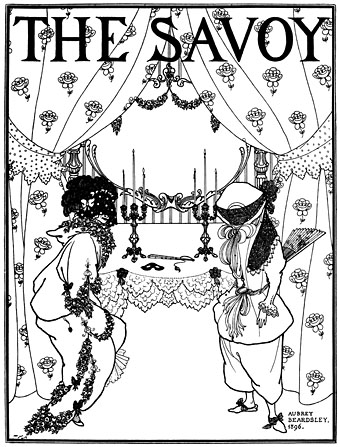
Further retrievals from the depths of the Internet Archive (and thanks to Lord Cornelius Plum for the tip) come in the form of three bound editions of The Savoy magazine, a British art and literary periodical which ran for eight issues from January to December 1896. Aubrey Beardsley was art editor and chief illustrator, Arthur Symons the literary editor and the publisher was the heroic and duplicitous London pornographer Leonard Smithers whose patronage and, it should be noted, exploitation of Beardsley’s work kept the artist solvent during his last two years.

A thesis could be written (and no doubt has been) exploring the curious symbiosis between pornography publishers and the artistic avant garde. Smithers was a proud purveyor of what he called “smut” but he also complained about all the money he lost supporting poets and down-at-heel writers. Posterity can thank him for publishing Teleny, the classic early work of gay fiction attributed to Oscar Wilde, as well as Beardsley’s Lysistrata illustrations and The Savoy, a magazine founded in the fallout of the Wilde scandal when The Yellow Book dropped Beardsley from its staff in order to appease its more conservative contributors. The magazine’s run was short due to poor sales after WH Smith’s refused to stock it, worried again about the controversial nature of Beardsley’s art. (Speculative fiction magazine New Worlds faced similar problems with Smith’s in the late Sixties.) This seems astonishing to us now when looking at the world-class roster of contributors to the first issue, a list which included two future Nobel winners—George Bernard Shaw and WB Yeats—as well as Max Beerbohm, Ernest Dowson, Havelock Ellis, JM Whistler, Charles Shannon, William Rothenstein, and Beardsley writing and illustrating the first part of his erotic caprice, Under the Hill.

Beardsley’s illustrations are very familiar from book reproduction but it’s good to see them in the context in which they first appeared, and to be able to read some of the features. The later issues include pages of adverts which always fascinate for their contemporary detail.

The Savoy: Volume 1 | Volume 2 | Volume 3

Elsewhere on { feuilleton }
The Aubrey Beardsley archive
The illustrators archive