Chemiserie Niguet

hankar1.jpg

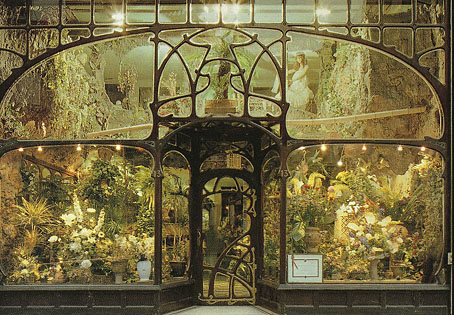
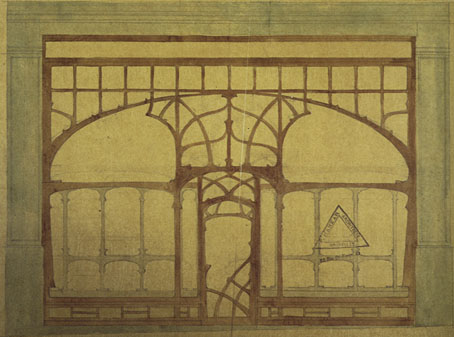
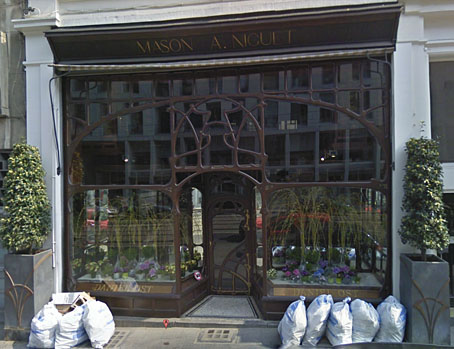
Spotted at Beautiful Century, this scan of a postcard showing the flower shop which now occupies what was originally the Chemiserie Niguet in Brussels. The shop is in the Rue Royale, and the Art Nouveau storefront was installed in 1896 from a design by Belgian architect Paul Hankar (1859–1901). Considering this is one of Hankar’s few Art Nouveau designs to have survived the depredations of “Brusselization” I was surprised that the only illustration in any of my books was the early plan below. (In fairness, Victor Horta tends to dominate any general discussion of Belgian Art Nouveau architecture.)
hankar2.jpg

Magasin Niguet (1896).

Searching for the shop as it is today on Google Maps reveals the view below. Shame about the camera catching the rubbish awaiting collection. The bland 20th-century facades surrounding the storefront make its presence an incongruous one but at least it’s survived, unlike this Parisian establishment.
hankar3.jpg

Previously on { feuilleton }
Rue St. Augustin, then and now
Hector Guimard elevations
Infernal entrances
Hector Guimard sketches
Temples for Future Religions by François Garas
Elizabetes Iela 10b, Riga
Atelier Elvira
Louis Bonnier’s exposition dreams
The Maison Lavirotte
The House with Chimaeras

Doorways

doorway1.jpg

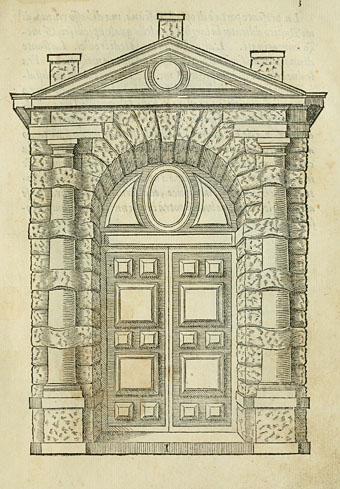
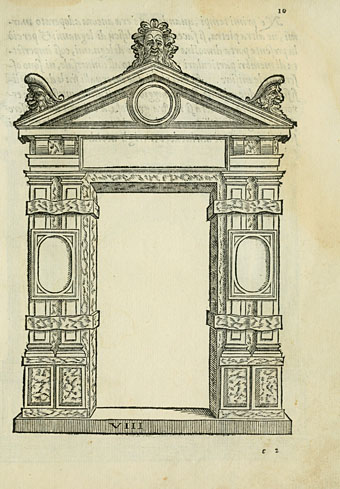
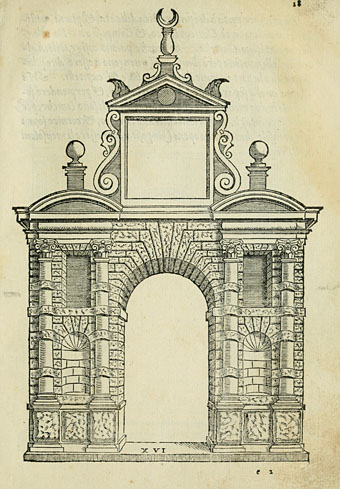
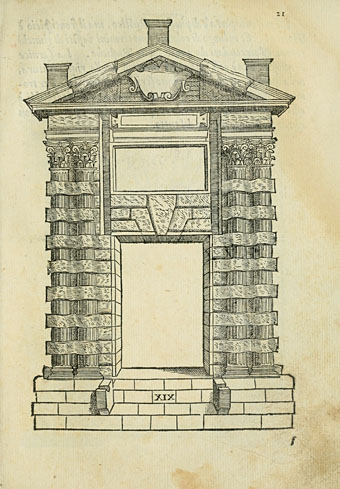
Another fine book for us collagists, Libro estraordinario di Sebastiano Serlio bolognese : nel quale si dimostrano trenta porte di opera rustica, mista con diuersi ordini, & uenti di opera dilicata di diuerse specie : con la scrittura dauanti, che narra il tutto (1566) is a guide to “porte rustiche”, or old doorways. There are fifty in all, of which I’ve chosen seven random examples. Browse the rest here or download the book here.

doorway2.jpg

doorway3.jpg

doorway4.jpg

Continue reading “Doorways”

Paolo Soleri, 1919–2013

soleri1.jpg

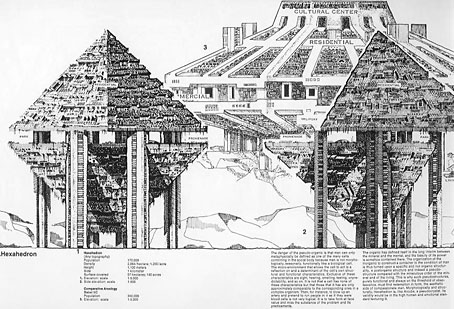
Hexahedron, The City in the Image of Man (1969).

“We must build up, not out,” said Soleri. “The problem is the present design of cities are only a few storeys high, stretching outward in unwieldy sprawl for miles…turning farms into parking lots, and waste enormous amounts of time and energy transporting people, goods and services over their expanses.”

Paolo Soleri, visionary architect, dies aged 93

For obvious reasons, Paolo Soleri’s plans for kilometre-high megastructure cities towering over green landscapes were popular in science fiction books and magazines in the 1970s. Soleri’s solution to unstoppable urban sprawl seems eminently sensible despite the difficulties of building anything on this scale; complaints about undesirability can be countered (in Britain at least) with dismal stories such as this recent report. Or maybe it’s better to live in a Hong Kong shoebox? Soleri devoted most of his life to thinking about how architecture could better serve our limited planetary resources; with Arcosanti he was leading by example.

• LA Times: Paolo Soleri, architect of innovative city Arcosanti, dies at 93
• Arch Daily: Paolo Soleri’s Arcosanti : The City in the Image of Man
Architect Paolo Soleri – a life in pictures
• Flickr: Arcosanti, An Urban Laboratory

soleri2.jpg

Babel IIB, The City in the Image of Man (1969).

Previously on { feuilleton }
The paper architecture of Brodsky and Utkin
Hugh Ferriss and The Metropolis of Tomorrow

Weekend links 153

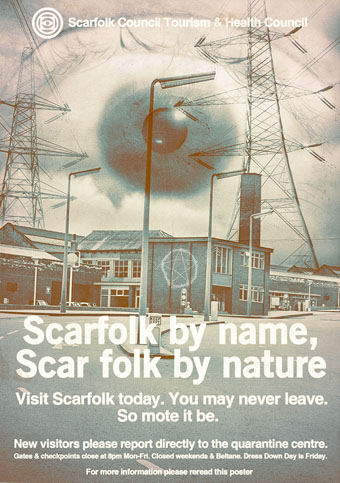
scarfolk.jpg

Scarfolk, as was noted here last month, is a home from home, especially if you grew up in the 1970s. The mayor of the rabies-afflicted town, Richard Littler, talked to Creative Review about his unheimlich design project.

Ensemble Pearl, an album stream of “cosmic psychedelic space-doom minimal drone soundscapes” by Atsuo, William Herzog, Eyvind Kang, Michio Kurihara, Stephen O’Malley and Timba Harris.

• At Dangerous Minds: Louise Huebner’s Seduction Through Witchcraft (1969), an album of occult instruction with an electronic soundtrack by Louis & Bebe Barron.

My apartment is teeming with unfinished books. They cover my desk, coffee table, and nightstand. They sit two rows deep on my bookshelves. There they remain, neglected, misunderstood, unappreciated, still with the last read page firmly marked with a piece of paper, a subscription card, or a proper bookmark: a reminder of my stagnation, my failure to engage.

Gabrielle at The Contextual Life on The Secret Lives of Unfinished Books.

• Hauntological mix of the week: Electronic Music For Schools by Pattern & Shape. Related: Pye Corner Audio live at Cafe OTO, March 2013.

• Tumblrs of the week: Des Hommes et des Chatons, Remarkably Retro, The Pop-Up Museum of Queer History, and Shit My Cats Read.

Icons: An exhibition of Kenneth Anger’s Hollywood memorabilia, and other material from his home, at Sprüth Magers, London.

hooray.jpg

Hooray for Gay, an exhibition of pre-Stonewall images at Boo-Hooray, NYC.

The Servant, “a 60s masterwork that hides its homosexuality in the shadows”.

The Cosmic Bicycle, collages by Wilfried Sätty made into a short film.

• Photos of the derelict R Power Plant in Pennsylvania.

1913: The Year of Modernism

• RIP Richard Griffiths

Wildspot (2005) by Belbury Poly | Now Ends The Beginning (2011) by The Advisory Circle | Wildspot (2012) by The Advisory Circle | Now Ends The Beginning (2012) by Belbury Poly

On the pyramid

pyramid01.jpg

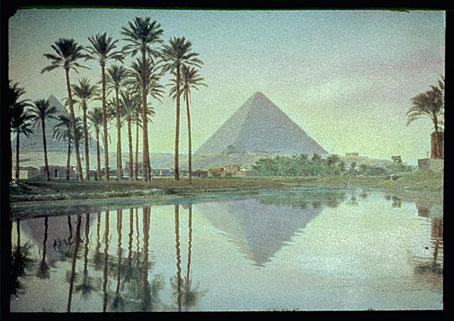
Lots of attention given this week to a series of photos taken from the summit of the Great Pyramid of Cheops by a Russian group of urban explorers. The Egyptian authorities who maintain the World Heritage site bar visitors from the place at night so the photographers hid in a tomb for a few hours before beginning their ascent. The original LiveJournal post with the full complement of photos is here, and is worth running through Google Translate if you’re interested in the details. One of the other photographers has a page devoted to his spectacular views here.

pyramid02.jpg

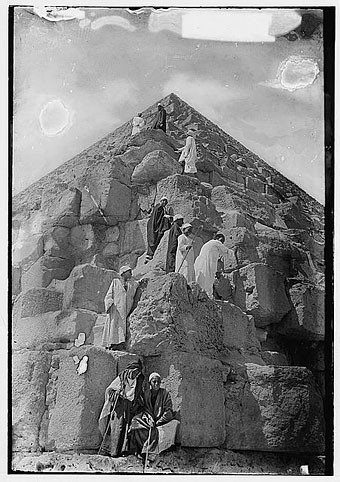
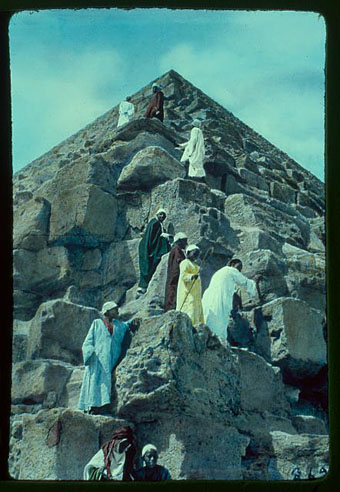
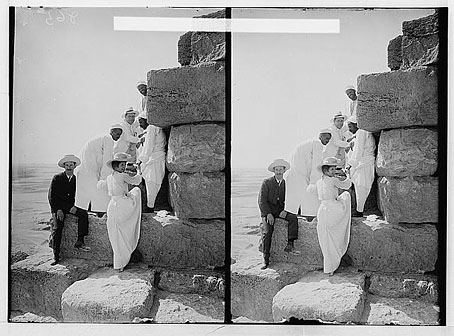
Ascent of the Cheops pyramid may be discouraged now but used to be a common pursuit for those visitors capable of making the climb. The Russian post mentions that among the graffiti carved into the stones on the summit they found the name of Tsar Nicholas II. The Library of Congress has many photos of Egyptian monuments in its archives, including a number showing pyramid ascents. Ex-Hawkwind man Nik Turner made the ascent himself after leaving the band in 1976. Whilst there he recorded three hours of solo flute in the sarcophagus of the King’s Chamber which later formed the basis for his Xitintoday album.

pyramid03.jpg

pyramid04.jpg

Continue reading “On the pyramid”