Dugald Stewart Walker revisited

dsw5.jpg

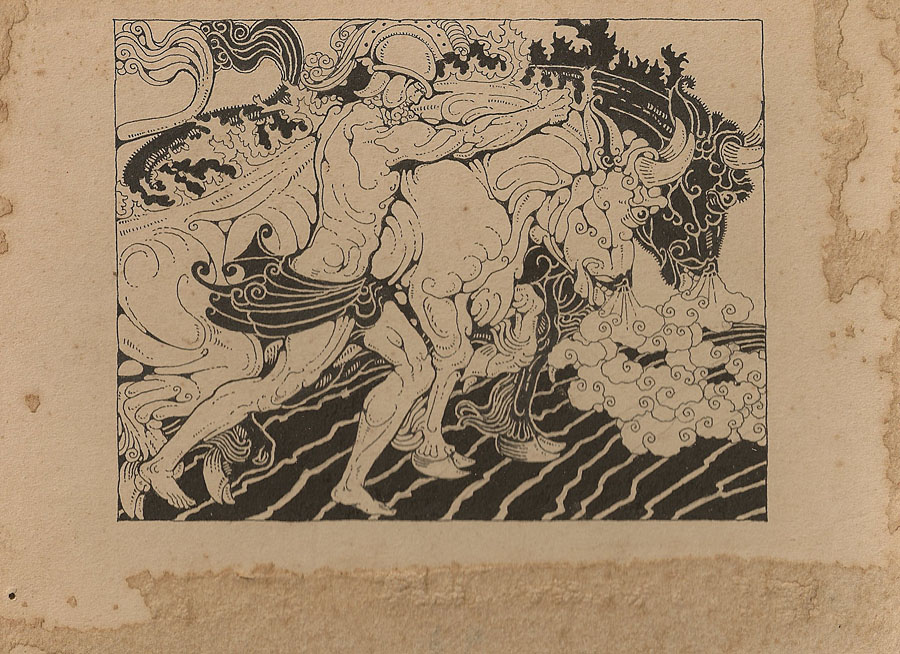
The Golden Porch (1925).

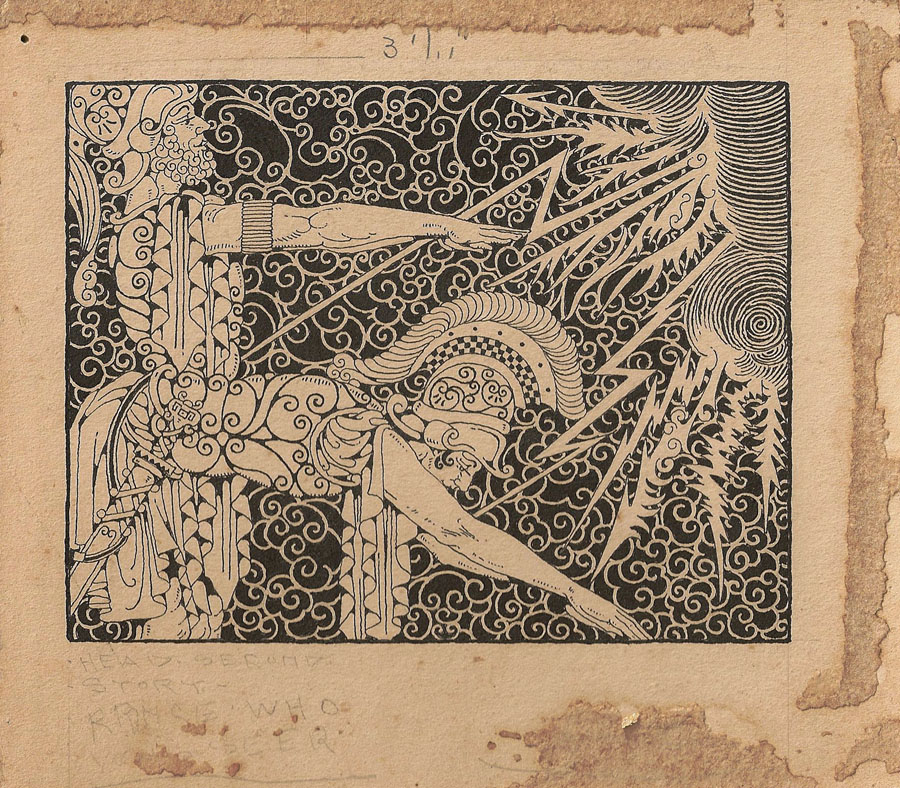
A post prompted by an email from Deborah Hirsch who wrote to tell me about some original works she’d found by American illustrator Dugald Stewart Walker (1883–1937), scans of which are shown here with her permission. This has made me take another look at Walker’s drawings, many of which I’d overlooked during earlier searches. His body of work runs from the usual fairy-tale illustration to some very fine renderings of tales from Ancient Greece. He was also an excellent peacock illustrator although you’ll have to look elsewhere for those; Golden Age Comic Book Stories has made several postings of his book plates. The drawings shown here are from Snythergen (1923) by Hal Garrott, The Golden Porch (1925) and Orpheus with His Lute (1926), both by WML Hutchinson.
dsw6.jpg

The Golden Porch (1925).

Every so often an artist’s work sets me wondering about their sexuality, a consideration which agitates some, especially surviving relatives, who find such speculation to be unwarranted or vulgar. The matter is relevant for two reasons: firstly, if an artist turns out to be gay or bisexual (as was the case with Hannes Bok) then certain details in their work become informed by that knowledge. Secondly, there’s still a lot more work to be done in retrieving from history the lives of gay people who have added to our culture in some way. Illustrators receive little attention in this area since illustration has always been the poor cousin to gallery art. I try to be wary of projecting my own concerns onto an artist for whom such attention may be unwarranted, and I’m not saying one can read anything substantial into Walker’s life simply by looking at his pictures. I do, however, have a mental checklist for any gay vs. straight appraisal which includes among its subjects common themes such as Greek myths (especially those concerning Orpheus and Narcissus), a recurrence of nude males, excessively florid décor, etc. Let’s just say that certain aspects of Walker’s work are (as Sherlock Holmes would say) “suggestive”, and the ex libris plate at the end of this post is notable for illustrating Keats’ famous quote about truth and beauty with a peacock and a (nude?) boy. If anyone has any relevant details about Dugald Stewart Walker’s life, as always they’re encouraged to leave a comment.

A Dugald Stewart Walker set at Flickr
Dream Boats and Other Stories (1920) at the Internet Archive
Continue reading “Dugald Stewart Walker revisited”

Cabala, Speculum Artis Et Naturae In Alchymia

speculum.jpg

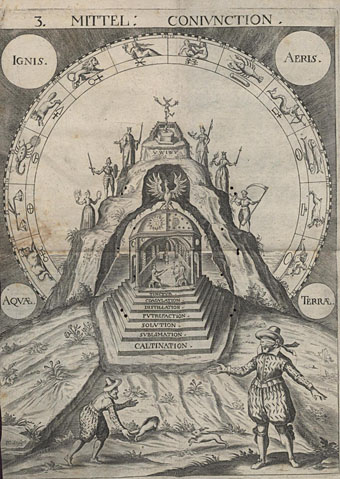
The plates from Stephan Michelspacher’s Cabala, Speculum Artis Et Naturae In Alchymia (1654) are familiar from histories of alchemy but SLUB Dresden has high-resolution scans of the entire book. Also there is Wenzel Jamnitzer’s astonishing Perspectiva Corporum Regularium (1568), a volume covered in detail at BibliOdyssey last year.

Elsewhere on { feuilleton }
The etching and engraving archive

Previously on { feuilleton }
Digital alchemy

The Savoy magazine

savoy.jpg

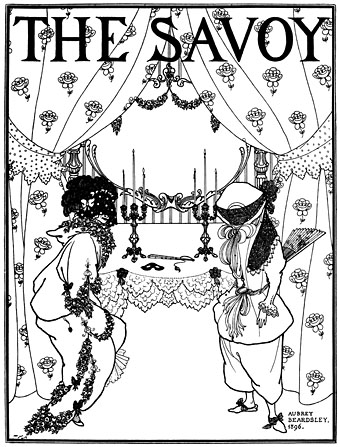
Further retrievals from the depths of the Internet Archive (and thanks to Lord Cornelius Plum for the tip) come in the form of three bound editions of The Savoy magazine, a British art and literary periodical which ran for eight issues from January to December 1896. Aubrey Beardsley was art editor and chief illustrator, Arthur Symons the literary editor and the publisher was the heroic and duplicitous London pornographer Leonard Smithers whose patronage and, it should be noted, exploitation of Beardsley’s work kept the artist solvent during his last two years.

A thesis could be written (and no doubt has been) exploring the curious symbiosis between pornography publishers and the artistic avant garde. Smithers was a proud purveyor of what he called “smut” but he also complained about all the money he lost supporting poets and down-at-heel writers. Posterity can thank him for publishing Teleny, the classic early work of gay fiction attributed to Oscar Wilde, as well as Beardsley’s Lysistrata illustrations and The Savoy, a magazine founded in the fallout of the Wilde scandal when The Yellow Book dropped Beardsley from its staff in order to appease its more conservative contributors. The magazine’s run was short due to poor sales after WH Smith’s refused to stock it, worried again about the controversial nature of Beardsley’s art. (Speculative fiction magazine New Worlds faced similar problems with Smith’s in the late Sixties.) This seems astonishing to us now when looking at the world-class roster of contributors to the first issue, a list which included two future Nobel winners—George Bernard Shaw and WB Yeats—as well as Max Beerbohm, Ernest Dowson, Havelock Ellis, JM Whistler, Charles Shannon, William Rothenstein, and Beardsley writing and illustrating the first part of his erotic caprice, Under the Hill.

Beardsley’s illustrations are very familiar from book reproduction but it’s good to see them in the context in which they first appeared, and to be able to read some of the features. The later issues include pages of adverts which always fascinate for their contemporary detail.

The Savoy: Volume 1 | Volume 2 | Volume 3

Elsewhere on { feuilleton }
The Aubrey Beardsley archive
The illustrators archive

Boy clones

lamberty.jpg

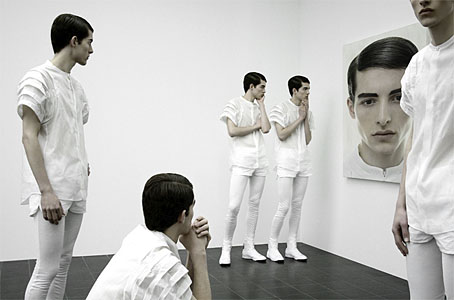
Yes, there’s something attractive about the proposition if the clones in question look like Ben Lamberty’s duplicated models from this fashion shoot. For earlier variations on the theme there’s a series by Toxicboy (although his site now seems to be defunct), and Anthony Goicolea, of course. Via Homotography, as usual.

Previously on { feuilleton }
The art of Anthony Goicolea
Toxicboy

The art of Jim Leon, 1938–2002

leon1.jpg

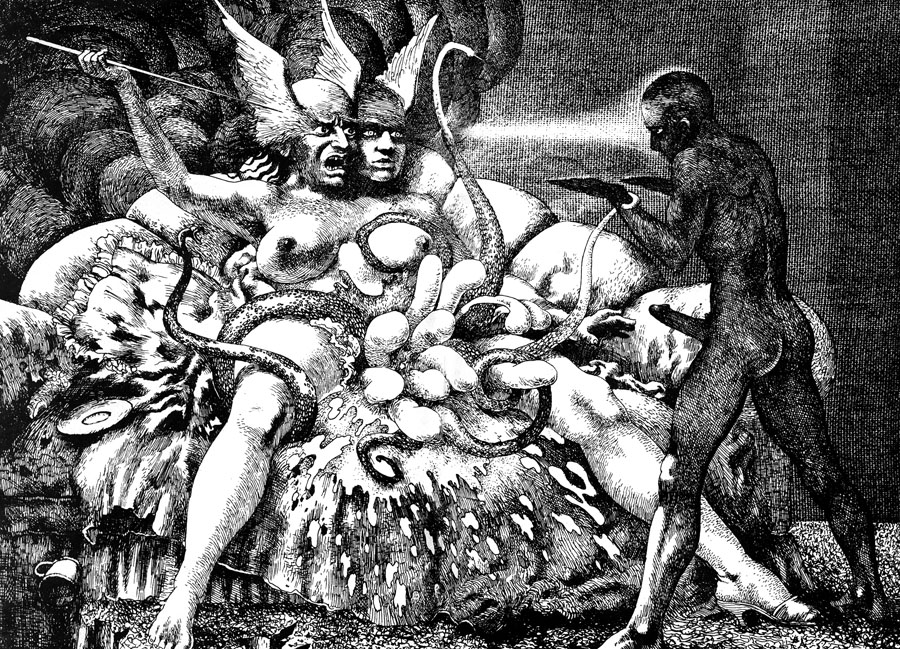
Psychopathia Sexualis (1967).

This, dear friends, is what the art of the fantastic could give us but rarely does, something which combines the metaphysical intensity of the Symbolists with a post-Freudian sensibility to create what Philip José Farmer once called “the pornography of the weird”. Jim Leon was a British artist whose work gained prominence via the underground magazines of the 1960s, especially Oz, although he was never really a psychedelic artist as such. Many of his earliest paintings show the influence of the Pop artists, it was only later in the decade that a distinctly original and surreal imagination came to the fore. Oz was always pretty scurrilous and had no qualms about challenging the authorities with bizarre sexual imagery which other magazines would never dare to print. Leon and other artists were fortunate to have such a public forum for outré work, a few years earlier or later and they might not have found an outlet at all.

leon2.jpg

Untitled (1979).

His early work blended influences from Francis Bacon, surrealism and the baroque. Lurking there is also the English visionary William Blake, together with the obsessive Romanticism of the pre-Raphaelites. A number of his early paintings and drawings refer to William Burroughs’s Naked Lunch (first published in Paris in 1959). These were just some of the ingredients of an amazing, semi-abstract, spatially complex, ritualistic, orgiastic flesh-painting, expressing highly wrought morbidity, eroticism, transcendence and ecstasy; astonishing explorations of the murkier depths of the human mind. (More.)

A Very English Visionary by Simon Wilson.

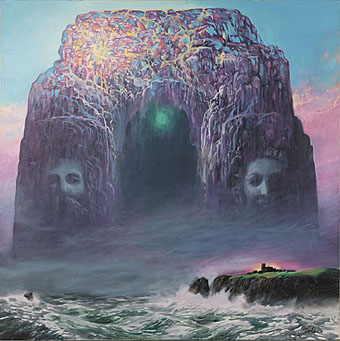
I first encountered Leon’s work thanks to David Britton’s curating of a portfolio feature in Wordworks magazine which was republished in the Savoy Books anthology, The Savoy Book in 1980. Having seen a Leon painting in a back issue of Oz I was surprised that an artist with such a powerful imagination was so little-known. It turns out that he’d been working all along, albeit far from the public gaze, having moved to Lyons in France where he spent the 1970s and 80s painting many canvases of mystical scenes similar to those produced by the California artists featured in the Visions book. None of his later work explores the darker realms of his earlier Psychopathia Sexualis drawings, and since it’s the early work that I prefer, that’s what’s featured here. These drawings and paintings bear comparison with the art of Raymond Bertrand but where Bertrand has had his work published in lavish book collections, we have to rake through back issues of magazines for Leon’s endeavours. Leon’s later paintings at least have a website which is maintained by his family.

Continue reading “The art of Jim Leon, 1938–2002”