Weekend links 642

wheel.jpg

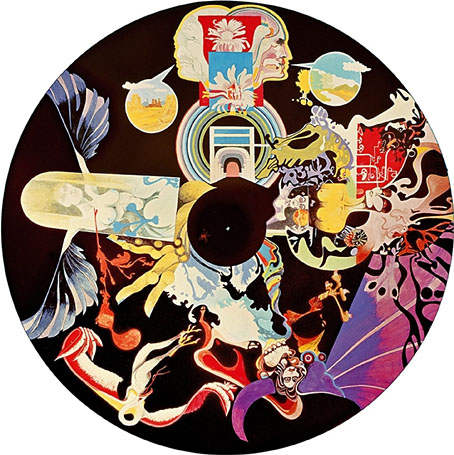
A light wheel. Via.

• “Part of the instrument’s draw is its fallibility. Famously, or perhaps infamously, every Rhodes is different: some freakishly responsive, some with keys that stick like glue, and all with uneven registers, darker corners, and sweet spots.” Hugh Morris on the delicate art of reinventing the Fender Rhodes.

Rambalac’s YouTube channel of first-person walks through Japanese locations is a vicarious pleasure, especially on a big screen. It’s not all city streets but if you like urban meandering then Tokyo walk from day to rainy night – Higashi-Ikebukuro, Mejiro, Ikebukuro is a good place to start.

• At Igloomag: Chang Terhune interviews Stephen Mallinder in a gratifyingly lengthy piece which covers Mallinder’s recent solo recordings and collaborations, his work with students on his sound-art course, and (unavoidably) the late Richard H. Kirk and Cabaret Voltaire.

What I think might be a useful approach—perhaps impractical, but bear me out—I think that if we were to reconnect magic and art as a starting point, because they’re practically the same thing anyway, make art the product of your magical experiments, the way that Austin Spare did for example, then that would give magic an enormous sense of purpose and I think it would also lend art the vision that it seems to be lacking at present. A lot of modern art seems rather empty and hollow conceptualism that lacks any real vision or substance or power. A linking of magic and art would help both of those fields. Then, once you’ve done that, maybe linking art and science. There’s plenty of work already done in that regard.

Alan Moore talking to Miles Ellingham about the usual concerns plus his new story collection, Illuminations

Wheels of Light: Designs for British Light Shows 1970–1990 is a book by Kevin Foakes (aka DJ Food) which will be published later this month by Four Corners Books. The author talks about his book here.

• “The Sandjak of Novi Pazar always sounded as if it were a title, like the Sultan of Zanzibar or the Dame of Sark…” Mark Valentine on discovering outdated maps in forgotten books.

• “My brief was to find tracks that had been left by the wayside or disregarded.” Lenny Kaye on 50 years of his influential garage-rock compilation Nuggets.

• Mixes of the week: XLR8R Podcast 768 by Lawrence English, and King Scratch (Musical Masterpieces from the Upsetter Ark-ive) by Aquarium Drunkard.

• At Dennis Cooper’s: Spotlight on Shirley Jackson The Haunting of Hill House (1959).

• Steven Heller’s font of the month is Slag.

• This Wheel’s On Fire (1968) by Julie Driscoll, Brian Auger & The Trinity | Cosmic Wheels (1973) by Donovan | Wheels On Fire (1985) by Haruomi Hosono
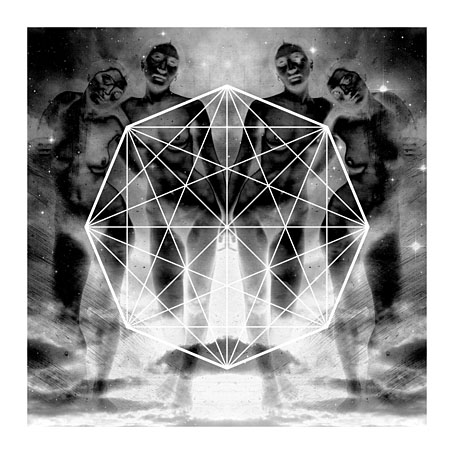
Empyrean/Ritual

empyrean.jpg

Today is another Bandcamp Friday, meaning that Bandcamp artists receive 100% of the proceeds from their sales, so I’ll link to this latest release from Grey Frequency which was very generously sent to me earlier this week. (Thanks!) Empyrean/Ritual is a limited 7-inch single on Haemoccult whose sides examine “the tangled threads of magick and superstition which lie beneath the surface of our everyday modern lives.” Untangle the threads here, and check out the rest of the Grey Frequency catalogue while you’re there.

The Fall of the House of Usher, 1928

usher1.jpg

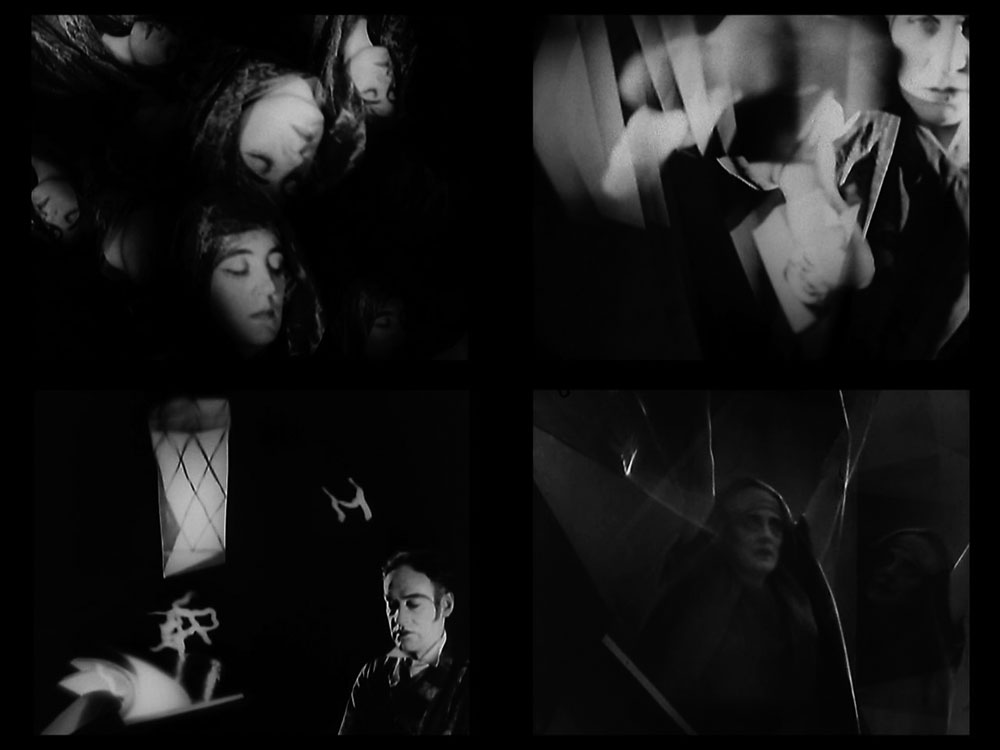
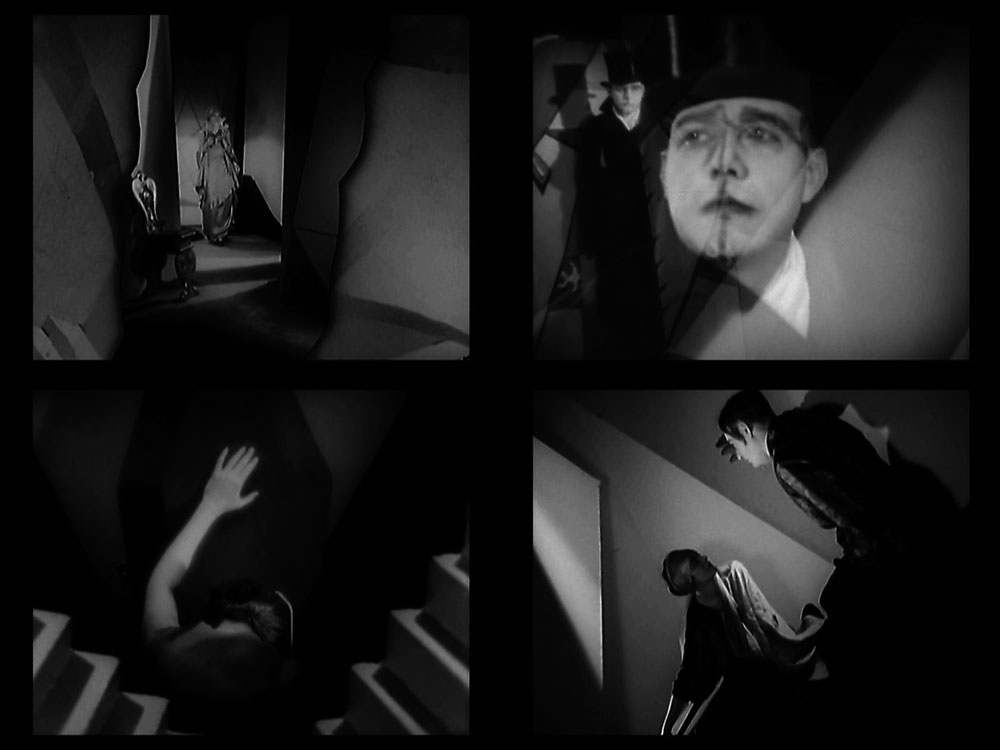
Halloween approaches, in case you hadn’t noticed. This silent short had eluded my attention until this week even though I knew the directors, James Sibley Watson and Melville Webber, via a later film, the homoerotic Biblical fantasia Lot in Sodom (1933). Watson and Webber’s Poe adaptation was made in the US the same year as a longer French version of the same story directed by Jean Epstein with partial assistance from Luis Buñuel.

usher2.jpg

The American Usher was described by its directors as an amateur work but it fills its running time with a remarkable range of visual effects: slow motion, tilted angles, multiple exposure, kaleidoscope views, even a touch of animation in the caption lettering when Madeline breaks out of her tomb. The visuals overwhelm the storytelling but that’s the advantage of using a familiar tale, the narrative can be subordinate to the style which in this case extends to the Caligari-derived sets. Watson and Webber’s Usher is less an imitation of Robert Wiene’s thriller than a condensation of everything that German Expressionist cinema had been doing throughout the 1920s, a fitful dream or hallucination.

Previously on { feuilleton }
Mask of the Red Death, 1969
The Pendulum, the Pit and Hope
The Tell-Tale Heart from UPA

The Midnight Parasites by Yoji Kuri

kuri.jpg

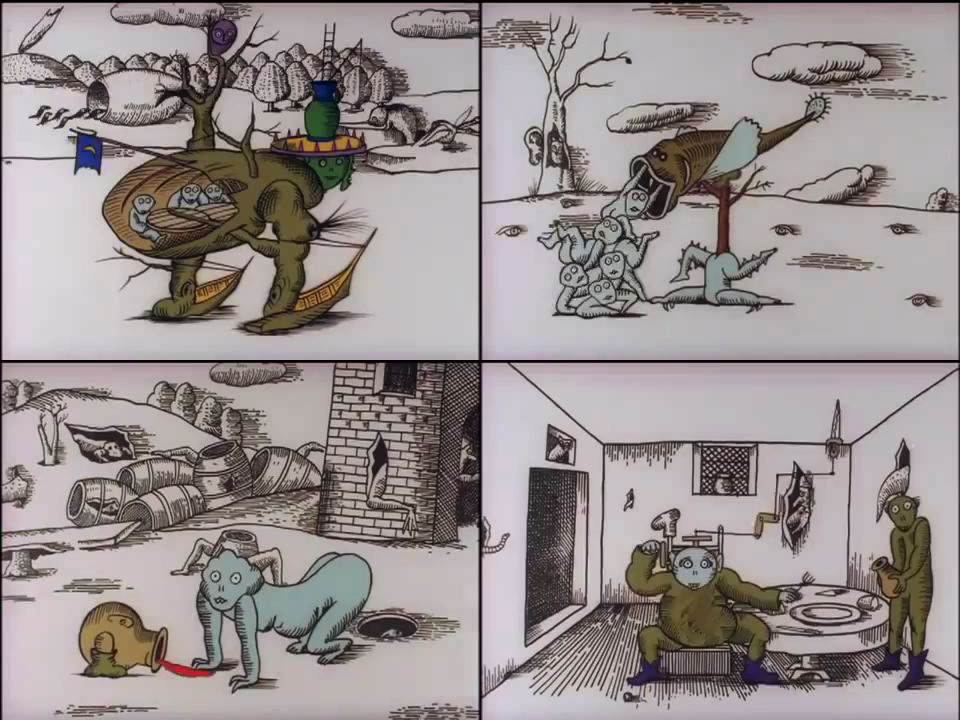
The Midnight Parasites (1972) is a good example of the kind of animation I’m often searching for: strange and grotesque yet with its own internal logic. Yoji Kuri populates a Surrealist landscape with infernal creatures borrowed from Hieronymus Bosch, a succession of humanoids and predatory monsters whose struggles for survival are overlaid with an uncredited electronic score. I can imagine Roland Topor enjoying this one, it belongs in the same solar system as Fantastic Planet. Watch it here.

Elsewhere on { feuilleton }
The Surrealism archive

Previously on { feuilleton }
Bosch details

Weekend links 641

coin.jpg

For mysterious and eldritch reasons the Republic of Palau has minted a Cthulhu-themed 20 dollar coin. Via.

• “Pre-gap tracks are a CD-specific phenomenon, paralleled only by DVD Easter Eggs, or hidden levels in a computer game. On the one hand, they’re only possible digitally, on the other, they seem to be an attempt to add some mystique to a circle of plastic.” Daryl Worthington on the 40th anniversary of the Digital Audio Compact Disc. Regular readers will know that CD has been, and remains, my favourite musical format for reasons I won’t bother arguing here. Related: Wikipedia’s list of albums with tracks hidden in the pregap. Also: “There’s endless choice, but you’re not listening”: fans quitting Spotify to save their love of music.

• “Meek’s use of sound effects and swathes of ghostly reverb, woven into seemingly innocuous pop songs and rock and roll instrumentals—as if the BBC Radiophonic Workshop was directed by Phil Spector—created a sense of the sublime and hinted at strange realities beyond our own.” Mark Pilkington explores the strange world of Joe Meek.

• “Structured as a ‘dream within a dream’, the narrative weaves together mythological, biblical, and occult references to construct a universe filled with ruinous landscapes and orgiastic celebrations.” Demetra Vogiatzaki on the enigmas, architectural and otherwise, presented by Hypnerotomachia Poliphili (1499).

The man who made this absurd noir was answerable neither to studio nor Shakespeare, but only his own monumental whims. Thus, Mr. Arkadin sends Citizen Kane (1941) through the looking glass—the action transposed to post–World War II Spain and given a spin somewhere between metaphysics and megalomania…

If Jean Cocteau’s Orpheus recast myth as pulp, Mr. Arkadin elevates pulp to myth. It is the most Borgesian of Welles’s movies. Writing in Cahiers du cinéma, the young Eric Rohmer compared Mr. Arkadin to Jules Verne and Fantômas: It creates something that is ­nearly impossible today: a romantic fiction that involves neither the future nor any removal from one’s usual surroundings…

J. Hoberman writing in 2006 about Orson Welles’ Mr. Arkadin (1955). I was rewatching the film earlier this week in its guise as Confidential Report, the version re-edited by its producer to try and create something with greater commercial appeal. I’ve yet to see the recent restoration but even in its butchered form it’s a fascinating piece of work

Early Cormac McCarthy interviews rediscovered: “Between 1968 and 1980, he gave at least 10 interviews to small local papers in Lexington, Kentucky and east Tennessee, a region where he lived and had friends.”

• New music: Perceptions by Model Alpha (Jonathan Fitoussi & Julie Freyri), and Epektasis by Nicklas Barker.

Dreams of Space: Books and Ephemera; “Non-fiction children’s space flight stuff 1945–1975”.

• At Dennis Cooper’s: Roget Malot presents…Spirit Photography Day.

• Mix of the week: A mix for The Wire by FOQL.

Spirit (1978) by Frédéric Mercier | Spirit (1990) by Jah Wobble’s Invaders Of The Heart | Spirit Level (Lost In Space) (1992) by Horizon 222