More from the Decadent Dutch

netherlands3.jpg

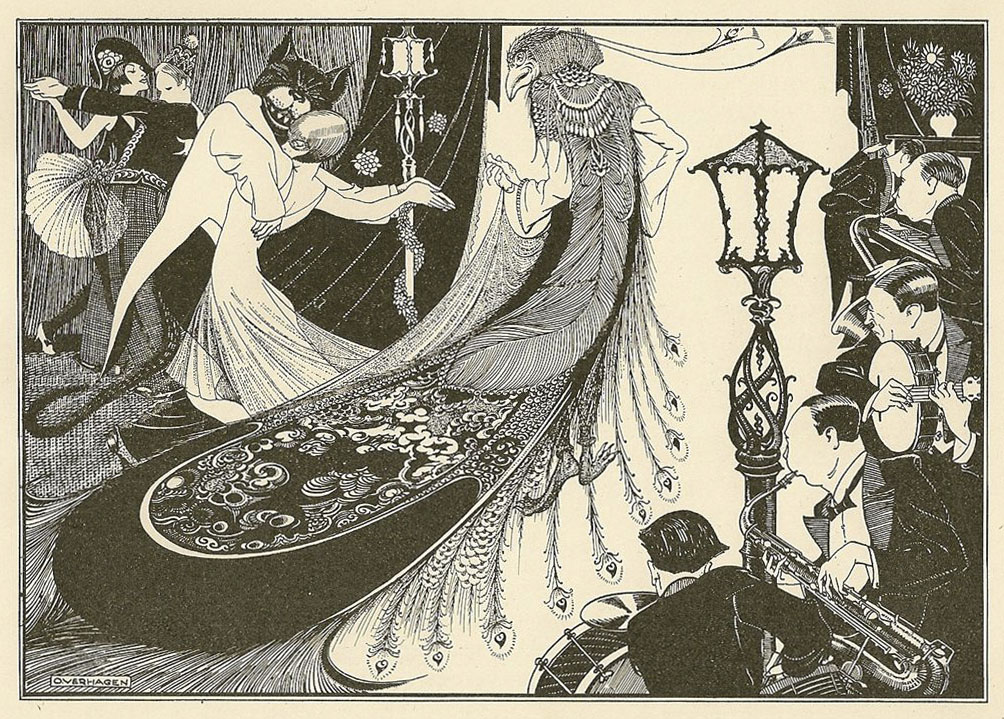
Illustration by Otto Verhagen from Yolanda – Het Boek van Bloei (1931) by Nan Copijn.

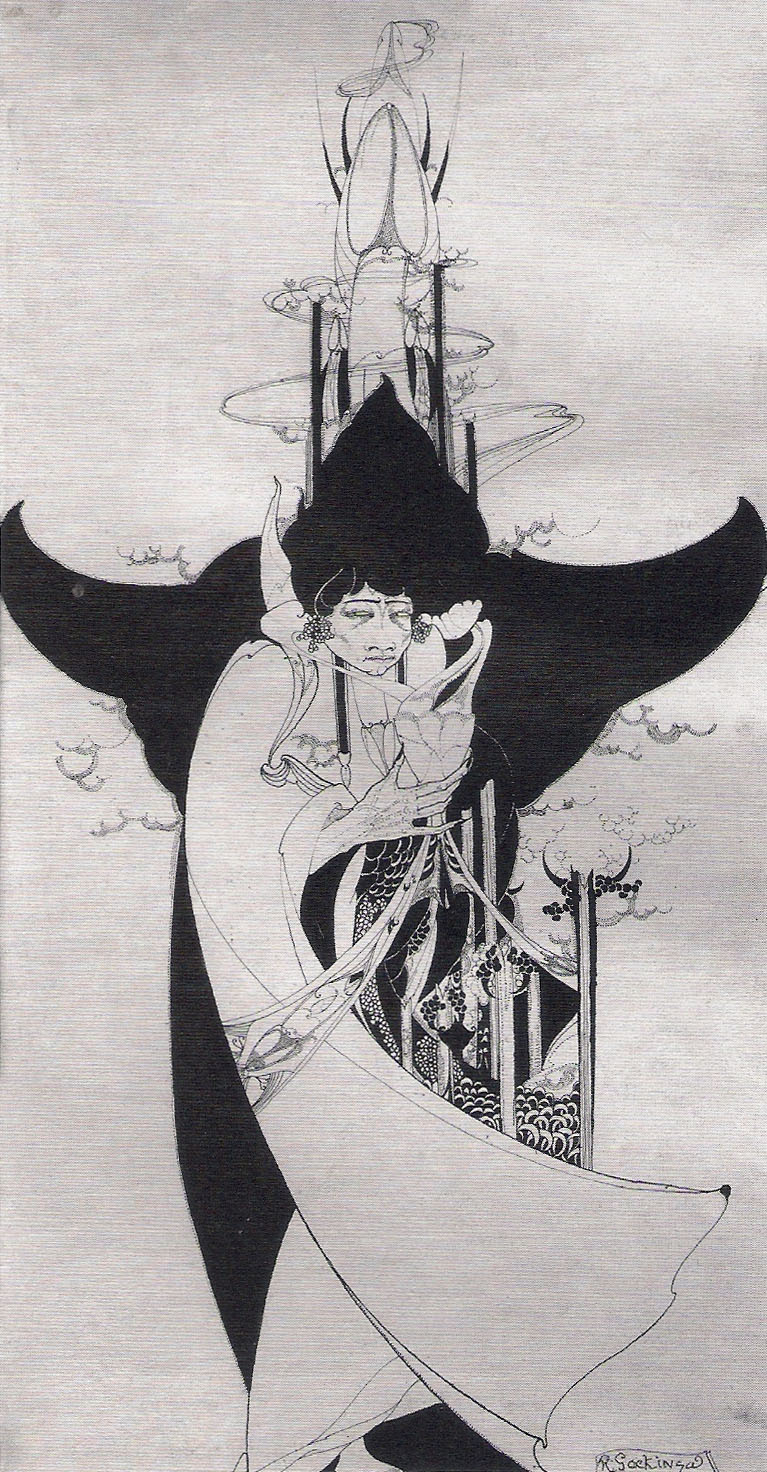
Would-be Decadents is perhaps a better label, the Decadent ship having set sail across an absinthe-tinted sea by the time these artists were putting pen to paper. Their drawings are another set of scarce images forwarded by Sander Bink who maintains the Rond1900 site. (See this earlier post for further examples.) Sandor also sent artwork details which I’ve quoted below. In addition to yet more overt Beardsley influence (the Verhagen above and René Gockinga’s woman with a candle) there’s also a striking Harry Clarke influence in the second Gockinga drawing which is closer to Clarke’s idiosyncratic style than (for example) these later drawings by Cardwell Higgins. Seeing one artist borrow the mannerisms of another is a common thing; far less common is finding an artist who adopts different styles the way Gockinga does. Incidentally, the Couperin novel mentioned below was published with a typically elegant cover design by Symbolist artist Jan Toorop.

(Thanks again Sander!)
netherlands2.jpg

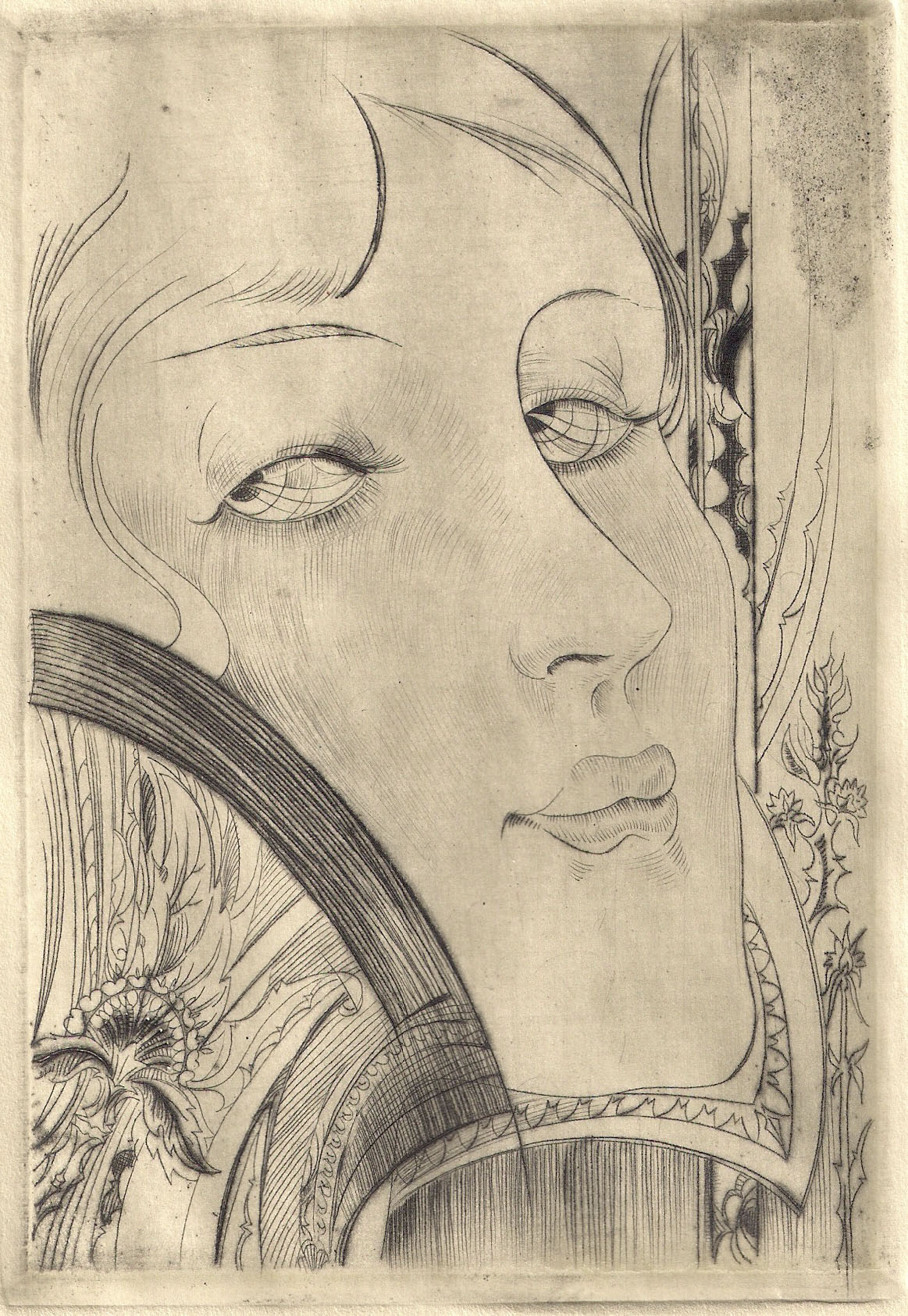
Otto Verhagen. Illustration (not used as such) for Couperus’ Psyche (1898). Engraving, ca 1913. Collection Sander Bink. This is a personage from the story but to me it looks somewhat like an Oscar Wilde portrait!
Illustration for the very popular fairy tale for adults Psyche by Louis Couperus (1863–1923). You might have heard of Couperus: Oscar Wilde appreciated his decadent, somewhat homosexual, novel Noodlot (1890), translated as Footsteps of fate. Some letters were exchanged. Couperus’ wife Elisabeth translated Dorian Gray in 1893. (First Dutch translation.)
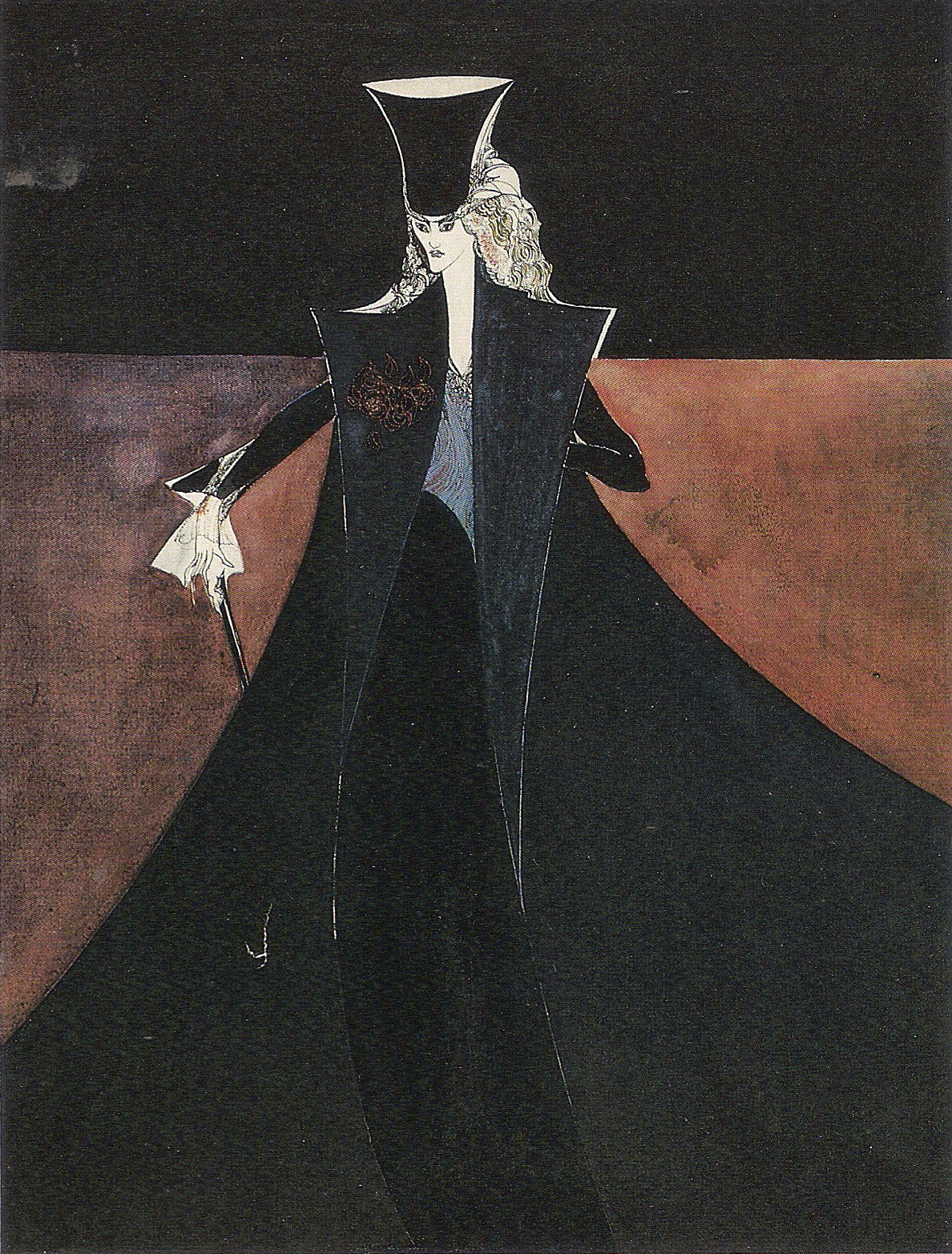
netherlands1.jpg

Sortie (1904) by Carel de Nerée tot Babberich. Museum of Modern Art, Arnhem (from De Neree catalogue, 1986). Verhagen’s Dorian Gray seems to be influenced by this.
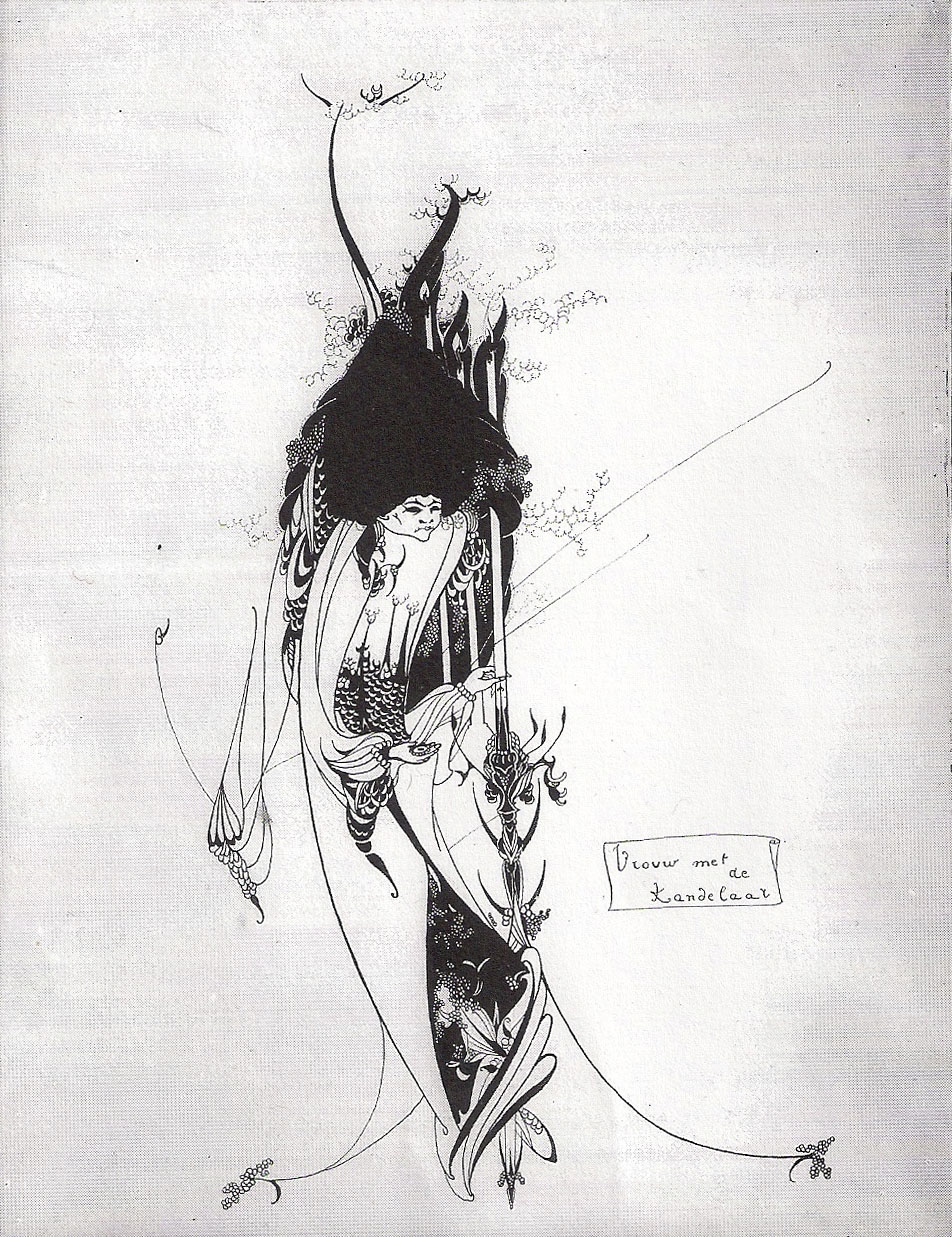
netherlands4.jpg

Woman with candle by René Gockinga, ca 1916. Current location unknown.
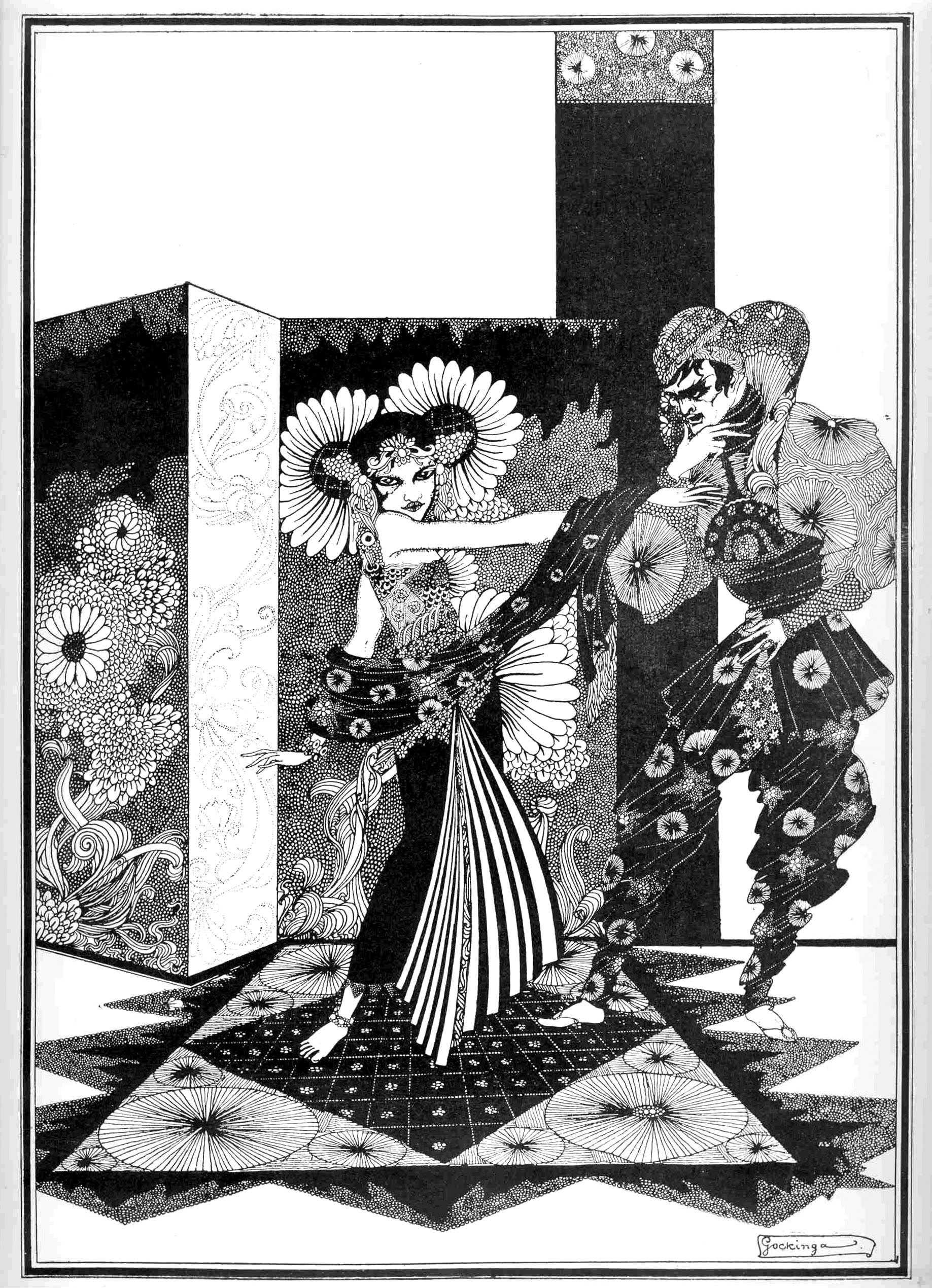
netherlands5.jpg

Indonesian lady dancing [as I call it—SB] by René Gockinga. From the Indonesian satirical-political periodical De Zweep [The Whip] 1922.

Previously on { feuilleton }
Further echoes of Aubrey
A Wilde Night
Echoes of Aubrey
After Beardsley by Chris James
Illustrating Poe #1: Aubrey Beardsley
The art of Karel de Nerée tot Babberich, 1880–1909
Beardsley’s Rape of the Lock
The Savoy magazine
Beardsley at the V&A
Merely fanciful or grotesque
Aubrey Beardsley’s musical afterlife
Aubrey by John Selwyn Gilbert
“Weirdsley Daubery”: Beardsley and Punch
Alla Nazimova’s Salomé

Wildeana 7

wilde1.jpg

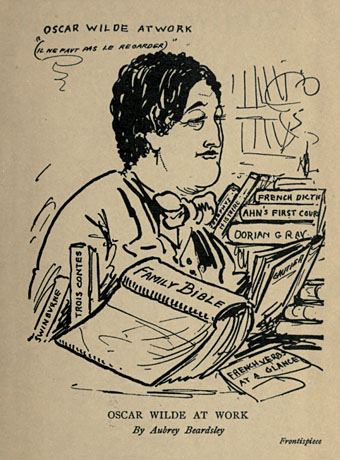
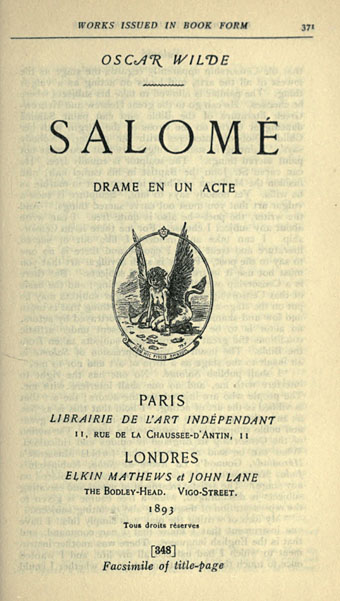
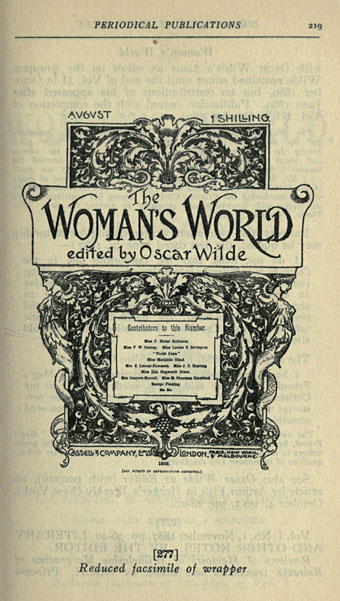
Continuing an occasional series. The drawing above is frequently credited to Aubrey Beardsley in books about Oscar Wilde but receives an “anonymous” attribution in books of Beardsley’s work. The copy here, and the pages below, are from Bibliography of Oscar Wilde (1914) by Stuart Mason.

Last November it was announced that Wilde’s lipstick-blotched tomb in Père Lachaise cemetery is to be cleaned (again) then shielded from the persistent kissers and graffiti writers by a glass screen. Flickr has a collection of photos showing the earlier condition of the tomb and its embellishments.

wilde2.jpg

• Maria Bustillos in The Vexed Posthumous Life of Oscar Wilde chronicles the story of the blue plaque on Wilde’s former home in Tite Street, London.

• “A hundred and twenty five years ago, Oscar Wilde edited a fashion magazine, his first and only office job. We have yet to learn from the experience.” Wilde in the Office by Kaya Genç.

wilde3.jpg

Elsewhere on { feuilleton }
The Oscar Wilde archive

Further echoes of Aubrey

verhagen.jpg

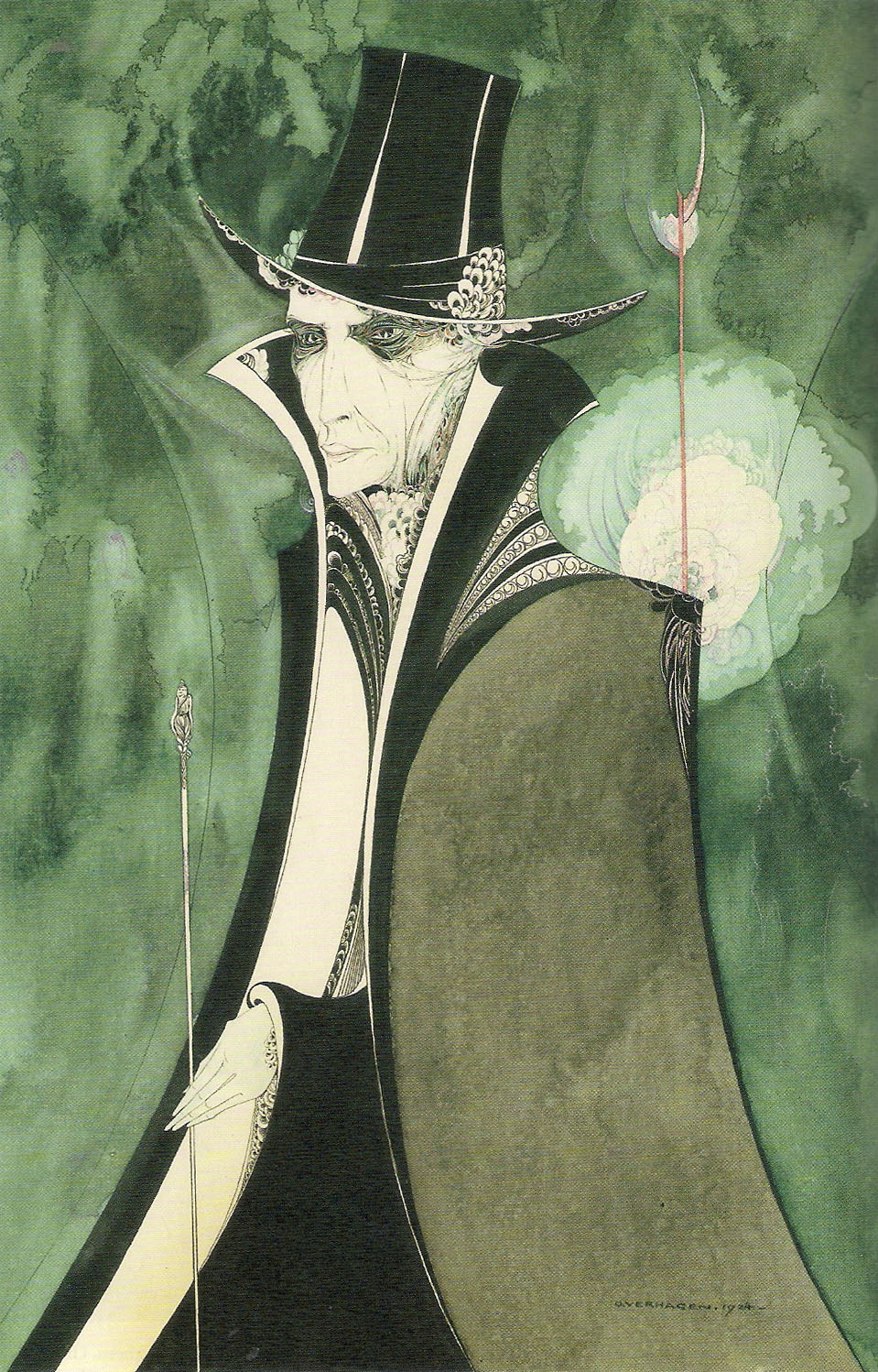
Dorian Gray (1924) by Otto Verhagen (1885–1951).

If you need an idea of the colossal impact Aubrey Beardsley’s drawing had on the art world of the 1890s consider that the entirety of his career—from his first public exposure in The Studio in 1893 to his very untimely death in 1898—lasted a mere five years. Decades afterwards artists around the world were still imitating his style. The later disciples are so numerous and so widespread it’s no surprise if some have yet to be fully acknowledged by subsequent generations. Sander Bink who maintains the Rond1900 site sent copies of these drawings (from Lopende Vuurtjes, Verloren Publishers, 2012) and provided some information about the artists:

Verhagen was a government official for most of his life and seems to have led a very respected life and made his Beardsley-esque work privately, no expositions as far is I know. Gockinga appears to have led a more interesting life: born in Indonesia, lived in Holland 1908–1922, the Indonesia (Java) again, then New York, and the Indonesia and after wwii Amsterdam, probably homosexual. Had one exposition of his work in 1917.

Sander’s site has further examples of Verhagen’s drawings, and he says that both artists were probably inspired by Carel (or Karel) de Nerée, some of whose work was featured here a while back. Always good to have the dots joined. Verhagen’s Dorian Gray is a curious piece; in style it’s a little like the angular drawings that Beresford Egan was producing in the 1920s, while the subject can’t be Dorian himself unless it’s a rendering of his aged portrait. As for Gockinga’s drawing, it’s a lot more faithful to Beardsley’s early style (complete with phallic extrusions) than the poor Nichols fakes that appeared in 1919. If you want a successful forgery it’s always best to find someone with talent.

(Thanks Sander!)

gockinga.jpg

Old lady with ghost (c.1916) by René Gockinga (1893–1962).

Elsewhere on { feuilleton }
The Aubrey Beardsley archive
The illustrators archive
The Oscar Wilde archive

Borges and I

borges.jpg

Another piece of revenant television to tick off the “When will I see this?” list. I mentioned David Wheatley’s film Borges and I back in January in a post about the director’s dramatisation of the life and work of René Magritte. Wheatley’s student film secured for him a job as a BBC director at a time when the Arena arts series was one of the best things being produced by the corporation. Borges and I was filmed in 1982 and broadcast a year later, an event I managed to miss to my considerable regret. Once again Ubuweb has turned up the goods with a copy from an American video tape. It’s not ideal—all the Spanish sequences would have been subtitled in the original broadcast—but I’m not going to complain. This 80-minute film is not only the best Anglophone documentary I’ve seen on Borges, it was produced in collaboration with the author who for much of the running time discusses his life and work in English. The tape copy also frustratingly lacks credits but the unseen American interviewer and narrator would appear to be translator and collaborator Norman Thomas di Giovanni, a writer who later found himself and his work marginalised by the Borges estate. Between the interviews and readings there are dramatised sequences from The Meeting, Funes, the Memorious, The South, The Circular Ruins, Death and the Compass, and The Sartorial Revolution, one of the collaborations with Adolfo Bioy Casares. Plus, of course, the expected complement of mirrors, tigers and a duel with knives. The budget must have been generous: scenes were shot in Argentina and Uruguay, and we also see Borges at his favourite lodging in Paris: L’Hôtel in the Rue des Beaux-Arts, a building which now bears plaques celebrating the visits of Borges and another famous literary resident, Oscar Wilde.

Previously on { feuilleton }
René Magritte by David Wheatley
L’Hôtel, Paris
Borges documentary
Borges in Performance

Greek games

ganymede.jpg

Ganymede from an Attic red-figure bell-krater, ca. 500–490 BC.

And ye Megarians, at Nisæa dwelling,
Expert at rowing, mariners excelling,
Be happy ever! for with honours due
Th’ Athenian Diocles, to friendship true
Ye celebrate. With the first blush of spring
The youth surround his tomb: there who shall bring
The sweetest kiss, whose lip is purest found,
Back to his mother goes with garlands crowned.
Nice touch the arbiter must have indeed,
And must, methinks, the blue-eyed Ganymede
Invoke with many prayers—a mouth to own
True to the touch of lips, as Lydian stone
To proof of gold—which test will instant show
The pure or base, as money changers know.

Theocritus, Idyll XII, translated by Edward Carpenter.

One Ancient Greek tradition yet to be revived by the International Olympic Committee is the Diocleia, an annual contest held in the Dorian city of Megara. William Smith’s A Dictionary of Greek and Roman Antiquities (1882) gives a brief explanation:

DIOCLEIA, a festival celebrated by the Megarians in honour of an ancient Athenian hero, Diocles, around whose grave young men assembled on the occasion, and amused themselves with gymnastic and other contests. We read that he who gave the sweetest kiss obtained the prize, consisting of a garland of flowers. (Theocrit. Idyll. xii. 27, &c.) The Scholiast on Theocritus (l. c.) relates the origin of this festival as follows – Diocles, an Athenian exile, fled to Megara, where he found a youth with whom he fell in love. In some battle, while protecting the object of his love with his shield, he was slain. The Megarians honoured the gallant lover with a tomb, raised him to the rank of a hero, and in commemoration of his faithful attachment, instituted the festival of the Diocleia.

So the Diocleia was primarily a same-sex kissing contest, a detail that 19th century accounts do their best to skirt around, as they tended to do when faced with the unavoidable yet unacceptable sexual proclivities of the Ancient World. Here’s another account from a typewritten thesis by Ernest Leslie Highbarger, Chapters in the History and Civilization of Ancient Megara (1923):

Diocles
In his honor public games, the Diocleia, were celebrated. These were as important at Megara as were the Pythia and Eleusinia elsewhere. According to Megarian belief, Diocles was a Megarian ruler of Eleusis. But the Alexandrine tradition claimed that he was an Athenian who had fled to Megara for some cause and had become a hero after dying in defense of a boy friend. […] These Diocleia were held at the beginning of spring. The prize is said to have been a crown of flowers and was presented to the boy who gave the sweetest kiss. Boeckh and Reinganum, however, maintain that we must not limit such a contest to kissing but must extend it to contests in general such as the ones in which Diocles was victorious. But if we are to judge by the elegies of Theognis, boy-love was as common at Megara as in other parts of Greece and the osculatory contest at the games may have constituted no insignificant part.

Edward Carpenter, on the other hand, being a pioneering activist for gay rights, regarded these festivals as one of the many valuable precedents that might be used to argue a defence for same-sex relations:

Further [Bethe] suggests that the competition which yearly took place among the youths at the tomb of the great hero and lover, Diocles, in Megara – and which is known to us through Theocritus (Idyll xii.) – had a similar origin; and represented the survival of actual betrothals which once were celebrated there, as at a holy place. There is certainly something very grand about this whole conception and manifestation of the Uranian love among the Dorians. The wonderful stories – treasured in the hearts of the Greek peoples for centuries – of heroic bravery and mutual devotion inspired by it; the high seriousness with which it was cultivated both as a political safeguard and as a means of the education of youth, the religious sanction and dedication to the gods, and withal the absolute recognition of its human and passional origin, cannot fail to make us feel that here was a great people with a unique message for the world. Certainly we shall never in modern times understand this love until we realise this quality of it and its immense capabilities.

Intermediate Types among Primitive Folk (1914)

Dorian: Yes, the word is the origin of Dorian Gray’s first name, and Oscar Wilde was fully aware of its referring to proscribed passions. He was sufficiently well-acquainted with Greek poetry to pen a poem of his own to Theocritus so would have been very familiar with the Idylls and their paean to the Diocleia.

Previously on { feuilleton }
Achilles by Barry JC Purves