Nezha Conquers the Dragon King

nezha1.jpg

From an Arabian story with a Chinese theme to a Chinese adaptation of a Chinese story. Nezha Conquers the Dragon King is an hour-long animated presentation of an episode from Chinese mythology, in which Nezha, a magical boy born from a lotus flower, uses his powers to defend his home town and its inhabitants against four destructive dragons. The film was made in 1979 by the Shanghai Animation Film Studio, and directed by Wang Shuchen, Yan Dingxian and Xu Jingda. It was dubbed into English by the BBC for a TV broadcast a few years later, something I never saw at the time but the dubbed version sounds like one to avoid. They also replaced the original score and no doubt cropped the widescreen image as well. The BBC dubbed René Laloux’s marvellous Time Masters for its TV broadcasts in the 1980s but they did at least leave the music alone.

nezha2.jpg

One of my most enjoyable cinematic discoveries of the past year has been the wuxia films of Zhang Yimou: Hero (2002), House of Flying Daggers (2004), and Shadow (2018). Also Curse of the Golden Flower (2006) which is more of a straightforward historical drama for the most part, without any of the displays of balletic martial arts that are a common feature of wuxia films. Nezha Conquers the Dragon King is pretty much a wuxia story for children, with Nezha being a skilled fighter almost from the day he’s born. His feud with the dragons culminates in a battle in which he takes on an army of anthropomorphic animal opponents. (Another common feature of wuxia stories is pitting one or two skilled combatants against a mass of armed men.) The stylised animation, replete with motifs borrowed from traditional paintings, is beautifully rendered througout, while the basic storyline is so similar to Marcell Jankovics’ Son of the White Mare (1981) it’s tempting to wonder whether the Chinese film gave Jankovics the idea for his second feature. Son of the White Mare is based on Hungarian folk tales but it too concerns a magical child (born from a horse rather than a flower) whose super-strength enables him to fight three dragon beings who have been threatening the land. Like their Chinese counterparts, the Hungarian dragons can assume human form, and each has a special power related to a different element. Jankovics’ film was released on blu-ray recently; I ought to watch it again.

Nezha Conquers the Dragon King may be seen here in a print with embedded English subtitles.
Moon Flight by Sándor Reisenbüchler

reisenbuchler1.jpg

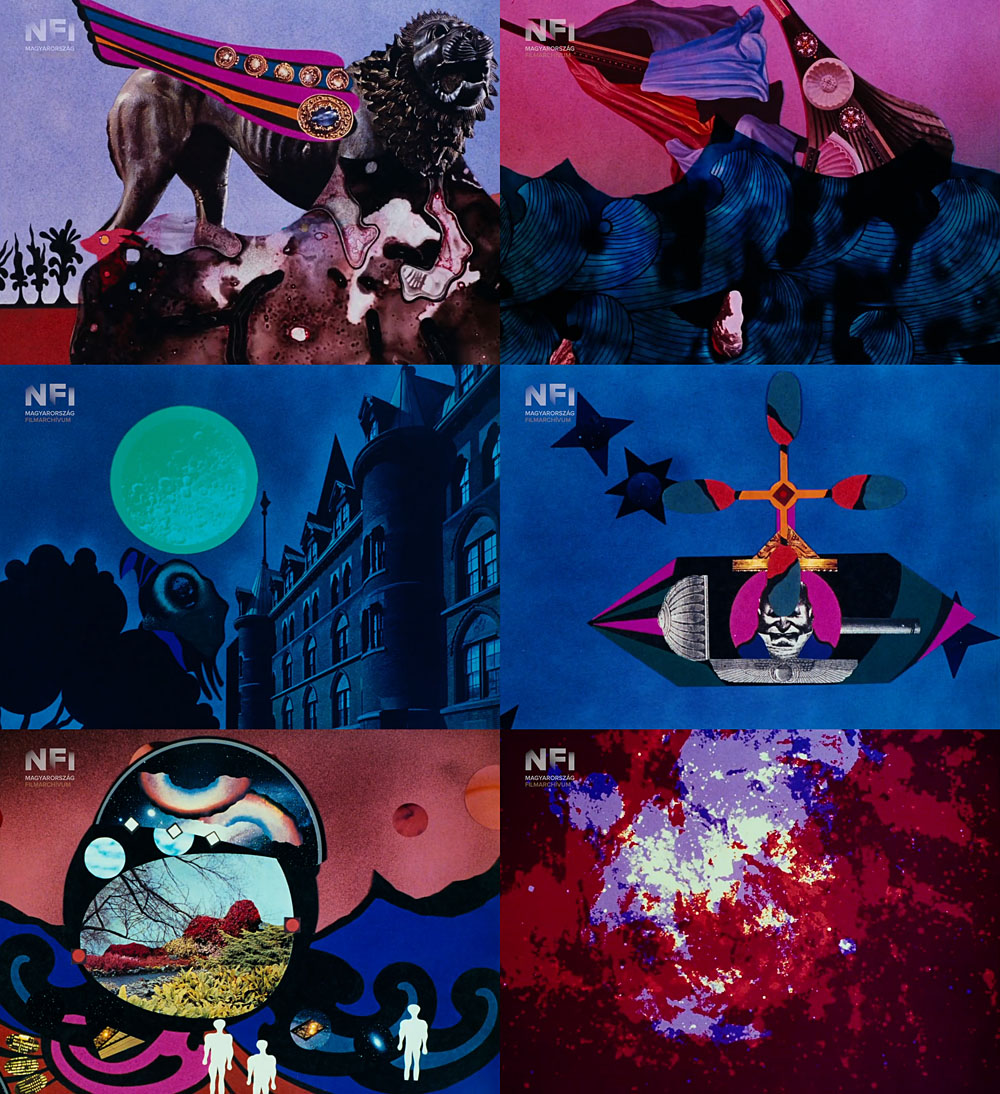
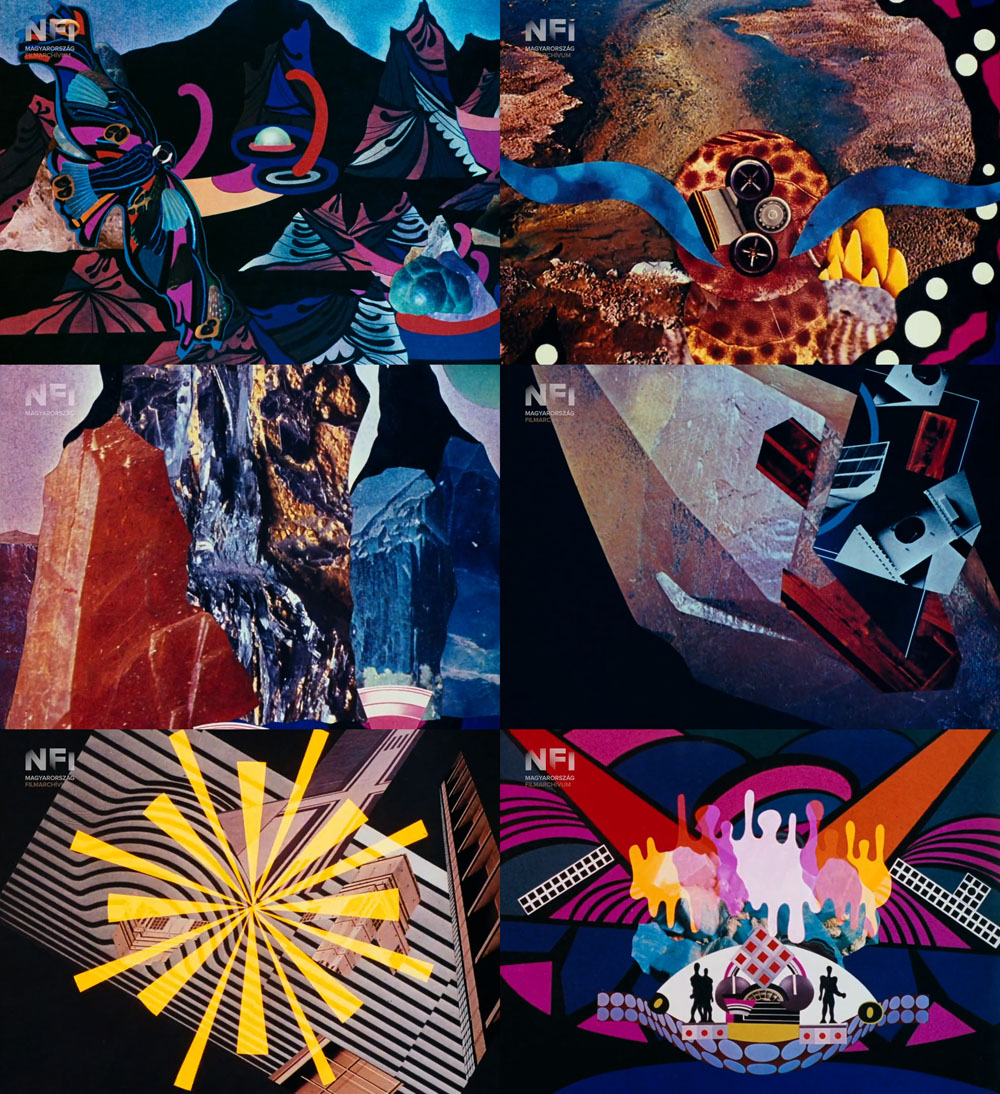
Moon Flight is the English title given to Holdmese, a Hungarian word that Google translates as “Moon tale”. Both translations suit this short film by Hungarian animator Sándor Reisenbüchler in which we discover that the Moon is a giant space vehicle contructed by an alien race. Moon Flight was Reisenbüchler’s third short, made in 1975 using the same collage technique as an earlier film, The Year of 1812 (1973). The animation is minimal but there’s an immense amount of variety in the tableaux that convey the story. The visual style is also strikingly vivid in a manner that might be labelled “psychedelic” if that term means anything when applied to cinematic fare from the Eastern Bloc. Reisenbüchler wasn’t the only Hungarian animator borrowing Pop and psychedelic influences at this time. The first two feature films by Marcell Jankovics, Johnny Corncob (1973) and The Son of the White Mare (1982), are equally vivid; Johnny Corncob even mimics some of the style of Yellow Submarine. I’ve not seen much other Hungarian animation from this period so this makes me wonder what else I may have been missing.

reisenbuchler2.jpg

Moon Flight is a recent upload at Rarefilmm where you can also see The Year of 1812, both as high-quality transfers. The Year of 1812, which concerns Napoleon’s failed invasion of Russia, won an award at Cannes but I prefer Moon Flight. It’s not only more visually interesting it’s also free of Tchaikovsky’s bombast. Reisenbüchler’s first short, Kidnapping of the Sun and the Moon (1968), is another work of fantasy which may be seen at the YouTube channel for NFI, the Hungarian film archive.

Previously on { feuilleton }
Three short films by Marcell Jankovics
Short films by Gérald Frydman
Raoul Servais: Courts-Métrages
Scarabus, a film by Gérald Frydman
The Heat of a Thousand Suns by Pierre Kast
L’Araignéléphant
Le labyrinthe and Coeur de secours
Chronopolis by Piotr Kamler

Phantastische Edelmann

edelmann1.jpg

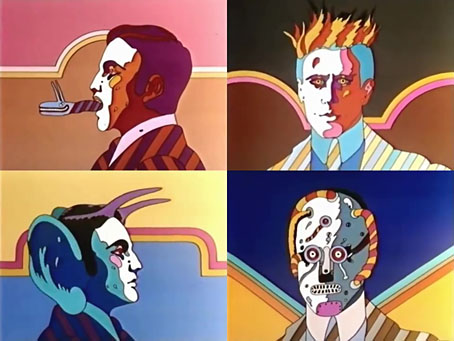
There’s more to Heinz Edelmann than the designs he created for Yellow Submarine, as Edelmann himself often used to remind people. And there’s more to his work for animated film than the Beatles’ exploits. Der Phantastische Film is a short introductory sequence for a long-running German TV series which has been doing the rounds for a number of years. Brief it may be but a couple of the monstrous details resemble those that Edelmann put into his covers for Tolkien’s books.

edelmann2.jpg

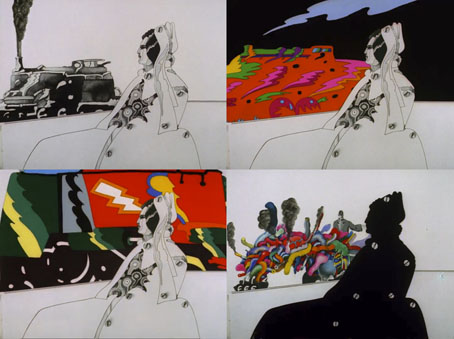
Edelmann had plans to capitalise on the success of Yellow Submarine with more films like this when he set up his own animation company, Trickfilm, but the only other example is The Transformer, a short about steam trains which he designed. (The direction was by Charlie Jenkins, with animation by Alison De Vere and Denis Rich.) Given the persistent popularity of Yellow Submarine I keep hoping someone might revive its style for something new. The first animated feature directed by Marcell Jankovics, Johnny Corncob, comes close but lacks the trippy Surrealism of the Beatles film. The Japanese can certainly do trippy Surrealism (see Mind Game or Paprika) but I’ve yet to see anything that approaches the Edelmann style. Johnny Corncob, incidentally, is now available on Region B blu-ray from Eureka. It’s worth seeing but the main film in the set, Son of the White Mare, is Jankovics’s masterpiece.

edelmann3.jpg

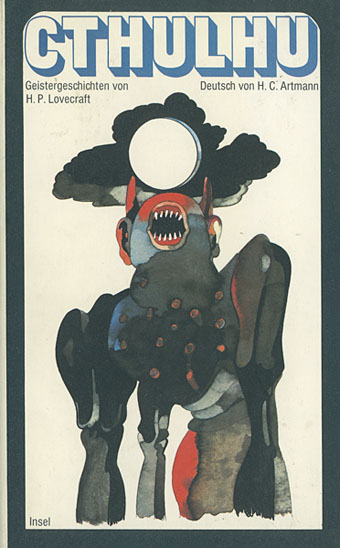
On a slightly related note, until today I hadn’t looked at ISFDB.org for Heinz Edelmann’s genre credits so I hadn’t seen this Lovecraft cover before. Hard to tell if this creature is supposed to be Cthulhu or Wilbur Whateley’s brother when The Dunwich Horror is one of the stories in the collection. Either way, it belongs in the Sea of Monsters. Insel Verlag published this one in 1968, a year before launching their special imprint devoted to fantastic literature, Bibliothek des Hauses Usher.

Previously on { feuilleton }
Return to Pepperland
The groovy look
The Sea of Monsters
Yellow Submarine comic books
Heinz Edelmann

Weekend links 638

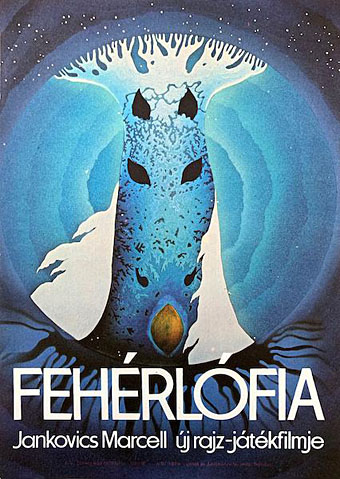
feherlofia.jpg

• After writing about Hungarian animator Marcell Jankovics back in January, I left a comment expressing the hope that Arrow or Eureka might give us a Region B blu-ray of Son of the White Mare (aka Fehérlófia), Jankovics’s “psychedelic” animated feature from 1982. Fast-forward nine months to Eureka’s announcement that they’ll be doing exactly this in November. Watch the trailer. The release will include some of the director’s short films plus his first feature, Johnny Corncob (1973), a historical tale presented in the “groovy” style (previously) popularised by Yellow Submarine. If idle wishes can be granted so easily then I’ll hope again that Eureka might do the same for René Laloux’s second and third animated features, the Moebius-designed Time Masters (1982) (made in the same studio as Son of the White Mare) and the Caza-designed Gandahar (1987). Fingers crossed.

• “I don’t think anybody copies me, but Harmony Korine, Todd Solondz, Bruno Dumont, Gaspar Noé, I like those kinds of directors. They’re sometimes not funny at all. They’re very serious and eerily melodramatic. I just like movies that surprise me.” John Waters (yet again) talking to Conor Williams about films, writing and a prayer for Pasolini.

• “There is something profoundly haunting about a master artist’s last painting left unfinished upon its easel…” Kevin Dann on The Mermaid (1910) by Howard Pyle.

• At Bandcamp: Navigating the Nurse With Wound List: A Gateway to Far-Flung Sounds.

• “Juicy With Meaning”: Alex Denney chooses five essential films by David Cronenberg.

• Mix of the week: Discovering 1970s jazz fusion with Kerri Chandler.

• Coming soon from Strange Attractor: Purgatory by Ken Hollings.

• Steven Heller’s font(s) of the month: Farandole & Lustik.

Dennis Cooper’s favourite albums.

• RIP Peter Straub.

White Horses (1968) by Jacky | Five White Horses (1968) by Sun Dragon | Ride A White Horse (2006) by Goldfrapp

Three short films by Marcell Jankovics

jankovics1.jpg

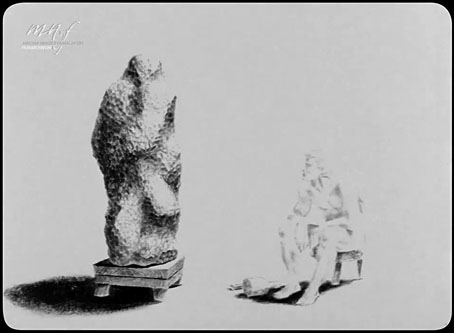
Sisyphus (1974).

Hungarian animator Marcell Jankovics died in May last year but he lived just long enough to see his most celebrated feature, Son of the White Mare (1981), restored and released for the first time in the USA. The film—which I haven’t yet managed to see—is one of those that gets described as “most psychedelic ever”, a grand and rather unwise claim when other animated features such as Belladonna of Sadness (1973) and Paprika (2006) are very “psychedelic” in their own different ways (and both films I’d recommend, incidentally). Psychedelic or not, Son of the White Mare is beautifully styled and vividly coloured, to a degree that puts it at the polar extreme to these three shorts from Jankovics, all of which are exercises in hand-drawn, black-and-white minimalism.

jankovics2.jpg

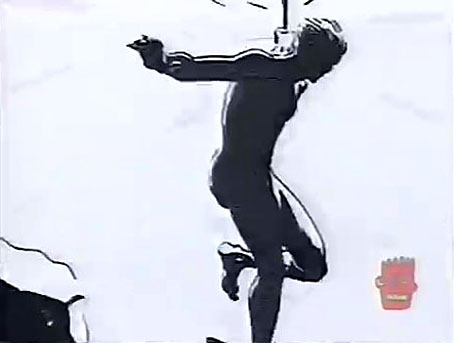
The Struggle (1977).

Hungarian animation from the Cold War era tends to be overshadowed by the films produced by the studios in Poland and the former Czechoslovakia, but animated films from all the Eastern Bloc nations were a fertile medium for symbolic expressions of frustration with the politics of the time. It’s a commonplace observation that repressive regimes inspire a flourishing of metaphor and symbolism in the arts. I don’t know whether Jankovics was being deliberately allegorical with these three shorts but when two of them concern familiar figures from Greek mythology you start to look for subtext. The films are all very brief but they’re also technically impressive. I especially like the way Sisyphus manages to convey a sense of colossal weight with nothing more than a few calligraphic flourishes.

jankovics3.jpg

Prometheus (1992).