The Snow Queen

dulac1.jpg

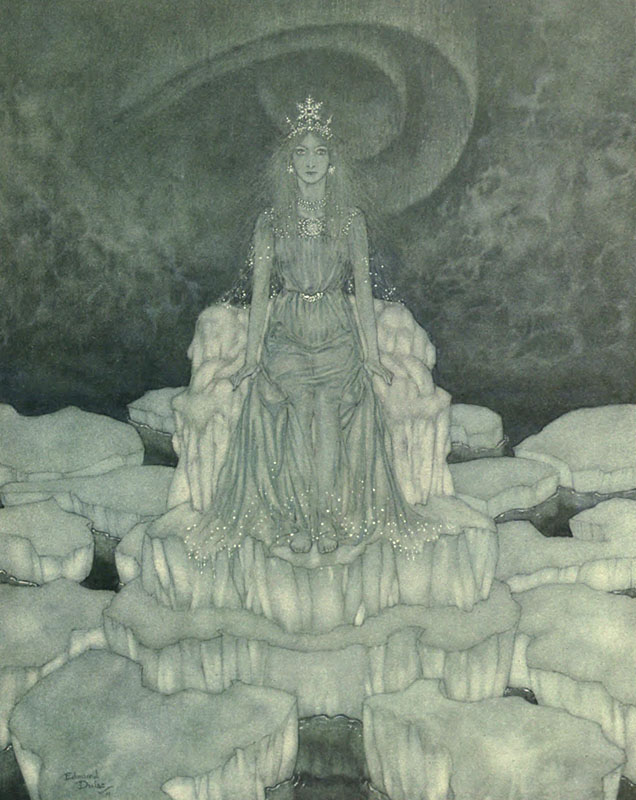
Edmund Dulac.

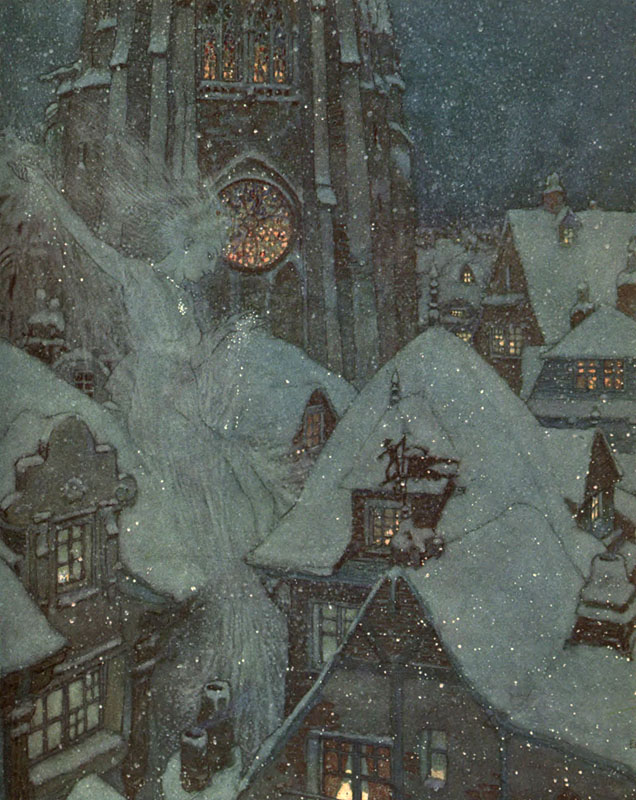
Empty, vast, and cold were the halls of the Snow Queen. The flickering flame of the northern lights could be plainly seen, whether they rose high or low in the heavens, from every part of the castle. In the midst of its empty, endless hall of snow was a frozen lake, broken on its surface into a thousand forms; each piece resembled another, from being in itself perfect as a work of art, and in the centre of this lake sat the Snow Queen, when she was at home. She called the lake “The Mirror of Reason,” and said that it was the best, and indeed the only one in the world.

Here in Britain it may not be quite as cold as it was earlier in the month but the Snow Queen still has us in her thrall. Hans Christian Andersen’s fairy tale was published in 1845 and, like many of the writer’s stories, is a blend of the beguiling and irritating: beguiling for the traces of older folk tales in its trolls, their magic mirror, and the Snow Queen as an embodiment of the season; irritating for the Christian gloss which is layered over everything like a sugar-coating. In this respect it’s a lot like Christmas; religiose sentimentality papered over winter rituals that are older and darker than the celebrations we’re supposed to acknowledge.
dulac2.jpg

Edmund Dulac.

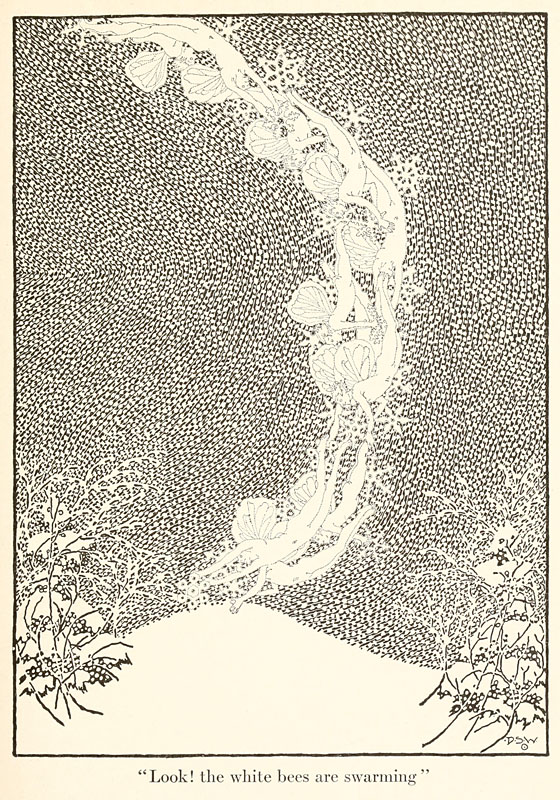
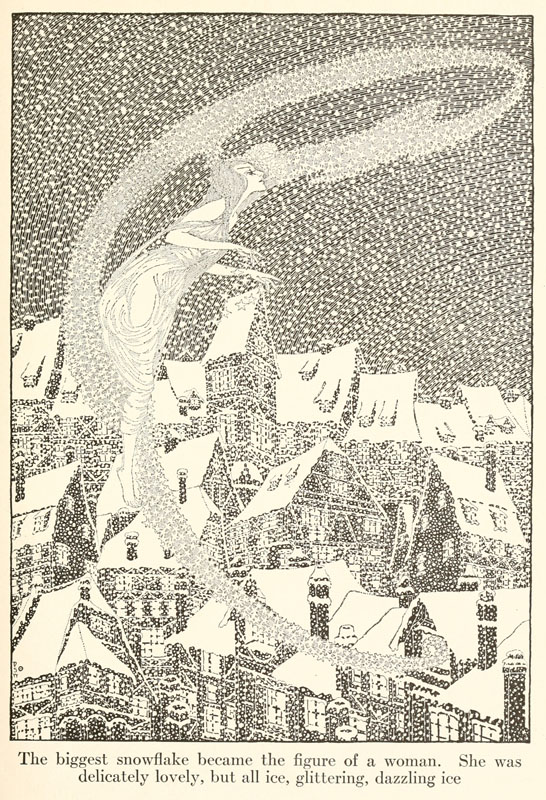
Andersen’s story has been illustrated and filmed many times with varying success. The Internet Archive has several illustrated editions, the selections here being from two of the better ones. Edmund Dulac’s Stories from Hans Andersen (1911) is one of the shorter collections and features predominantly colour pictures while Dugald Stewart Walker’s Fairy Tales from Hans Christian Andersen (1914) is one of the most heavily illustrated as well as having finer renderings of many stories. But not of the Snow Queen in her palace, Dulac beats everyone there.
walker2.jpg

Dugald Stewart Walker.

This description stood out from the second part of Andersen’s tale:

In winter all this pleasure came to an end, for the windows were sometimes quite frozen over. But then they would warm copper pennies on the stove, and hold the warm pennies against the frozen pane; there would be very soon a little round hole through which they could peep…

My sister and I had been reminiscing recently about growing up in the 1960s when central heating and double-glazing were a lot less common than they are today. This meant little or no heating in bedrooms, so very cold weather often meant the same frozen windows which Andersen describes. People in rural places will be familiar with this but it’s something I haven’t seen for years. When you’re a child it’s quite an excitement waking up to find that Jack Frost has paid a visit but these days I prefer a warm house.

As usual I’ll be away for a few days so the archive feature will be activated to summon posts from the past. Have a good one. And Gruß vom Krampus!
walker1.jpg

Dugald Stewart Walker.

Elsewhere on { feuilleton }
The illustrators archive

Previously on { feuilleton }
Dugald Stewart Walker revisited
More Arabian Nights
The art of Dugald Stewart Walker, 1883–1937
The Thief of Bagdad

thief2.jpg

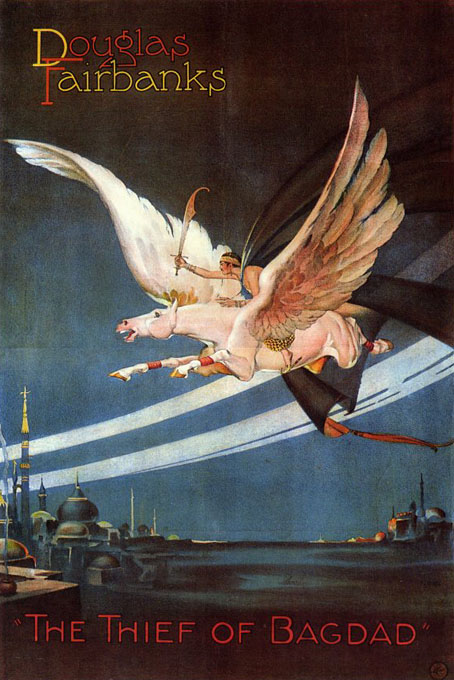
It’s the poster for the 1924 film version we’re concerning ourselves with here, not the more popular 1940 adaptation directed by Michael Powell. Both films are great but I have a special affection for Raoul Walsh’s silent version and this poster design has long been a favourite for the way it manages to condense the film’s blend of storybook graphics and Art Deco exotica. I’d wondered for years who was responsible for this design; according to various poster sites it’s the work of the film’s art director Anton Grot (1884–1974). This is one of several variations (there another here and one here) and there’s also a less interesting design which is far more typical of the period.

I often recommend the 1924 Thief of Bagdad as an introduction to silent cinema, especially if you can find a decent print. Fairbanks’ production had William Cameron Menzies as production designer and his sets are enormous Arabian Nights confections replete with minarets, onion domes and filigree screens like something from an Edmund Dulac illustration. Fairbanks gives a tremendously athletic performance and the marvellous Anna May Wong plays a Mongolian slave girl. There’s a lengthy description of the film’s production here while you can find a copy of the entire film at the Internet Archive although it really ought to be seen in a version which isn’t blighted by a company logo throughout.

Previously on { feuilleton }
More Arabian Nights
Edward William Lane’s Arabian Nights Entertainments
Alla Nazimova’s Salomé
Metropolis posters

René Bull’s Salomé

bull.jpg

An illustration by René Bull (1872–1942) from The Russian Ballet (1913) by AE Johnson. Bull seems to be primarily known as one of the many illustrators of that Golden Age staple, The Arabian Nights, although his interpretation is a little too comical for my taste. You can judge for yourself here.

Other Salomés turning up recently include a George Barbier picture in this BibliOdyssey post, Salomé, la Gran Diva at Bajo el Signo de Libra, and the Guardian’s review of David McVicar’s Pasolini-esque opera production.

Elsewhere on { feuilleton }
The illustrators archive
The Salomé archive

Louis Rhead bookplates

rhead1.jpg

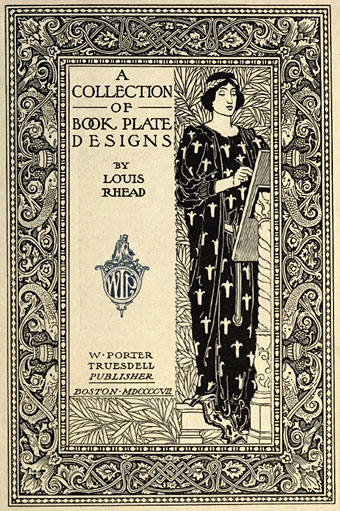
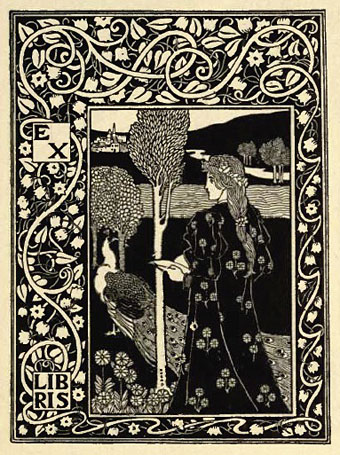
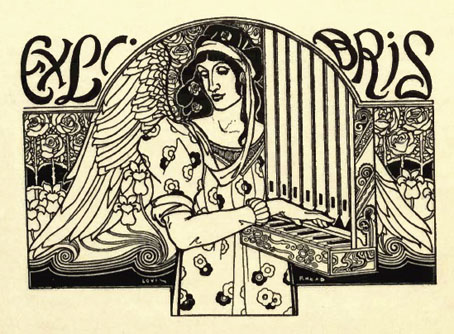
Yet another Internet Archive discovery, examples from a small book collection from 1907 of ex libris plates by Art Nouveau illustrator Louis Rhead (1857–1926). Rhead’s brightly-coloured poster art is often represented in Art Nouveau design books, less visible is his black-and-white work, some of which, like the example below, owes a clear debt to Aubrey Beardsley.

rhead2.jpg

rhead3.jpg

Elsewhere on { feuilleton }
The illustrators archive

Previously on { feuilleton }
Pratt Libraries Ex Libris Collection
The Evil Orchid Bookplate Contest
David Becket’s bookplates
Louis Rhead’s peacocks
More Arabian Nights
Buccaneers #1

The art of Bertha Lum, 1869–1954

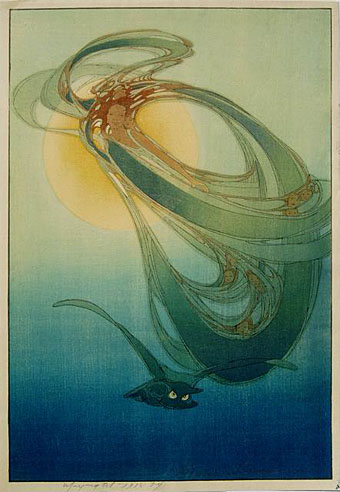
lum1.jpg

Mother West Wind (1918).

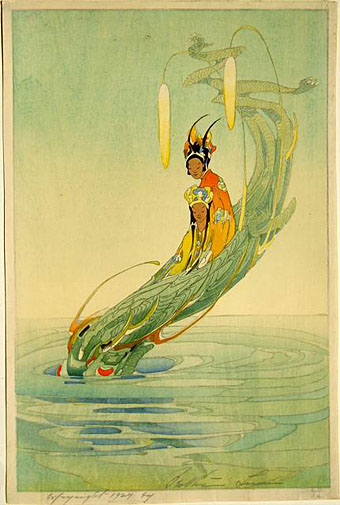
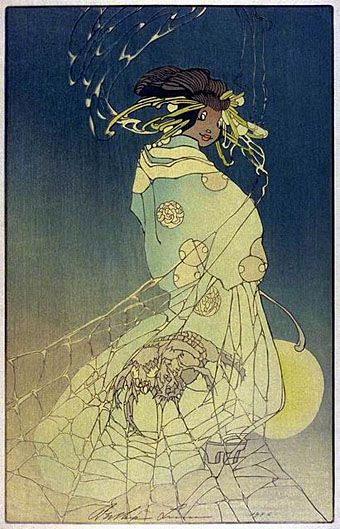
The first thought which comes to mind when looking at these beautiful prints is to wonder why American artist Bertha Lum isn’t more well-known, she had a particularly fondness for fluid lines and swirling arabesques as in the example above. There is at least a wealth of detail about her career online, and her biography shows her to be far more than a careful pasticheur like Edmund Dulac and others. She travelled to Japan specially to learn printmaking, and her later works were produced in collaboration with Japanese artisans. No surprise to see she was attracted to the works of Lafcadio Hearn (1850–1904), another Westerner who did much to introduce the rest of the world to Japanese folklore—especially the ghost stories—during the late Victorian era.

lum2.jpg

The Dragon King and his Bride (1924).

Four pages of catalogued works at Bertha-lum.org
Biography page in English and a reference gallery

lum3.jpg

Spider Woman (1936).

Elsewhere on { feuilleton }
The illustrators archive

Previously on { feuilleton }
The Boy Who Drew Cats
More Arabian Nights