The Great Transparent Ones

herold1.jpg

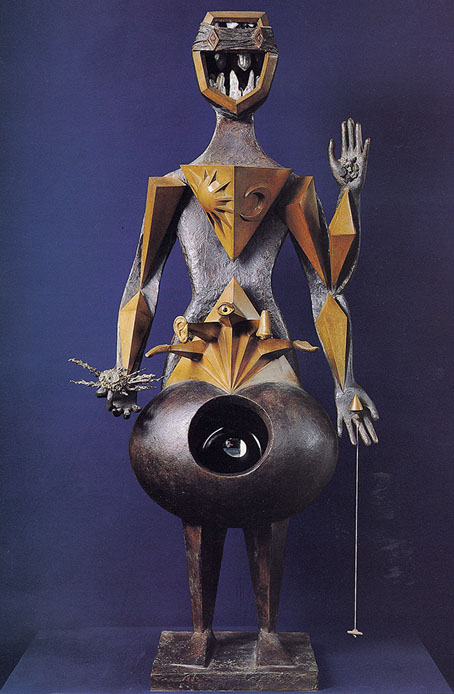
Le Grand Transparent (1947) by Jacques Hérold.

The Great Transparent Ones

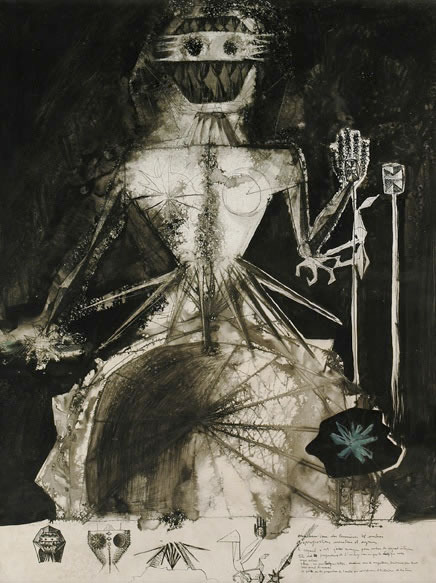
Man is perhaps not the centre, the cynosure of the universe. One can go so far as to believe that there exist above him, on the animal scale, beings whose behaviour is as strange to him as his may be to the mayfly or the whale. Nothing necessarily stands in the way of these creatures’ being able to completely escape man’s sensory system of references through a camouflage of whatever sort one cares to imagine, though the possibility of such a camouflage is posited only by the theory of forms and the study of mimetic animals. There is no doubt that there is ample room for speculation here, even though this idea tends to place man in the same modest conditions of interpretation of his own universe as the child who is pleased to form his conception of an ant from its underside just after he has kicked over an anthill. In considering disturbances such as cyclones, in face of which man is powerless to be anything but a victim or a witness, or those such as war, notoriously inadequate versions of which are set forth, it would not be impossible, in the course of a vast work over which the most daring sort of induction should never cease to preside, to approximate the structure and the constitution of such hypothetical beings (which mysteriously reveal themselves to us when we are afraid and when we are conscious of the workings of chance) to the point where they become credible.

I think it necessary to point out that I am not departing appreciably from Novalis’ testimony: “In reality we live in an animal whose parasites we are. The constitution of this animal determines ours and vice versa,” and that I am only agreeing with a thought of William James’s: “Who knows whether, in nature, we do not occupy just as small a place alongside beings whose existence we do not suspect as our cats and dogs that live with us in our homes?” Even learned men do not all contradict this view of things: “Perhaps there circle round about us beings built on the same plan as we are, but different, men for example whose albumins are straight,” said Émile Duclaux, a former director of the Pasteur Institute (1840–1904).

A new myth? Must these things be convinced that they result from a mirage or must they be given a chance to show themselves?

André Breton, Prolegomena to a Third Surrealist Manifesto, or Not, 1942
herold2.jpg

Le Grand Transparent (1947) by Jacques Hérold.

Elsewhere on { feuilleton }
The Surrealism archive

Previously on { feuilleton }
The Execution of the Testament of the Marquis de Sade by Jean Benoît
Chance encounters on the dissecting table
The Marvellous
Surrealist cartomancy

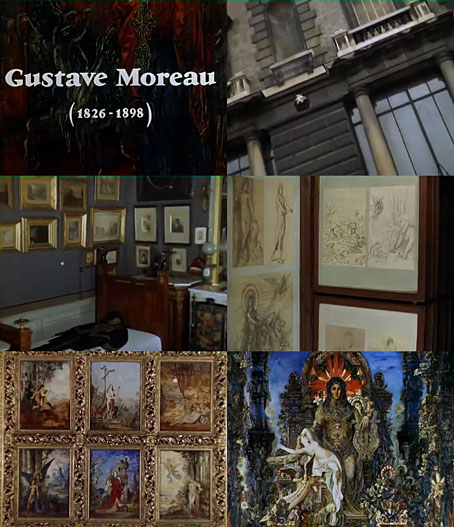
Gustave Moreau (1826–1898), a film by Nelly Kaplan

moreau1.jpg

André Breton has acknowledged that his personal ideal of female beauty was established in his adolescence when he visited the Gustave Moreau museum in Paris; like Joris-Karl Huysmans’s protagonist, Des Esseintes, Breton was enthralled by Moreau’s depiction of figures such as Salomé.

Keith Aspley, Historical Dictionary of Surrealism

André Breton happens to be one of four narrators whose voices may be heard (all speaking French) in this short study of Gustave Moreau’s paintings and drawings made in 1961. Director Nelly Kaplan was an Argentinian writer and film-maker who moved to Paris in the 1950s where she became creatively involved with Abel Gance, and with what was left of the original Surrealist movement based around the autocratic Breton. I’ve often drawn attention to Breton’s pettiness, especially his penchant for excommunicating from his circle anyone he disagreed with, but he deserves credit for championing Gustave Moreau during the decades when the artist was resolutely beyond the critical pale. A lesson I learned from the Surrealists early on is that you don’t let other people dictate the limits of your cultural tastes.

moreau2.jpg

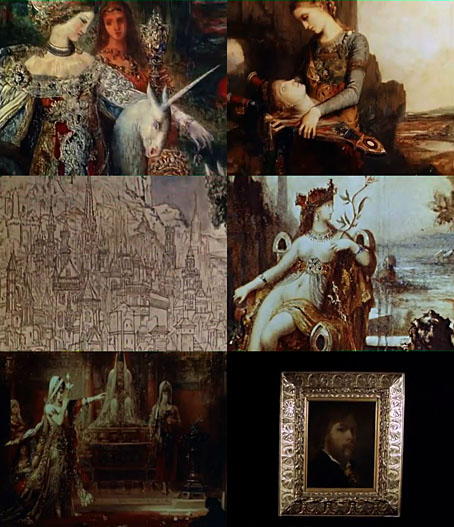
Moreau was still beyond the pale in 1961 so Kaplan’s film was in the vanguard of the reappraisals that were to take place later in the decade, culminating in major exhibitions in the early 1970s. One of the curators of the Hayward exhibition of 1972, Philippe Jullian, made an unfinished Moreau painting, The Chimeras, a key reference in his landmark study of Symbolist art, Dreamers of Decadence (1971). You see a few details from this picture in Kaplan’s film when the camera is roaming the walls of the Moreau Museum, formerly the artist’s residence in the rue de la Rochefoucauld, Paris. The years of neglect had their advantages, one of them being that the house/museum hasn’t had to change very much in order to accommodate visitors; the same goes for Moreau’s art which didn’t get scattered around the world like the works of his contemporaries. The upper floors of the museum are filled with original paintings, together with preliminary sketches which you see here in their hinged frames which allow you to leaf through them like pages of a book. No film or book does justice to the jewelled splendour of the finished paintings, however, especially the detailed works like Jupiter and Semele. You really have to see these things in person if you can.

Previously on { feuilleton }
New Life for the Decadents by Philippe Jullian
More chimeras
Philippe Jullian, connoisseur of the exotic
Ballard and the painters

Fuzz Against Junk & The Hero Maker

rubington1.jpg

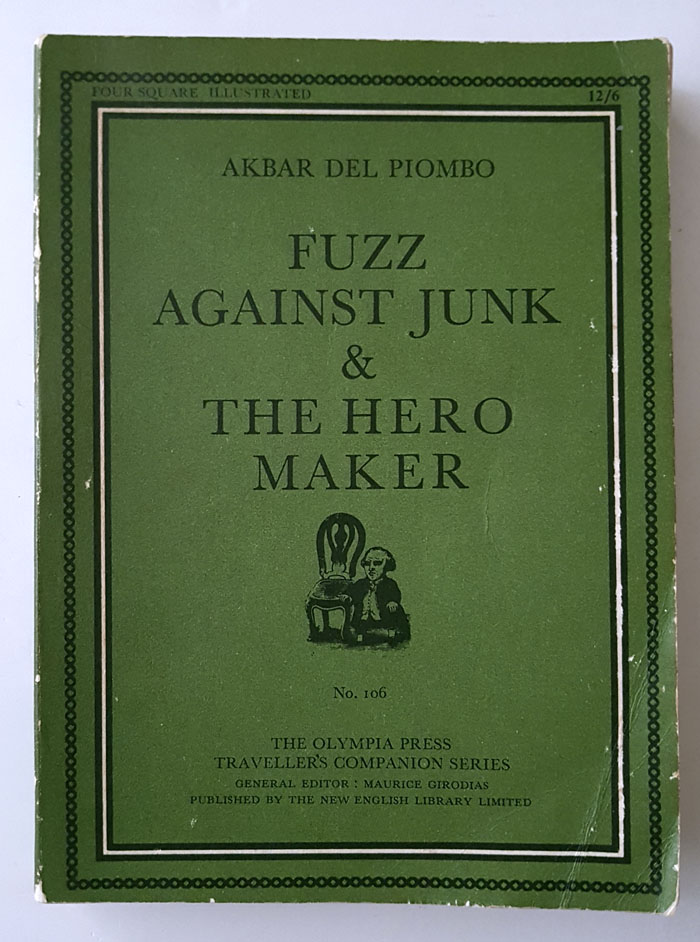
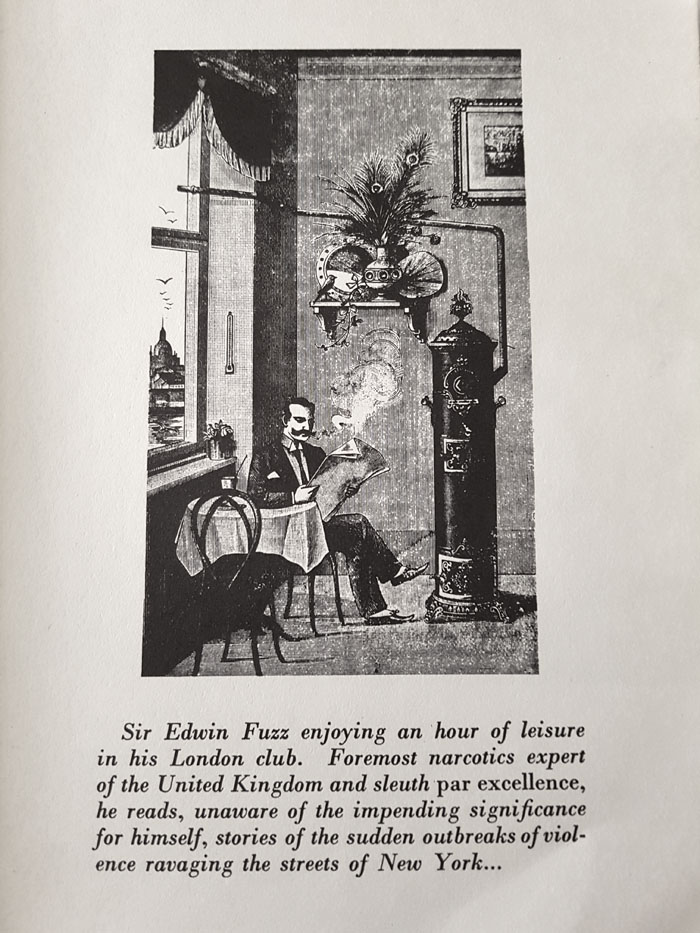
This is another of those posts in which I brag about finding an old book in a charity shop for a lot less than you’d have to pay for it online. But it does give me the opportunity to say something about American writer/artist Norman Rubington and his alter ego Akbar Del Piombo, something I was sure I’d done already. One of the weekend posts linked to an article about Rubington’s work but my discussion of his collages is in the essay I wrote about Wilfried Sätty for the Strange Attractor Journal, a piece which isn’t available here.

rubington8.jpg

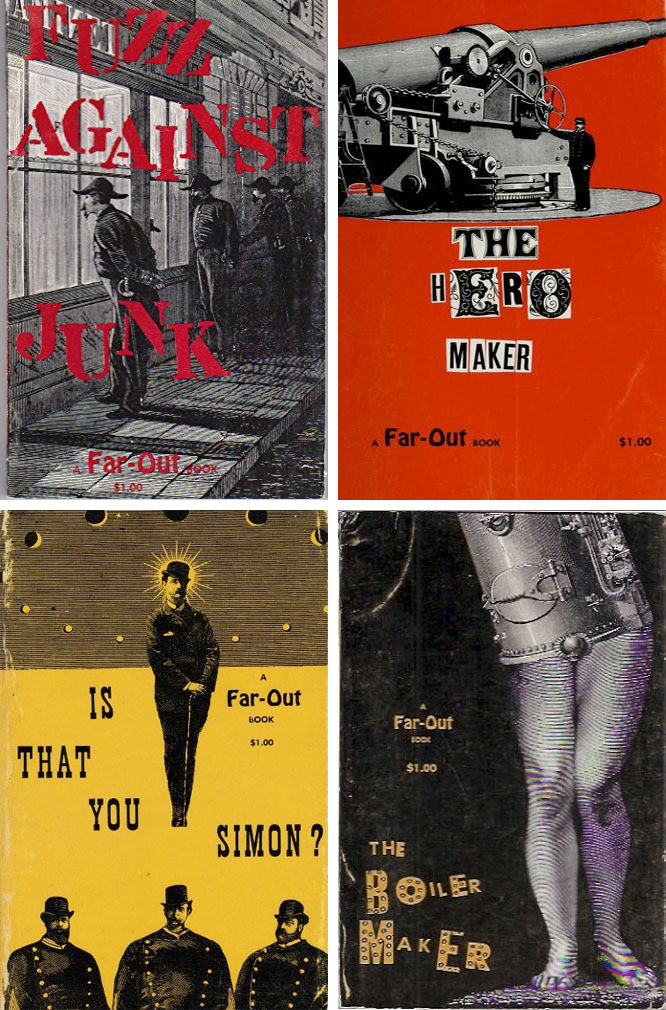
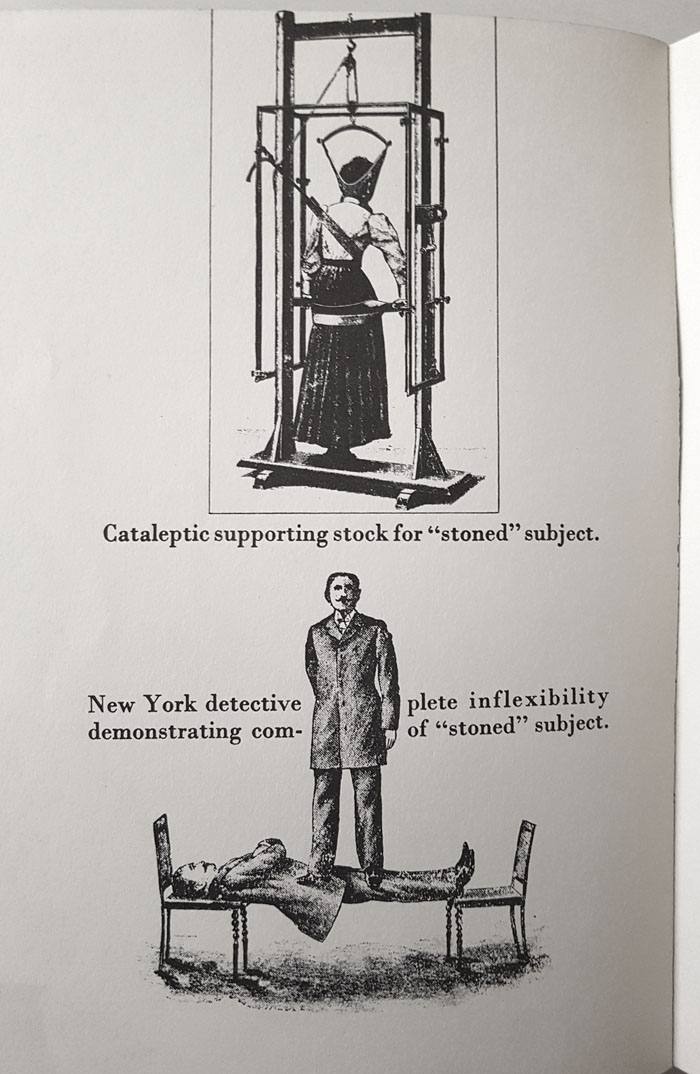
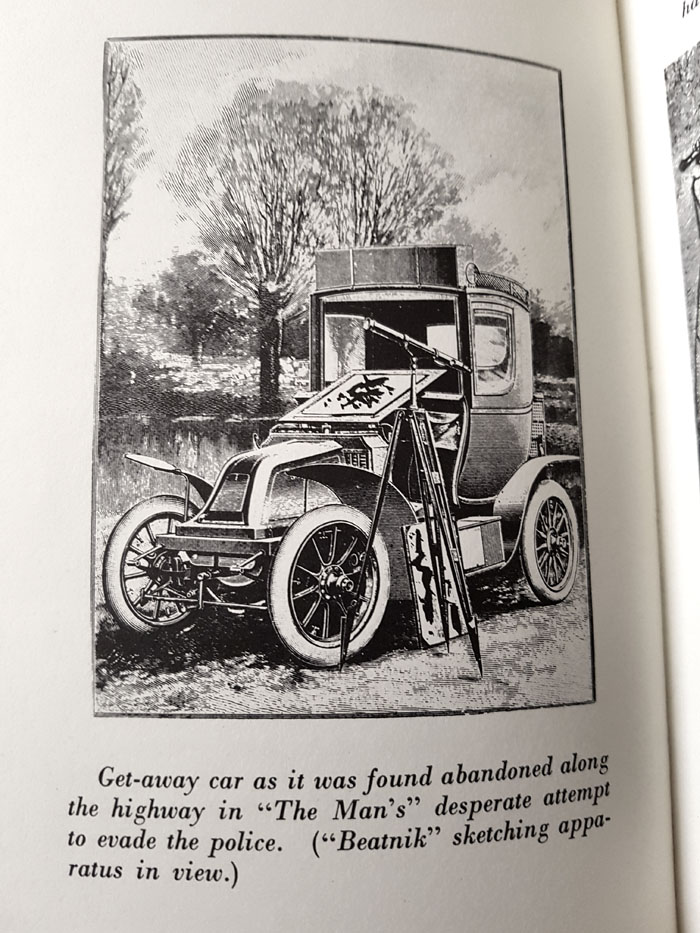
The engraving collages of Norman Rubington (1921–1991) were probably the first to use the form developed by Max Ernst for explicitly humorous purposes. They’re certainly among the earliest to take the lead from Ernst while aiming themselves at an audience outside the art world. There is humour in some of Ernst’s collages, of course, but it tends to be the black variety favoured by the Surrealists (and actually defined by them; André Breton’s 1940 Anthology of Black Humour was a pioneering study). Rubington’s small books exploit the comic potential of antique illustrations by repurposing them as the primary content in a series of absurd narratives; these aren’t “graphic novels”, they’re more like heavily-illustrated comedy routines. There were four books in the original series—Fuzz Against Junk (1959), The Hero Maker (1959), Is That You Simon? (1961) and The Boiler Maker (1961)—with a fifth title, Moonglow, appearing in 1969. Olympia Press published the books in France, with US editions appearing around the same time under the Far-Out imprint used by Citadel Press. My charity purchase is the 1966 New English Library reprint of an Olympia Press collection of the first two volumes. The olive-green Olympia covers always provoke a Pavlovian grab response when I see one on a shelf although I’ve yet to find a copy that wasn’t an NEL reprint.

rubington2.jpg

rubington3.jpg

rubington4.jpg

Continue reading “Fuzz Against Junk & The Hero Maker”

Study II (Hallucinations) by Peter Weiss

weiss1.jpg

If you hadn’t noticed by now, this year is the centennial anniversary of the publication of Ulysses and The Waste Land. It’s also a centenary year for the Surrealist movement although the same could be said of last year and the next couple of years when Surrealism, like most art movements, doesn’t have a definite point of departure. Apollinaire first coined the term in 1917, after which it became attached by a process of accretion to some of the moves being made in the wake of Dada. André Breton and Philippe Soupault’s collection of automatic writing, The Magnetic Fields, was published in 1920 but it would be another four years before the appearance of the first Surrealist manifesto, and there were two of those produced by rival groups within a few weeks of each other as a result of the childish factionalism that plagued the movement from the outset.

weiss2.jpg

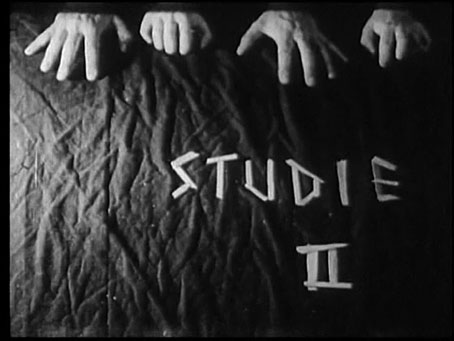
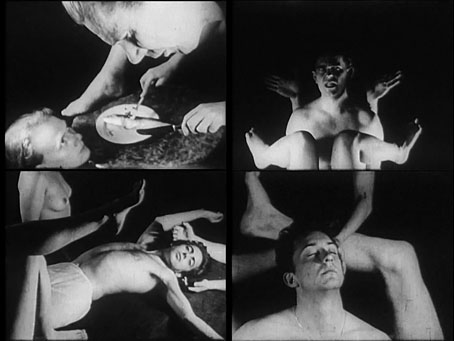
Anyway, Study II (Hallucinations) (1952) is a short film that can be regarded as Surrealist even if it wasn’t intended as such. I didn’t know playwright Peter Weiss had made any films but then I only really know him at all from his extraordinary Marat/Sade. Study II is a long way from Marat/Sade in both form and content, being an attempt to capture the fleeting impressions that enter the mind before the onset of sleep. The juxtaposition of naked figures and isolated body parts is reminiscent of many Surrealist paintings or collages, although filmed tableaux such as these are seldom as effective as still images or animated ones when there’s always the distracting awareness of watching people holding an awkward pose. But Weiss’s film would suit a screening with similar Surrealist shorts, especially Eric Duvivier’s La femme cent têtes, another display of awkward poses and hallucinatory moments.

Previously on { feuilleton }
The Marat/Sade

Weekend links 539

earle.jpg

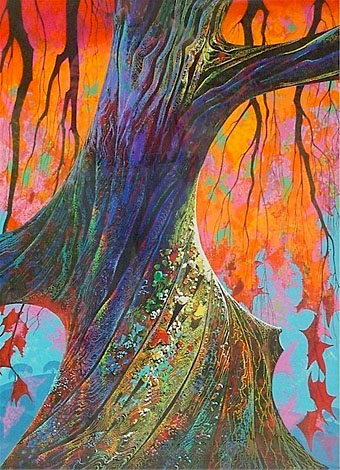
Fire, Red and Gold (1990) by Eyvind Earle.

Roger Penrose won a Nobel Prize recently for his work in physics. I read one of his books a few years ago, and was intimidated by the “simple” equations, but I always like to hear his ideas. This 2017 article by Philip Ball is an illuminating overview of Penrose’s life and work.

• At Dangerous Minds: Joe Banks on the incidents that led to Lemmy’s dismissal from Hawkwind in 1975, an extract from Hawkwind: Days of the Underground. The book is available from Strange Attractor in Europe and via MIT Press in the USA.

• “Not married but willing to be!”: men in love (with each other) from the 1850s on. It’s always advisable to take photos like these with a pinch of salt but several of the examples are unavoidably what they appear to be.

Most of all, this resolutely collaborative production stood against the vanity and careerism of individual authorship; Breton called it the first attempt to “adapt a moral attitude, and the only one possible, to a writing process.” The text itself is peppered with readymade phrases, advertising slogans, twisted proverbs, and pastiches of such admired predecessors as Rimbaud, Apollinaire, and Lautréamont, whose pluralistic credo, “Poetry must be made by all. Not by one,” anticipates the sampling aesthetic by a century. But the intensity was draining, and as the book moves toward its final pages and the writing becomes increasingly frenetic, you can almost feel the burnout taking hold. After eight days, fearing for his and Soupault’s sanity, Breton terminated the experiment.

Mark Polizzotti reviews a new translation by Charlotte Mandell of The Magnetic Fields by André Breton and Philippe Soupault

• The hide that binds: Mike Jay reviews Dark Archives: A Librarian’s Investigation into the Science and History of Books Bound in Human Skin by Megan Rosenbloom.

• “A photographer ventures deeper into Chernobyl than any before him.” Pictures from Chernobyl: A Stalker’s Guide by Darmon Richter.

John Van Stan’s reading of Frankenstein by Mary Shelley uses my illustrations (with my permission) for each of its chapters.

Susan Jamison, one of the artists in The Art of the Occult by S. Elizabeth, talks to the latter about her work.

William Hope Hodgson: The Secret Index. A collection of Hodgson-related posts at Greydogtales.

Gee Vaucher talks to Savage Pencil about her cover art for anarchist punk band, Crass.

Weird, wacky and utterly wonderful: the world’s greatest unsung museums.

Tom Cardamone chooses the best books about Oscar Wilde.

• At Dennis Cooper’s: Jean-Pierre Melville Day.

You by The Bug ft. Dis Fig.

Magnetic Dwarf Reptile (1978) by Chrome | Magnetic Fields, Part 1 (1981) by Jean-Michel Jarre | Magnetic North (1998) by Skyray