Hokusai’s Horses

hokusai01.jpg

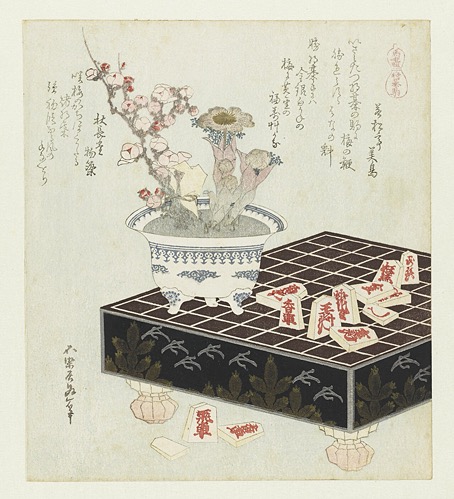
Shogi Chess Board.

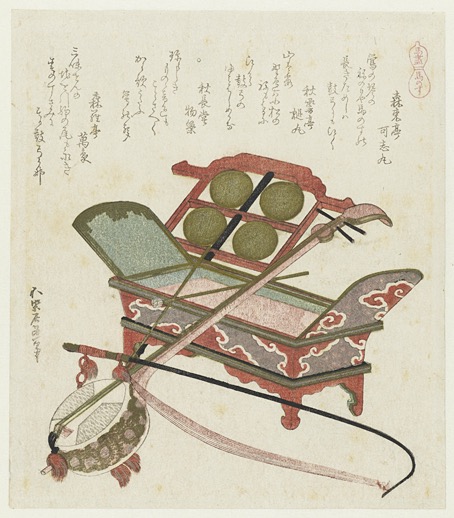
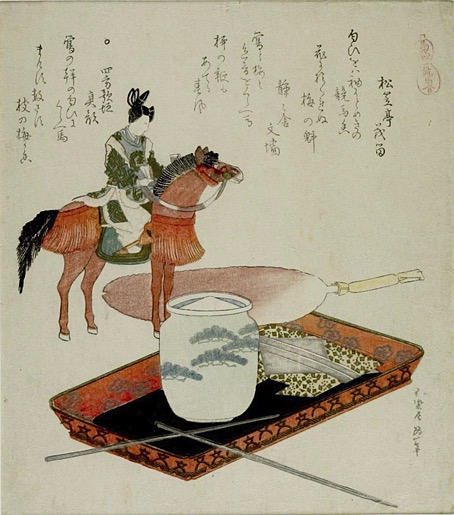
I ought to have posted this several weeks ago for the advent of the Year of the Horse. Umazukushi is a series of wood-block prints by Katsushika Hokusai created to celebrate another Year of the Horse, 1822. Umazukushi (also Uma-zukushi) is usually translated as “A Selection of Horses”, and this is what Hokusai gives us, albeit in a cryptic manner since most of the prints are still-life views of household objects. Each print features a short poem—the series was commissioned by a group of poets—while each picture contains a reference to horses. The allusions aren’t always easy to decipher for the non-Japanese, especially when looking back over two centuries. The Japanese robin, for example, is known as the “horse bird” as a result of its singing voice which was regarded as sounding like the neighing of a horse. I’m still not sure about some of the other prints. A complete description of the references would be useful but my searches so far have failed to turn up anything.

hokusai02.jpg

Inkstone in a Horseshoe Shape.

hokusai03.jpg

Musical Instruments and Horse’s Tail.
hokusai04.jpg

Toy Horse Fan and Incense Burner.

hokusai05.jpg

Saddle Wringer, Smoking Outfit and Plum Branch.
Continue reading “Hokusai’s Horses”

Weekend links 822

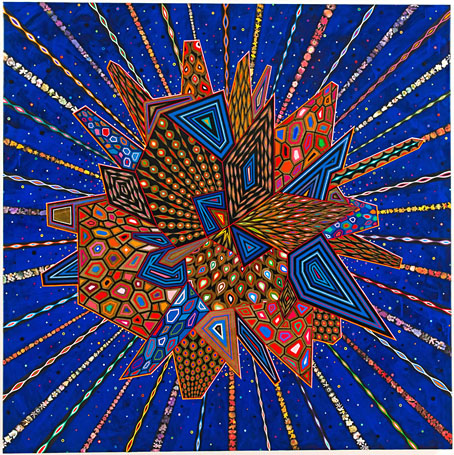
tomaselli.jpg

Untitled (2013) by Fred Tomaselli.

• The latest book from A Year In The Country is Ghost Signals: The Shadowlands of British Analogue Television 1968–1995, an exploration of “a shadowland of terrestrial TV hidden in plain sight across the unmediated and unmarketed corners of the internet”.

• New music: After The Rain, Strange Seeds by The Leaf Library; Music For Intersecting Planes by Leila Bordreuil + Kali Malone.

• RIP airbrush artist Philip Castle. Steve Mepstead talked to Castle in 2011 about his work for Stanley Kubrick and others.

Strassman began to see patterns in these encounters and created a typology: aliens; guides and helpers; clowns, jokers and jesters; elves and dwarves; or reptilian or insect-like figures. Variations and outliers notwithstanding, this spectrum remains remarkably consistent with DMT studies today. Strassman also looked into the historical literature and found similar descriptions as far back as Szára, who wrote that one of his subjects reported meeting “dwarfs or something.” Forty years later and a continent away, one of Strassman’s participants put it succinctly: “That was real strange. There were a lot of elves.”

A long read by Joanna Steinhardt on the history and nature of hallucinated spirit guides and “self-transforming machine elves”

• Jet Propulsion Laboratory: Ben Cardew on the pivotal role of Stereolab’s Super-Electric.

• At Colossal: Pejac transforms basic graph paper into detailed, trompe-l’œil tableaux.

Sixty finalists from the 23rd Annual Smithsonian Magazine Photo Contest.

• At BLDGBLOG: The landscape architecture of auroras on demand.

• Mix of the week: Float V mix by DJ Food.

We Have Always Been Here (1995) by ELpH vs Coil | 5-Methoxy-N,N-Dimethyl- (5-MeO-DMT) (1998) by Time Machines/Coil | Machine Elves (2024) by Polypores

Locked Groove

locked1.jpg

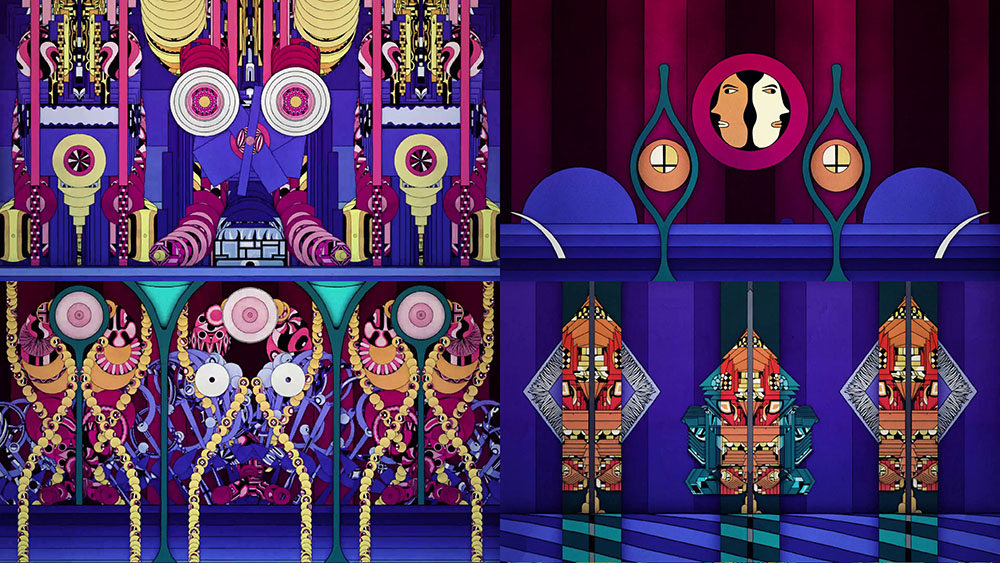
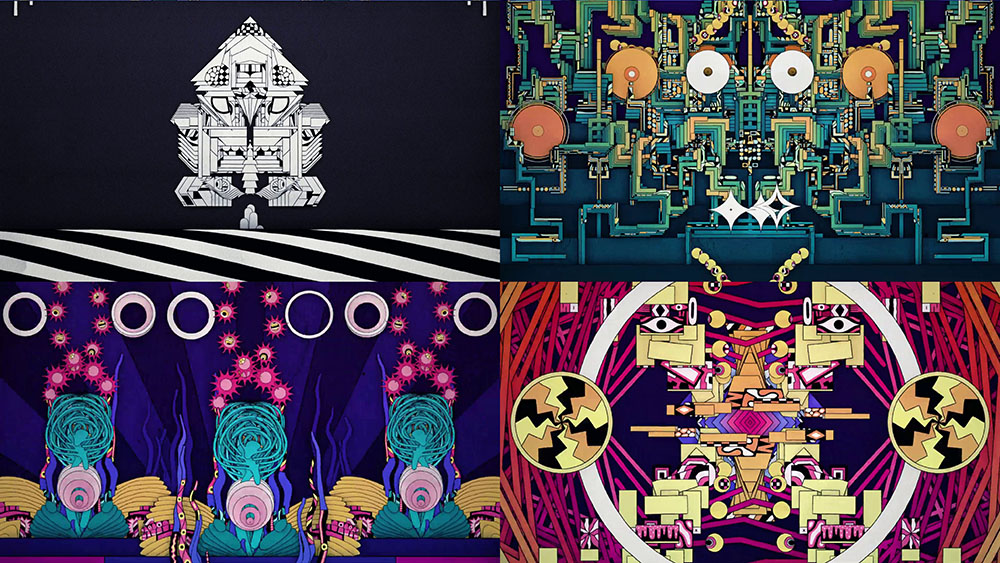
It’s been a while since Scotto Moore’s newsletter turned up any of the abstract animated visuals I enjoy. Locked Groove by Emanuele Kabu fits the bill perfectly, an exercise in vibrant random symmetry which bears the subtitle “A hypnotic audiovisual animation inspired by pareidolia”. The video might also have been inspired by psychedelic hallucination given the way it captures the tendency of the abstract patterns generated by psychedelic delirium to continually change their size, shape and colour. This is one feature of the psychedelic experience you don’t see reproduced very often even though animation has long been the ideal medium for creating such effects. Kabu has soundtracked the metamorphoses with analogue synth noises but you could just as easily watch them with a suitably psychedelic piece of music.

locked2.jpg

Previously on { feuilleton }
Short films by Hideki Inaba

Antonio Rubino’s Versi e Disegni

rubino01.jpg

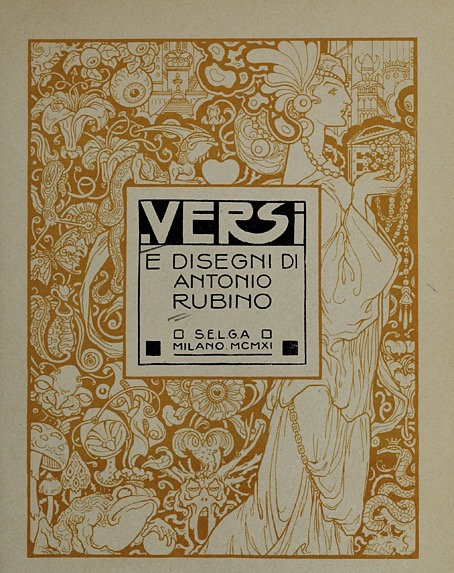
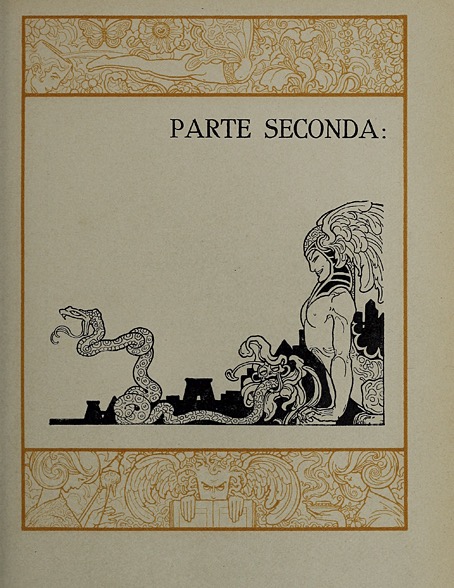
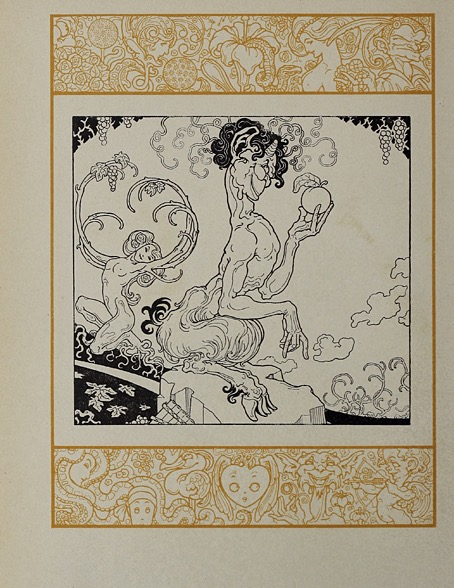
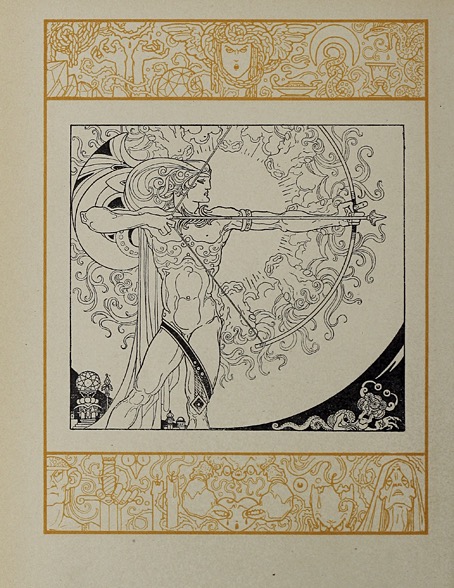
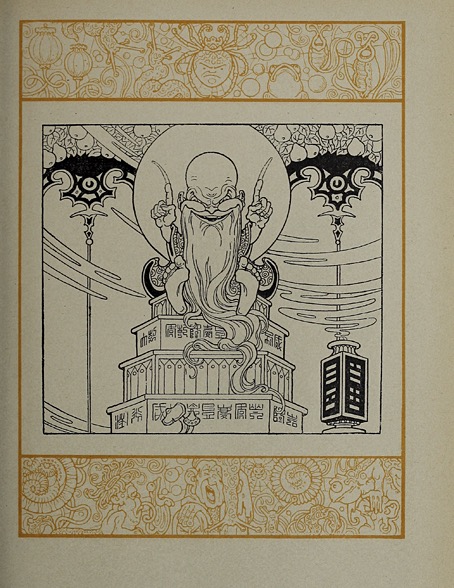
I didn’t know anything about Italian artist Antonio Rubino (1880–1964) until I went searching for information about this book’s creator. Wikipedia describes Rubino as an illustrator, cartoonist, animation director, screenwriter, playwright, author and poet who was also the most prolific comics illustrator in Italy before the First World War. Versi e Disegni is a product of those pre-war years, being published in 1911, a collection of the artist’s poetry with illustrations that range from the grotesquely comic to careful delineations reminiscent of later drawings by Wallace Smith and Dugald Stewart Walker.

rubino02.jpg

The title page sets the mood with its picture of an elegant woman surrounded by a tangle of orchids, fungi, small animals and disembodied eyeballs. The uneven tone continues inside, veering from mythological scenes that feature a surprising quantity of tentacles, to cutesy fare of a type closer to the illustrations from Rubino’s cartoons and children’s books. Not everything in the drawings is to my taste—I’ve never found pictures of gurning gnomes delightful—but it’s all very assured and well-presented, with decorative borders that vary from page to page. Given Rubino’s later successes it’s unlikely there’s much more like Versi e Disegni in his oeuvre but if there is I’d like to see it. His first illustration commission from 1905, for the libretto of Alberto Colantuoni’s operatic adaptation of The Rime of the Ancient Mariner, may be seen here, with the artist confusingly credited by his other forename, Augusto.

• Further reading: The dreamy illustrations of Antonio Rubino

rubino03.jpg

rubino04.jpg

rubino05.jpg

Continue reading “Antonio Rubino’s Versi e Disegni”

Weekend links 821

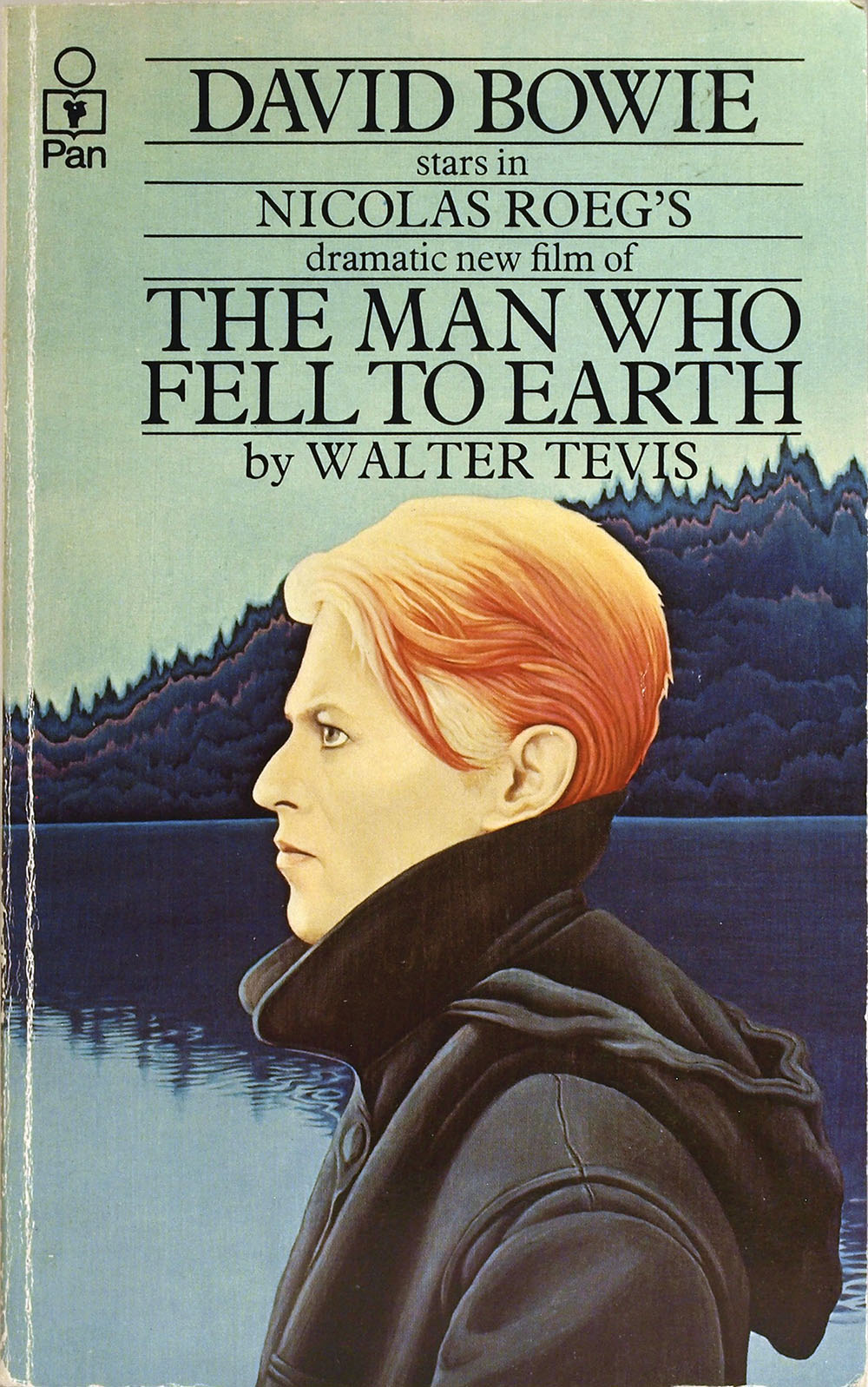
tevis.jpg

The first UK paperback edition, 1976. Cover art by David Bowie’s illustrator friend George Underwood.

• At the BFI: “Humanity, lost and found”. The original Sight and Sound review by Tom Milne of The Man Who Fell to Earth which was released 50 years ago this month. The film is another Nicolas Roeg project whose lofty reputation today has made everyone forget the bewildered or even hostile reaction it generated at the time, including from the US distributor, Paramount, who hated it. Milne, by contrast, had read the novel it was based on, and paid close attention to what the film’s writer, Paul Mayersberg, described as its “minefield of images”.

• Among the new titles at Standard Ebooks, the home of free, high-quality, public-domain texts: The Varieties of Religious Experience by William James.

• Issue 13 of Verbal magazine features an interview with Michael Moorcock, Iain Sinclair in the “Talking Books” section, and more.

• New music: 4 Hours (DVATION 2026 Version) by Clock DVA; -Music For Oriental Hotel Okinawa Resort & Spa- by Harikuyamaku.

• The Shaw Brothers Cinema YouTube channel has whole feature films from the studio’s huge archive free to view.

• At Colossal: “Historic architecture emerges from stone in Matthew Simmonds‘ ethereal sculptures”.

• “Music with Balls”: Terry Riley performing live with an arrangement of shiny silver spheres on KQED TV in 1969.

• Mixes of the week: DreamScenes – March 2026 at Ambientblog, and Motorik by Jon Savage.

• “What is electronic music?” Daphne Oram explains.

• RIP Country Joe MacDonald.

Stardust (1941) by Artie Shaw And His Orchestra | Stardust (1959) by Martin Denny | Stardust (1985) by Yasuaki Shimizu & Saxofonettes