The skull beneath the skin

skull1.jpg

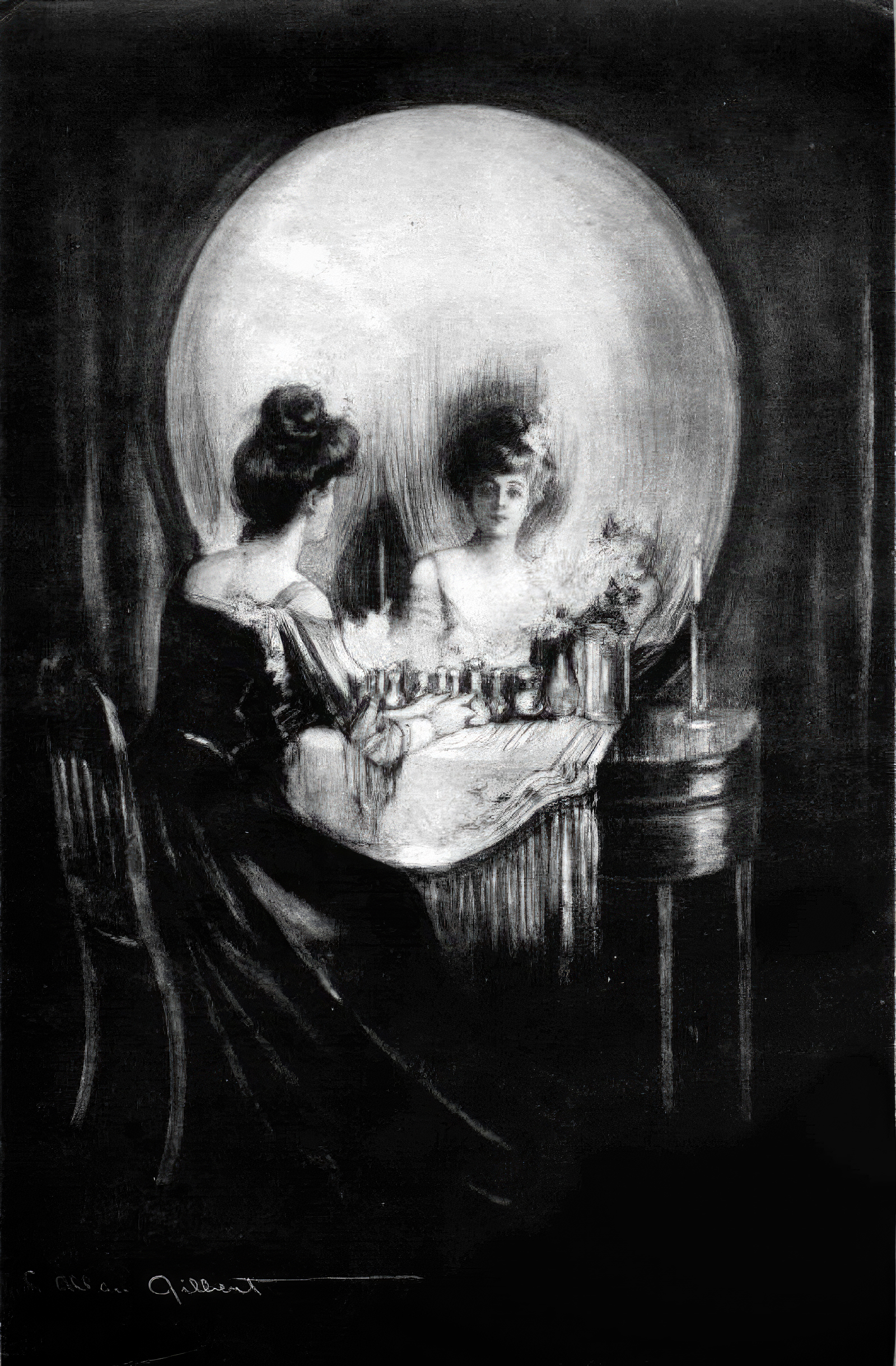
All Is Vanity by Charles Allan Gilbert (1892).

The subliminal skull is another of those perennial motifs that recur in art from time to time, and one which has become especially prevalent since the late 19th century. There seem to be a number of reasons for this, the most obvious being that if you’re going to show how clever you are by hiding one image inside another you may as well make the hidden thing something that everyone recognises. A secondary reason would seem to be the waning power of the vanitas theme. As painting became more pictorially sophisticated it wasn’t enough to simply show a skull and expect people to accept this with a stern moral as the principal content. Hence the development of death as a non-skeletal character in Symbolism and the reduction of skulls in pictures to a kind of playful game.

Holbein’s anamorphic skull in The Ambassadors is probably the grandfather of all the later versions but the more recent popularity of the hidden motif can be traced back to Charles Allan Gilbert whose 1892 picture, All is Vanity, drawn when he was just 18, was sold to Life Publishing in 1902, and subsequently spread all over the world in postcard form. Despite giving birth to a host of imitators, Gilbert’s picture is the one that still inspires artists and photographers up to the present day.
Continue reading “The skull beneath the skin”

The art of Heidi Taillefer

taillefer.jpg

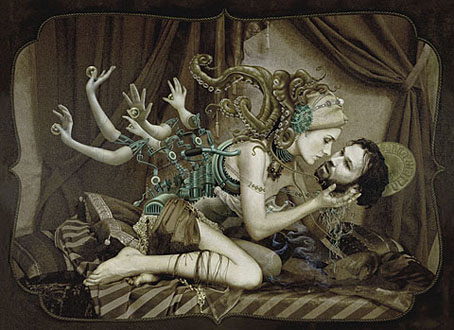
Frustration Attraction (2006).

A Canadian artist works a marvellous variation on Salomé using oils and photo-printed canvas. Lots of other fine, inventive work at her site, all of it shown far too small to see the considerable detail. A tip to artists with websites: let us see the pictures properly; people appreciate it and will spread the word if they like your work. Via Fabulon.

Update: Her site has been relaunched and you can now see a lot more of the detail in her incredible paintings.

Elsewhere on { feuilleton }
The fantastic art archive

Previously on { feuilleton }
Beardsley’s Salomé
Peter Reed and Salomé After Dark
Alla Nazimova’s Salomé

Klaus Dinger, 1946–2008

dingers.jpg

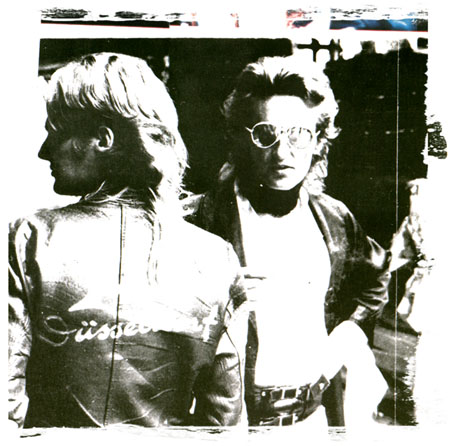
Klaus Dinger (right) with brother Thomas, circa 1978. From the sleeve of Viva by La Düsseldorf.

“There were three great beats in the ’70s: Fela Kuti’s Afrobeat, James Brown’s funk and Klaus Dinger’s Neu! beat.” Brian Eno

Klaus Dinger, the great drummer for Neu! and La Düsseldorf (and briefly Kraftwerk in 1971) died back in March but news of this has taken a while to emerge. Everything he did in the Seventies is essential, the Neu! albums especially. YouTube has a few choice examples such as this clip of someone playing Neu!’s finest (and oft-imitated) moment, Hallogallo, slightly too fast. Then there’s Isi from Neu! 75 and the crazy glam-punk of Hero (a tremendous period performance) shortly before guitarist Michael Rother left and the band transmuted into La Düsseldorf. For a blast of the latter, there’s the majestic Rheinita from Viva. Happily, Michael Rother is still with us and was interviewed in the most recent issue of The Wire.

Previously on { feuilleton }
Aerodynamik by Kraftwerk
Metabolist: Goatmanauts, Drömm-heads and the Zuehl Axis
The genius of Kraftwerk

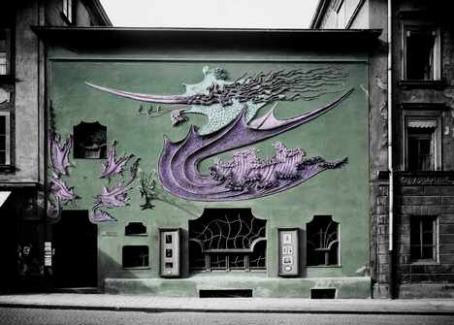
Atelier Elvira

elvira1.jpg

Atelier Elvira (1897-98).

Seeing as there’s been a run of Art Nouveau-related posts here it’s worth mentioning a location that’s familiar to students of the Jugendstil but less well-known to the world at large. August Endell’s Atelier Elvira was a Munich studio building whose exterior decoration of a very stylised dragon creature manages to be even more exaggerated than similar work by Antoni Gaudí. Munich was the centre of German arts and crafts and produced much home-grown Art Nouveau but this eruption of bizarre plasterwork in an otherwise mundane street was still surprising. The façade was painted green, as in the tinted photo above, and the dragon painted different colours each year, yellow, red and so on.

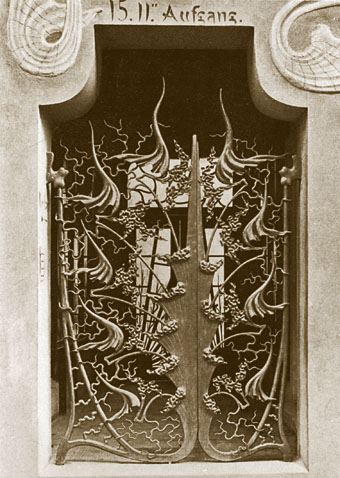
elvira3.jpg

The ironwork street entrance.

Needless to say, not everyone looked upon this kind of challenging décor favourably. In 1937 the Nazi Oberbürgermeister complained about the “hideous façade disrupting the character of the rest of the street” and had the dragon design chipped off the wall. Allied bombs did for the rest a few years later so these pictures are all that we have left.

Continue reading “Atelier Elvira”