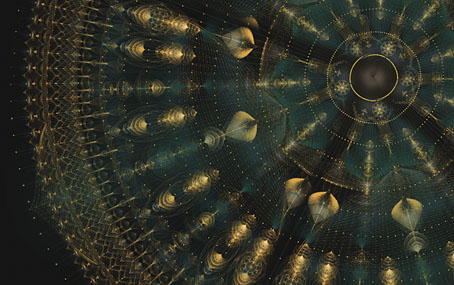
Beautiful abstractions by this Russian artist at Behance. Thanks again to Thom for the tip!
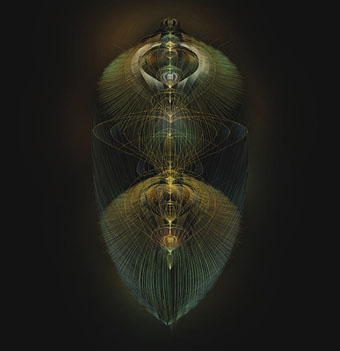
A journal by artist and designer John Coulthart.
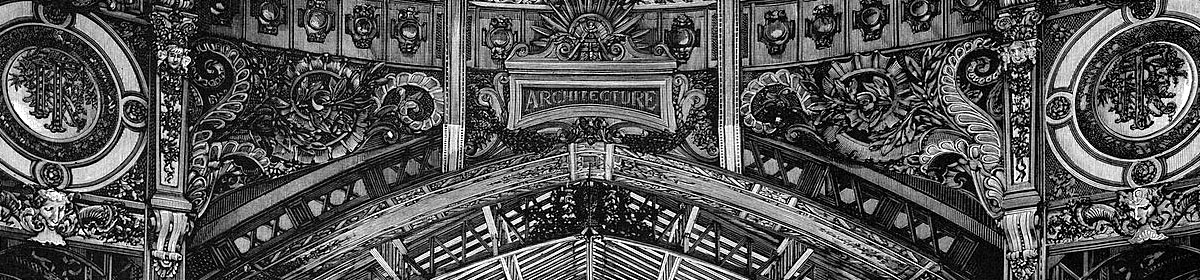
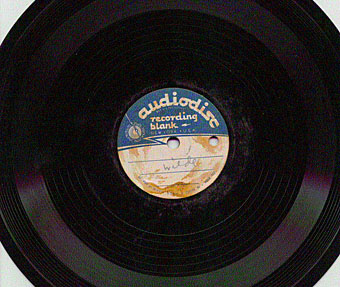
How to combine two recent {feuilleton} obsessions? Ask whether Oscar Wilde had his voice recorded on an Edison machine at the Exposition Universelle in Paris, 1900. It’s a tantalising question. We know from Wilde’s letters that he visited the Exposition several times; he talked with Rodin and admired a self-portrait by his old painter friend Charles Shannon in the British pavilion. Edison staff were prominent at the exposition and did us a favour by filming parts of it. Several of the Wilde biographies mention the rumoured recording, the details of which are recounted at Utterly Wilde:
According to H Montgomery Hyde’s 1975 biography of Oscar Wilde: “…It was during one of these visits to the Exhibition that Wilde was recognized in the American pavilion, where one of the stands was devoted to the inventions of Thomas Edison. One of these inventions was the ‘phonograph or speaking machine,’ and Wilde was asked to say something into the horn of the recording mechanism. He responded by reciting part VI of The Ballad Of Reading Gaol, which consists of the last three stanzas of the poem, and identifying it with his name at the end.” (More.)
The purported wax cylinder is lost but an acetate copy surfaced in the 1960s. Wilde’s son, Vyvyan Holland, identified his father’s voice then changed his mind later on. An analysis by the British Sound Archive threw further doubt on the recording so we’re left to make up our own minds which you can do for yourself here. It doesn’t sound to me like the voice one would expect from a man of Wilde’s physical size, but then I also never expected Aleister Crowley’s voice to be so highly-pitched. If anyone knows of more recent research or detail about the Wilde recording, please leave a comment.
Elsewhere on { feuilleton }
• The Oscar Wilde archive
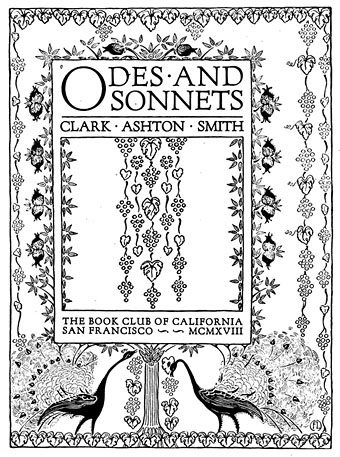
Clark Ashton Smith’s weird fiction is reprinted more often and more widely than his poetry so it’s convenient for those curious about his verse that the Internet Archive has two volumes of early work. Odes and Sonnets is from 1918 and features embellishments by illustrator Florence Lundborg whose grape-devouring peacocks nod towards the fin de siècle spirit Smith was trying to capture in his poems. The Star-Treader, and Other Poems is Smith’s first book from 1912, published when he was just 19, and is heavily indebted to the Decadents. That Decadent influence carried over into the stories he wrote for Weird Tales and augments their unique flavour and over-heated atmosphere, an atmosphere which raised his work above the often mediocre level of his contemporaries. On page 58 of The Star-Treader can be found The Eldritch Dark, the poem from which the leading Smith website takes its name.
Previously on { feuilleton }
• Clark Ashton Smith book covers

A tattooed version of the Flandrin pose—and a fine tattoo it is—from photographer Rory Desmond. There’s more from his photo set here. Thanks to Thom for the tip!
Elsewhere on { feuilleton }
• The recurrent pose archive
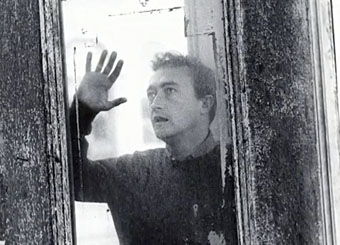
Curtis Harrington.
House of Harrington is a short documentary from 2008 about the late filmmaker Curtis Harrington which has just been posted to YouTube by its makers, and by a curious coincidence this appearance occurs in the week of Dennis Hopper’s death. Harrington gave Hopper the lead in his debut feature Night Tide (1961) at a time when the actor was ostracised in Hollywood after a falling out with director Henry Hathaway. Hopper’s diligent performance in Harrington’s film, a low budget horror, is a long way from the histrionics one usually finds in works of this sort and is a good reason to seek it out.
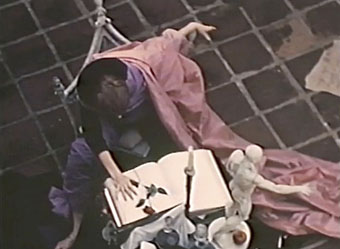
Marjorie Cameron in The Wormwood Star.
Also in Night Tide in a wordless role is the enigmatic occult artist Marjorie Cameron who drifts around looking spooky and mysterious. Cameron had earlier appeared with Harrington in Kenneth Anger’s Inauguration of the Pleasure Dome (1954), he as Cesaré the Somnambulist from Caligari, she as Aleister Crowley’s Scarlet Woman. That encounter led to Harrington making her the subject of one of his experimental shorts, The Wormwood Star in 1956. I’ve wanted to see this film for years, if only to sate a persistent curiosity, and House of Harrington contains a few tantalising glimpses. With luck it may turn up on YouTube (or even DVD) in the future.
Lastly, Automat Pictures, the makers of House of Harrington, also have a lengthy filmed lecture in their channel, Queer for Fear, which “explores gay and lesbian subtext in the horror film, and examines the intertwining of queer history and monster movies.”
• House of Harrington: Part 1 | Part 2 | Part 3 | Part 4
Previously on { feuilleton }
• Curtis Harrington, 1926–2007
• The art of Cameron, 1922–1995
• Kenneth Anger on DVD…finally