Wenceslaus Hollar’s peacocks

hollar1.jpg

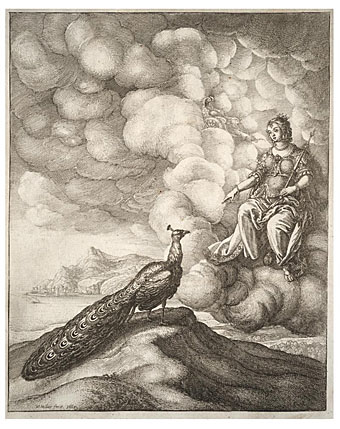
Juno and the peacock (1665).

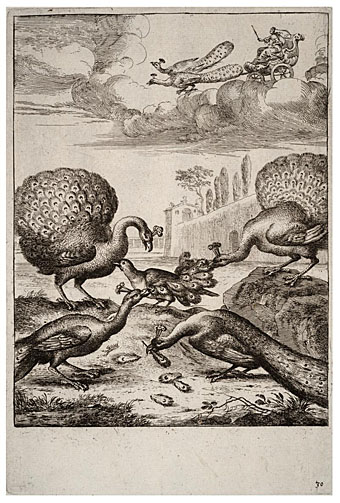
Wenceslaus Hollar (1607–1677) did more than just peacocks, of course, as you can discover if you browse the substantial collection of his work at the University of Toronto. Both these pieces illustrate Aesop’s fables. (See here and here.)

hollar2.jpg

The jay and the peacocks (1665).

Elsewhere on { feuilleton }
The etching and engraving archive

The art of Ray Frederick Coyle, 1885–1924

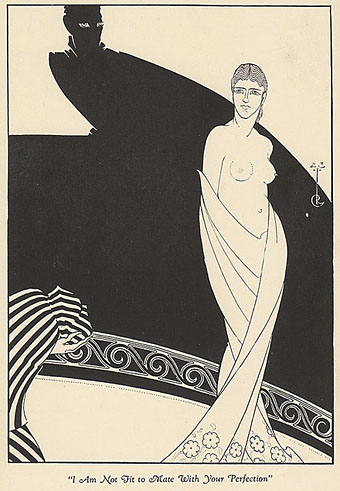
coyle1.jpg

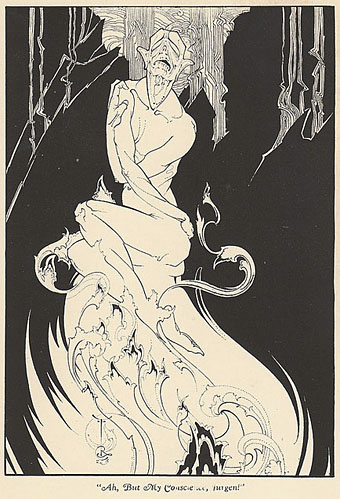
Another illustrator who died young, Ray Coyle’s short life no doubt explains why his work isn’t more visible today. The first two illustrations here are from a 1920s edition of Jurgen (1919), the scurrilous fantasy novel by James Branch Cabell which has been praised by enthusiasts of ironic comedy as diverse as Aleister Crowley and Michael Moorcock.
coyle2.jpg

Some of the illustrations in this Flickr set bear the date 1923 so they may have been Coyle’s last major work. Frank C Papé is the artist more commonly associated with Cabell, and while his art complements the author’s humour, Coyle’s elegant post-Beardsley style seems more suited to Jurgen’s worldly temperament.
coyle3.jpg

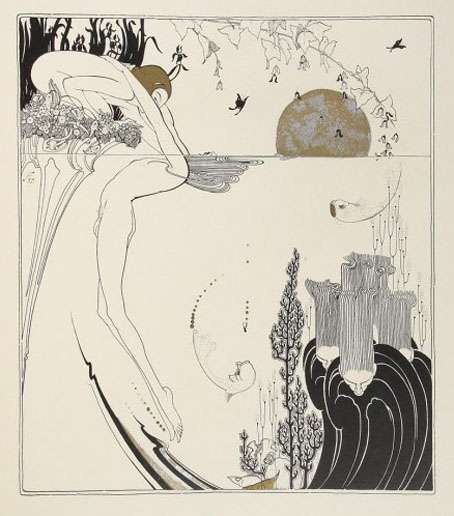
This beautiful drawing is one of six pieces from a memorial book, To Remember Ray Frederick Coyle, published in 1926. A stunning piece of art and this rebound edition has an equally stunning cover design by Jeannie Sack. If anyone has a link to other drawings in this series, please leave a comment.

Elsewhere on { feuilleton }
The illustrators archive

Previously on { feuilleton }
Fantazius Mallare and the Kingdom of Evil

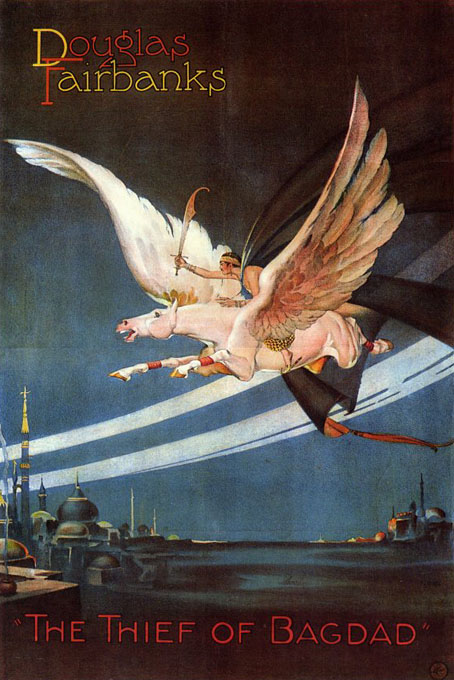
The Thief of Bagdad

thief2.jpg

It’s the poster for the 1924 film version we’re concerning ourselves with here, not the more popular 1940 adaptation directed by Michael Powell. Both films are great but I have a special affection for Raoul Walsh’s silent version and this poster design has long been a favourite for the way it manages to condense the film’s blend of storybook graphics and Art Deco exotica. I’d wondered for years who was responsible for this design; according to various poster sites it’s the work of the film’s art director Anton Grot (1884–1974). This is one of several variations (there another here and one here) and there’s also a less interesting design which is far more typical of the period.

I often recommend the 1924 Thief of Bagdad as an introduction to silent cinema, especially if you can find a decent print. Fairbanks’ production had William Cameron Menzies as production designer and his sets are enormous Arabian Nights confections replete with minarets, onion domes and filigree screens like something from an Edmund Dulac illustration. Fairbanks gives a tremendously athletic performance and the marvellous Anna May Wong plays a Mongolian slave girl. There’s a lengthy description of the film’s production here while you can find a copy of the entire film at the Internet Archive although it really ought to be seen in a version which isn’t blighted by a company logo throughout.

Previously on { feuilleton }
More Arabian Nights
Edward William Lane’s Arabian Nights Entertainments
Alla Nazimova’s Salomé
Metropolis posters

Constantinople, 1900

constantinople1.jpg

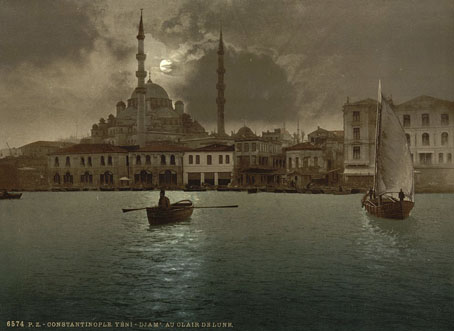
Yeni-Djama (ie, Yeni Cami) by moonlight, Constantinople.

Fascinating views of the Turkish city circa 1890–1900 from the Photochrom collection of the Library of Congress. These are from the LoC Flickr selection; the library website has a lot more.

Published primarily from the 1890s to 1910s, these prints were created by the Photoglob Company in Zürich, Switzerland, and the Detroit Publishing Company in Michigan. The richly colored images look like photographs but are actually ink-based photolithographs, usually 6.5 x 9 inches.

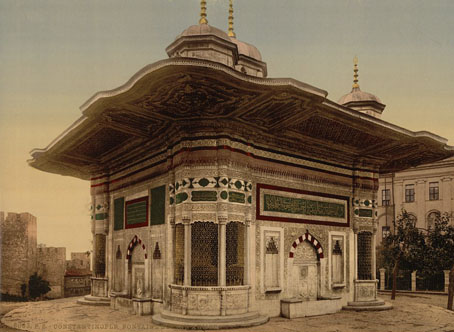
constantinople2.jpg

The fountain of Sultan Ahmed, Constantinople.

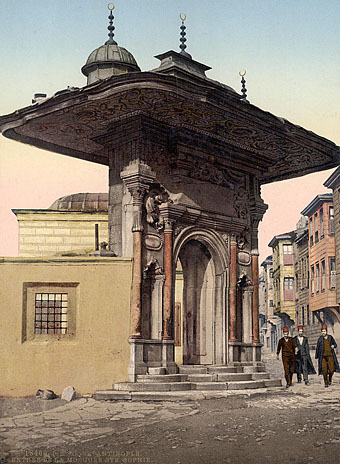
constantinople3.jpg

Entrée de la Mosque Ste. Sophie, Constantinople.

Previously on { feuilleton }
Albert Kahn’s Autochromes
The Dawn of the Autochrome

Hand bookbindings

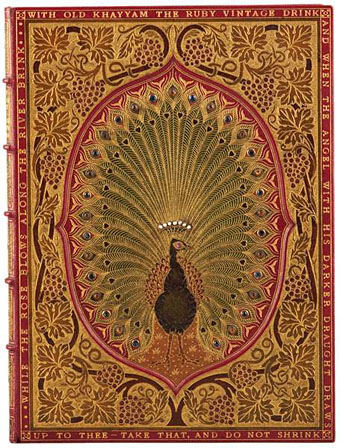
khayyam1.jpg

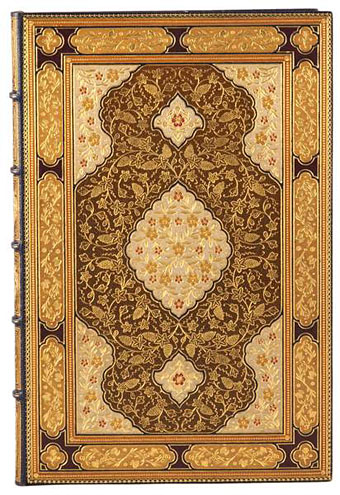
Two editions of the Rubáiyát of Omar Khayyam from a presentation of special bindings at the Princeton University Library. The peacock design contains real jewels. In addition to these displays of lavish blocking there are some remarkable examples of edge decoration, something one rarely sees today even on expensive limited editions. Thanks again to Thom for the tip!

khayyam2.jpg

Elsewhere on { feuilleton }
The book covers archive

Previously on { feuilleton }
Ronald Balfour’s Rubáiyát