The Living Grave by David Rudkin

rudkin.jpg

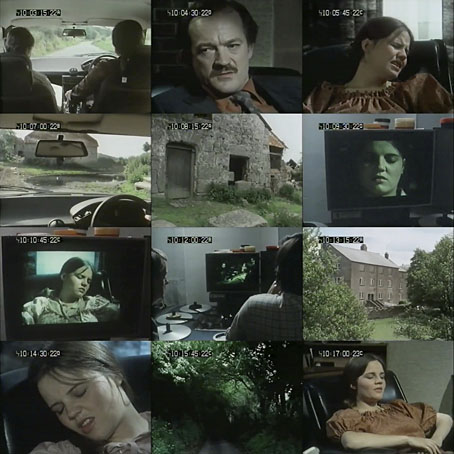
Having recently discovered two episodes from the BBC’s long-running Leap in the Dark series (In the Mind’s Eye, and Alan Garner’s To Kill a King), I was hoping the episode written by David Rudkin might turn up eventually. And here it is, posted to YouTube last month. Leap in the Dark, which ran from 1973 to 1980, was unusual for series dealing with the paranormal in the way it combined documentary episodes with fictional ones. The Living Grave (1980) is a skillful blend of both fact and fiction; Rudkin’s website describes it thus:

Based on documentary transcripts: the hypnotist Joe Keaton “regresses” Pauline, a Merseyside nurse, back beyond her birth to an earlier life – she starts to speak as Kitty, a maidservant on 18th century Dartmoor, who is made pregnant and hangs herself. To this day, on Kitty’s unconsecrated grave at a lonely forkroads, flowers are still left by an unknown hand.

I intercut the hypnosis scenes with glimpses of the life and death of Kitty herself as “her” voice was describing them – but with the camera as Kitty’s point of view, and so never seeing her, and using the locations as they are now. This was to avoid the inertia of mere illustration, creating instead a simultaneity of the two time-frames, and a sense of Kitty’s experience still present in the landscape today.

In May this year I wrote a lengthy essay about Rudkin’s dramas (more about that later) so The Living Grave has additional relevance beyond its cult interest. For a half-hour film it’s a more impressive piece than White Lady, a longer original drama that Rudkin wrote and also directed in 1987. Where White Lady is surprisingly inert, The Living Grave features familiar Rudkin touches, especially the voice of the unseen “haunted man” whose words are the closest thing to the speech in the stage plays. After spending some time tracing Rudkin’s recurrent use of sacred monuments, whether churches or stone circles, the shots of Dartmoor megaliths were especially notable. In the essay I sketched a comparison between Rudkin and Alan Garner, two writers who share concerns with the way the deep past of the British Isles impresses itself on the present, especially in a rural context. As noted above, Garner wrote an episode of Leap in the Dark, and there’s a further connection here in Lesley Dunlop who plays the hypnotised nurse, Pauline; two years before, Dunlop was Jan in Garner’s excellent TV adaptation of his novel, Red Shift. The hypnotist in The Living Grave is played by Ian Hogg, a friend of Rudkin’s who played Arne in Penda’s Fen, and has appeared in a number of the writer’s other dramas for stage and radio.

Previously on { feuilleton }
In the Mind’s Eye
To Kill a King by Alan Garner
Afore Night Come by David Rudkin
White Lady by David Rudkin
Red Shift by Alan Garner
Penda’s Fen by David Rudkin
David Rudkin on Carl Dreyer’s Vampyr
Tooropia

toorop1.jpg

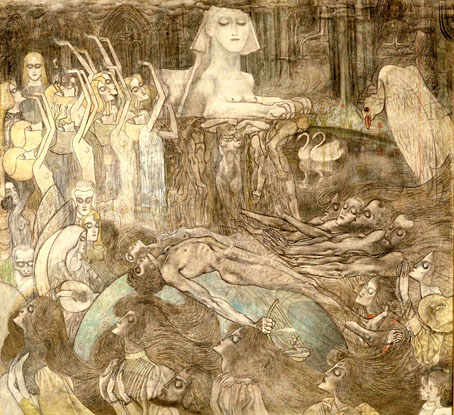
The Sphinx (1895).

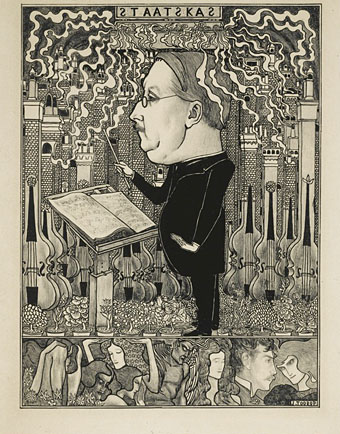
The Dutch Symbolist isn’t a stranger to these pages but every so often a drawing or painting by Jan Toorop draws attention to itself. The Sphinx above is oft-reproduced but you don’t always see it in colour or at a size that does justice to its detail. De Staatskas (below) is a caricature I hadn’t seen before, an unusual piece whose background is filled with stringed instruments that are also smoking chimneys.

toorop2.jpg

Desire and Satisfaction (1893).

toorop4.jpg

De Staatskas (1895).

Continue reading “Tooropia”

Ralph Steadman record covers

steadman01.jpg

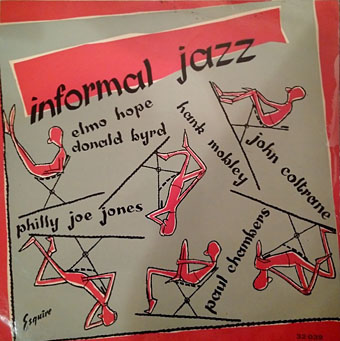
Informal Jazz (1956) by Elmo Hope Sextet.

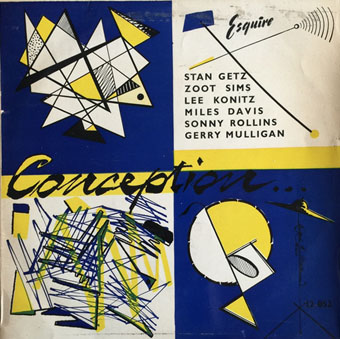
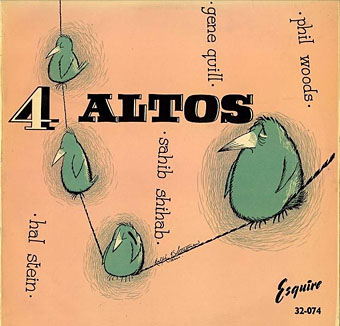
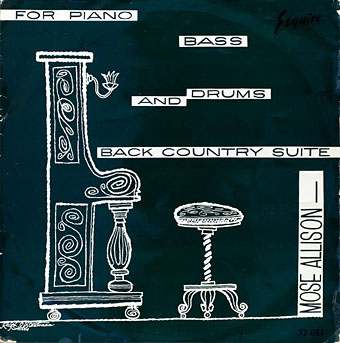
Yesterday’s post made me realise I’d never looked to see how many album covers Ralph Steadman might have designed or illustrated. A quick delve into Discogs revealed the following haul, a couple of which I own on CD. Steadman has worked in a wide range of media but I didn’t know his album work went back into the 1950s. The style of the early sleeves is markedly different to the angry, splattery creations that made his name, and without a signature you’d be unlikely to recognise the artist.

steadman02.jpg

Conception (1956) by Miles Davis, Stan Getz, Gerry Mulligan, Lee Konitz, Sonny Rollins, Zoot Sims.

Artists known for their work outside the music world tend to have pre-existing art used on record sleeves but Steadman is unusual in creating so much cover art afresh. In light of this I’ve omitted the CD insert for a dramatisation of Fear and Loathing in Las Vegas which repeats the drawing familiar from many of the paperback editions.

steadman03.jpg

4 Altos (1957) by Phil Woods, Gene Quill, Sahib Shihab, Hal Stein.

steadman04.jpg

Back Country Suite For Piano, Bass And Drums (1959) by Mose Allison.

Continue reading “Ralph Steadman record covers”

Polaroids

polaroid1.jpg

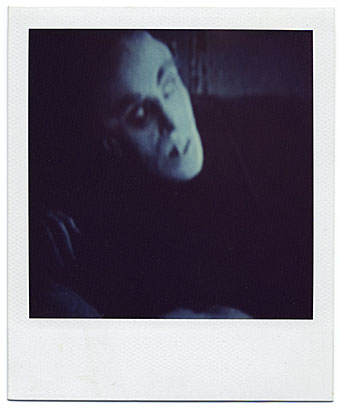
I was given a Polaroid Instant Camera some years ago, not the cult SX-70, a later model. I still have it somewhere but never used it very much. The film cartridges were still available in shops, but at around £1 a shot Polaroids always seemed like a costly indulgence unless you had some specific use for them which I never did. The photo of Murnau’s Nosferatu was taken from a TV screen, and seems to be the only print I kept.

krims.jpg

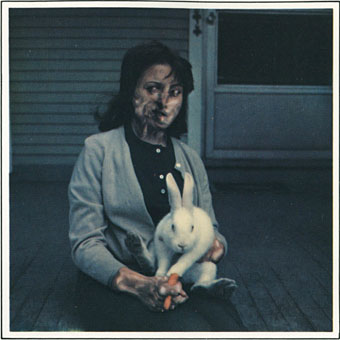
Radiation Victim Holding a Rabbit and Carrot (1974) by Les Krims.

This post was prompted by a search for the Polaroid manipulations made by Les Krims in the 1970s. Krims was one of the first people (the first?) to exploit the potential of the print’s slow processing to create surreal and grotesque images. Krims self-published a collection of these as Fictcryptokrimsographs in 1975. The Francis Bacon-like “radiation victim” is one of the more restrained examples, many of the others being male and female nudes in various stages of mutation.

gabriel1.jpg

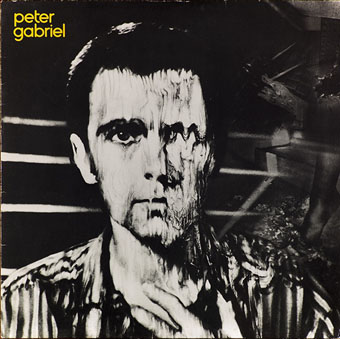
Peter Gabriel (1980).

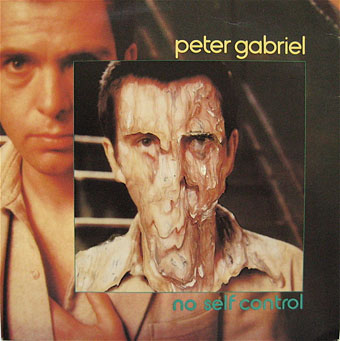
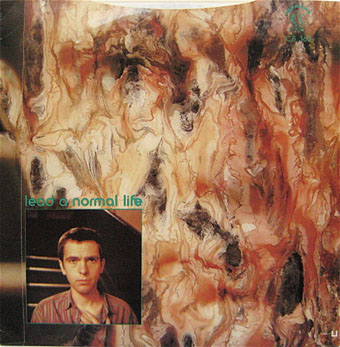
The mutation technique was more famously employed by the Hipgnosis design team and Peter Gabriel for the cover art of Gabriel’s third album. (Americans insist on calling this album “Melt” even though it was never titled as such.) The technique was also used for photos on the inner sleeve and on two of the single releases.

gabriel2.jpg

No Self Control (1980). Front and back sleeve of 7-inch single.

gabriel3.jpg

steadman.jpg

William Burroughs by Ralph Steadman.

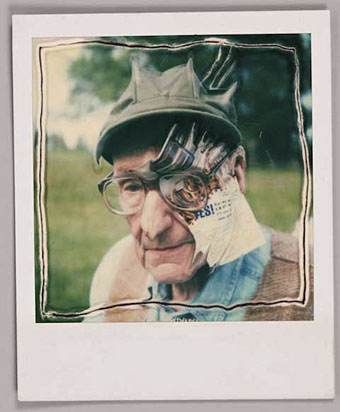
Also in 1980, Ralph Steadman says discovered the same technique while on holiday in Turkey. I recall him discussing his own manipulations, which he calls “Paranoids”, on TV around this time. There’s no indication that Steadman was aware of Krims or the Gabriel album but he’s continued to use the technique ever since. The Burroughs portrait was one of a series created in 1995 when Steadman paid a visit to Lawrence, Kansas. There’s film of the meeting here although I’m more interested in the older TV film on the same page which shows Steadman creating a new composite portrait by drawing onto the emulsion.

Previously on { feuilleton }
Portrait

NecronomiCon Providence 2015

necro.jpg

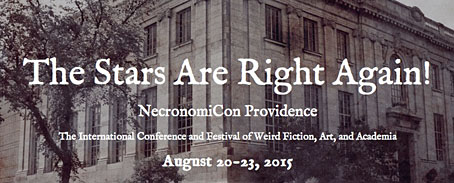
Next month I’ll be in Providence, Rhode Island, where I’m the Artist Guest of Honour for NecronomiCon Providence 2015. This is an honour for me in more ways than one: the city of Providence, or its representation in the spectral prose of HP Lovecraft, has occupied a fair amount of my creative life, especially in the comic-strip adaptations I was drawing in the 1980s. I just hope the citizens of Providence can forgive the liberties I took with the city’s architecture in The Haunter of the Dark where the buildings owe far more to the architecture of Scotland than they do to New England.

lm19.jpg

A nameless entity from Lovecraft’s Monsters (2014).

The main event where I’m concerned will be the Ars Necronomica art show at the Providence Art Club on Thomas Street. This is a few doors away from the beautiful Fleur-De-Lys Studios, a building that Lovecraft mentions in The Call of Cthulhu, and which (having done some research this time) filled a panel in my adaptation. In the story the building is the home of eccentric artist Henry Wilcox so it’s a dizzying prospect to find my own art being exhibited a few doors away. Among my works there will be print enlargements of some of the illustrations from last year’s Lovecraft’s Monsters, Ellen Datlow’s expertly edited collection of recent Lovecraftiana; and the piece I created in 2007 for the Exhibition of Unspeakable Things at Maison d’Ailleurs, Switzerland, has been refashioned especially for this show. My work isn’t the only art on display, there’ll be contributions from 50 other artists which I think must make the event one of the largest Lovecraftian art shows staged anywhere. The show opens on August 11th but the official opening will be on the 20th which happens to be Lovecraft’s 125th birthday. Big thanks to Joe Shea, Niels Hobbs et al for arranging everything.

The convention begins on the 21st, and rather than attempt to summarise the astonishing range of events it’s easier to provide links to the main schedule and the additional programming. For anyone interested in attending, there are still day passes available, while many of the additional events are open to the public. Oh, and I’ve also designed the cover for the convention booklet so attendees will be able to get their copy defaced by my signature. (I’m probably making work for myself here, aren’t I?) And I’ve just noticed that there’s a preview of the booklet cover on the convention Facebook page.

Elsewhere on { feuilleton }
The Lovecraft archive