Ron Cobb, 1937–2020

cobb02.jpg

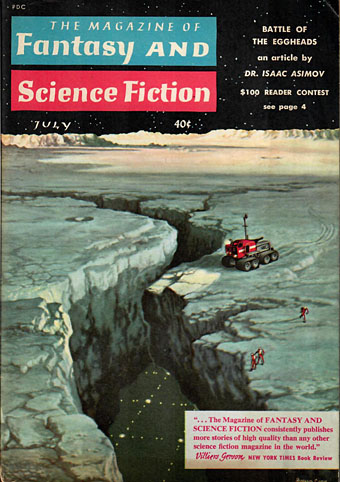
The Magazine of Fantasy and Science Fiction, July 1959.

The death of American illustrator/cartoonist/designer Ron Cobb was announced yesterday. All the obituaries are concentrating on the designs he produced for Hollywood feature films so here’s an alternative view of a long and varied career.

cobb01.jpg

After Bathing At Baxter’s (1967) by Jefferson Airplane.

Cobb’s first album cover is his most famous, and probably his most familiar work outside his film designs, but there were a few more, some of which may be seen below. The San-Francisco-house-as-aircraft always reminds me of the car/plane hybrid piloted by Professor Pat Pending in the Wacky Races cartoons.

cobb04.jpg

Some Of Our Best Friends Are (1968) by Various Artists.

cobb10.jpg

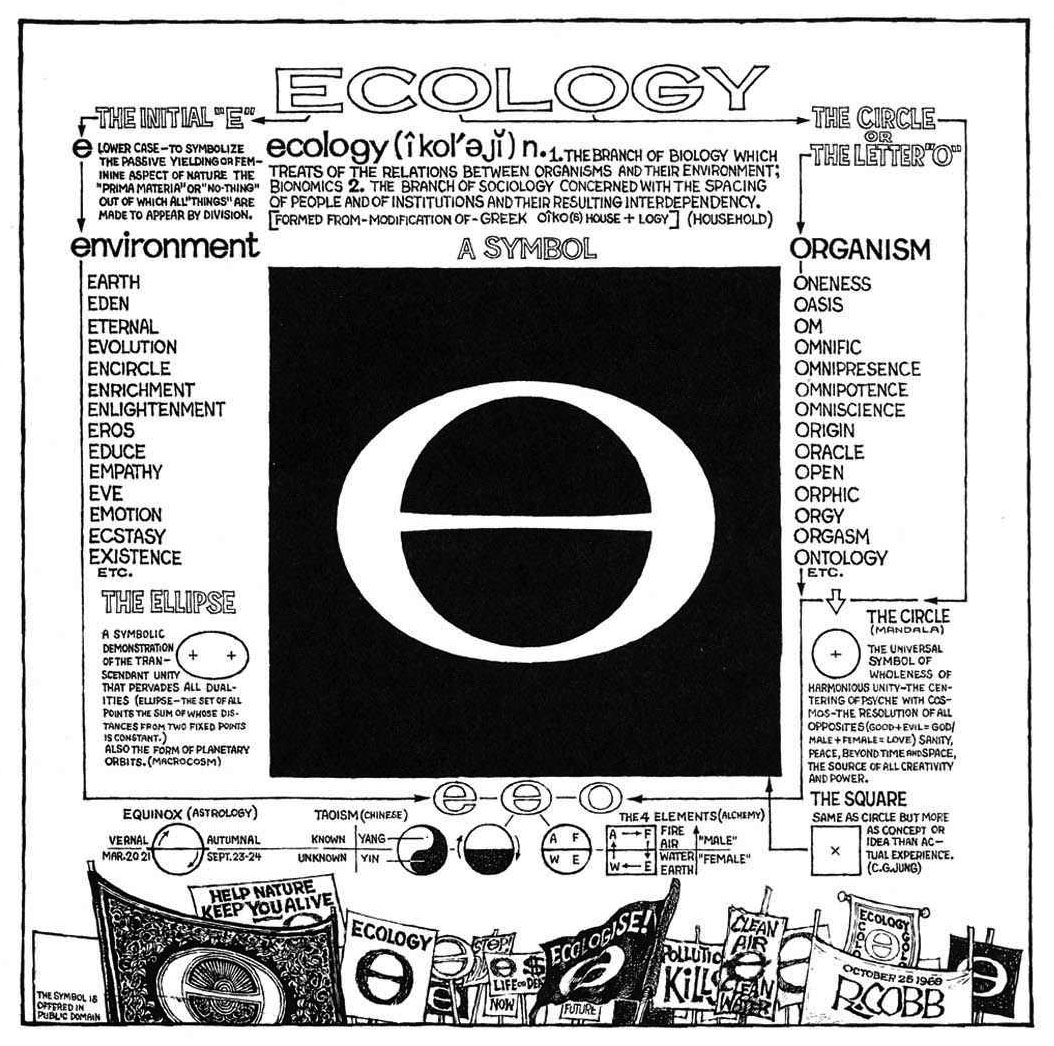
Ecology symbol, October 1969.

Cobb’s copyright-free design for an ecology symbol was published in the Los Angeles Free Press in November, 1969. The “Freep” also ran Cobb’s cartoons, some of which were later collected in The Cobb Book (1975). Satire has a tendency to date very quickly but many of Cobb’s barbs are still relevant today.

cobb07.jpg

Undated cartoon.

cobb05.jpg

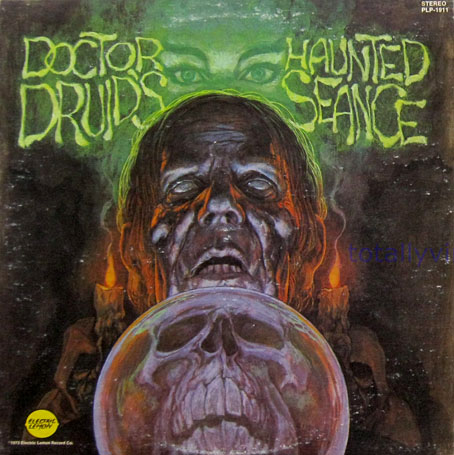
Doctor Druid’s Haunted Seance (1973).

Continue reading “Ron Cobb, 1937–2020”

Sympathy for the devil

endore1.jpg

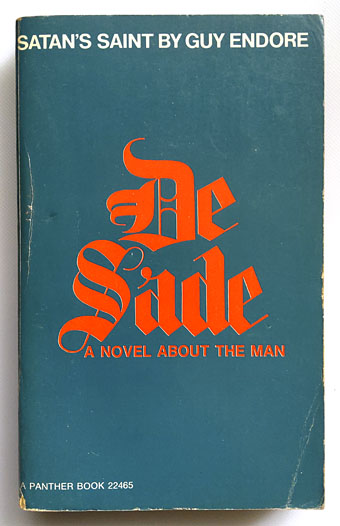
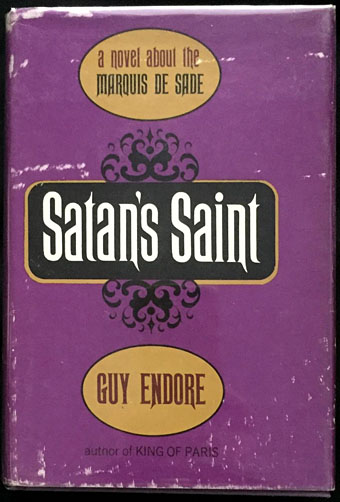
After unearthing this book in July I finally got round to reading it. Guy Endore’s biography of the Marquis de Sade isn’t a great work of literature (and my paperback is also badly typeset) but it was worthwhile for the sketch it offers of the life and philosophies of the notorious libertine. Sade is of interest to me more for his importance to subsequent generations than for his works (although the one leads back to the other), not least the Surrealists who revered him as a revolutionary thinker far ahead of his time. But this interest isn’t really enough to warrant immersion in a major biography which would run to many hundreds of pages, and have to take account of the tumultuous historical era that Sade lived through: pre-Revolutionary France, the Revolution itself, then the Napoleonic period.

Guy Endore was a biographical collagist whose method in this and other books was to explore the life by stitching together with his own commentary extracts from letters and diaries and, where necessary, his own inventions. Most editions of Satan’s Saint proclaim the book as a novel but this isn’t really the case, Endore describes his text in the introductory note as a “novelized Ph.D. thesis”. The note also indicates the passages he was forced to invent when the documentary material was absent. Sade’s life was more turbulent than most, a continual round of family drama, pursuit by the authorities and serial imprisonment, all taking place during a time of the greatest national upheaval, so it’s no surprise that letters, diaries and other documents have been lost. Endore’s most substantial invention is the diary of Sade’s sister-in-law, Anne-Prospère de Launay, with whom the Marquis was besotted, and who he took with him to Italy when he fled his first court conviction and a death sentence. Endore attempts to explain (not always successfully) how the convent-raised woman could not only betray her sister and the rest of her family but also run away with a man accused of terrible sexual crimes. Less invention is required for the Marquis himself since some letters do survive, and his voice and opinions are present throughout his published writings. Given Sade’s enduring reputation it’s a surprise to discover how much of his life was consumed by familial squabbles, especially with his mother-in-law. The Sade family saga, like many of his novels, is a familiar human affair inflated to outrageous proportions; the hatred between Sade and his in-laws was mutual but each saved the other from execution.
endore2.jpg

It’s that Rubens typeface again… First US edition, 1965.

Endore’s penultimate chapter steps away from the biography to present a talk given to students at the University of California in May 1962. The lecture allows the author to summarise his attitude to Sade which isn’t so much one of admiration but respect for a man who stood against the hypocrisies of his time even when his life was at stake. “I never killed anyone,” Sade said in later years, and Endore draws a lengthy comparison between Sade and Napoleon Bonaparte, the latter being responsible for the destruction of Sade’s published novels as well as the deaths of hundreds of thousands of men, women and children. The crimes of Napoleon were far greater than those of the man who spent 14 years of his life in prison, yet the name of Napoleon carries none of the notoriety that surrounds the name of Sade. Endore also notes the irony that without his lengthy terms of imprisonment the Marquis might have been as forgotten as he always hoped he would be. Prison compelled him to rage on paper against the world.

I have another Endore book, The Werewolf of Paris, lurking in the unread stacks but it will have to wait. Since reading this piece I’ve had an urge to revisit the novels of Charles Williams. Some metaphysical thrills are in order.

Previously on { feuilleton }
Satan’s Saint
The Execution of the Testament of the Marquis de Sade by Jean Benoît
The Marat/Sade

Weekend links 535

beardsley.jpg

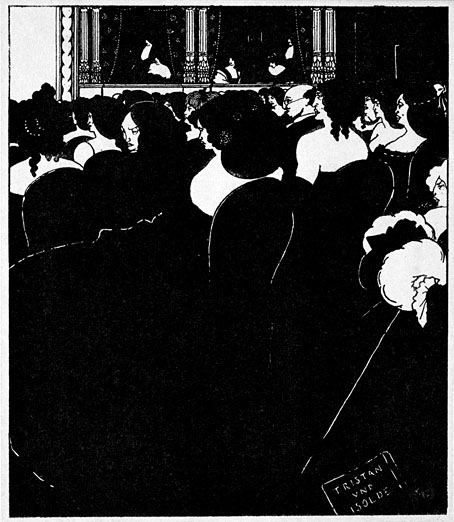
The Wagnerites (1894) by Aubrey Beardsley.

• “Part of my problem with influence is that the concept is too univocal; most of us are impacted by many others during our lifetimes, but often in oblique ways. So many of the most interesting bits of cultural transmission happen nonlinearly, via large groups of people, and in zigzag mutations. Assigning influence can also have the unintentional effect of stripping artists of their own originality and vision.” Geeta Dayal reviewing Wagnerism by Alex Ross.

• “Buñuel stubbornly refused to have any group affiliation whatsoever. Even though critics always tried to categorize him, he never wanted to explain the hidden meanings of any of his films and often denied that there were any.” Matt Hanson on the surreal banality of Luis Buñuel’s The Exterminating Angel.

• Next month Soul Jazz release the fourth multi-disc compilation in their Deutsche Elektronische Musik series devoted to German music from the 1970s and 80s. The third collection was the weakest of the lot so I wasn’t expecting another but this one looks like it may be better.

James Balmont chooses the five best films by Kiyoshi Kurosawa, who he calls “cinema’s master of horror”. I’ve yet to see any of these so I can’t say whether the label is warranted or not.

• At Wormwoodiana: Mark Valentine in a two-part post here and here charts the emergence of an under-examined sub-genre, the metaphysical thriller.

• Power Spots: 13 artists choose favourite pieces of music by Jon Hassell. A surprising amount of interest in his first album, Vernal Equinox.

• At Spine: George Orwell’s Animal Farm receives new cover designs for its 75th anniversary.

• “Pierre Guyotat’s work is more relevant now than ever,” says Donatien Grau.

• Mix of the week: FACT mix 775 by Sarah Davachi.

May 24th by Matthew Cardinal.

• Ry Cooder with Jon Hassell & Jim Keltner: Video Drive-By (1993) | Goose And Lucky (1993) | Totally Boxed In (1993)

Pole position

pole1.jpg

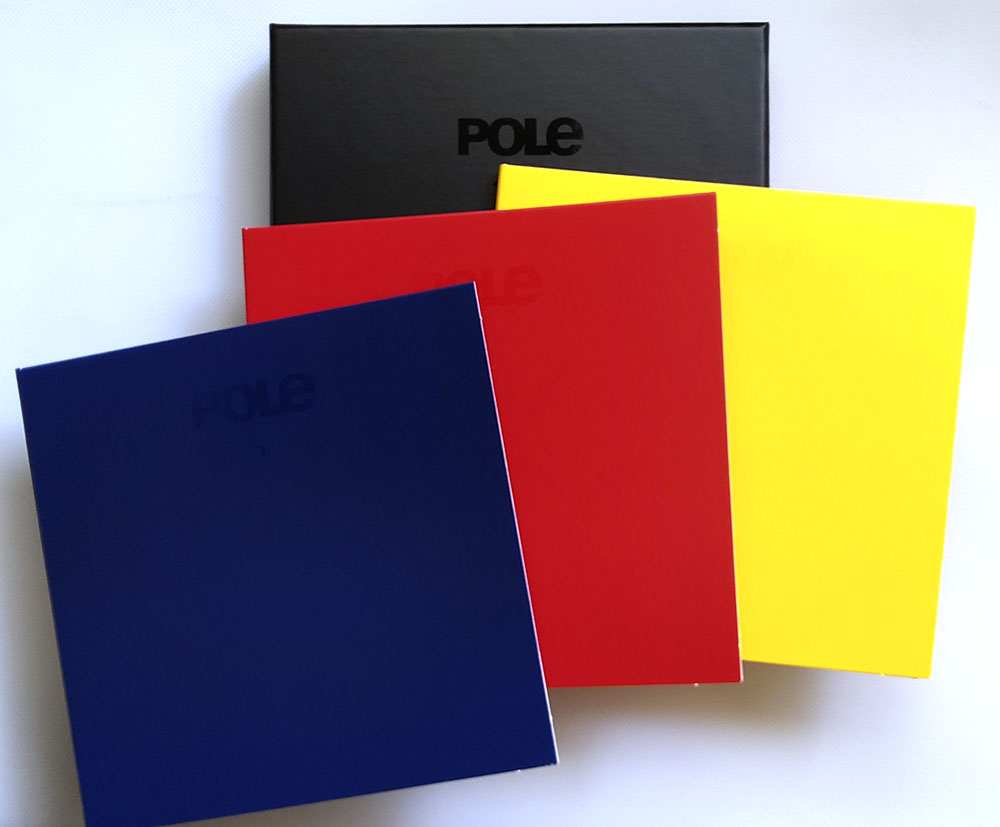
In today’s post, the recent Mute reissue of the first three albums by Stefan Betke, aka Pole. The photo below is one I took of Herr Betke in a club in Los Angeles in 2005. My old Canon camera was never very good in low-light conditions but a portrait of the artist emerging from gloom seems fitting for music whose reverberant pulses seem to evolve from an equally tenebrous void.

pole2.jpg

The hundred-year Voyage

arcturus1.jpg

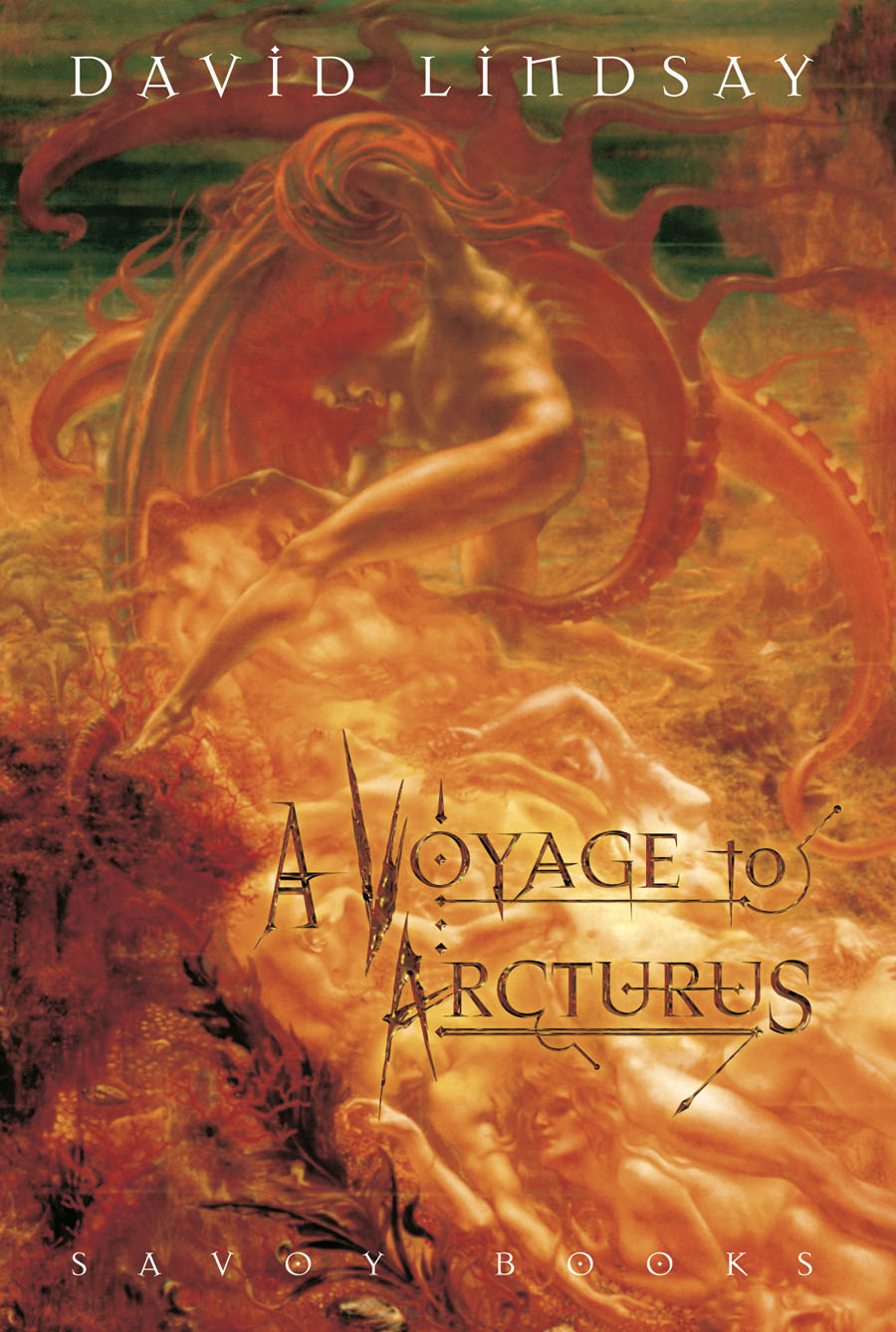
Today’s post at Wormwoodiana reminds me that David Lindsay’s unique novel of philosophical fantasy, A Voyage to Arcturus, was published a hundred years ago today. I designed a lavish reprint for Savoy Books in 2002, an edition which unfortunately used the re-edited text from earlier reprints instead of going to the original publication. This wasn’t done for lack of a first edition, it was more out of ignorance—nobody bothered to look into the history of the text—as well as convenience; Savoy’s earlier reprinting of Anthony Skene’s Monsieur Zenith the Albino had involved many weeks of text preparation, scanning pages from a photocopy of Skene’s very scarce novel, then running the copy through rudimentary OCR software and proofing the result. In Savoy’s slight defence, the reprint of Arcturus did correct a couple of typos that everyone else had missed.

arcturus2.jpg

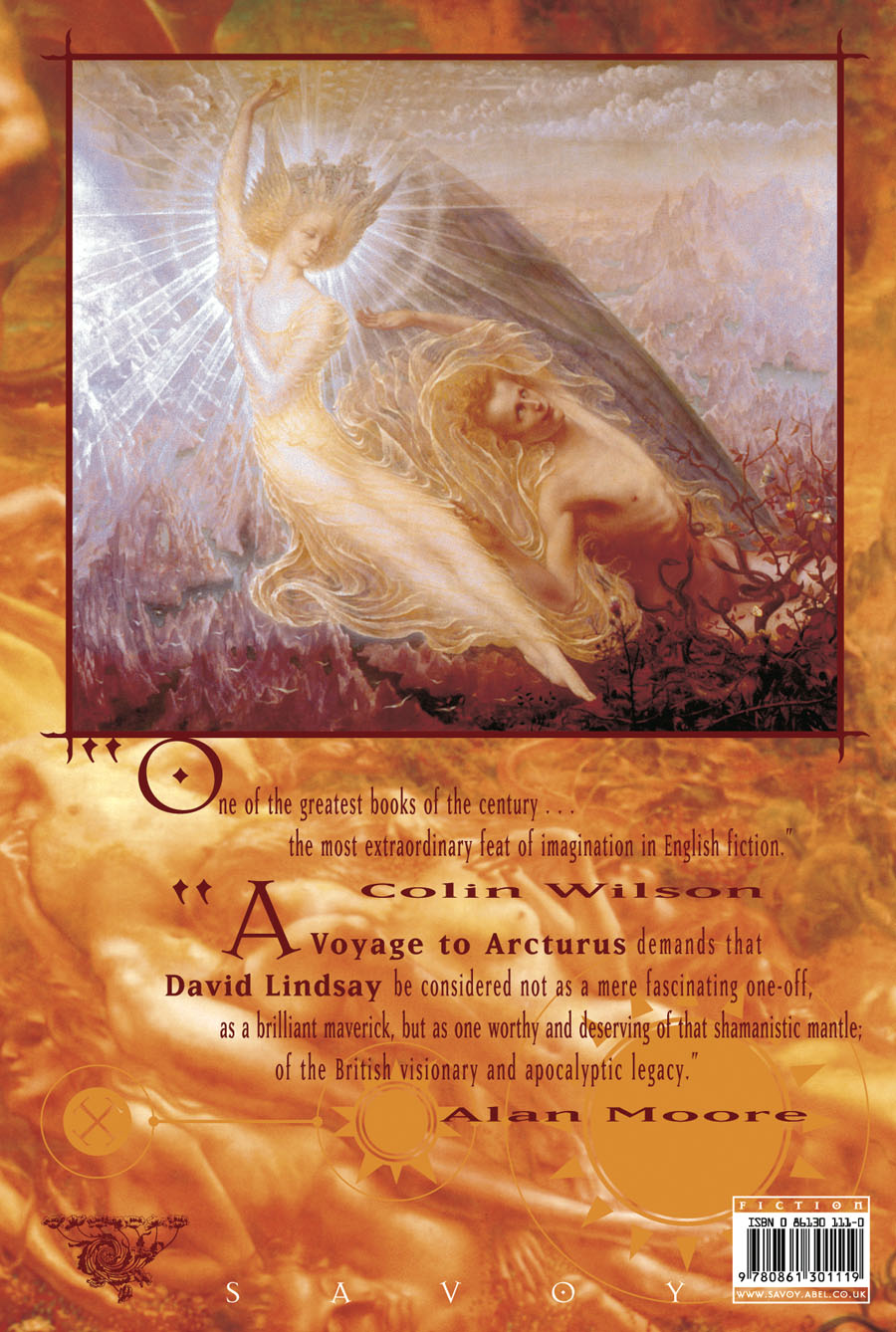
I still think the best feature of my design was the selection of Jean Delville’s remarkable Symbolist painting, The Treasures of Satan (1895), a picture used with the permission of the Brussels Museum of Fine Art. (They supplied us with a print of the painting together with a photo of Delville’s Angel of Splendour (1894) for the back cover.) With the exception of Bob Pepper’s artwork for the 1968 Ballantine paperback, previous reprints of the novel seldom reflected the contents on their covers. I’m no longer happy with the type layout on the rest of the dust-jacket, however, although the front cover looks okay. The Savoy edition included an introduction by Alan Moore, an afterword by Colin Wilson, a collection of philosophical aphorisms by David Lindsay, plus a couple of photos of the author which I don’t think had been published before. Despite its flaws, the book was well-received. The paper was heavier stock than is generally used for hardback fiction which made for a heavy and expensive volume but the edition still sold out.

Penguin are reprinting the novel next year in an edition which continues the tradition of unsuitable cover art. According to Lindsay site The Violet Apple the figure on the cover is from an illustration for a Dostoevsky novella, so what is it doing on Lindsay’s book? Cover art aside, the novel is in a class of its own, and very highly recommended.

Previously on { feuilleton}
The art of Bob Pepper
Masonic fonts and the designer’s dark materials