Hell, a film by Rein Raamat

porgu.jpg

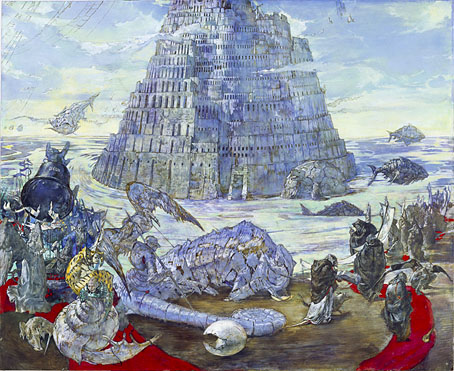
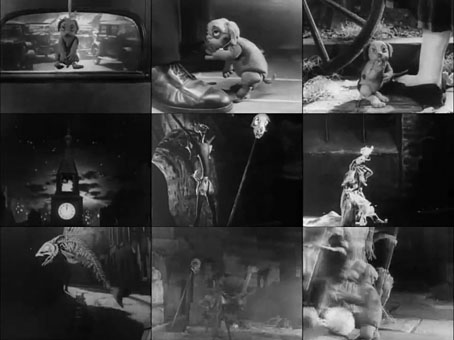
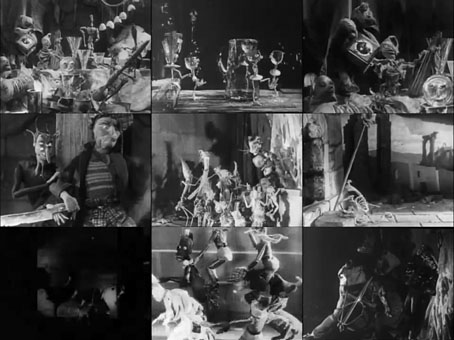
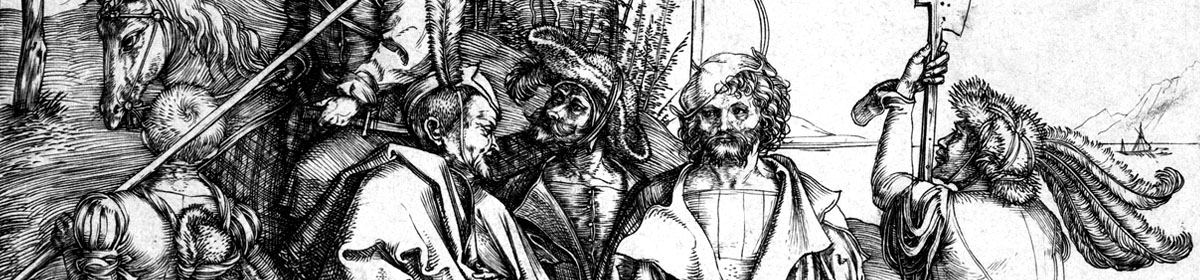
An inferno of a different kind, Hell (1983) is a short film by Estonian animator Rein Raamat based on a series of etchings by Estonian artist Eduard Wiiralt (1898–1954). The drawings date from around 1930 when Wiiralt was living in Paris so they’re understandably connected to Surrealism. Browse some of the originals at 50 Watts. (Thanks to Modzilla for the tip!)

Previously on { feuilleton }
Inferni
Mirko Racki’s Inferno
Albert Goodwin’s fantasies
Harry Lachman’s Inferno
Maps of the Inferno
A TV Dante by Tom Phillips and Peter Greenaway
The last circle of the Inferno

Weekend links 261

hardie.jpg

Salome (2013) by Lucie Hardie.

Aickmanesque, “A list of films that possess the same strange ambiguities, disturbing illogicalities, grim mundanities, psychological unpleasantness, narrative open-endedness, Freudian oddness and genuine disturbing moments of horror as the short stories of Robert Aickman.” One of those films, Symptoms (1974), has been out of circulation for a long time but may be watched at YouTube.

• “If this was psychedelia, then it had more in common with the variety peddled by US bands like The Rain Parade, The Three O’Clock…and The Bangles…all of whom had been grouped into a movement known as The Paisley Underground.” Joseph Stannard looks back at Around The World In A Day by Prince And The Revolution.

• “…what I do is not magical realism. I do realistic magic.” Alejandro Jodorowsky talking to Ilan Stavans about writing and filmmaking. A substantial interview in which Jodorowsky isn’t forced to express himself solely in English.

[Angela] Carter thoroughly upset the bien pensants with her essay The Sadeian Woman (1978) where she argued that Sade “was unusual in his period for claiming rights of free sexuality for women and in installing women as beings of power in his imaginary worlds … I would like to think that he put pornography in the service of women, or, perhaps, allowed it to be invaded by an ideology not inimical to women.” She also makes the connection between Sade’s misanthropy, as she calls it, and his splitting of women’s bodies from “the mothering function”. McQueen seems to me to fascinate for similar reasons. Some of the pull he exerts on huge numbers of people arises from this side of his sensibility: there’s no hint of motherhood; he disliked the way that traditional décolletage revealed the breasts, and instead encased the whole female torso in coiled silver, mussel shells or razor clams—even glass.

Marina Warner on Alexander McQueen whose Savage Beauty exhibition is currently running at the V&A

• London’s American poster king: Graham Twemlow on E. McKnight Kauffer’s posters for the London Underground.

• At Celluloid Wicker Man: Electronic music and mental illness in cinema.

• Mix of the week: Secret Thirteen Mix 154 by Moniek Darge.

#1 (1994), the first album by Skylab, has been reissued.

Vir·tu·al Ge·om·e·try

Tamborine (1985) by Prince And The Revolution | Indigo (1994) by Skylab | Metronomic Underground (1996) by Stereolab

Lady Bug, a film by Ben Proudfoot

goluch1.jpg

Lady Bug is a short study of Canadian artist Elizabeth Goluch, the creator of beautiful sculptures of insects and other creatures crafted from precious metals. Ben Proudfoot’s film is one of a series, Life’s Work: Six Conversations with Makers, looking at artists and craftspeople in the Nova Scotia area. I’d not browsed Elizabeth Goluch’s website for a while so it’s good to see new additions like this jellyfish that conceals a Medusa pendant. I’m very partial to Ms Goluch’s work, of course, but the other films are worth a look as well.

goluch2.jpg

Previously on { feuilleton }
Elizabeth Goluch’s precious metal insects

The pinscreen works of Alexandre Alexeieff & Claire Parker

enpassant.jpg

The incredible animated films of Alexeieff & Parker have been featured here before, the last occasion being a post about their 1963 adaptation of Gogol’s The Nose. The Gogol film is included in this 38-minute YouTube compilation whose contents are as follows: A Night on Bald Mountain (1933), En passant (1943), The Nose (1963), Pictures at an Exhibition (1972), Three Moods (1980). The Nose is still the best of their films that I’ve seen to date but mention should be made of the gem that is En passant, a very brief illustration of a Canadian song. The precision of this piece never fails to astonish me: the pinscreen technique must be difficult enough without also being able to suddenly shift viewpoint—the moment when the squirrel jumps on the windmill blades!—and accurately convey the movements of a squirrel and a rooster. Watch that one if nothing else.

Previously on { feuilleton }
The Nose, a film by Alexandre Alexeieff & Claire Parker
Alexandre Alexeieff and Claire Parker

Spheres, a film by Norman McLaren and René Jodoin

spheres.jpg

Norman McLaren’s dance films were a late development, previous decades having been spent creating animated films in a variety of techniques. Many of these were abstract works with a musical accompaniment, as is Spheres (1969), one of McLaren’s last films in this style. It’s not completely abstract: a butterfly keeps interrupting the multiplying spheres which dance through space to a piano piece by Bach. This being a Canadian production, it’s fitting that Glenn Gould is at the keyboard.

Previously on { feuilleton }
Ballet Adagio, a film by Norman McLaren
Pas de Deux by Norman McLaren
Norman McLaren