Isles of the Dead

iod_leipzig.jpg

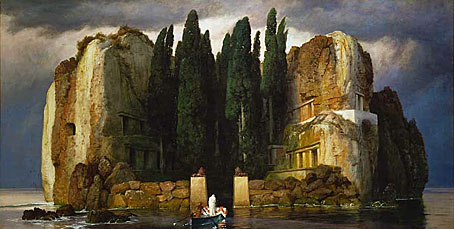
The Isle of the Dead (version five, 1886) by Arnold Böcklin, Leipzig, Museum der bildenden Künste.

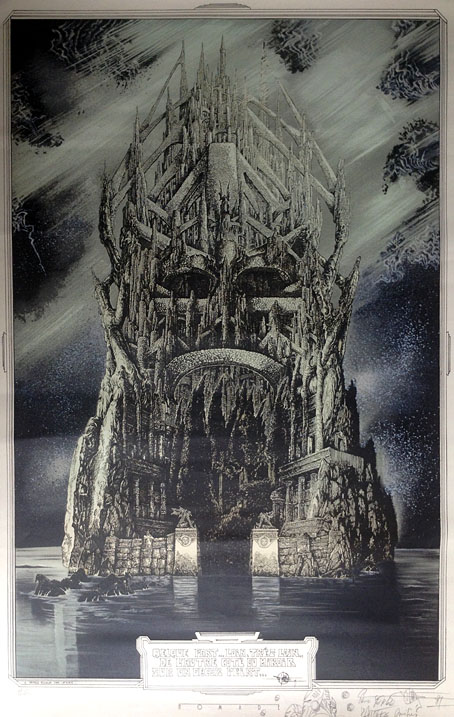
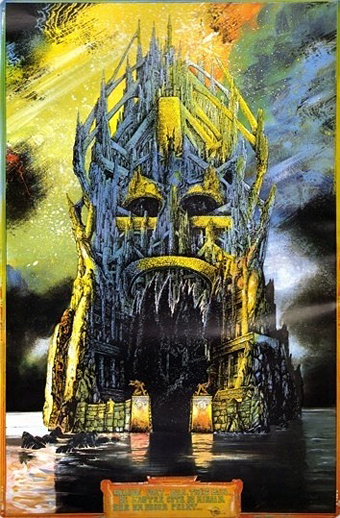
Reading old comics recently turned up the page below by Philippe Druillet which I didn’t remember having seen before. The drawing is from Gail, one of Druillet’s Lone Sloane stories (but not one included in the Six Voyages of Lone Sloane), and shows the entrance to a typically sinister Druillet city modelled on one of Arnold Böcklin’s Isle of the Dead paintings. (Druillet’s original was in black-and-white but was later coloured.) This derivation manages to keep all of Böcklin’s details while cleverly turning the cypresses into a fanged mouth.

isle1.jpg

Philippe Druillet (1976).

isle2.jpg

Böcklin’s cemetery isle has been the subject of several posts here, being one of my favourite paintings and also an object of fascination for its continuing influence in a variety of media: novels, films, music and, of course, comics. Druillet quotes from other artists in his Lone Sloane stories—notably Escher and Grandville—so the Böcklin quotation wasn’t too much of a surprise. Toteninsel.net, the website devoted to works influenced by The Isle of the Dead, turned up a few more comic-related examples, some of which are featured below. What’s notable about the examples at Toteninsel is that they’re all from European artists; that’s not to say there isn’t an example to be found in American comics but European comic art seems much more aware of Symbolist painting.

Continue reading “Isles of the Dead”

Exhibitionism

bilal.jpg

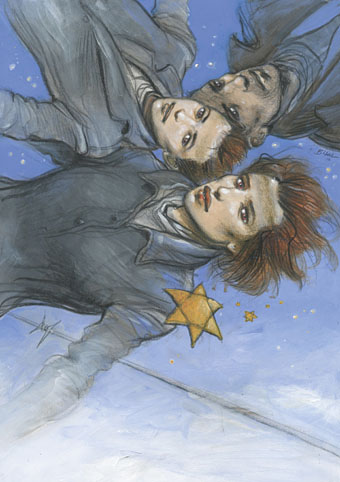
Art by Enki Bilal.

My work is featured in two very different exhibitions over the next few weeks, so different, in fact, that they’re almost at opposite poles to each other.

hch5.jpg

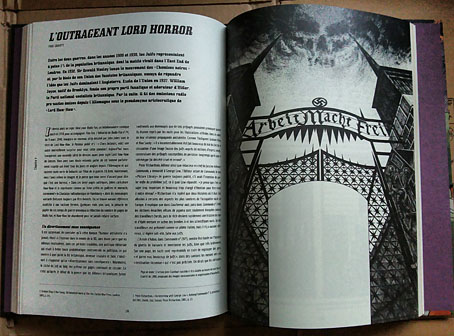
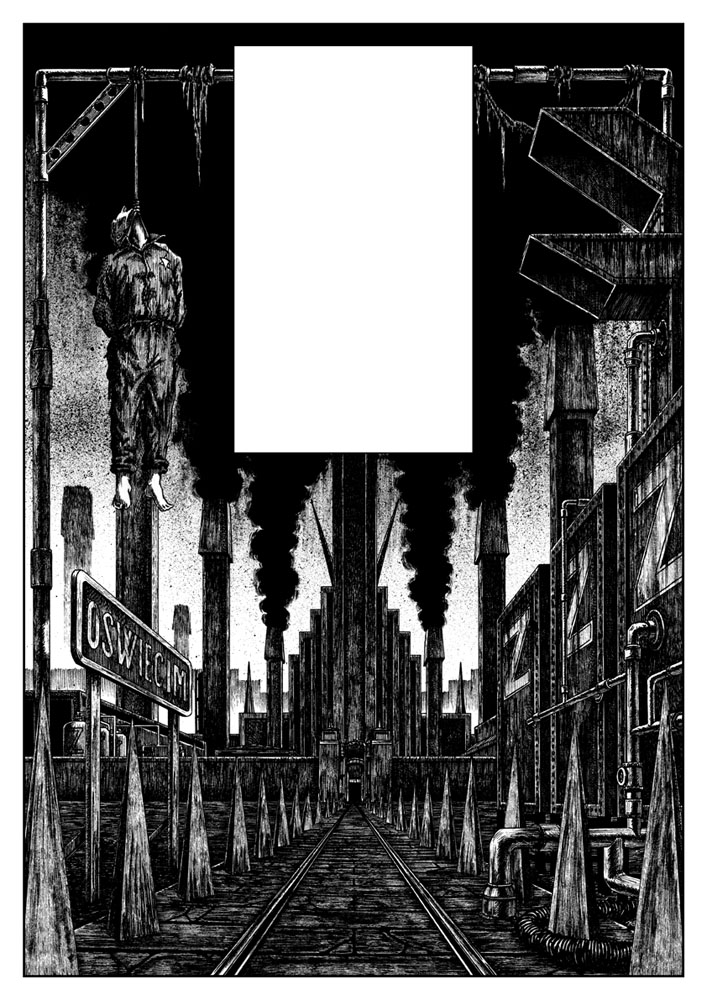
Hard Core Horror 5 (1990).

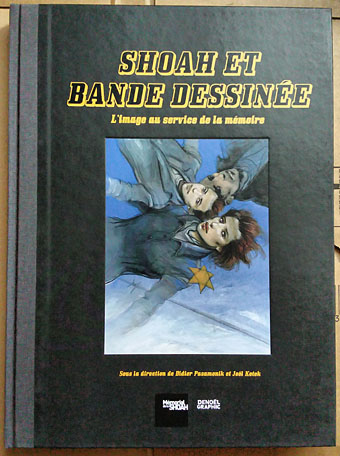
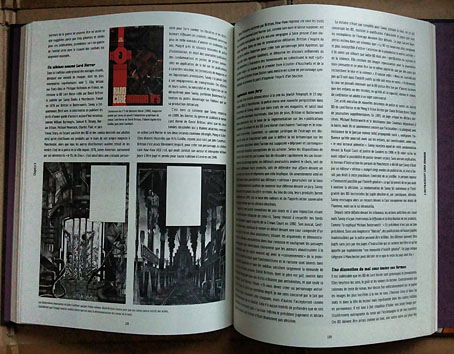
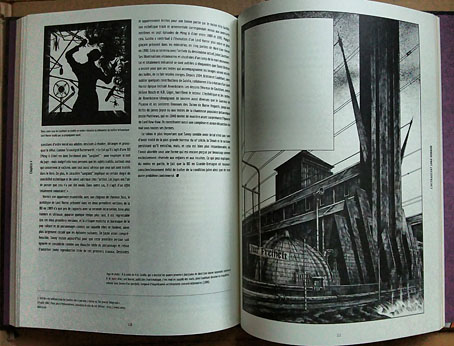
The first, Shoah et bande dessinée, takes place at Mémorial de la Shoah, Paris, and opens on 19th January. This is an exhibition of comic-book art dealing with the Holocaust, and will include three of my pages from the death-camp scenes in the final issue of the Lord Horror series, Hard Core Horror (created with David Britton in 1990, and published by Savoy). This is one instance where the term “comic” is particularly inappropriate, unlike the more neutral French designation, bande dessinée. I haven’t yet seen a list of all the other artists being represented but I was very pleased to see a drawing by Enki Bilal being used to promote the event. Bilal was one of several French comic artists whose work I discovered in the pages of Heavy Metal/Metal Hurlant in the 1970s, and it was the example of the artists there that kept me interested enough in the comics medium to attempt something of my own a few years later. The exhibition will run until 30th October, 2017, and will feature a printed catalogue.

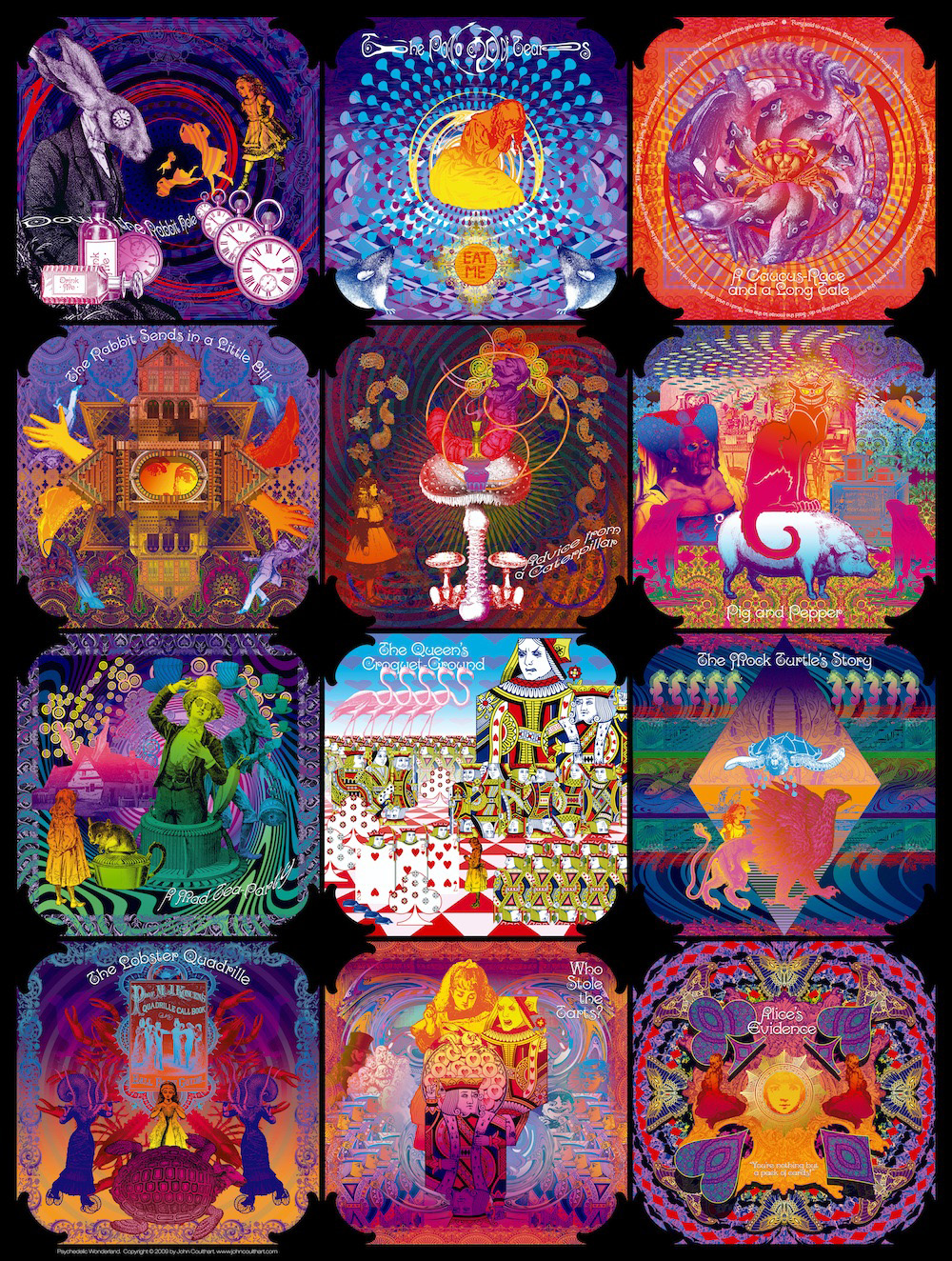
alice1.jpg

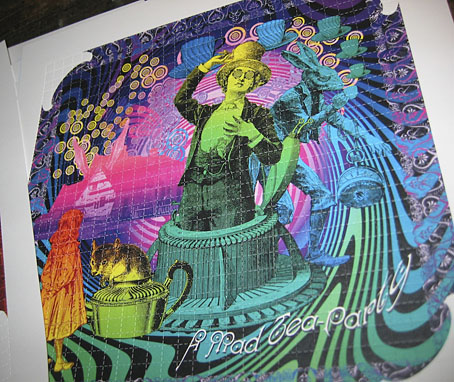
The second event, Alice’s Adventures in the Underground, has already been mentioned here, and takes place at the Horse Hospital, London, at the beginning of February:

“Feed your head…” An evening discourse on all things Wonderland, with John Coulthart, Andy Roberts, Nikki Wyrd and Jake Fior (facilitator).

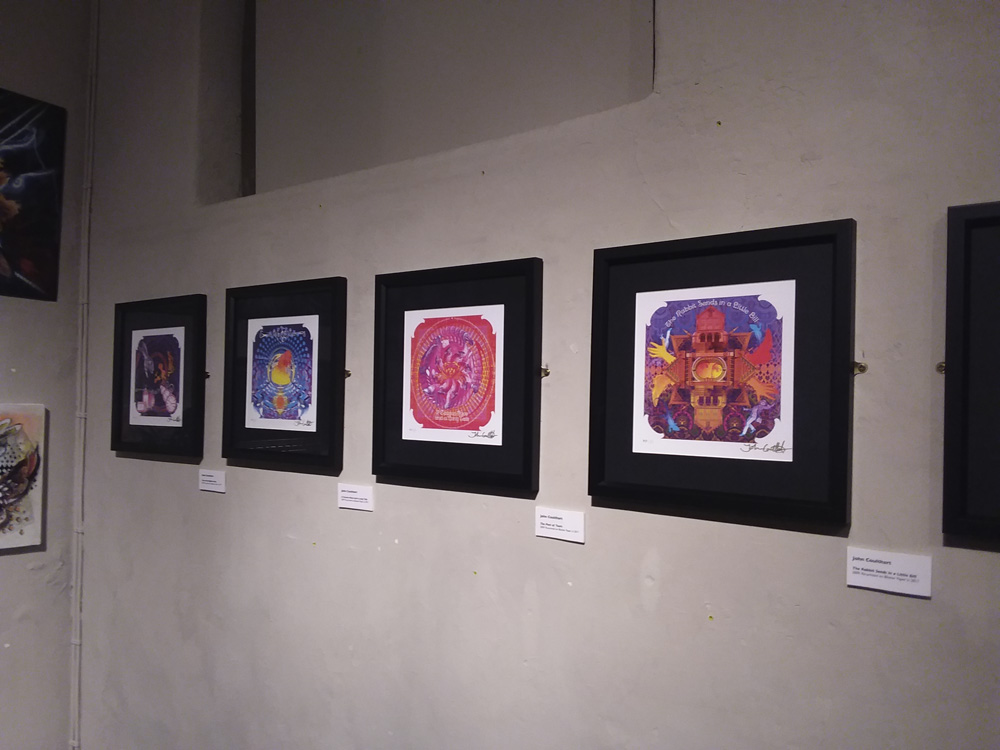
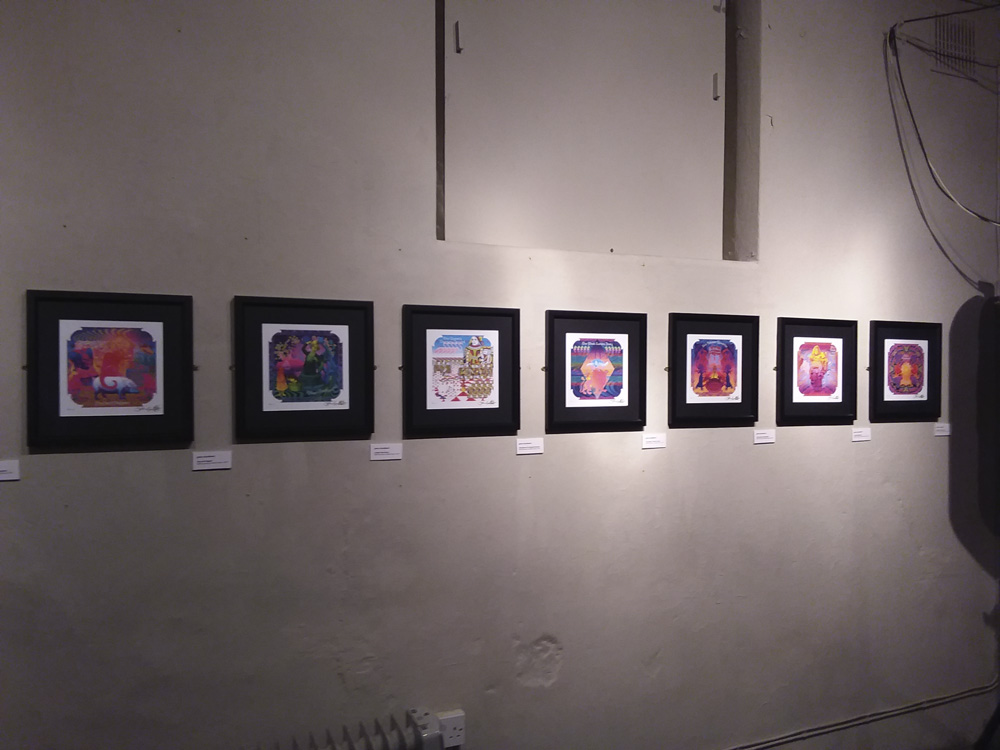
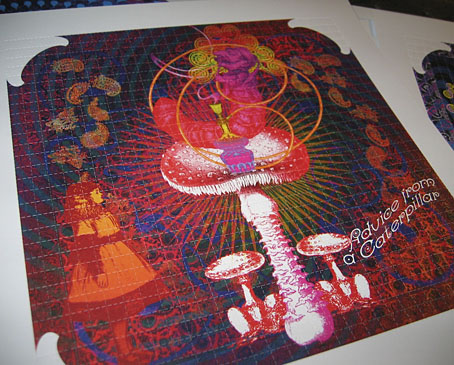
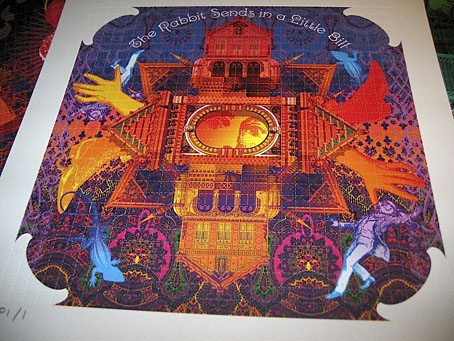
This event marks the opening of a three day exhibition hosted by the Horse Hospital, featuring John Coulthart’s psychedelia-themed ‘Alice’ artwork, printed for the first time as (drug-free) blotter art. John’s depictions of the twelve chapters of ‘Alice’s Adventures in Wonderland’ view the 1860s through the iridescent lens of the 1960s; Victoriana refracted through a psychedelic prism. Come along for a discussion of the links between psychedelic art and music, and the persistent fascination of Lewis Carroll’s books. There will be talk of many things, not only cabbages and kings, but far more than you can possibly imagine before breakfast. Signed blotter prints will be on sale.

Psychedelic artists – particularly in the 60s – and many other outsider creative types (before and since that influential decade), have drawn their inspiration from the well of imagery found within the ‘Alice’ books. As well as John’s artwork, there will be Alice themed creations by other artists on show. In addition, the Psychedelic Museum will be holding its second pop-up museum display, with particular focus on the 60s counterculture.

alice2.jpg

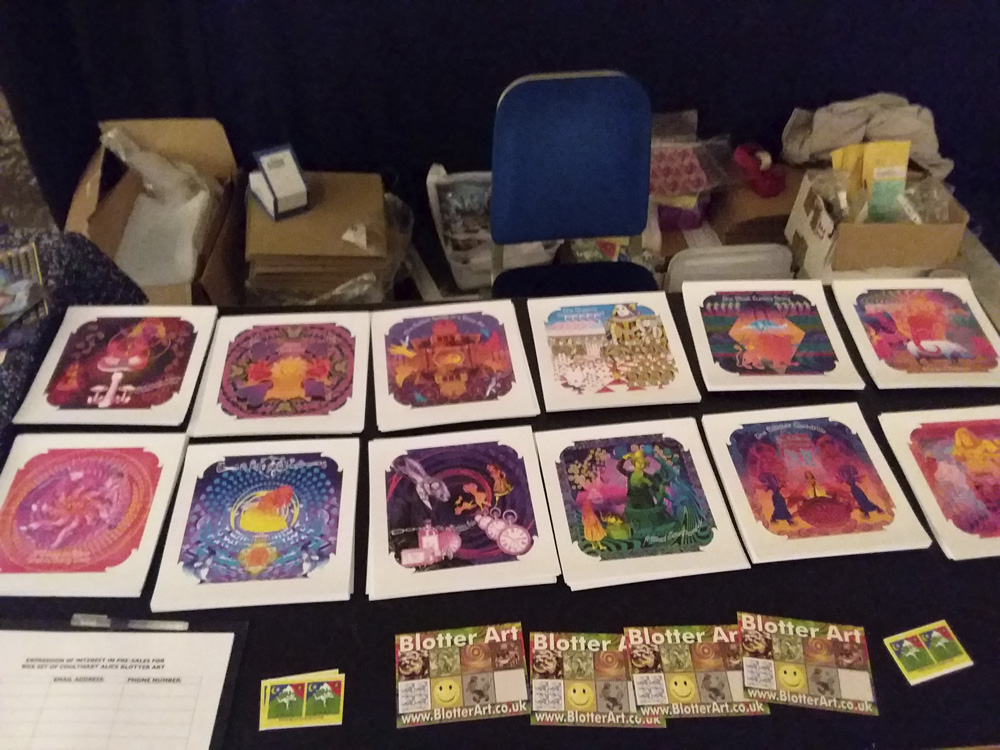
This show came about after an offer from Paul at Blotter Art to produce a series of blotter prints from my psychedelic Alice series. The first set of sheets are shown here, and I’m very pleased with the print quality after having been a little worried that the paper might not reproduce the colour and detail to the best effect. As noted above, signed sheets will be on sale (either as singles or a series of 12) during the event and afterwards via the Blotter Art website. People often ask about signed prints but most of my print sales are through CafePress which doesn’t allow this; so here’s a rare opportunity to get something spoiled by my signature. In addition to my work there should be Alice-themed art by other artists filling out the space. This exhibition will run to 4th February. I’m looking forward to it.

alice3.jpg

Weekend links 341

fountaingod.jpg

Fountain (1917) by R. Mutt (Marcel Duchamp), and God (1917) by Elsa von Freytag-Loringhoven.

• “What is there left to know about David Bowie? What is there left to unearth?” asks Ian Penman whose lengthy review of recent Bowie books is better by far than a shelf full of cash-in doorstops.

Strázci z hlubin casu is a collection of stories by HP Lovecraft and August Derleth from Czech publisher Volvox Globator. The book reprints artwork of mine on the cover and inside.

• Mixes of the week: Through December by David Colohan, At Alien Altars: A Conjurer’s Hexmas by Seraphic Manta, and Secret Thirteen Mix 204 by James Welburn.

• “Something vindictive resides in soot.” Timothy Jarvis on the weird fiction of Stefan Grabiński. From 2003: China Miéville on Grabiński.

• Paintings by Jakub Rozalski of eastern European peasants with mechas and werewolves.

Colm Tóibín on James Joyce’s A Portrait of the Artist as a Young Man, 100 years on.

Jesse Singal on why straight rural men (in the USA) have “bud-sex” with each other.

Mark Valentine recommends books on tasseography, or divination by tea leaves.

• “Northampton Calling: A Conversation with Alan Moore,” by Rob Vollmar.

Bill Schutt at Scientific American asks what human flesh tastes like.

Gwendolyn Nix on the Tritone, aka The Devil’s Musical Interval.

• At Dennis Cooper’s: _Black_Acrylic presents…Penda’s Fen Day.

• The latest Buddha Machine from FM3 is Philip Glass-themed.

Listen to The Wire’s top 50 releases of 2016

Tritone (Musica Diablo) (1980) by Tuxedomoon | Diabolus In Musica (1987) by The Foetus All Nude Review | Tritone (Musica Diablo) (2016) by Aksak Maboul

The George Dower Trilogy by KW Jeter

infernal.jpg

My latest covers for Angry Robot are a return to the world of steampunk, and also a return to the novels of KW Jeter, the man who not only wrote some of the pioneering novels of the sub-genre but also invented the term steampunk in the first place. Infernal Devices was one of the pioneering texts, and it’s a book that’s been very good to me in its earlier Angry Robot edition, with a cover design that’s been well-received around the world. (It still pops up regularly on the front page of Goodreads.)

infernal.jpg

The brief for the republication was to create fresh covers for Infernal Devices and for its two sequels; the second of these, Fiendish Schemes, was first published by Tor with (at the author’s request) another cover of mine that matched the Angry Robot design. Grim Expectations is a new novel which makes George Dower’s adventures in an alternate-history Britain into a trilogy. The request for the new designs was to avoid the detailed Victoriana of the earlier editions in favour of something that would suit the content but be a little more restrained. Mention was made of the Picador covers for Italo Calvino that Gary Day-Ellison designed with the Quay Brothers in the 1980s. Those covers are personal favourites so I was happy to use a similar vertical division with small illustrative elements, the details of which relate to the stories but without being too literal. My designs are a lot more florid in comparison to the Calvinos but then the content demanded a shift of emphasis. After having created a lot of steampunk art emblazoned with cogs of all shapes and sizes the one thing I didn’t want to do was use more cogs on these covers. So the background pattern for Infernal Devices is cog-like but is actually an abstract design I found in a book of 19th-century decoration. Similarly, the circle motifs at the top of each cover are also cog-like but are more Victorian embellishments.

infernal.jpg

All three books will be published in June 2017; a long time to wait but there’s more about the new novel—and the series as a whole—at Tor.com.

Previously on { feuilleton }
Steampunk in the Tank
More vapour trails
Steampunk catalogued
Steampunk: The Art of Victorian Futurism
Steampunk Calendar
Words and pictures
Nathanial Krill at the Time Node
Fiendish Schemes
Ghosts in Gaslight, Monsters in Steam
Steampunk Revolution
The Bookman Histories
Aether Cola
Crafting steampunk illustrations
SteamPunk Magazine
Morlocks, airships and curious cabinets
The Steampunk Bible
Steampunk Reloaded
Steampunk overloaded!
More Steampunk and the Crawling Chaos
Steampunk Redux
Steampunk framed
Steampunk Horror Shortcuts

Subtextual

subtext1.jpg

Études (2015) by Yair Elazar Glotman.

The work section of this website is still lacking the addition of some recent commissions but I have managed this week to get the albums section up to date. If I don’t talk about my work in the music world very much that’s because it’s been scaled down in recent years. I am still working regularly for the Subtext label, however, and the releases shown here are all the recent designs bar the latest one which will be out in February.

Almost all my work for Subtext involves preparing artwork I’ve been sent, and applying the relevant text information (or “label copy” as the big record companies prefer to call it). That’s generally easy work but the minimal style of Subtext means that some designs go through several iterations before everyone is happy with the results. The Signal album by Emptyset required the careful cropping and adjusting of James Ginzburg’s photos to get something that sat well in the square of the album sleeve. Almost all the artwork here was selected by the artists; if it wasn’t then it was prepared with their approval. The individual web pages show the full layouts, and also have all the necessary artwork credits.

As to the audio content, Subtext releases operate in the nebulous intersection between noise, drones, sound design and ambient music. The albums by Paul Jebanasam and FIS were featured this month on a list of the Top 30 Drone Records of 2016. See the label’s Soundcloud page for samples.

I’ll be posting another work update—if I get round to it!—next week.

subtext2.jpg

Emptyset (2015 reissue) by Emptyset.

subtext3.jpg

Signal (2015) by Emptyset.

subtext4.jpg

Continuum (2016) by Paul Jebanasam.

subtext5.jpg

Frenzy (Original Motion Picture Soundtrack) (2016) by Cevdet Erek.

subtext8.jpg

Barotrauma (2016) by Eric Holm.

subtext6.jpg

From Patterns To Details (2016) by FIS.

subtext7.jpg

Blessed Initiative (2016) by Blessed Initiative.