James Cawthorn: The Man and His Art

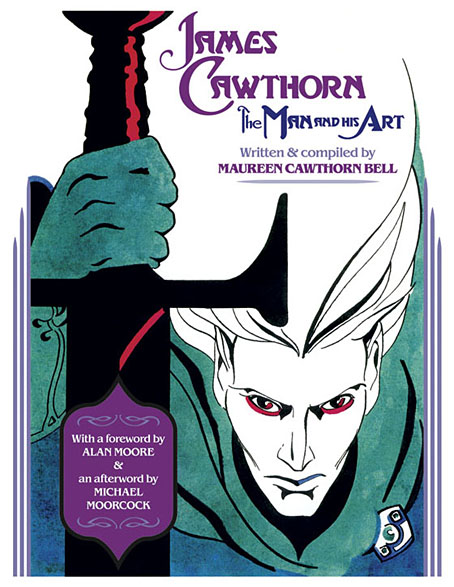
cawthorn-cover.jpg

The past year would have been busier than usual with the amount of illustration work I had to deal with, but it was made even busier with my having to design this book at the same time. James Cawthorn: The Man and His Art was originally intended to be a modest memorial by Maureen Cawthorn Bell for her artist brother following his death in 2008, but the book grew into a heavyweight volume of 448 pages containing over 800 individual pieces of art: book covers, illustrations for magazines and fanzines, private pieces for friends and relatives, and many sketches or preliminary works, most of which have never seen print before.
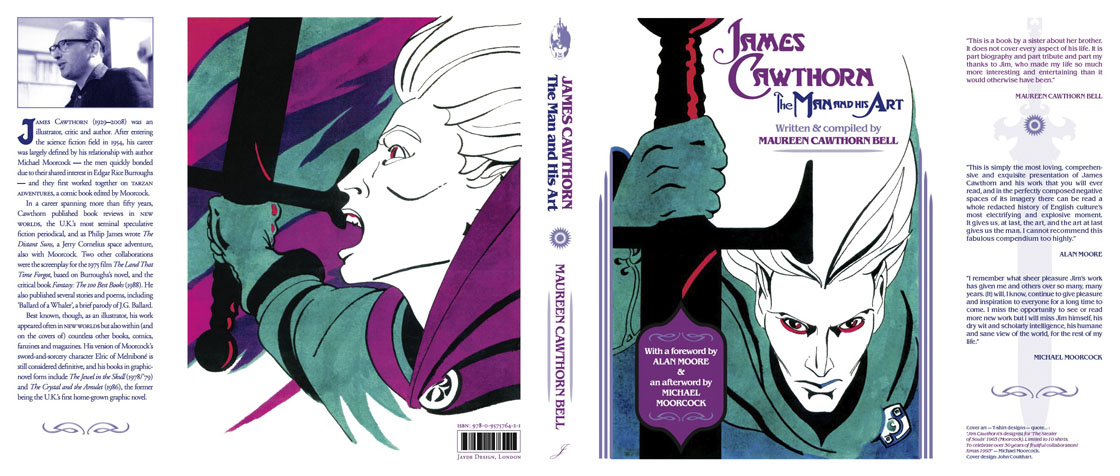
cawthorn-coverspread.jpg

Given Jim Cawthorn’s long association with Michael Moorcock, as both friend and collaborator, the task of collating the artwork and editing the book went to Moorcock bibliographer John Davey, who also serves as the book’s publisher. John spent three years locating over 3000 pieces of artwork, large and small. Some of these pieces are now lodged with the Moorcock archives in the Bodleian Library, Oxford, while others may only be found in the pages of the many science fiction and fantasy fanzines that Jim illustrated, copies of which are stored at the British Library. From this body of material Maureen and John selected a core of representative work from Jim’s private as well as public life, although no-one at the outset of the project was expecting the final picture tally to be so high.
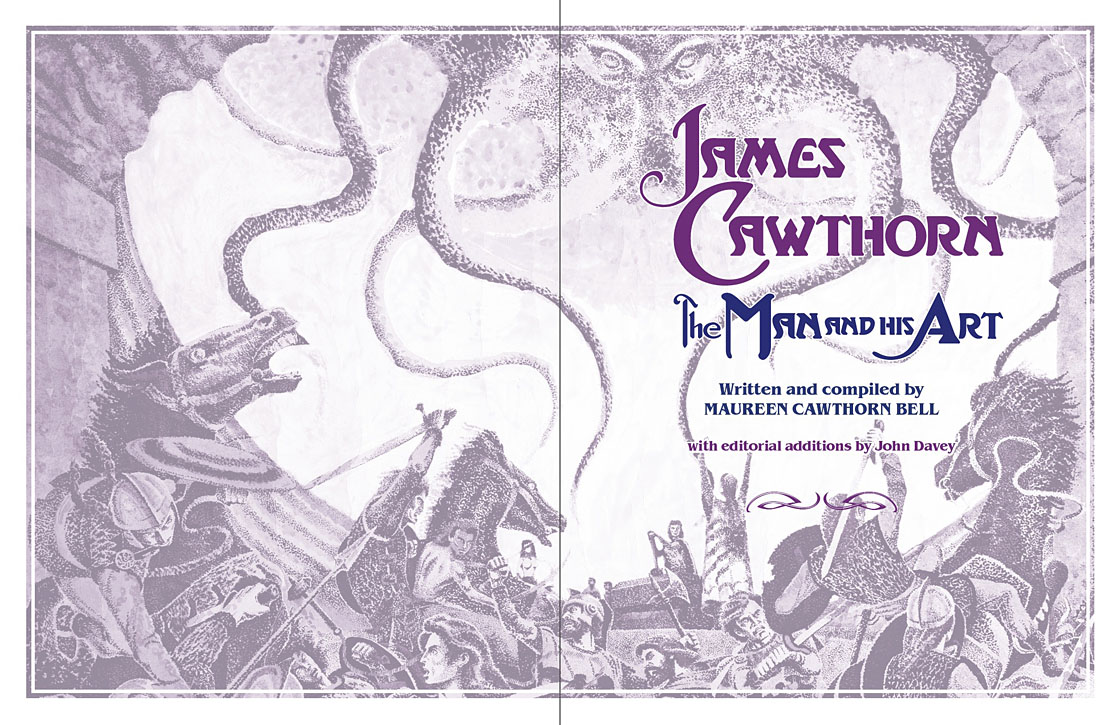
cawthorn-spread-01.jpg

My task as the book’s designer involved making the text presentable (easy) and corralling the artwork (not so easy, and I also had to either clean or colour-adjust every single piece). Maureen had divided the book into several sections, beginning with a lengthy biographical reminiscence. Following this was “Jim by Jim”, a selection of interviews, magazine pieces, some fiction, essays and book reviews. There was also a lengthy extract from Fantasy: 100 Best Novels (1988), a book credited to Jim and Michael Moorcock but, by Moorcock’s admission, mostly Jim’s work. Jim Cawthorn was very well-read, especially in the genres—he was old enough and interested enough to have read The Lord of the Rings when it was first published—and could also present his erudition engagingly for a reader, so the text section of Maureen’s book is far from indulgent.
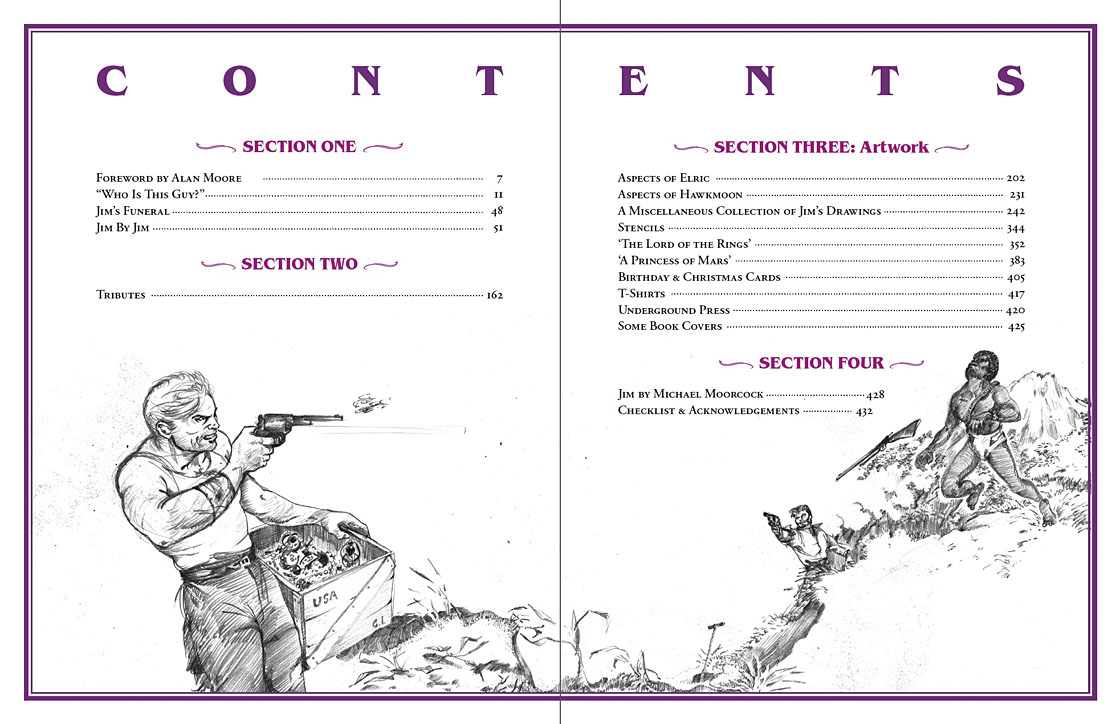
cawthorn-spread-02.jpg

The book design isn’t as elaborate as some I’ve worked on but it didn’t need to be when the pictorial material is rich with what Moorcock calls “wizardry and wild romance”. Maureen wanted a particular picture of Moorcock’s Elric character on the cover so I took details and motifs from some of Jim’s many Elric illustrations to give the book a thematic thread and internal consistency. Cawthorn was present at the creation of Elric in the early 1960s; he not only provided Moorcock’s characters with their first illustrations but even helped plot one of the earliest stories, Kings in Darkness.

cawthorn-number.jpg

Page numbers are framed by the swords from the Elric stories.

Using motifs such as the sword silhouette and Elric head is something I frequently do with book designs but for this book I also went to the trouble of creating a one-off font for the drop capitals based on Jim’s hand-drawn lettering. Jim drew titles and other lettering throughout his career, so again this was a decision warranted by the book’s contents. The few times we met I never asked him about this but I’ve always thought his lettering designs were derived from the stylised titles that J. Allen St. John created for many of the early Edgar Rice Burroughs books. Jim spent most of his life drawing Burroughs’ characters, and was very familiar with the work of Burroughs’ original illustrators. I was hoping to find a title design of Jim’s that I could rework for the book’s title but none of the examples worked as well as I hoped. For this reason the title lettering is based on different styles from the John Carter novels that were Jim’s favourites among Burroughs’ works.
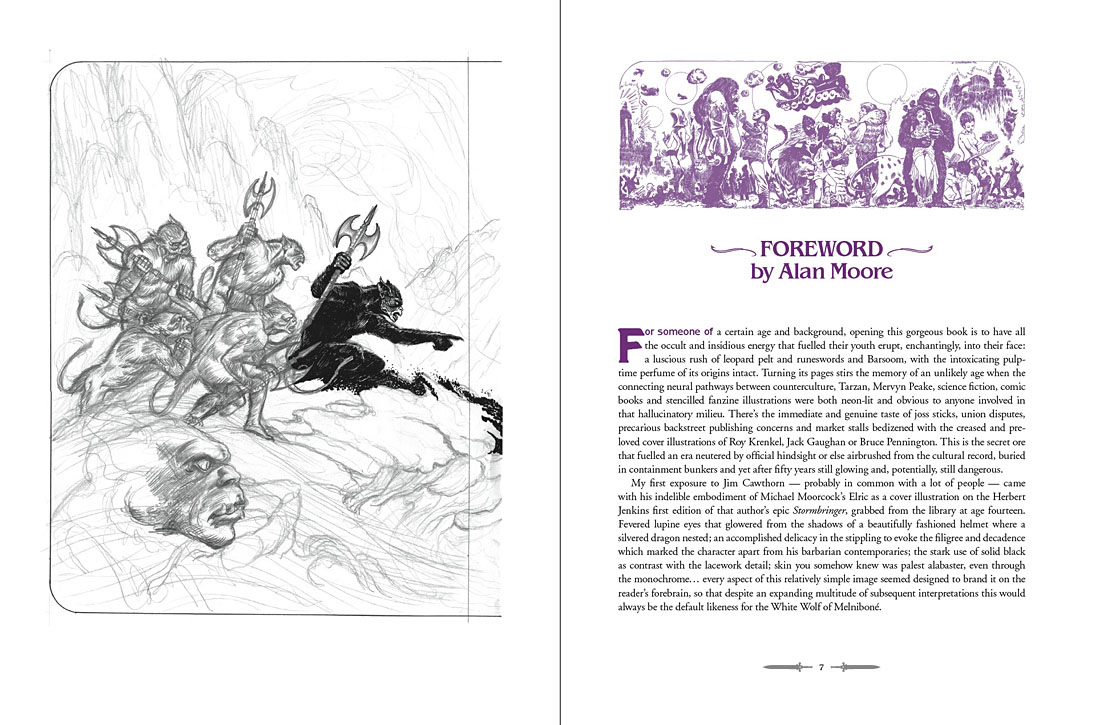
cawthorn-spread-03.jpg

Other features include a foreword by Alan Moore, an afterword by Michael Moorcock, a gallery of Jim’s Lord of the Rings drawings and character sketches from the early 1960s (which predate all others bar those by Tolkien himself), artwork for Hawkwind (including Dave Brock’s “Meliadus” T-shirt), and even a handful of photos from the set of The Land that Time Forgot (1975), the ER Burroughs-derived feature film scripted by Jim with Michael Moorcock. The page samples here are necessarily few given the size of the book.
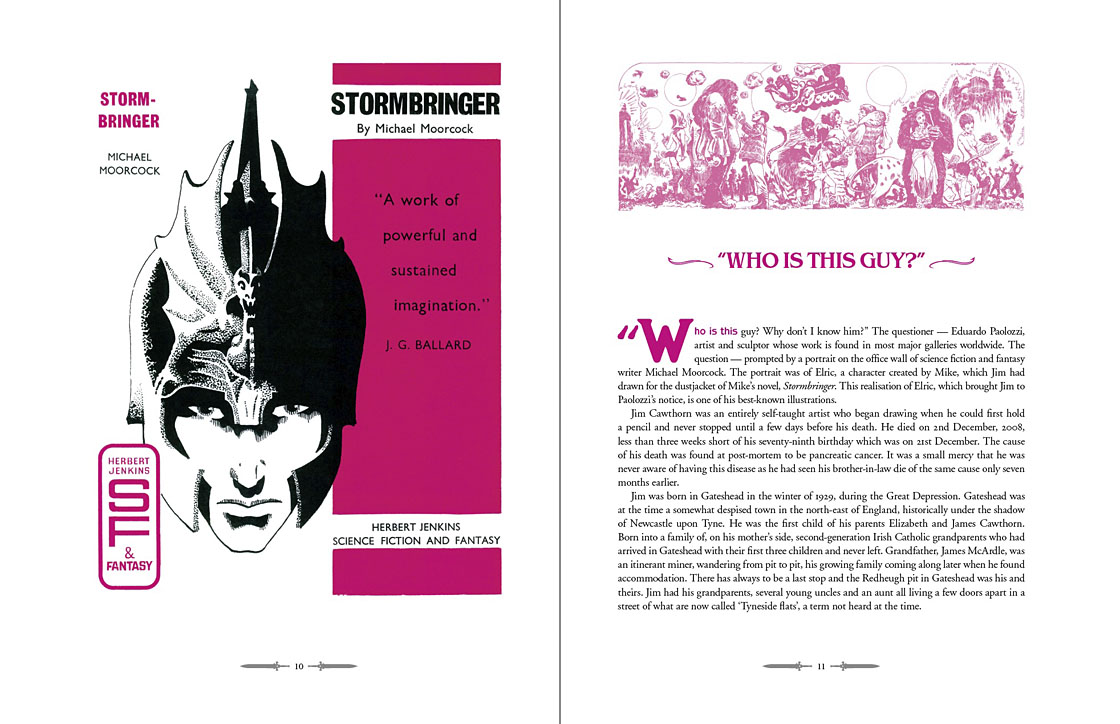
cawthorn-spread-04.jpg

For the moment James Cawthorn: The Man and His Art is available exclusively from publishers Jayde Design at a special pre-publication price of £20. After publication on 6th August the price will rise to £35. Further page samples follow.
Continue reading “James Cawthorn: The Man and His Art”

The Mercenaries of the Stolen Moon

mercenaries.jpg

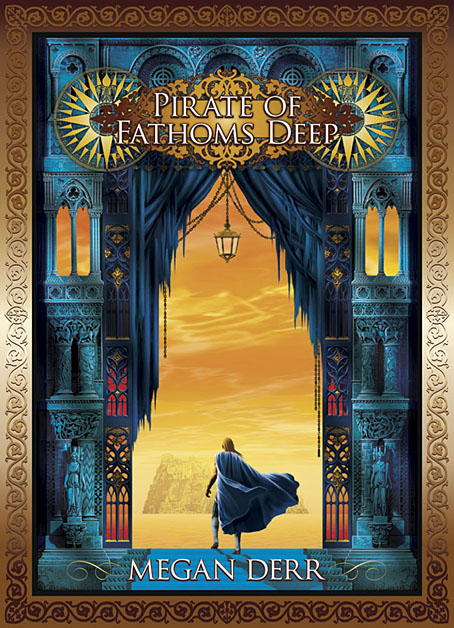
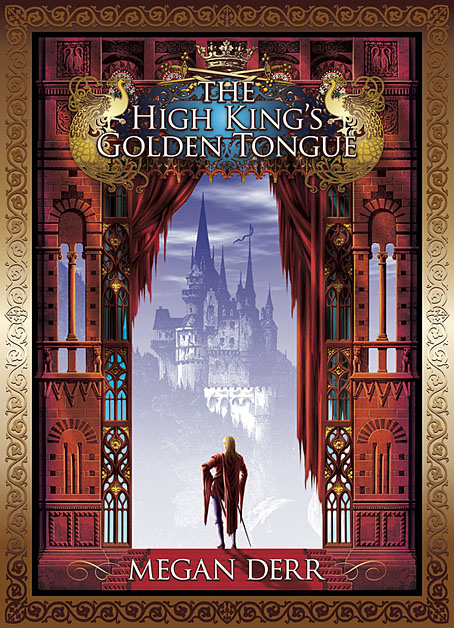
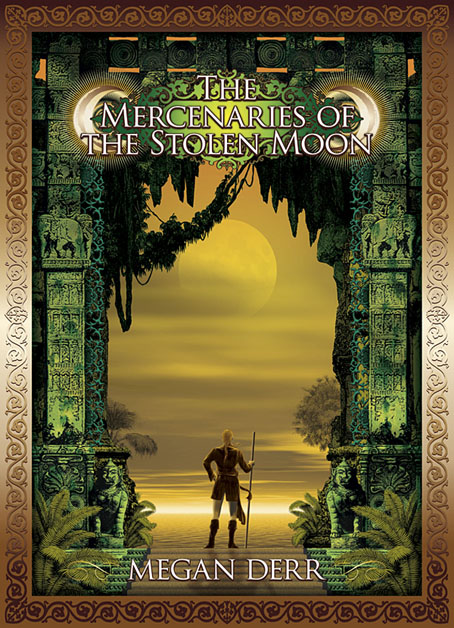
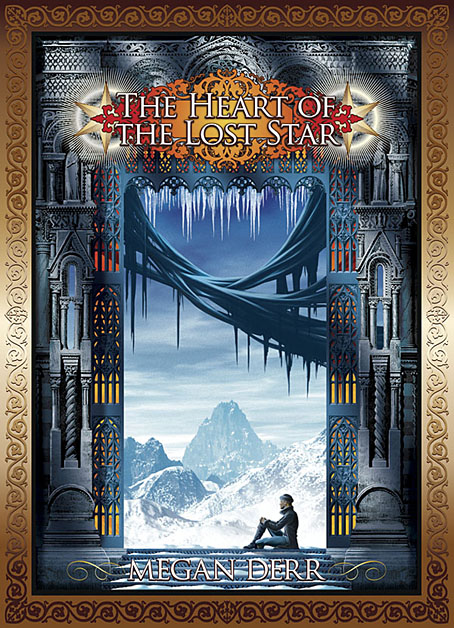
As promised last week, here’s my latest cover for Megan Derr’s gay fantasy series, Tales of the High Court. The first book wasn’t intended to have this many sequels so my initial cover design also wasn’t planned as something that might be a template for later volumes. The previous books (below) borrowed bits and pieces from a set of early Viollet-le-Duc illustrations, a decision that posed problems as the series evolved when I began to run out of usable material. The new book required a different setting so I was able to dispense with the medieval architecture in favour of a hybrid of Indian and Cambodian stonework. I’ve always enjoyed the ruined-jungle-temple aesthetic so this was fun to work on, and made a break from all the black-and-white illustration I’ve been producing for the past year or so. The Mercenaries of the Stolen Moon will be published by Less Than Three Press later this year.

loststar.jpg

derr2.jpg

derr1.jpg

Previously on { feuilleton }
The Heart of the Lost Star
Tales of the High Court

On the threshold

doorway.jpg

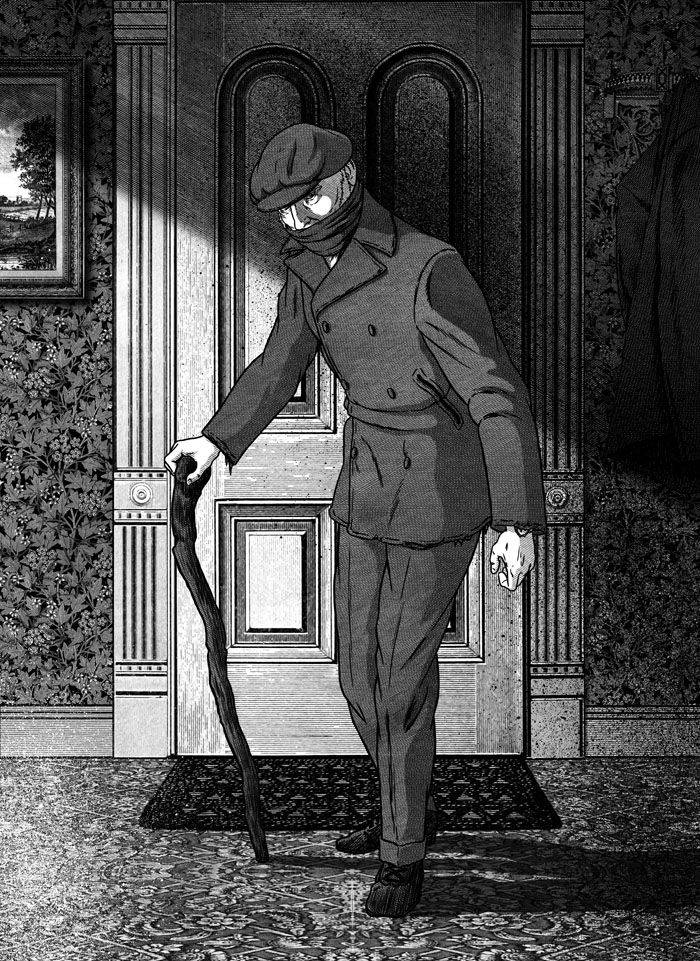
I was intending to post a new book cover this week but I’m up against another deadline—the last pressing one of this half of the year—so good intentions have been felled by the urgent need to keep drawing. In place of the cover design, here’s a taster of some of the work of the past few months which will be seen shortly in another volume from Editorial Alma. All being well, the postponed cover should appear next week. I also have planned a post I’m looking forward to putting together about a series of horror covers from the 1970s. As always, watch this space.

Illustrating Dracula

holloway.jpg

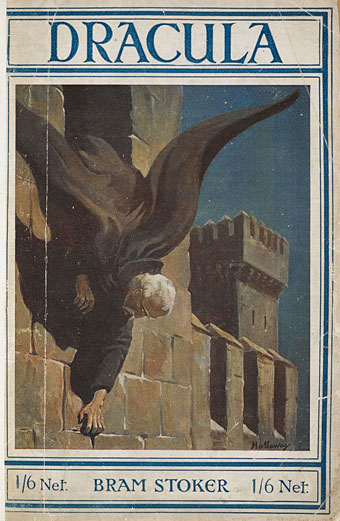
Cover art by Edgar Alfred Holloway for the Rider edition of Bram Stoker’s novel, an edition reprinted many times during the early 20th century. Holloway’s Count is shown as Stoker describes him in the early chapters of the book, white-haired and bearded.

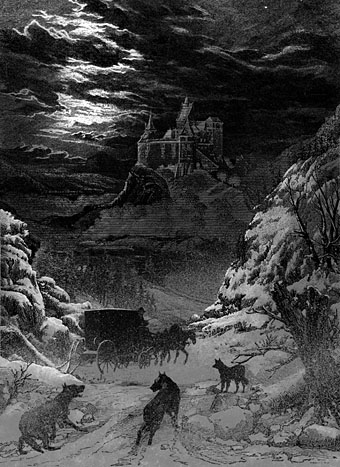
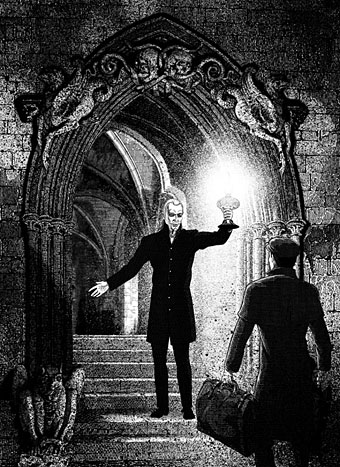
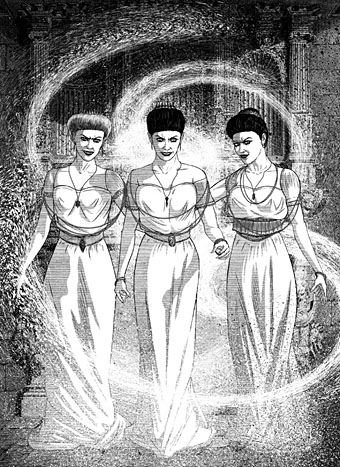
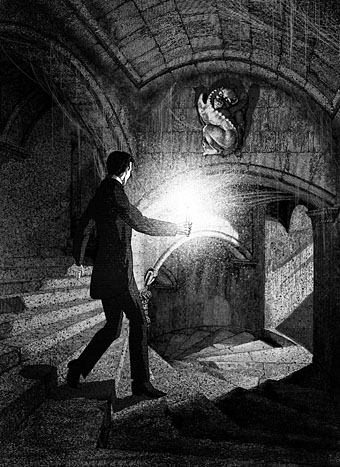
Last year I illustrated a number of stories by Edgar Allan Poe, and the entirety of Mary Shelley’s Frankenstein for Spanish publisher Editorial Alma. Earlier this year I was illustrating Dracula for the same publisher; now the book is in print I can show the results here. This was another difficult task since I had a few weeks to illustrate all 27 chapters of the novel while trying to do something new (or at least slightly different) with a very familiar story.

As with Frankenstein, I opted for fidelity to the text and period details. Despite its epistolary form, Dracula is much more readable (in a contemporary sense) than Frankenstein, so more people will have read Stoker than Shelley; but the sheer scale of cultural mauling that Dracula has been subject to means that—as with Frankenstein—even the allegedly faithful adaptations often deviate from the novel. The lounge-lizard vampire that everyone knows was a creation of Hamilton Deane’s 1924 stage adaptation, the success of which led to Tod Browning’s film and Bela Lugosi’s performance (which I’ve never liked); film and theatre may have made Dracula universally popular but the Lugosi stereotype has overshadowed the more powerful and violent character that Stoker gives us, with his bearded face, hairy palms and glowing eyes. So that’s who you see here, although the restrictions of time and brief (one picture per chapter) meant that some of the moments I’d have liked to illustrate had to be forfeit. Poor old Renfield gets short shrift, and some of the minor male characters are out of the picture altogether.

dracula01.jpg

On the plus side (I hope), many of the background details are well-researched even if they’re not at all obvious. The castle in the first picture (above) is Bran Castle, known today as “Dracula’s Castle” even though the building in the novel is Stoker’s invention; it certainly looks the part. As before, the full run of pictures follows below. All may be seen at a larger size here.

dracula02.jpg

dracula03.jpg

dracula04.jpg

Continue reading “Illustrating Dracula”

Daughters of Forgotten Light by Sean Grigsby

grigsby.jpg

I’ve spent most of the year so far working on more black-and-white illustrations for Editorial Alma—47 full-page pieces to date—so this cover design made a welcome break, especially since all the black-and-white art has a late-Victorian setting. More about that later. Sean Grigsby’s second novel for Angry Robot Books is previewed at the Barnes & Noble SF blog as follows:

A floating prison is home to Earth’s unwanted people, where they are forgotten…but not yet dead, in this wild science fiction adventure.

Deep space penal colony Oubliette, population: scum. Lena “Horror” Horowitz leads the Daughters of Forgotten Light, one of three vicious gangs fighting for survival on Oubliette. Their fragile truce is shaken when a new shipment arrives from Earth carrying a fresh batch of prisoners and supplies to squabble over. But the delivery includes two new surprises: a drone, and a baby. Earth Senator Linda Dolfuse wants evidence of the bloodthirsty gangs to justify the government finally eradicating the wasters dumped on Oubliette. There’s only one problem: the baby in the drone’s video may be hers.

The gangs are biker gangs, riding machines with wheels of light, so the brief was for a design as much reminiscent of a rock poster as a science-fiction cover. I don’t stray very often into the SF world so this again made a refreshing break from the 19th century and its heavy furnishings. There’s a touch of Syd Mead in the background, a reference suggested by the Tron-style bikes, but he’s long been a favourite visual futurist of mine even before Blade Runner (as I noted recently). The side panels and parts of the halo are adapted from Art Deco designs, the panels being based on embellishments for a New York skyscraper. It doesn’t take much to push the aerodynamic qualities of Deco style into the Space Age (the Soviet Monument to the Conquerors of Space could have been designed in 1930), a suggestion that William Gibson explored from a different angle in The Gernsback Continuum.

The Barnes & Noble post linked above also has an extract from the beginning of the novel. The book itself will be out on 4th September, 2018.