Stuck’s serpents

stuck1.jpg

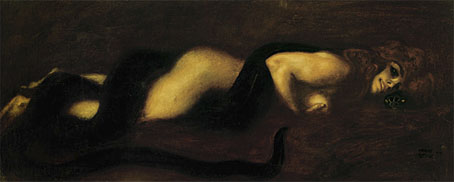
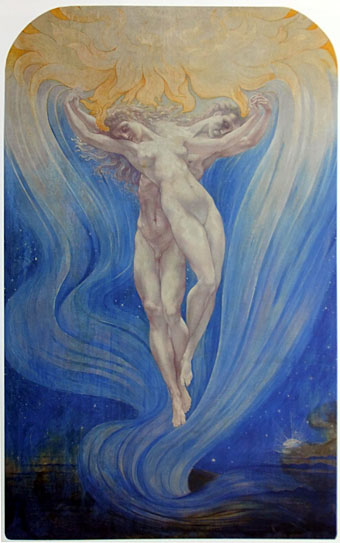
The Sin (1894).

Some pictures in honour of the Chinese year of the Water Snake which begins this Sunday. Paintings of women with snakes are legion, even after you winnow out all the Eve and the Serpent pictures, so you need to narrow the field of view. Artists of the 19th century must have been delighted when Gustave Flaubert published Salammbô in 1862, chapter 10 of which—The Serpent—gave them an excuse to depict an exotic woman involved with a snake completely free of any Biblical trappings.

stuck3.jpg

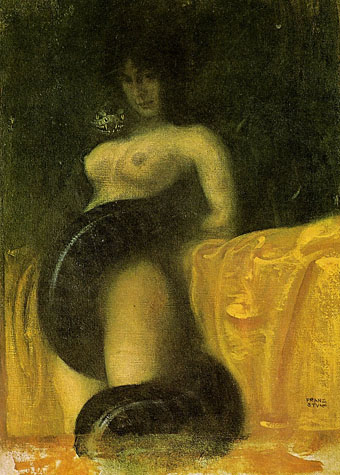
Sensuality (1891).

Franz Stuck’s celebrated trio of serpent women can be read as Eve figures but their provocative posing is more in line with the prurient misogyny common to much art of the period, an attitude which condemned women for being so tempting whilst also secretly lusting after their bodies. Sensuality is remarkable for the way its oiled snake is so firmly lodged between the woman’s thighs. Stuck was never very interested in Christian themes—many of his other works are a Teutonic take on Classical subjects—so I wonder whether his use of the word “sin” was merely a fig leaf for delivering imagery he wouldn’t have otherwise been able to exhibit.

stuck2.jpg

The Sin (1893).

wilson.jpg

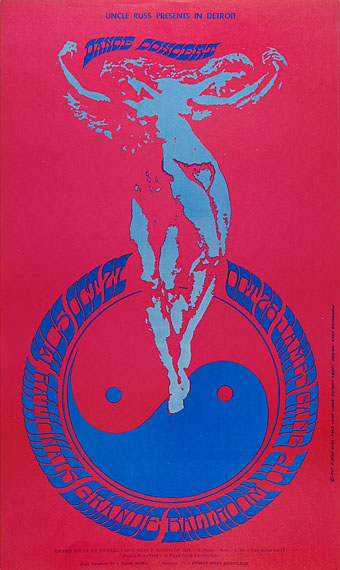
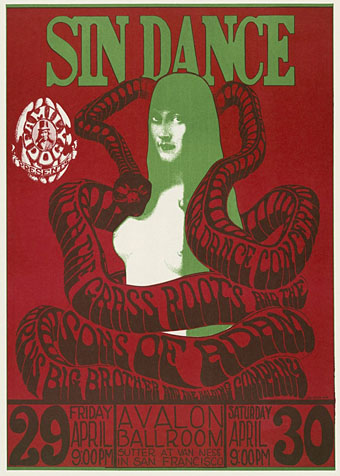
Sin Dance (1966) by Wes Wilson.

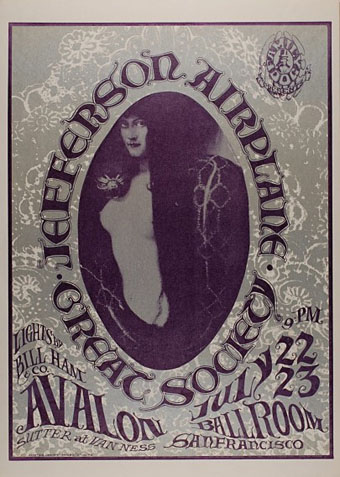
Symbolist art was rediscovered in the 1960s after decades of neglect, and the psychedelic poster artists happily plundered the art books for suitable imagery. Stuck’s Sin returned to the world in these two Avalon Ballroom posters. Wes Wilson’s Sin Dance was a design for an event which was cancelled so this might explain why the same painting appeared a few months later on a Stanley Mouse and Alton Kelley poster. The Mouse & Kelley version was printed with metallic inks.

For more of Franz Stuck’s work see WikiPaintings.

mouse.jpg

Jefferson Airplane at the Avalon Ballroom (1966) by Mouse & Kelley.

Previously on { feuilleton }
Serpentine pulchritude
Salammbô illustrated
The Feminine Sphinx
Men with snakes

Caresses by Fernand Khnopff

khnopff1.jpg

khnopff2.jpg

khnopff3.jpg

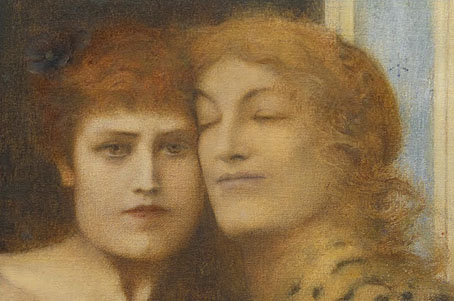
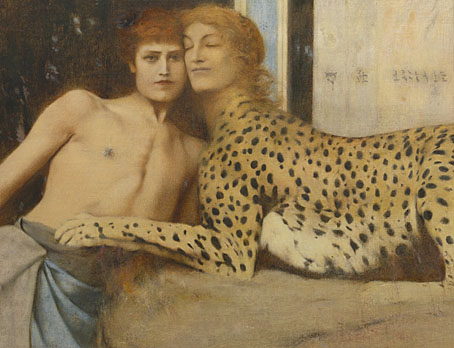
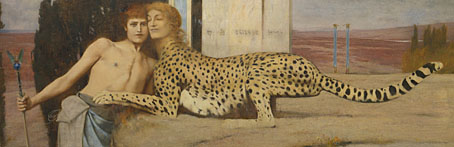
Details from Caresses aka The Caress (1896), the most famous painting by Belgian Symbolist Fernand Khnopff which can now be explored in detail at the Google Art Project. Caresses was one of Khnopff’s more enigmatic works although the term is a relative one when it comes to an oeuvre in which enigma is the default position. The combination of a young male, a feline female and the trappings of antiquity suggests Oedipus and the Sphinx although the Sphinx of mythology is a far more threatening presence. Adding to the enigma is the fact that Khnopff’s sister, Marguerite, was his model in most of his paintings which means we can recognise her heavily-jawed features in the male figure as well as the female. The essence of Symbolism for me has always been an atmosphere of unresolved pictorial mystery, a quality which this painting exemplifies.

khnopff4.jpg

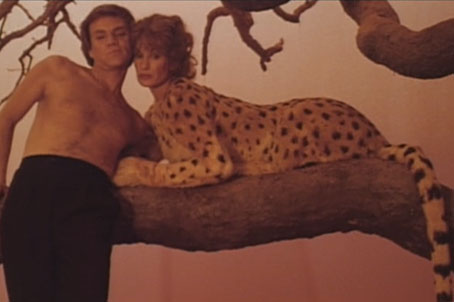
Malcolm McDowell and Ruth Brigitte Tocki in a deleted scene from Cat People (1982).

The mystery would have been carried over to the cinematic world in 1982 if the producers of Cat People had kept their nerve. The “Leopard Tree” dream sequence was to have featured a moment when Irena (Nastassia Kinski) meets her dead brother and mother in a pose which recapitulates Khnopff’s painting. The painting itself also appeared earlier in the film although it’s so long since I watched it I forget now whether that moment was also excised. The dream sequence may have been stretching audience credulity too far but the symbolism is fitting not least for the incestuous nature of the story. Here’s the scene in the final cut set to Giorgio Moroder’s fantastic score.

khnopff5.jpg

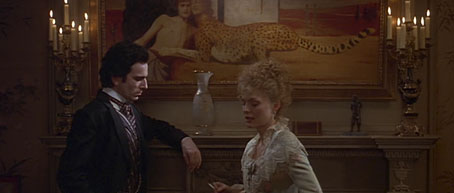
Daniel Day-Lewis and Michelle Pfeiffer.

The painting definitely did appear on-screen in 1993 where it overshadows a crucial conversation in Martin Scorsese’s adaptation of The Age of Innocence. Given that the setting is New York in the 1870s the usage is slightly anachronistic but once again the symbolism works for a scene which concerns unacceptable and unrequited passions.

Previously on { feuilleton }
Symbolist cinema
Bruges-la-Morte

The art of Gösta Adrian-Nilsson, 1884–1965

gan19.jpg

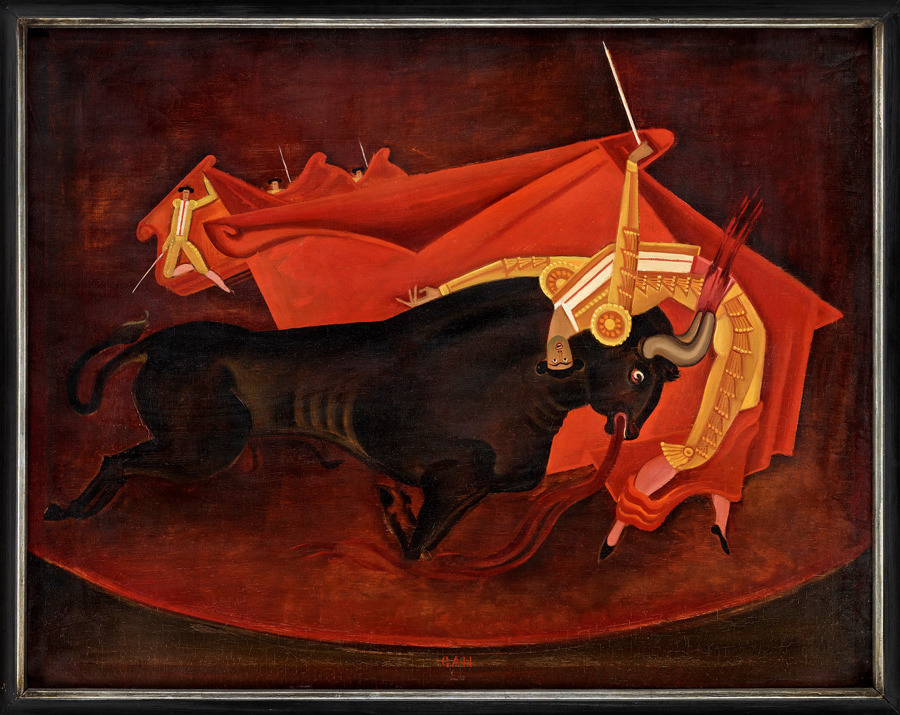
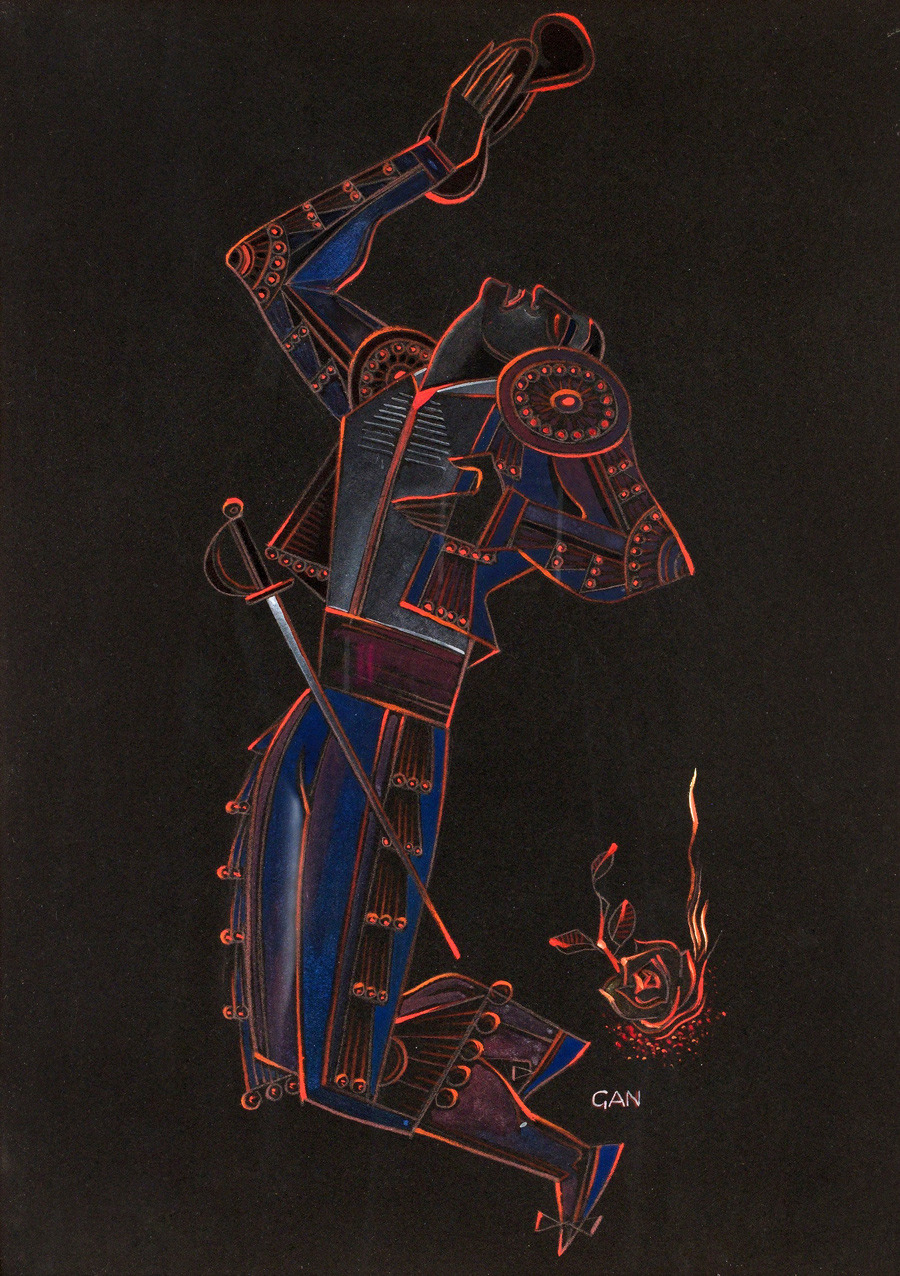
Tjur och Matador III (Bull and Matador III) (1926).

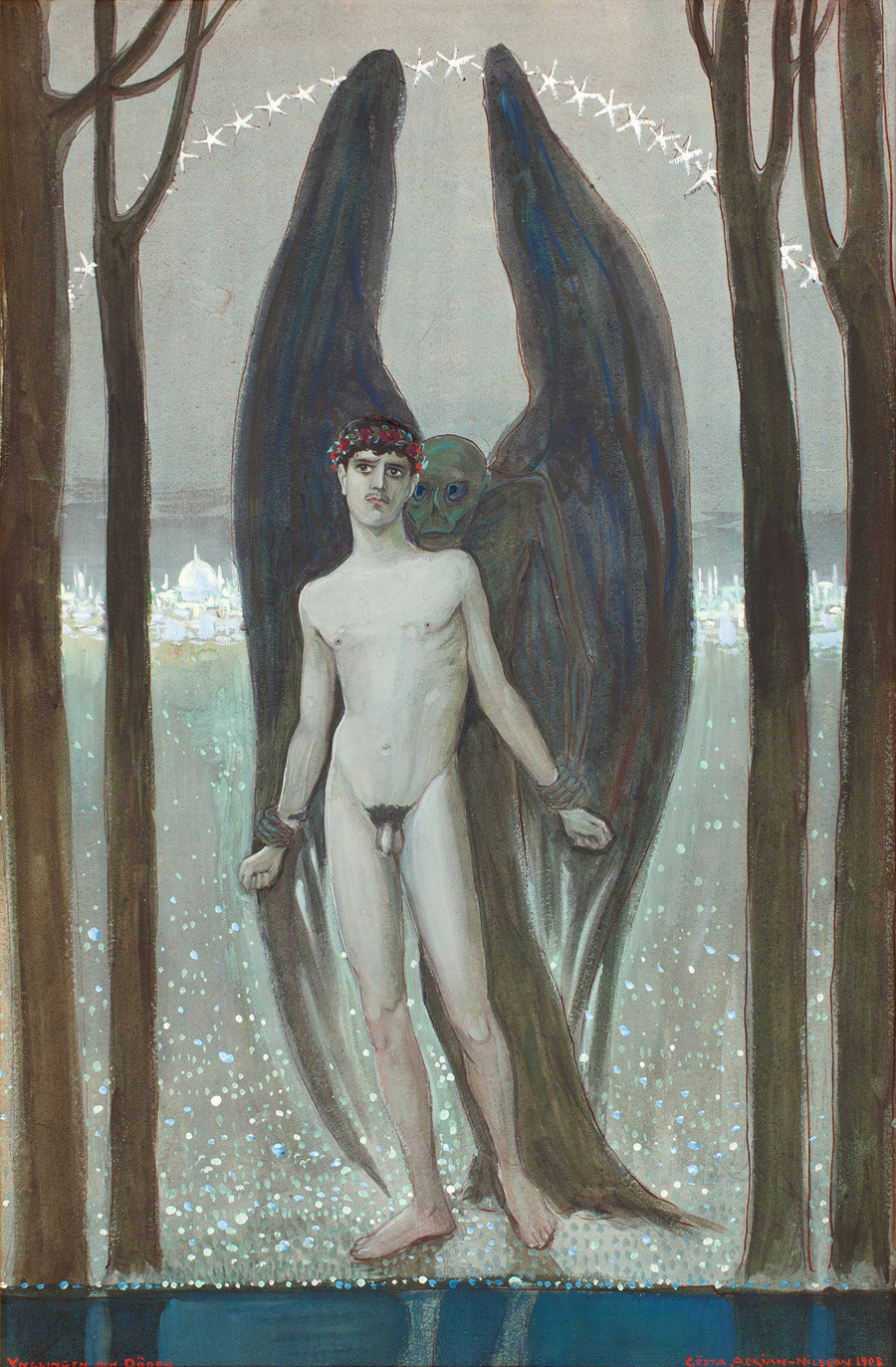
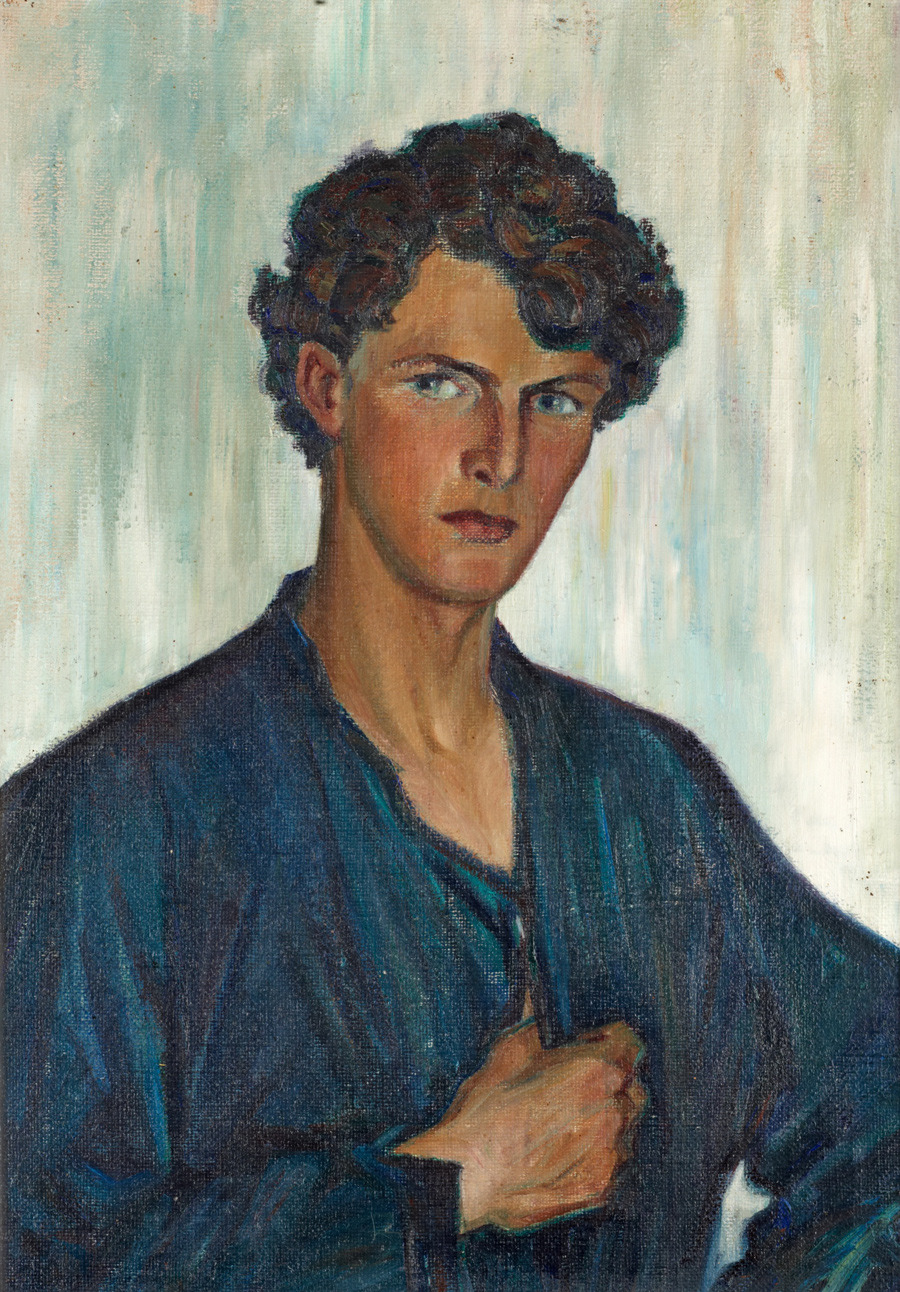
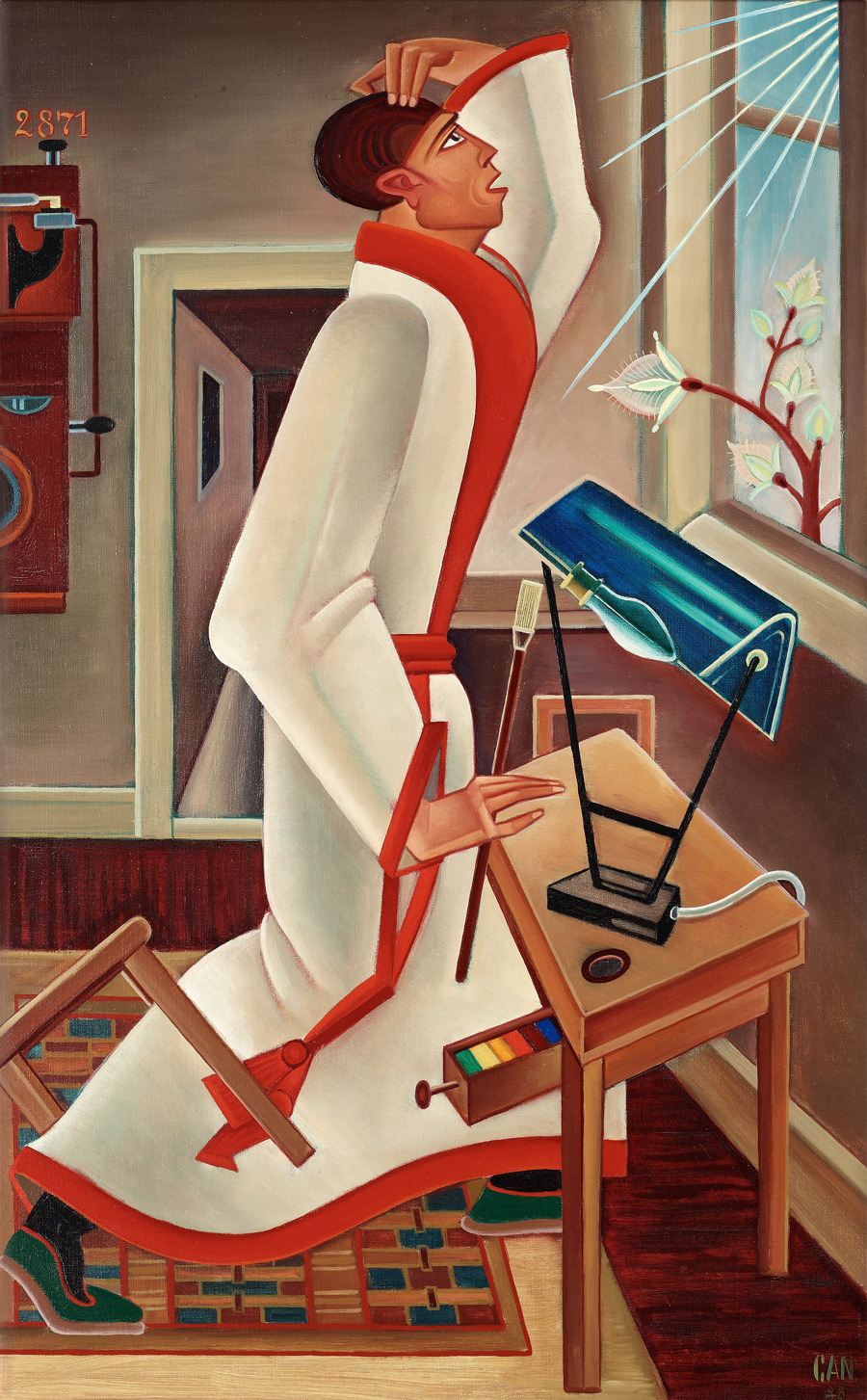
My thanks again to Will at 50 Watts for generously sending me this selection of paintings by Swedish artist Gösta Adrian-Nilsson, or GAN as he was known. These pictures alone show him to have been a very versatile artist, ranging from the late Symbolism of his Young man with death to the works below which deploy a variety of Modernist styles including nods to Cubism and Futurism. A translation of his Swedish Wikipedia page explains the preponderance of matelots and toreadors thus:

The GAN was homosexual reflected in several of his works. For example, he was at times almost manic fixed at the Mariners, and he worshiped the masculine force. Other favorite subjects were male athletes. Meanwhile, the homosexual eroticism both forbidden and taboo and GAN forced to live a double life.

It’s a shame there isn’t a good single site for his work but Google’s image search turns up a lot more paintings. There’s also this Swedish site which contains more biographical detail.

gan01.jpg

Ynglingen och döden (Young man with death) (1908).

gan02.jpg

Epilog.

gan03.jpg

Ilja (Portrait of Karl Edvard Holmström) (1911–12).

gan04.jpg

Inspiration (1928).

Continue reading “The art of Gösta Adrian-Nilsson, 1884–1965”

Gloves

klingerglove.jpg

A Glove: Anxieties (1881) by Max Klinger.

Although the Glove‘s scenario was given its due Germanic explication by contemporary critics, it defies rational analysis. The last picture, which was seen as a kind of happy ending to the glove’s peregrinations, is particularly ambiguous and leaves the whole meaning of the series in doubt. The story is a parable of loss based on a trivial lost article, like the lost keys in Bluebeard and in Alice, like Desdemona’s missing handkerchief, or like the philosopher’s spectacles in Klinger’s own Fantasy on Brahms, which have slid out of their proprietor’s reach just as he was nearing the summit of a kind of Matterhorn. There are overtones of erotic symbolism and fetishism in the glove and the phalloid monster who abducts it, heightened for a modern viewer by the Krafft-Ebing period costumes and décors (the engravings appeared in 1881, and the drawings were apparently finished in 1878).

John Ashbery describing Max Klinger’s extraordinary series of etchings A Glove (aka Paraphrase on the Finding of a Glove) which in their inexplicable narrative of fetishist obsession anticipate Surrealism. See the entire sequence here or here. For A Glove in print there’s The Graphic Works of Max Klinger from Dover Publications.

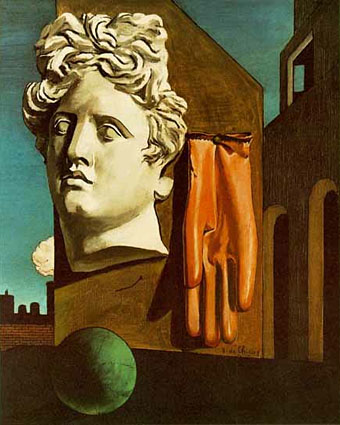
dechirico.jpg

The Song of Love (1914) by Giorgio de Chirico.

Ashbery begins by discussing Giorgio de Chirico’s enthusiasm for Klinger’s work, a passion and influence that provides one of the many connections between the Symbolists and the Surrealists. This “metaphysical” painting looks back to Klinger and forward to Magritte.

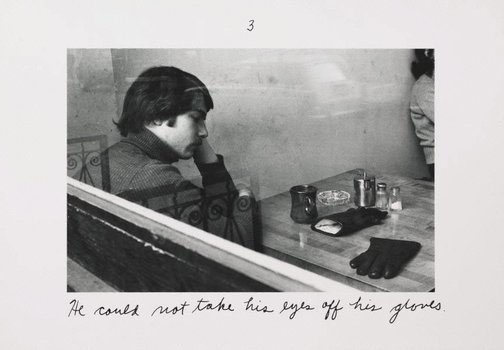
michalsglove.jpg

The Pleasures of the Glove, 3 (1974) by Duane Michals.

The enigmatic encounter of ‘The pleasures of the glove’ follows the lead character as he fantasises about a pair of gloves on the hands of a mannequin in a shopfront window. The perverse pleasure of desiring the gloves but not acquiring them leads him on a surreal adventure of first imagining his own glove as a queer furry tunnel that swallows his hand to the fantasy of stroking the naked body of a woman he sees on the bus with her own glove. (more)

A more contemporary take on the same idea, albeit without the intercession of a pterodactyl-like thief. If Klinger is pre-Surrealism then this is the post- version; Michals photographed René Magritte, and many of his other works run in a distinctly Surreal direction. (Thanks to Anne Billson for the tip!)

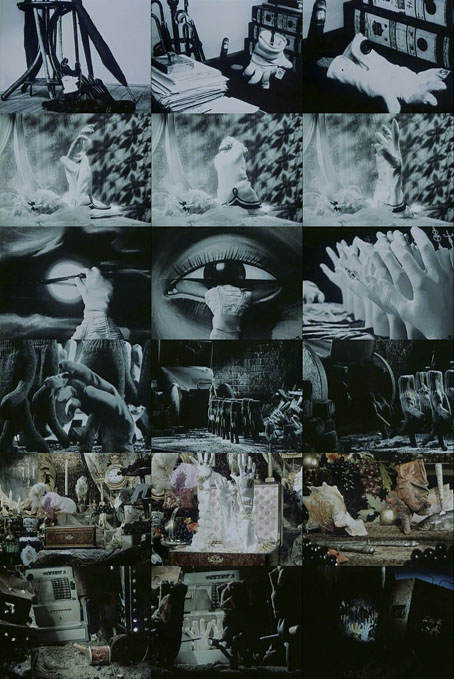
bartagloves.jpg

The Vanished World of Gloves (1982) by Czech animator Jiří Barta features sex, Surrealism and a lot more besides, all in the space of 16 minutes. A can of film is unearthed which contains a series of short episodes pastiching different cinematic styles: Chaplinesque slapstick, swashbuckling romance, Buñuel Surrealism, a war film, a Fellini orgy and a science fiction apocalypse. All the parts are played by gloves, of course, and if you didn’t see the credits you might take this at first for a Svankmajer short.

The Vanished World of Gloves: part one | part two

Update: I knew I’d forgotten something… Added de Chirico’s The Song of Love.

Previously on { feuilleton }
More Golems
Max Klinger’s New Salomé
Barta’s Golem