Weekend links 539

earle.jpg

Fire, Red and Gold (1990) by Eyvind Earle.

Roger Penrose won a Nobel Prize recently for his work in physics. I read one of his books a few years ago, and was intimidated by the “simple” equations, but I always like to hear his ideas. This 2017 article by Philip Ball is an illuminating overview of Penrose’s life and work.

• At Dangerous Minds: Joe Banks on the incidents that led to Lemmy’s dismissal from Hawkwind in 1975, an extract from Hawkwind: Days of the Underground. The book is available from Strange Attractor in Europe and via MIT Press in the USA.

• “Not married but willing to be!”: men in love (with each other) from the 1850s on. It’s always advisable to take photos like these with a pinch of salt but several of the examples are unavoidably what they appear to be.

Most of all, this resolutely collaborative production stood against the vanity and careerism of individual authorship; Breton called it the first attempt to “adapt a moral attitude, and the only one possible, to a writing process.” The text itself is peppered with readymade phrases, advertising slogans, twisted proverbs, and pastiches of such admired predecessors as Rimbaud, Apollinaire, and Lautréamont, whose pluralistic credo, “Poetry must be made by all. Not by one,” anticipates the sampling aesthetic by a century. But the intensity was draining, and as the book moves toward its final pages and the writing becomes increasingly frenetic, you can almost feel the burnout taking hold. After eight days, fearing for his and Soupault’s sanity, Breton terminated the experiment.

Mark Polizzotti reviews a new translation by Charlotte Mandell of The Magnetic Fields by André Breton and Philippe Soupault

• The hide that binds: Mike Jay reviews Dark Archives: A Librarian’s Investigation into the Science and History of Books Bound in Human Skin by Megan Rosenbloom.

• “A photographer ventures deeper into Chernobyl than any before him.” Pictures from Chernobyl: A Stalker’s Guide by Darmon Richter.

John Van Stan’s reading of Frankenstein by Mary Shelley uses my illustrations (with my permission) for each of its chapters.

Susan Jamison, one of the artists in The Art of the Occult by S. Elizabeth, talks to the latter about her work.

William Hope Hodgson: The Secret Index. A collection of Hodgson-related posts at Greydogtales.

Gee Vaucher talks to Savage Pencil about her cover art for anarchist punk band, Crass.

Weird, wacky and utterly wonderful: the world’s greatest unsung museums.

Tom Cardamone chooses the best books about Oscar Wilde.

• At Dennis Cooper’s: Jean-Pierre Melville Day.

You by The Bug ft. Dis Fig.

Magnetic Dwarf Reptile (1978) by Chrome | Magnetic Fields, Part 1 (1981) by Jean-Michel Jarre | Magnetic North (1998) by Skyray

Weekend links 538

greenaway.jpg

The Elf Ring by Kate Greenaway.

• “Is it possible that the Victorian fairy tradition, beneath its innocent exterior, operated as a conduit for a hidden tradition of psychedelic knowledge?” Just in time for the British mushroom season, Mike Jay explores the connections between psychedelic mushrooms, folklore and fairy tales.

• “This second coming of Prince’s greatest album is the immaculate execution of a flawed conception: the belief that you can never have too much of a good thing.” Simon Reynolds on Prince and the expanded, multi-disc reissue of Sign O’ The Times.

• “An extraordinary stash of more than 400 erotic drawings by Duncan Grant that was long thought to have been destroyed has come to light, secretly passed down over decades from friend to friend and lover to lover.” Mark Brown on a trove of gay erotica.

• New art exhibitions: Wessel + O’Connor celebrates 35 years of homoerotic exhibitionism with 35 works by different artists; “masks a must”. And New Framing at Museum More includes a great painting by Jan Ouwersloot of trams manoeuvring at night.

• There is no Prog, only Zeuhl: A guide to one of rock’s most imaginative subgenres by Jim Allen. I recommend the Weidorje album.

The Power (Of Their Knowledge), another preview of the forthcoming album by Cabaret Voltaire (or Richard Kirk solo).

• RIP Eddie Van Halen. Annie Zaleski selects 10 of his best songs (really 9 plus an instrumental…).

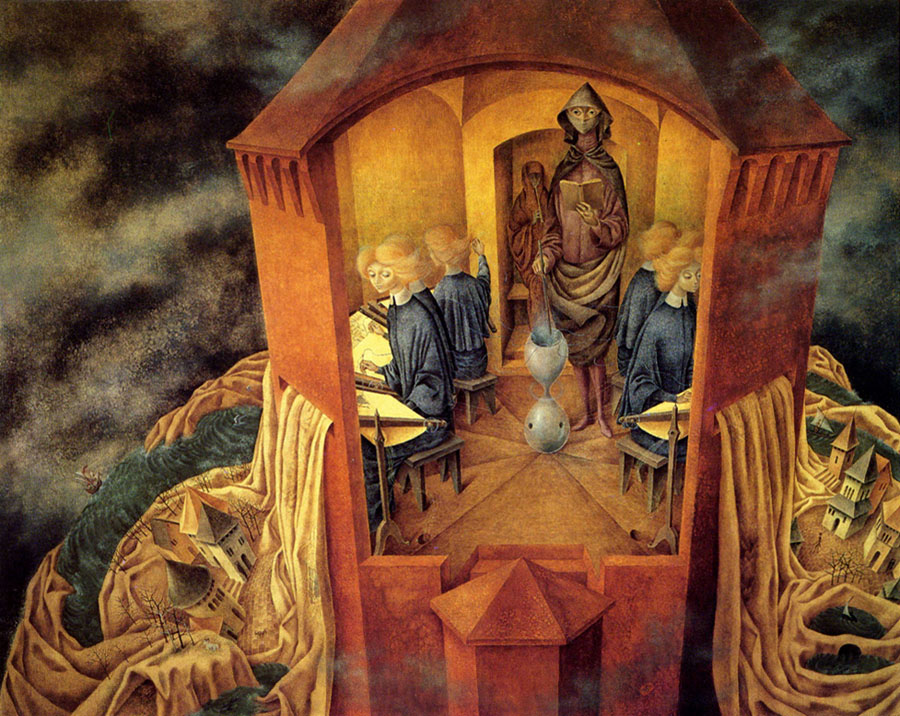
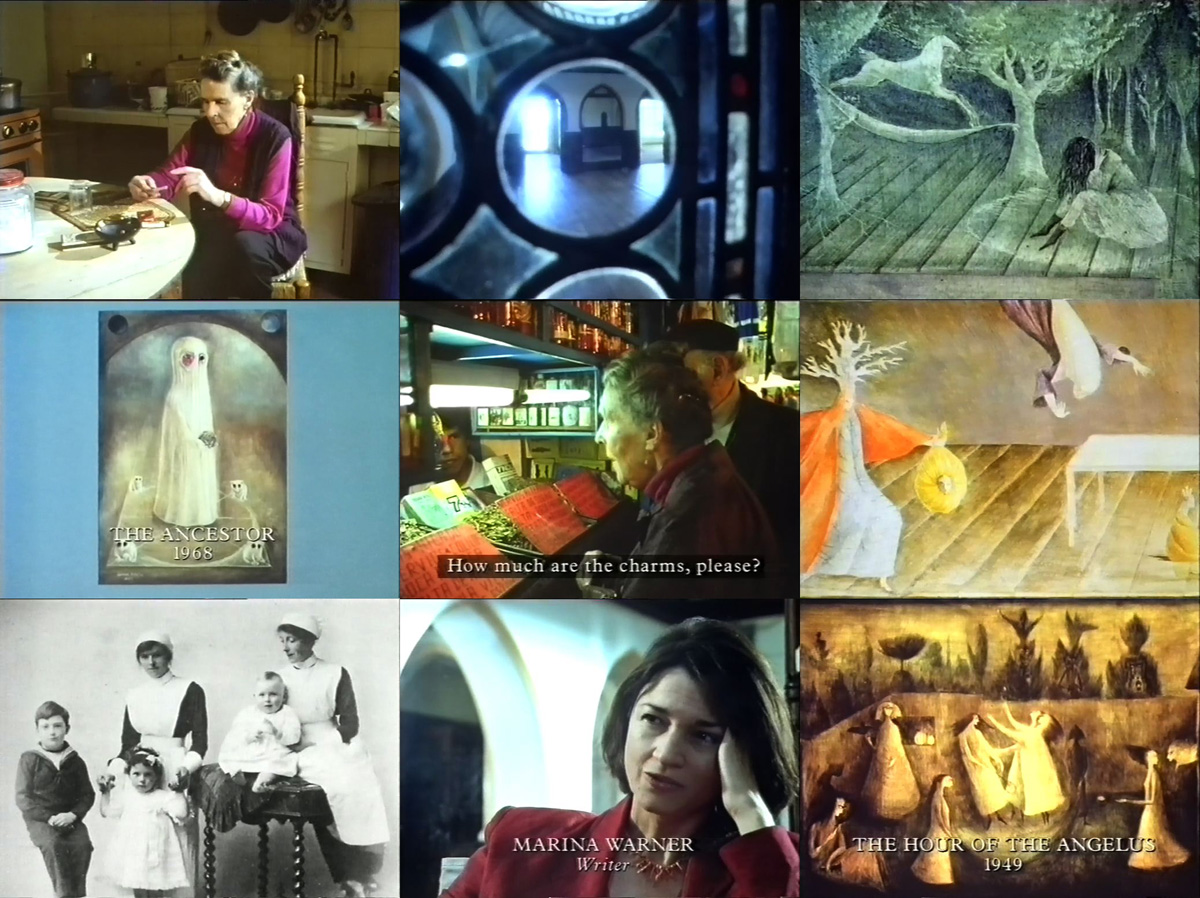
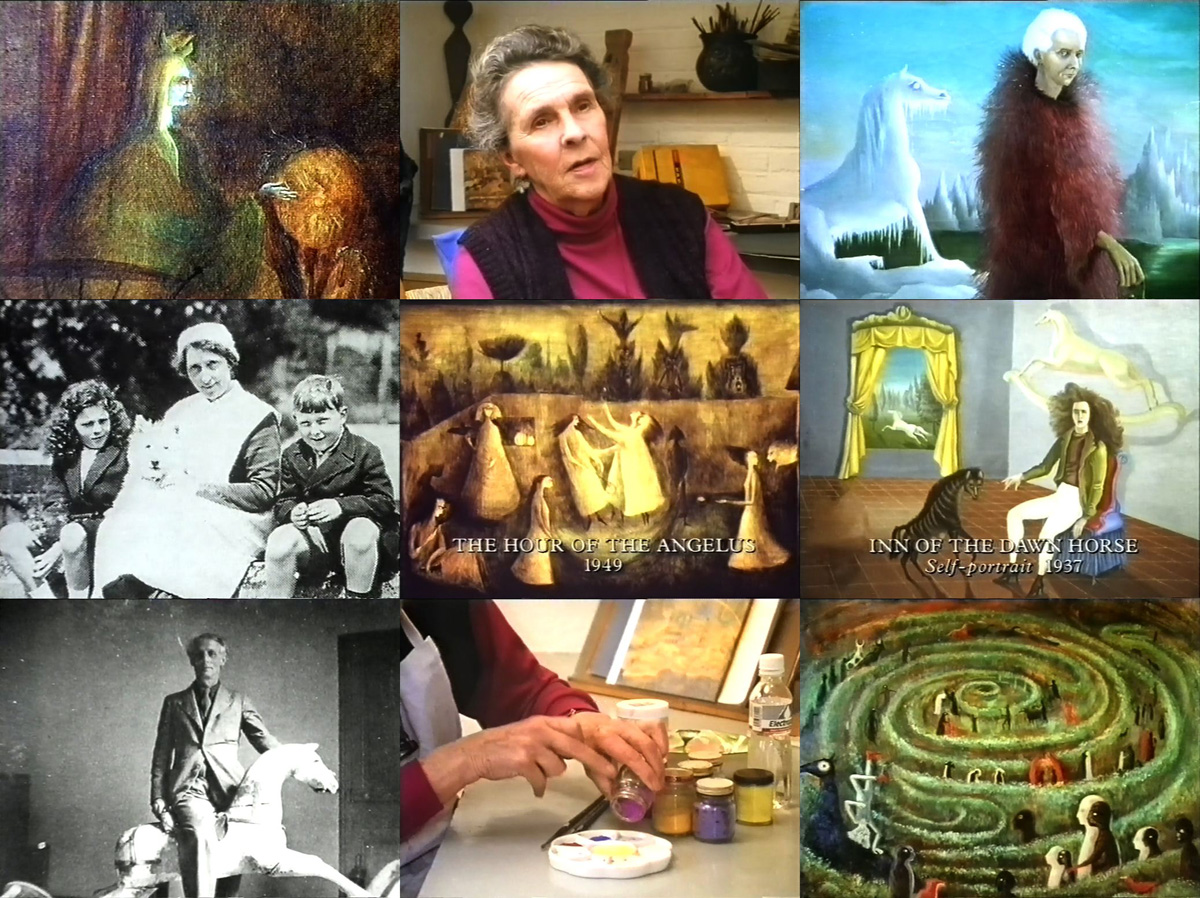
• At Dennis Cooper’s: Spotlight on…Leonora Carrington The Hearing Trumpet (1976).

• Mix of the week: Autumn and Wise (The Fall) by The Ephemeral Man.

Abandoned Isle of Wight

Dark Side Of The Mushroom (1967) by Chocolate Watch Band | Mushroom (1971) by Can | Growing Mushrooms Of Potency (2011) by Expo ’70

Weekend links 537

clarke.jpg

“The dagger dropped gleaming upon the sable carpet.” The Masque of the Red Death illustrated by Harry Clarke, 1919.

• 2020 is the year of enormous pink lady faces on book covers, apparently. As someone who spends little time following cover trends, the identification of a new variety of herd behaviour among designers or their art directors is always fascinating and bizarre.

Tomoko Sauvage plays her porcelain and glass instruments inside a disused water tank in Berlin for a new album, Fischgeist. The Wire has previews.

• At The Paris Review: Craig Morgan Teicher on the later work of Dorothea Tanning, and Daniel Mendelsohn on the rings of Sebald.

Unlike many of the rapidly forgotten [Nobel] “winners”, and despite the occasional sniffy critic wondering “who still reads it?” Durrell’s Alexandria Quartet has never been out of print since he published it in 1957. The centenary of his birth in 2012 raised a flurry of revived interest in Durrell. Indeed the whole Durrell family has been popping up regularly in reprints of Lawrence’s novels and poetry, in his brother Gerald’s popular tales of his “family and other animals,” and in several TV series about their life in Greece on Corfu island in the late 1930s. A BBC interviewer once asked Lawrence about the difference between his writing and brother Gerald’s. He replied: “I write literature. My brother writes books that people read.”

I’ve read Gerald and I’ve read Lawrence; I prefer Lawrence, thank you. Thomas O’Dwyer examines the chef d’oeuvre of the elder Durrell, The Alexandria Quartet

• Dark Entries shares Patrick Cowley’s cover of Chameleon by Herbie Hancock. The original is here.

• Saunas, sex clubs and street fights: how Sunil Gupta captured global gay life.

• Inside the Grace Jones exhibition at Nottingham Contemporary.

Rob Walker on how dub reggae’s beats conquered 70s Britain.

• Who invented the newspaper? John Boardley reports.

Spread The Virus (1981) by Cabaret Voltaire | Cut Virus (2003) by Bill Laswell | The Unexclusive Virus ~even our invincible religion “Technology” cannnot~ (2006) by Kashiwa Daisuke

The Art of the Occult

occult1.jpg

Cover art: Group X, No. 1, Altarpiece (1915) by Hilma af Klint. Design by Paileen Currie.

A surprise arrival in today’s post, the occult art compendium by S. Elizabeth which I would have wanted to read even if it didn’t contain one of my pictures:

From theosophy and kabbalah, to the zodiac and alchemy; spiritualism and ceremonial magic, to the elements and sacred geometry – The Art of the Occult introduces major occult themes and showcases the artists who have been influenced and led by them. Discover the symbolic and mythical images of the Pre-Raphaelites; the automatic drawing of Hilma af Klint and Madge Gill; Leonora Carrington’s surrealist interpretation of myth, alchemy and kabbalah; and much more.

Most of the books I’ve seen on this subject have either been very general and in need of an update (Thames and Hudson’s venerable Magic: The Western Tradition) or exhibition catalogues which are never comprehensive and become increasingly hard to find since they don’t get reprinted. The Art of the Occult is an ideal introduction to the subject for the curious reader, as well as being a useful overview for the aficionado (or initiate) which spans several hundred years of art and illustration, from the earliest occult manuscripts to contemporary works. Occult art is a house with many mansions, a form which can encompass photo-realism, Symbolism, Surrealism or total abstraction without the definition breaking down. The Art of the Occult contains a satisfyingly wide range of examples, 200 in all, and includes many artists whose work I hadn’t seen before. It also reinforces the origin of abstract art in occult concerns, a lineage that went unmentioned for many years by critics who couldn’t accept that their beloved “pure” idiom was tainted by mysticism.

occult2.jpg

My piece is a portrait of the serpent-haired Abyzou, one of the Solomonic demons I depicted for The Demons of King Solomon in 2017. The picture was one of the better representations in a series I would have preferred to have more time to work on. I was pleased to see my contribution facing one of Elijah Burgher’s sigil drawings; I like Burgher’s art so he makes a good companion. This is the first and maybe the only book where my name is listed in an index between Pamela Colman Smith and Aleister Crowley.

The Art of the Occult will be published by White Lion Publishing on 13th of October, just in time for the annual spook-fest.

Update: Haute Macabre has a new post by S. Elizabeth showing more pages from the book’s interior plus the opportunity to win a copy.

Previously on { feuilleton }
Calendrier Magique
The Demons of King Solomon
Typefaces of the occult revival
The art of Frieda Harris, 1877–1962
The art of Fay Pomerance, 1912–2001
Songs for the Witch Woman
Wilfried Sätty: Artist of the occult
The art of Scott Treleaven

Man Ray and the Marquis

manray1.jpg

Monument to D.A.F. de Sade (1933).

A slight return to the literary outlaw. Man Ray was more preoccupied by the Marquis de Sade than many of his fellow Surrealists, although he never took his interest as far as the obsessive Jean Benoît. His imaginary portraits were created after Sade scholar Maurice Heine complained that the only surviving picture of the Marquis was a drawing that could be of any other young aristocrat of the time.

manray2.jpg

Imaginary Portrait of D.A.F. de Sade (1936).

Man Ray’s portraits ran through several variations, first as drawings, then as two paintings, finally as a bronze. These always seemed to me to be more representations of Sade’s character as it comes through his writing than portraits of the writer himself. The two paintings could easily depict the villainous Duke de Blangis from The 120 Days of Sodom, with the castle of the Bastille standing for the castle where Blangis and his colleagues conduct their murderous games. An earlier photo work, Monument to D.A.F. de Sade (1933), was used by Mary Reynolds in a metal binding she created in 1935 for the first print edition of the 120 Days. Penguin used the same photo on the cover of their new translation of the book in 2016. And it would be remiss of me if I didn’t mention the gay variation designed by Peter Christopherson for the CD release of Scatology by Coil.

manray3.jpg

Imaginary Portrait of D.A.F. de Sade (1936).

manray4.jpg

Imaginary Portrait of D.A.F. de Sade (1938).

Continue reading “Man Ray and the Marquis”