Angels 6: Paradise stands in the shadow of swords

stuck_angel.jpg

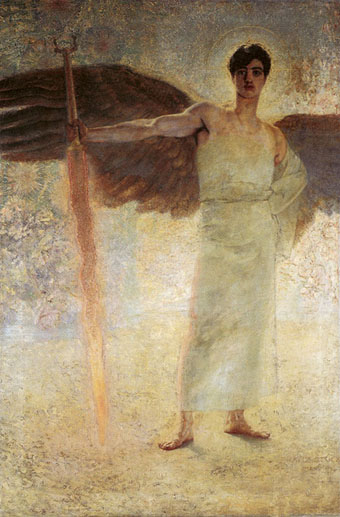
The Guardian of Paradise by Franz Stuck (1889).

We’ll let Coil have the final word on the angel theme, the post title being taken from their Cathedral In Flames. Those words recognise—as does the painting above—that the Christian concept of Heaven is of a gated community guarded by warriors to keep the undesirable at bay.

Symbolist painter Franz Stuck was (as far as we know) robustly heterosexual but his angel isn’t far removed from the work of contemporary photographers like Anthony Gayton who specialise in teasing out the erotic undercurrents in this kind of imagery. Which brings us full circle, seeing as we started with Caravaggio and his distinct brand of religious subversion. The irony is that some of the more vocal elements of Christianity can’t help subverting themselves or their own messages, as John Patterson notes in his Guardian piece today, alluding not only to the Ted Haggard debacle but also to Haggard’s favourite artist, Thomas Blackshear, both of whom were discussed here in November. Patterson writes that the recent brand of bigoted fervour that’s swept America seems to have abated, or at least retreated, after threatening to become a mainstream force. Europe often seems a haven of healthy heathen sanity by comparison, a part of the undesirable world being kept outside the American Paradise. St. Peter now demands retinal scans, fingerprints and a biometric passport. Continual rumbles from Pope Maledict and his closeted cardinals are an increasing irrelevance, the background static of a dying regime. Paradise may be guarded by attractive angels but we can only look and never touch. As Patterson says, the devil has all the best tunes. And the best books and movies and games. And sex and fun. I know which side of the fence I’d rather be on.

Elsewhere on { feuilleton }
The gay artists archive
The men with swords archive

Previously on { feuilleton }
Gay for God

Death from above

bombs.jpg

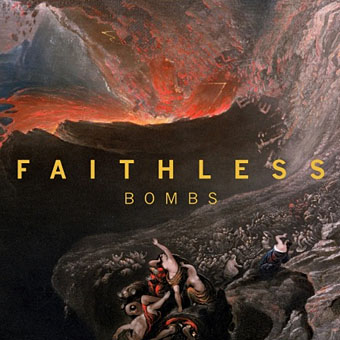
The apocalyptic spectacles of Romantic painter John Martin are routinely treated by art critics as kitsch, a dismissal which ignores the considerable power and perennial attraction that many of his best pictures possess. Kitsch is a bad thing, it seems, unless you’re Jeff Koons or Jake and Dinos Chapman.

Martin’s most famous work, The Great Day of His Wrath, has raised its tumultuous head again on the cover of Bombs, a recent single by Faithless. The painting depicts a scene from the Book of Revelations with city-capped mountains being upturned onto terrified sinners while lightning cuts through the sky. The video for the song is an anti-war affair by Howard Greenhalgh, juxtaposing innocuous images of everday life with weapons being fired and soldiers being attacked, often in the same shot. So a happy family skips along a beach while a mushroom cloud grows on the horizon. The moral guardians at MTV have duly banned this in order to spare the delicate sensibilities of America’s teenagers. And they wonder why people like YouTube so much? Or Google Video?

heresy.jpg

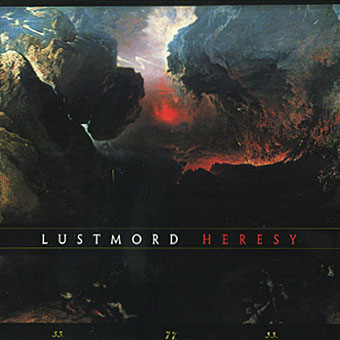
Faithless are a bit late to John Martin’s table, Lustmord featured the painting in full on the cover of Heresy in 1990, an album whose doomy rumbles I much prefer to the duo’s lightweight soul. Better late than never, I suppose.

Previously on { feuilleton }
The apocalyptic art of Francis Danby
The Enigma of Desiderio

World Aids Day

wad.jpg

Within the next 25 years, AIDS is set to join heart disease and stroke as the top three causes of death worldwide, according to a study published online Monday.

When global mortality projections were last calculated a decade ago, researchers had assumed the number of AIDS cases would be declining. Instead, it’s on the rise.

Full story here.

There is a hot wind blowing
It moves across the oceans and into every port.
A plague. A black plague. There’s danger everywhere
And you’ve been sailing.

And you’re all alone on an island now, tuning in.
Did you think this was the way
Your world would end?
Hombres. Sailors. Comrades.

There is no pure land now. No safe place.
And we stand here on the pier
Watching you drown.
Love among the sailors.

There is a hot wind blowing.
Plague drifts across the oceans.
And if this is the work of an angry god
I want to look into his angry face.
There is no pure land now. No safe place.
Come with us into the mountains.
Hombres. Sailors. Comrades.

Laurie Anderson

William Burroughs gives thanks

Lest we forget…

burroughs.jpg

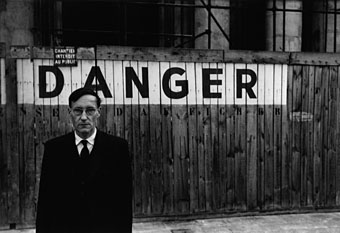
William Burroughs.

Thanksgiving Day, Nov. 28, 1986.

For John Dillinger
In hope he is still alive

Thanks for the wild turkey and the Passenger Pigeons, destined to be shit out through wholesome American guts —

thanks for a Continent to despoil and poison —

thanks for Indians to provide a modicum of challenge and danger —

thanks for vast herds of bison to kill and skin, leaving the carcass to rot —

thanks for bounties on wolves and coyotes —

thanks for the AMERICAN DREAM to vulgarize and falsify until the bare lies shine through —

thanks for the KKK, for nigger-killing lawmen feeling their notches, for decent church-going women with their mean, pinched, bitter, evil faces —

thanks for “Kill a Queer for Christ” stickers —

thanks for laboratory AIDS —

thanks for Prohibition and the War Against Drugs —

thanks for a country where nobody is allowed to mind his own business —

thanks for a nation of finks — yes,

thanks for all the memories… all right, let’s see your arms… you always were a headache and you always were a bore —

thanks for the last and greatest betrayal of the last and greatest of human dreams.• From Tornado Alley (1989).

Previously on { feuilleton }
William Burroughs book covers
Towers Open Fire