Cocteau’s sword

cocteau1.jpg

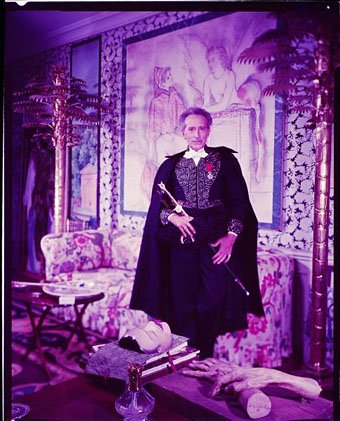
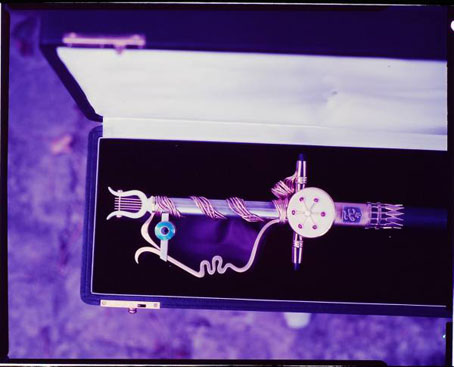
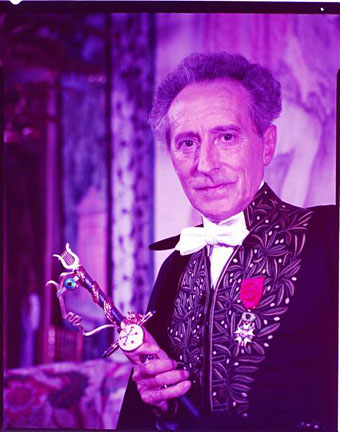
Jean Cocteau looking nothing less than fabulous in what I guess is 1955 since the writer is sporting his Académie française medal, an award bestowed upon him that year. The ceremonial sword is his own design, needless to say, and the curiously-tinted photographs are by Frank Scherschel for LIFE. The colours and lavish decor—those metallic palm trees—aren’t so far removed from the photographs of James Bidgood although the milieu certainly is. I doubt Cocteau would mind who the photographer was if Bidgood’s favourite model, Bobby Kendall, was in the picture with him.
cocteau2.jpg

cocteau3.jpg

Elsewhere on { feuilleton }
• The men with swords archive

Previously on { feuilleton }
• Cristalophonics: searching for the Cocteau sound
• Cocteau at the Louvre des Antiquaires
• James Bidgood
• La Villa Santo Sospir by Jean Cocteau
The recurrent pose 23

flandrin1.jpg

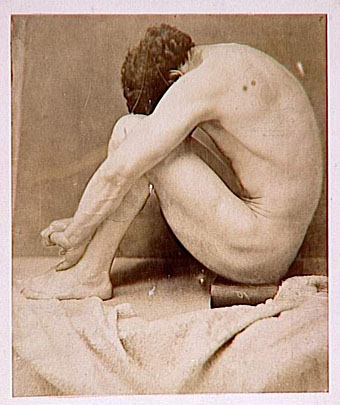
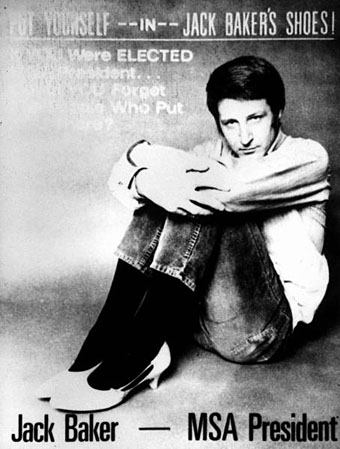
These latest examples of the postural idée fixe come via The Other Andrew (again…thanks, Andrew), courtesy of his eye for the vintage male. The first one isn’t quite the Flandrin pose (although that rule has been broken here before) while the second is even more vague but the Jack Baker ad was something that turned up while searching the newly unveiled LIFE magazine photo archive with the keywords “homosexuality 1970s”. In case you’re wondering, the picture is captioned “Campaign poster for admitted homosexual, Jack Baker, running for President of University of Minnesota Student Association”.

flandrin2.jpg

Elsewhere on { feuilleton }
• The recurrent pose archive

Vintage swordplay #3

sword_guy2.jpg

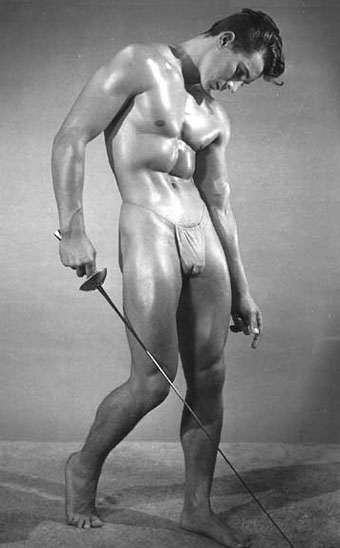
Another vintage find courtesy of The Other Andrew. (Thanks, Andrew!) The tag on this photo revealed the model to be one Steve Wengryn and since I’m not an expert on these beefcake types this was news to me. A swift search also revealed that Steve was a popular model in the 1950s and posed for Bruce of LA, among others, a photographer whose work was mentioned here recently. And sure enough, this isn’t the only picture of Steve with a sword, there’s also this photo of him posing with an épée.

sword_guy3.jpg

Elsewhere on { feuilleton }
• The men with swords archive

Return to the Exposition Universelle

exposition1.jpg

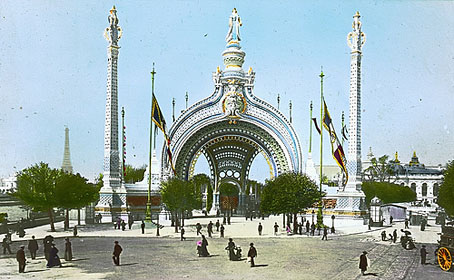
Main entrance gate by René Binet.

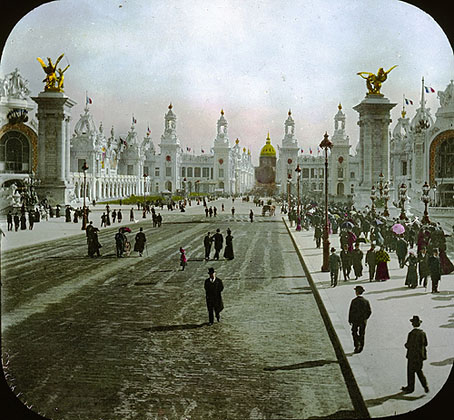
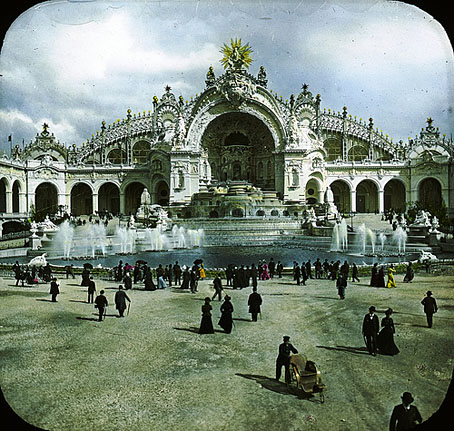
I can’t leave the 1900 Paris exposition alone, and with good reason. If further proof were required that this event brought Winsor McCay’s Slumberland to earth for a few weeks, this stunning Brooklyn Museum Flickr set has the evidence. Not only five pages of high-resolution views but they’re all hand-tinted which adds to the splendour and highlights the ladies’ parasols.

For earlier posts on the Exposition Universelle, see the links below. Via Things Magazine.

exposition2.jpg

Esplanade des Invalides.

exposition3.jpg

Palace of Electricity.

Previously on { feuilleton }
• The Palais Lumineux
• Louis Bonnier’s exposition dreams
• Exposition Universelle, 1900
• The Palais du Trocadéro
• The Evanescent City
• Winsor McCay’s Hippodrome souvenirs

The Central Molecular Zone

galaxy.jpg

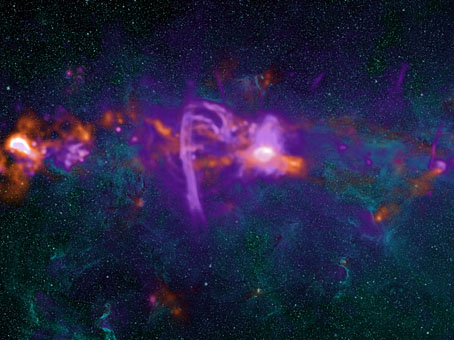
Our Galaxy’s Central Molecular Zone by A. Ginsburg (U. Colorado – Boulder) et al., BGPS Team, GLIMPSE II Team.

NASA explains:

The central region of our Milky Way Galaxy is a mysterious and complex place. Pictured here in radio and infrared light, the galaxy’s central square degree is highlighted in fine detail. The region is known as the Central Molecular Zone. While much of the extended emission is due to dense gas laced with molecules, also seen are emission nebulas lit up by massive young stars, glowing supernova remnants, and the curving Galactic Center Radio Arc in purple. The identity and root cause for many other features remains unknown. Besides a massive black hole named Sgr A*, the Galactic Center houses the galaxy’s most active star forming region. This image is not just interesting scientifically. It’s esthetic beauty won first prize this year in the AUI/NRAO Image Contest.