Colleen Corradi Brannigan’s Invisible Cities

ccb1.jpg

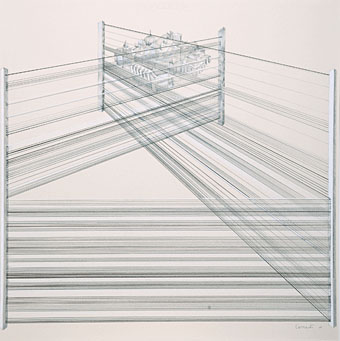
Cities and Memory 5: Maurilia.

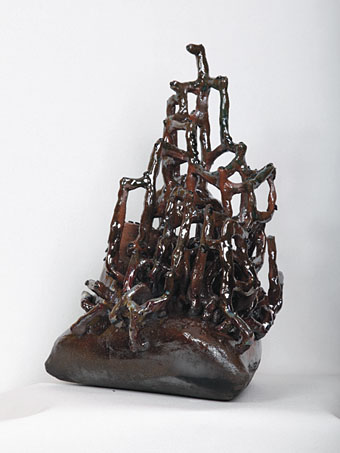
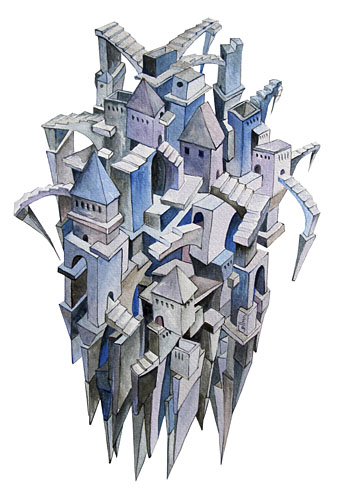
Colleen Corradi Brannigan’s multimedia project was linked here back in 2011 when news of her endeavours reached a number of high-profile websites. These artworks are another attempt to depict all of Italo Calvino’s cities, this time using a range of media that includes sculpture. I like the variety of this series; some of the depictions approach the more rigorous perspectives of MC Escher while others are as loose as Expressionist paintings. The website also includes extracts from Calvino’s descriptions.

ccb2.jpg

Trading Cities 4: Ersilia.

ccb3.jpg

Thin Cities 3: Armilla.

Continue reading “Colleen Corradi Brannigan’s Invisible Cities”

The recurrent pose 56

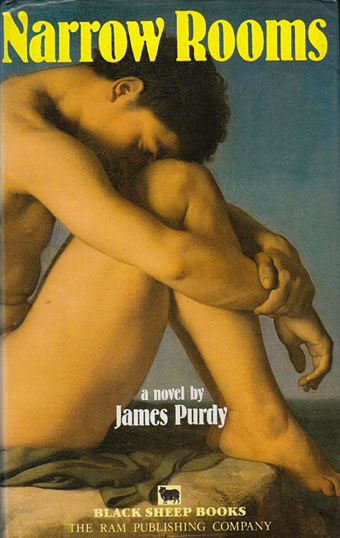
purdy.jpg

A pair of literary poses for this increasingly sluggish series. Both these titles are gay-themed to a greater or lesser degree. James Purdy (1914–2009) received much praise from contemporaries while he was alive but, like Angus Wilson, he’s one of those writers’ writers you don’t hear about today. Outsiders were a favourite Purdy theme, and he wrote several novels about gay characters, of which Narrow Rooms is considered something of a classic. I’ve not read it but going by descriptions the use of Flandrin’s painting on this cover from 1980 would seem a little lazy. This later use on the cover of Teleny (another gay classic) at least suits the French theme. (Thanks to Sander for the tip!)

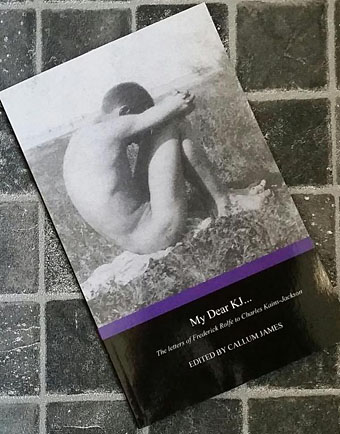
rolfe.jpg

The second volume hasn’t been published yet but Callum James posted the cover proof on Twitter a few days ago so I hope he doesn’t mind my showing it here. The book is a collection of letters by Frederick Rolfe aka Baron Corvo. I don’t know whether this is one of Rolfe’s own photos but he enjoyed photographing naked youths so even if it isn’t his work it suits the book. Further news about the publication should be announced at Front Free Endpaper.

Elsewhere on { feuilleton }
The recurrent pose archive

Weekend links 264

dakin.jpg

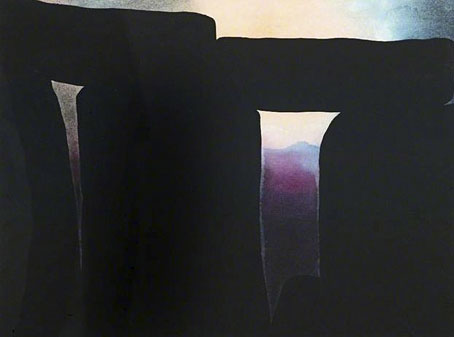
Stonehenge Suite, No.10 (1977) by Malcolm Dakin.

• “Part of me always wanted to write a teatime drama. That’s something that I wanted to get out of my system,” says director Peter Strickland. The results may be heard here. In the same interview there’s news that Strickland will be adapting Nigel Kneale’s The Stone Tape for radio later this year.

• “He was, as one obituary stated in terms unusually blunt for the time, ‘not as other men’.” Strange Flowers on the eccentric and profligate Henry Cyril Paget (1875–1905) aka The Dancing Marquess.

• “Please tell Mr Jagger I am not Maurits to him.” MC Escher rebuking The Rolling Stones. The artist is the subject of a major exhibition at the National Galleries of Scotland from June 27th.

Often mentioned in the same breath as works of James Joyce and Samuel Beckett, Ó Cadhain’s novel is, in some ways, even more radically experimental. For starters, all the characters are dead and speaking from inside their coffins, which are interred in a graveyard in Connemara, on Ireland’s west coast. The novel has no physical action or plot, but rather some 300 pages of cascading dialogue without narration, description, stage direction, or any indication of who’s speaking when.

Niamh Ní Mhaoileoin on the newly-translated Cré na Cille (The Dirty Dust) by Máirtín Ó Cadhain

Paul Woods examines “10 Edgy Properties No Film Producer Dared To Touch
(Yet)”. No. 2 is David Britton’s Lord Horror.

Mallory Ortberg ranks paintings of Saint Sebastian “in ascending order of sexiness and descending order of actual martyring”.

The Sign of Satan (1964): Christopher Lee in a story by Robert Bloch for The Alfred Hitchcock Hour.

Sympathy For The Devil – The True Story of The Process Church of the Final Judgment.

• At Dangerous Minds: Paul Gallagher on the seedy malevolence of Get Carter (1971).

• Mix of the week: Sonic Attack Special – Earth by Bob’s Podcasts.

Sanctuary Stone (1973) by Midwinter | The Litanies Of Satan (1982) by Diamanda Galás | Sola Stone (2006) by Boris
Vortographs

coburn1.jpg

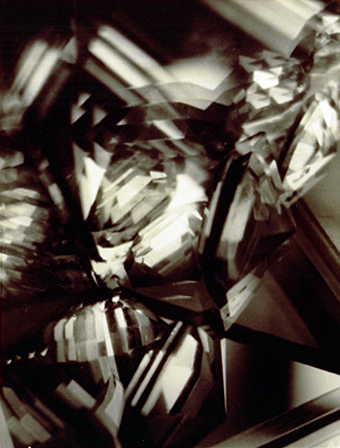
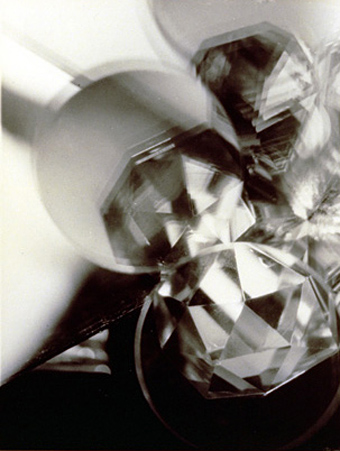
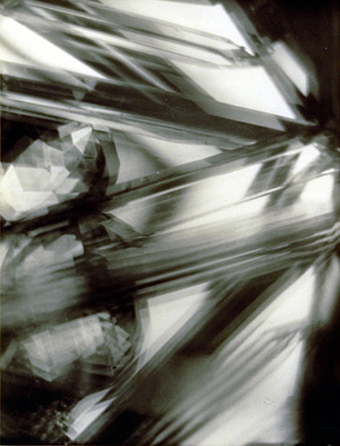
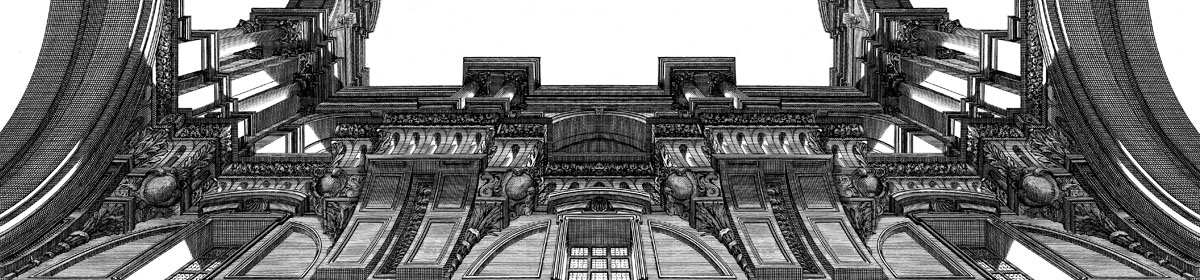
Reading this article by Richard Shone about the Vorticists, I was struck by passing mention of Alvin Langdon Coburn’s “Vortographs”. Coburn was an American photographer whose most commonly reproduced works are his portraits, some of which included leading members of the Vorticist circle such as Wyndham Lewis and Ezra Pound, and a number of pictorial early works. The Vortographs date from 1917, and were an attempt to produce photographs that fragmented the world in a manner similar to Vorticist painting, a process that necessitated the creation of a kaleidoscope-like “Vortoscope”. Seventeen of the results may be seen at the George Eastman collection. After a century of pictorial excess these don’t look so radical today but they’re some of the earliest examples of deliberately abstract photography, and to the world of 1917 they would have been even more shocking than the paintings they were hung beside.

coburn2.jpg

coburn3.jpg

Previously on { feuilleton }
Blast
Wyndham Lewis: Portraits
The Door in the Wall

A few more Salomés

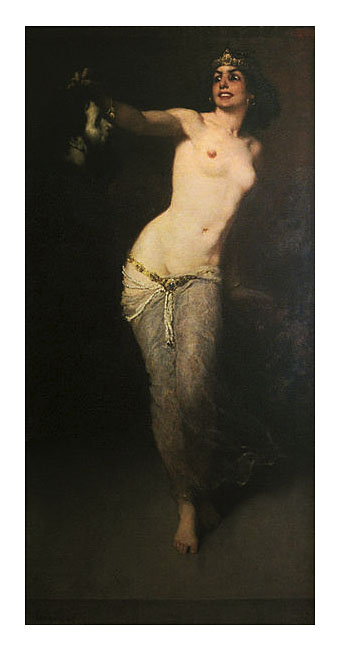
benner.jpg

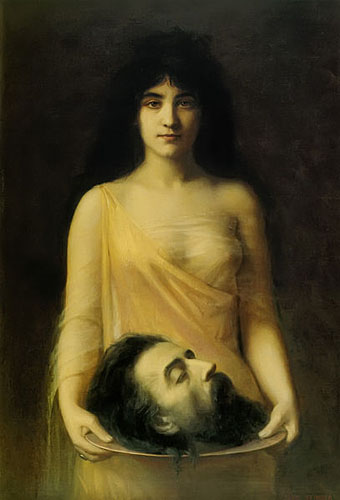
Jean Benner (1899).

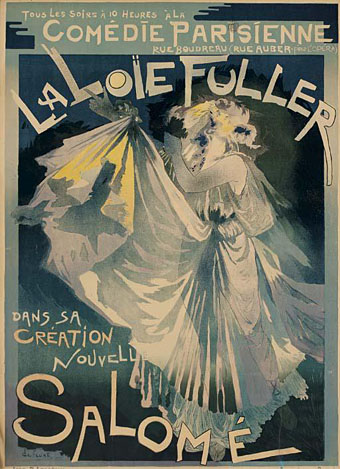
I’ve not done a Salomé post for a while so here’s another handful of different interpretations. The most interesting ones are the two most recent: a drawing by Barry Windsor Smith I’d not seen before (undated but it looks like his work from the 1980s), and a great piece by Paula Andrade that can also be seen in a black-and-white version here.

fuller.jpg

Georges De Feure (1900).

eder.jpg

Gyula Eder (1907).

Continue reading “A few more Salomés”