Heaven and Hell Calendar

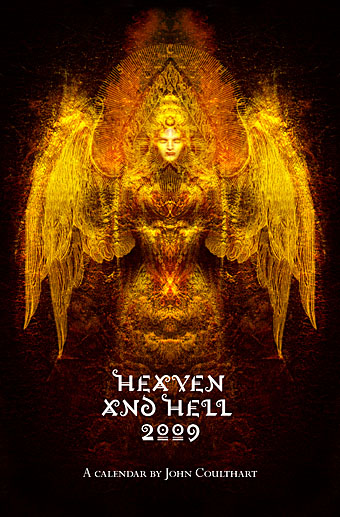
hhcalendar_cover.jpg

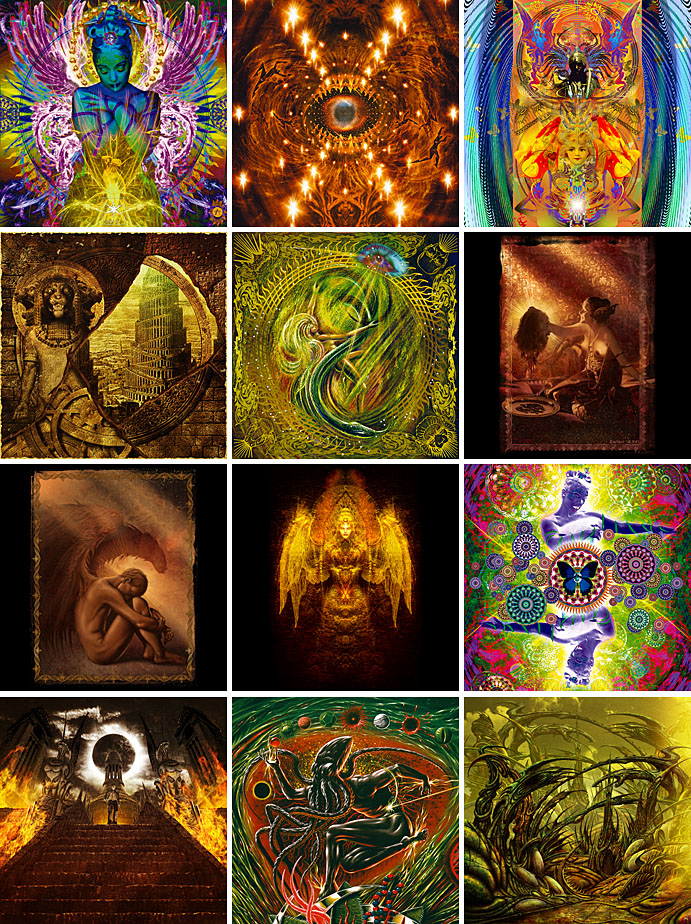
It was only a week ago I announced a new calendar for 2009 and now here’s an additional CafePress creation which manages to offer more than another collection of Lovecraft illustrations. This is a sampling of my work from the past few years gathered under the vague rubric of Heaven and Hell. A couple of pieces are variations on earlier designs reworked so as to fit the square page format. Details follow below.

hhcalendar_pages.jpg

1: Angel Passage (CD cover)
2: The Lucid View (detail; book cover)
3: MBV Arkestra (magazine cover)
4: Emissaries (CD cover)
5: Snakes and Ladders (CD cover)
6: Salomé
7: Fallen Angel
8: The Highbury Working (CD cover)
9: Acid Mothers Temple (poster design)
10: Steps of Descent (CD cover)
11: Metal Sushi (detail; book cover)
12: “Mirage in time—image of long-vanish’d pre-human city” (detail)

Previously on { feuilleton }
• Coulthart Calendar 2009

Guy Peellaert, 1934–2008

diamond_dogs.jpg

Diamond Dogs (1974).

Many people know this classic album sleeve even if they don’t recognise the name of the Belgian artist who painted it. Guy Peellaert died this week and this is easily his most famous picture. I remember being very struck by its appearance in the local record shop window which always displayed gatefold album sleeves opened out as above. By then the notorious dog’s genitals would have been removed from the picture to protect the delicate sensibilities of Bowie’s listeners; the copy here is from a later CD reissue.

taxi_driver.jpg

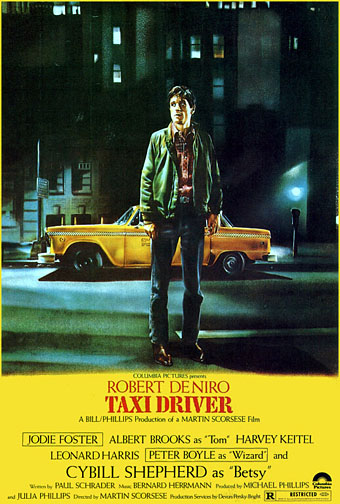
Taxi Driver (1976).

Peellaert’s work was very visible in the 1970s, especially his book of rock star portraits, Rock Dreams, a ubiquitous pop culture item along with Roger Dean’s Views and Alan Aldridge’s psychedelic whimsy. I always liked the Bowie cover, it hinted at weirder music than the rather mundane post-Velvets/Mott the Hoople rock which the album contained, but much of the work in Rock Dreams seemed garish and awkward. Far more successful was Peellaert’s painting for Martin Scorsese’s Taxi Driver, undoubtedly commissioned on the strength of his earlier work but superior to nearly everything in his book.

Peellaert’s official site has several galleries of his paintings.

Elsewhere on { feuilleton }
• The album covers archive
• The illustrators archive

Béla Bartók caricatured

bartok.jpg

One of my favourite 20th century composers and I’ve always liked this 1934 caricature from the BBC’s Radio Times magazine, reprinted a few years ago during the Proms season. I’ve searched in vain for the identity of the artist in the hope of finding more work in this style; the “R” monogram is undoubtedly a clue. The picture also turns up on a few Bartók websites uncredited. If anyone knows the answer, please leave a comment. Meanwhile this page has some examples of more recent portraits.

Welcome to Mars

welcometomars.jpg

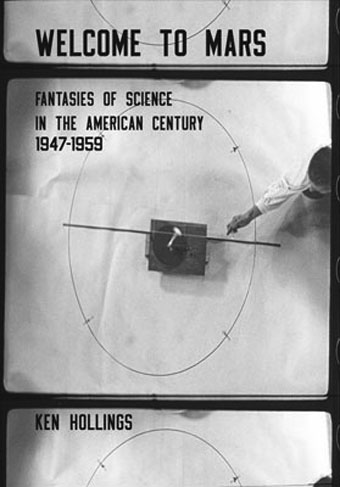
Arriving today—and barely surviving the postman’s attempts to cram it through the letterbox—is the latest volume from Strange Attractor, Welcome to Mars by Ken Hollings. I’m really looking forward to reading this since it touches on areas of interest which span the development of Cold War technologies to pulp science fiction, examining the interconnections between these disparate zones; most histories of the period prefer to stay in one area or the other. A glance at the chapter titles immediately pushes my buttons: “1947 Rebuilding Lemuria”, “1951 Absolute Elsewhere”. If all that wasn’t enough there’s an intro by Erik Davis and the first 250 copies come with a CD of “classy analogue Outer Space exotica” by Simon James. Order from the SA Shoppe and get a free postcard!

‘Welcome to Mars is a map of the post-war Zone, a non-fiction Gravity’s Rainbow that follows the arc of Germany’s V2 rocket to the end of the rainbow – to America.’ Erik Davis

Welcome to Mars is an iconoclastic, penetrating and darkly humorous history of America from 1947-1959, the decade in which the nation defined its image and created the blueprint for the world we live in today.

Welcome To Mars draws upon newspaper accounts, advertising campaigns, declassified government archives, old movies and newsreels from this unique period when the future first took on a tangible presence. Ken Hollings depicts an unsettled time in which the layout of Suburbia reflected atomic bombing strategies, bankers and movie stars experimented with hallucinogens, brainwashing was just another form of interior decoration and strange lights in the sky were taken very seriously indeed.

Seamlessly interweaving developments in technology, popular culture, politics, changes in home life, the development of the self, collective fantasy and overwhelming paranoia, Hollings has produced an alarming and often hysterically funny vision of the past that would ultimately govern all of our futures.

“Ken Hollings shows brilliantly how the extraordinary web of technologies that drove the Cold War have shaped not just our culture but the very way we think of ourselves as human beings. Welcome to Mars offers a rare and fascinating glimpse of the roots of the strange humanoid culture we live in today.” Adam Curtis

‘Ken Hollings has placed his critical focus at the precise point where the high technologies of information control and social manipulation intersect the passionate search for scientific ways to probe the human mind. Welcome to Mars is a searingly accurate and deeply disturbing exposé of the fantasies of American modernism that have inspired the many nightmares and the few hopeful visions of our new Millennium.’ Dr Jacques Vallée

Previously on { feuilleton }
• SAJ again
• Strange Attractor Journal Three
• How to make crop circles