Yule

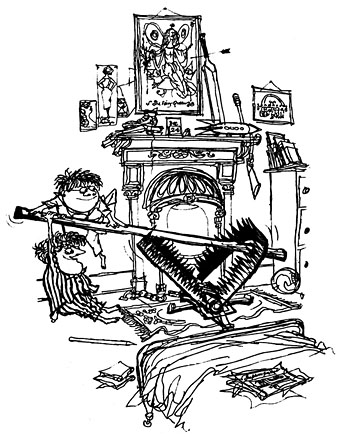
molesworth.jpg

“A trap for dere Santa”. From How to be Topp by
Geoffrey Willans and Ronald Searle (1954).

That time of year again. Here at { feuilleton } we prefer to acknowledge the solstice-based traditions that pre-date the usurping rituals of Middle Eastern sky gods. The old pagan business of lighting fires and creating artificial light and warmth still makes sense when you’re in the depths of another dreary English winter, with seemingly permanent grey skies and a smear of daylight that vanishes at half past three in the afternoon. Christmas used to agitate me too much and too often until the year the TV finally gave up the ghost. I realised a lot of the prior aggravation had been caused by the deluge of trivia that popular media creates at the end of the year; keep away from TV, avoid the crowds and the collective hysteria become a lot more manageable.

This page will be quiet while I visit the family for a few days but the archive feature will be active should you be seized by a sudden desire to read my words or look at some pictures. If you’re sat in front of a monitor over the coming week—and for some this may be a necessary escape—I’d suggest looking over some of the mp3 blogs that have been coming online in the past year. These are from people (usually anonymous for good reason) posting whole albums for download, many of which still haven’t made it onto CD. Hard to say how long this phenomenon will be allowed to continue in its current form—a lot of these places are using Blogger, so may be shut down by Google eventually—but for now its an encouraging trend. A by-no-means-definitive list follows below. These are only the ones I’ve run across recently, liked and bookmarked; if you know of any other good ones, feel free to leave a tip in the comments.

Fauni Gena Music Webbernet. Mainly ambient or quiet electronic releases.

À bientôt j’espère. Er…hard to describe, you’ll just have to go and look.

Lost-In-Tyme. Obscure psychedelia for the most part.

Swen’s blog – Artists mentioned in The Wire. What it says on the tin. Very useful if you’re a Wire reader.

Improvisie. Improvised music with an emphasis on the jazz spectrum. Not much there yet but may be worth watching and worth a visit solely for the insane Paul Bley synth album. (Thanks to Gav for the tip!)

Grown So Ugly. “A home for musical gems from the past fifty years, decidedly biased in favor of acoustic instrumentation. From the easily accessible to the challenging listen, quality is the sole requirement for our sharity. We encourage community participation.” (Thanks to Jay for pointing me to this one.)

Krautrockteam. Best of the lot where my tastes are concerned. More obscure (that word again…) German music than you can shake an Archangel’s Thunderbird at.

Previously on { feuilleton }
• The music of The Wicker Man
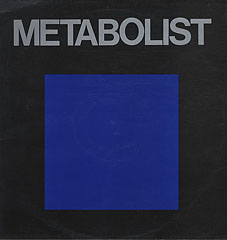
Metabolist: Goatmanauts, Drömm-heads and the Zuehl Axis

metabolist.jpgNo, not the school of Japanese architecture, we’re concerning ourselves here with a UK band from the early 1980s. There’s still a number of important albums from this period that remain caught in a curious limbo between the end of the time when vinyl was the prime carrier for new music and the start of the CD era. A few groups such as Metabolist expired before CDs became something commonly used by smaller labels and their recordings have tended to evade reissue. In addition, what recordings there are were often released in small quantities through obscure independent labels (the origin of the now thoroughly disreputable term “indie”) which means that the original works can be hard to find.

Metabolist were Malcolm Lane (guitar, synth, vocals), Simon Millward (bass, vocals, synth) and Mark Rowlatt (drums, percussion), with Jacqueline Bailey designing the covers in a Suprematist style that would no doubt have pleased Kazimir Malevich. All Metabolist covers feature variations on the same line of Helvetica plus a coloured (or black) square. As to the music, here’s my good friend Gav (who carefully digitised his Metabolist collection for me) on an old forum posting:

Initially very underrated and now just unknown, Metabolist were reviewed in the UK music press (NME & Sounds specifically) alongside The Pop Group, Cabaret Voltaire, Throbbing Gristle & This Heat as part of a brief vanguard of new UK experimental music, and for a little while it looked like fractured noise and Europe-inspired riffing might become an important part of the independent (as opposed to indie) mainstream…but alas…

According to “Eurock” magazine in 1980:

“gladiators of independent music, Metabolist have existed in one form or another for 3 or 4 years, the present group consisting of Malcolm Lane, Anton Loach, Simon Millward and Mark Rowlatt. The group is run along co-operative lines to include Jacqueline Bailey who handles publicity promotion, etc. The five of us have all reached the decision to work outside of the large companies in the music business and have therefore formed our own company – Drömm Records. So far we have released 1 EP, 15 minutes of music incl. “Drömm”, “Slaves” and “Eulam’s Beat”, plus a cassette tape of first take rehearsal material called “Goatmanaut”, also containing 3 tracks “Zordan Returns”, “Chained” and “Thru the Black Hole”. The groups first album “Hansten Klork is released in January 1980, closely followed by a single, “I Can’t Identify”. All these recordings have been made at the group’s studio with members of the group being responsible for recording, mixing and editing. We feel that this is the only way, apart from having unlimited cash, that Metabolist can have control over their musical output at every stage. All artwork and sleeve design are also handled within the group. Thanks to the growth of alternative distribution networks in recent years our records can now become available worldwide, so we consider independence to be both viable and desirable. Musically the group has been through many changes, Metabolist refuse to be dictated to by fashion, or by establishing a Metabolist “sound” and sticking to it for ever after. You can therefore find that you love the album, but hate the EP and so on. You will have to trust us as we do not intend to have 10 versions of a hit sound on our LP’s.”

Metabolist only released one full-length vinyl LP, 2 cassettes, a 7″ EP and a single, and their entire oeuvre, including peripheral compilation contributions, would fit onto a nice double CD comp, but none of it has ever been re-released – DURTRO were rumoured to be interested at one time, but as all original members were either untraceable or uninterested, it remains up to original fans (like myself – for the record I bought all their releases directly from the band) to champion their cause – and a worthy cause it is: imagine a lo-fi garageband Magma rehearsing & recording in a gents’ toilet, minus the chorale but compensating with the intensity of ‘Metal Box’ PiL or ‘Monster Movie’ Can, grunted vocals in a kind of proto-Kobaïan neo-dialect (‘Chained’, ‘King Quack’), or short bursts of bleeping and burping feedback and electronics like a lost ‘Faust Tapes’ outtake (‘Racing Poodles’, ‘Zordan Returns’)…and at a time when ‘Krautrock’ was just the first track on ‘Faust IV’ and ‘Mekanïk Destruktïw Kommandöh’ was a quid in any and every secondhand record shop, Metabolist were citing Der Kosmische Music and Magma as major influences, not a good starting point for a suspicious post-punk record-buying public…I’ve always loved this band because they did it their way, they rocked hard, and they then just disappeared, leaving a small but perfectly-formed Ur-Cosmic body of work that will be rediscovered at some point…surely…

Surely, but not yet. My summation of the Metabolist sound would be something like “Magma’s Christian Vander jamming with This Heat”, but seeing them as a poor man’s This Heat is rather unfair since they have their own distinct personality beyond the few areas of sound and production (This Heat also had their own studio) that overlap with Brixton’s finest. In place of This Heat’s familiar post-punk concerns, Metabolist are often fiercer and weirder, deliberately plugging themselves into a post-Magma “Zeuhl” axis as they growl many of their songs in an invented (?) tongue. Little wonder, then, that they remain beyond the pale. Other bands from the period such as Wire, The Gang of Four—even The Fire Engines!—have been resurrected, reissued and even reformed, with younger groups declaring them as influences. We’re currently lacking any enterprising Drömm-heads prepared to take this formidable sound as the starting point for something new. If they’re out there, they’ll need to be hardy souls with little expectation of reward; Franz Ferdinand wouldn’t have graced the charts shouting incoherently into an echo chamber while heavy bass rumbles and drums pound and ricochet in the background.

Thanks to Gav for permission to re-use his words. And for the music, of course…

The recordings:
Dromm (7″) (Drömm Records, 1979).
Goatmanaut (cassette) (Drömm Records, 1979).
Hansten Klork (LP) (Drömm Records, 1980).
Identify (7″) (Drömm Records, 1980).
Split (7″) (Bain Total, 1981).
Stagmanaut! (cassette) (Cassette King, 1981).
Tracks appear on:
Compilation Internationale No.1 (LP) Le Grand Prique, Chained (Scopa Invisible, 1980).
Miniatures (LP) Racing Poodles (Pipe, 1980).

Elsewhere on { feuilleton }
• The album covers archive

Previously on { feuilleton }
• Maximum Heaviosity
• The music of Igor Wakhévitch
• This Heat

The Stalker meme

stalker.jpg

The Stalker’s dream from Tarkovsky’s Stalker (1979).

The innocuously-titled Roadside Picnic is a Russian science fiction novel by Arkady and Boris Strugatsky, first published in 1972:

Aliens have visited the Earth, and departed, leaving behind a number of artefacts of their incomprehensibly advanced technology. The places where such artefacts were left behind are areas of great danger, known as ‘Zones.’ The Zones are laid out in a pattern which suggests that they resulted from the impact of an influence from space which struck repeatedly from the same direction, striking different places as the Earth rotated on its axis.

A frontier culture arises along the margins of these Zones, peopled by ‘stalkers’ who risk their lives in illegal expeditions to recover these artefacts, which do not obey known physical laws. The most sought one, the ‘golden sphere’, is rumoured to have the power to fulfill the deepest human wishes.

The name of the novel derives from a metaphor proposed by the character Dr. Valentin Pilman, who compares the visit to a roadside picnic. After the picnickers depart, nervous animals venture forth from the adjacent forest and discover the picnic garbage: spilled motor oil, faded unknown flowers, a box of matches, a clockwork teddy bear, balloons, candy wrappers, etc. He concludes that humankind finds itself in a situation similar to that of the curious forest animals.

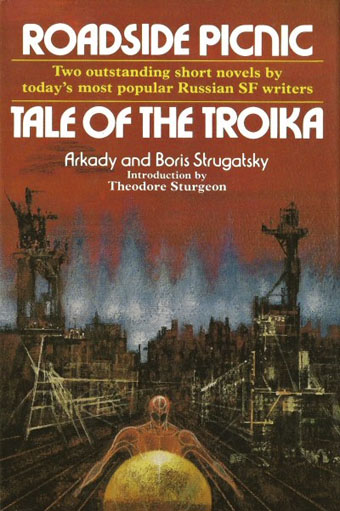
roadside.jpg

UK paperback, 1977; cover art by Richard Powers.

Surprisingly for a novel that’s still very much in copyright, a number of online versions are available, including this PDF. The Strugatsky’s idea seems to be a particularly attractive one for reasons that aren’t immediately clear. Is it because it works an sf twist on old fairy tales or myths such as Theseus and the Minotaur? Or is the central conceit of drawing a boundary around a dangerous area then sending in your characters the one that strikes a chord?

stalker_poster.jpgWhatever the answer—and with the Zone we can’t necessarily expect answers—Roadside Picnic was brilliantly filmed by Andrei Tarkovsky in 1979 as Stalker. Tarkovsky described the film’s production in his diaries as cursed; there were arguments with the original cinematographer and problems processing the film that ruined many of the original takes. The film was more cursed than he realised. Unbeknownst to the crew, the area around an old power station in Tallinn, Estonia, which provided many of the Zone’s ruins was highly polluted. This only became apparent several years later when cast and crew began dying prematurely. Tarkovsky himself succumbed to cancer in 1986. It’s impossible to avoid thinking of this when watching the film, especially when you see the actors wading into filthy water.

Stalker is available on DVD in a less-than-satisfactory transfer (annoyingly spread across two discs) but at least it doesn’t suffer the sound fault that plagues the DVD of Nostalgia. Nostalghia.com is the best Tarkovsky site, with several Stalker-related features.

The most notorious example of Soviet-era pollution is, of course, the Chernobyl disaster which occurred a few years after Stalker. In one of those typical examples of life imitating art, the 1,400 square mile quarantined area around the power station is referred to as the Zone of Alienation, the Chernobyl Zone, the 30 Kilometre Zone, the Zone of Exclusion or the Fourth Zone. Scientists who study the forbidden region (and guides who take people there illegally) have referred to themselves as “stalkers”. This site features a huge amount of photographs of the abandoned buildings inside the radioactive area. Bldgblog also has a photo feature.

The Stalker meme has infected the music world. In addition to soundtrack albums by composer Edward Artemyev, Robert Rich and Lustmord produced Stalker in 1995, a marvellously atmospheric album of dark ambience inspired by Tarkovsky’s film.

Latest work to explore the theme is Nova Swing, a science fiction novel by M John Harrison. This book is set in the same future as his excellent Light, “less a sequel…than an independent novel set in the same general universe.”

We are in a city, perhaps on New Venusport or Motel Splendido: next to the city is the event site, the zone, from out of which pour new, inexplicable artefacts, organisms and escapes of living algorithm—the wrong physics loose in the universe. They can cause plague and change. An entire department of the local police, Site Crime, exists to stop them being imported into the city by adventurers, entradistas, and the men known as ‘travel agents’, profiteers who can manage—or think they can manage—the bad physics, skewed geographies and psychic onslaughts of the event site. But now a new class of semi-biological artefact is finding its way out of the site, and this may be more than anyone can handle.

You can read an extract from Nova Swing here.

I don’t think we’ve heard the last of the Stalkers. The Strugatsky’s story seems like the Zone itself, leaking an influence into the surrounding culture that then mutates into strange new forms. It seems you can’t keep a good meme down or, for that matter, contained.

Previously on { feuilleton }
• Nova Swing
• Solaris

New Delia Derbyshire

delia.jpg

Well…new for us. Glo Spot Records have reissued Psyche-Delia‘s scarce KPM album, Electrosonic (1972), in an edition that will quickly become as scarce itself: 500 copies on green vinyl.

Order it (or hear clips) from Boomkat.

The great BBC documentary about the Radiophonic Workshop, Alchemists of Sound, can now be found on YouTube. Lots of archive footage of Delia and her collaborators showing how they extracted extraordinary sounds from primitive equipment.

Delia Derbyshire is best known as the woman who created the sound of the original Doctor Who theme. This one piece is so globally famous that it has overshadowed the wide ranging work of one of the most creative women working in the 1960s and ’70s. Delia collaborated with many of the most significant figures of the era and was admired by many more. Her story involves such names as Paul McCartney, Yoko Ono, Pink Floyd, Anthony Newley, Frankie Howerd and The Rolling Stones, in addition to work with the National Theatre, seminal electronic innovators and, of course, the BBC’s Radiophonic Workshop. Since her death in 2001, Derbyshire has gained cult icon status and her influence over artists who weren’t even born when she made some of her groundbreaking recordings has never been stronger. John Cavanagh (BBC Radio, Phosphene, author of The Piper at the Gates of Dawn etc. etc.) has found a rare album Delia recorded with Brian Hodgson (the man who created the sound of the TARDIS) and Australian mood music composer (who also scored some Doctor Who episodes) Don Harper in 1972. This was originally an lp of what is known as library music and was only made available to film, tv and radio organizations when originally issued. Cavanagh has licensed these recordings and the album—Electrosonic—will be released commercially for the first on his Glo-Spot label.

Electrosonic (1972)
Label: KPM
Cat: KPM1104

1 Quest
2 Quest – fast
3 Computermatic
4 Frontier of Knowledge
5 The Pattern Emerges
6 Freeze Frame
7 Plodding Power
8 Busy Microbes
9 Liquid Energy (a)
10 Liquid Energy (b)
11 No Man’s Land
12 Depression
13 Nightwalker
14 Electrostings
15 Electrobuild
16 Celestial Cantabile
17 Effervescence
18 The Wizard’s Laboratory
19 Shock Chords

Previously on { feuilleton }
• A playlist for Halloween
• Ghost Box

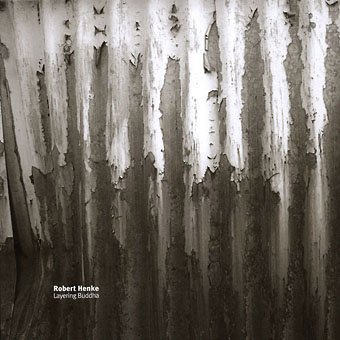
Layering Buddha by Robert Henke

henke_buddha.jpg

Layering Buddha on CD and limited vinyl.

The Fm3 Buddha Machine is a low-fi loop playing device containing nine pre-recorded loops which cannot be changed by the user. Due to manufacturing imperfections, individual machines play the loops with a slightly different sound, pitch and duration. The built-in playback circuit, with its low sampling rate and bit resolution, produces a very rough sound, similar to ancient computer games or talking toys. Rich, spacious textures and moving echoes occur when many of these machines are played at the same time.

I recorded the sound of one single buddha machine at 96 kHz, using a state of the art A/D converter. The recording contains audio information up to 48 kHz, which makes it possible to transpose the loops down and expose otherwise inaudible hidden details. The pieces on this CD have been created by granulating, filtering, pitching and layering either the original loops, or new loops which were re-assembled out of parts of the originals. Most pieces are based on one single source loop. The pieces as they live within my computer are set up as continuously permutating structures and theoretically could go on forever, just as the loops do within the buddha machines.

I made quite long renderings of these permutations and later decided which excerpt of each structure to put on this CD. Therefore, the tracks are not closed works, but views onto a perpetual machinery.