Weekend links 561

ghostbox.jpg

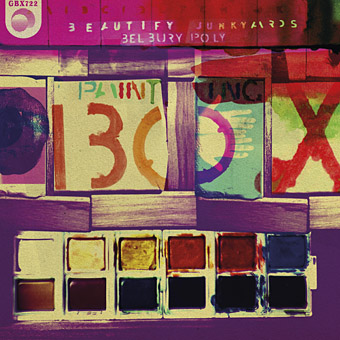
The next release on the Ghost Box label, Painting Box is a collaborative seven-inch single by Beautify Junkyards and Belbury Poly, the A-side of which is a cover of a song by The Incredible String Band. Available on 30th April. Design, as always, is by Julian House.

• “What is good for you as a person is often bad for you as a writer. People will tell you that this not true, and some of the people who will tell you that are also writers, but they are bad writers, at least when they try to convince you, and themselves, that the most important thing for a fiction writer to have is compassion.” Brock Clarke on the case for meanness in fiction.

• The week in non-human intelligence: “Life beyond human has to play by the rules of natural selection,” says David P. Barash, and Thomas Moynihan on dolphin intelligence and humanity’s cosmic future.

Ilia Rogatchevski speaks with historian Juliane Fürst about her new history of Soviet hippies and the counterculture of the former USSR.

• Mushroom with a view: Karen Schechner at Bookforum talks with Bett Williams about her mycological journey.

• Retro instinct versus future fetish: Fergal Kinney on Stereolab’s Emperor Tomato Ketchup 25 years on.

• At Dennis Cooper’s: Spotlight on…JG Ballard: The Atrocity Exhibition (1970).

This is Hexagon Sun: A feature-length video on Boards of Canada.

• Mix of the week: The Ides by The Ephemeral Man.

• New music: Gyropedie by Anne Guthrie.

Paintbox (1967) by Pink Floyd | Orgone Box (1989) by Haruomi Hosono | God Box (1996) by Paul Schütze & Andrew Hulme
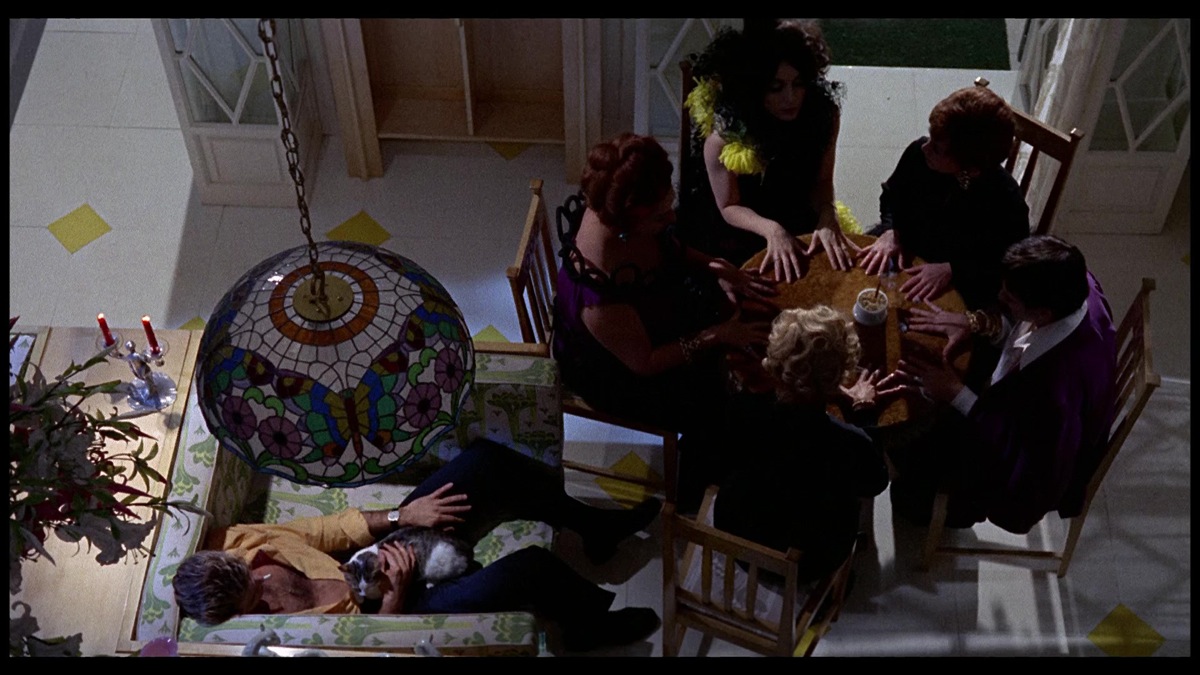
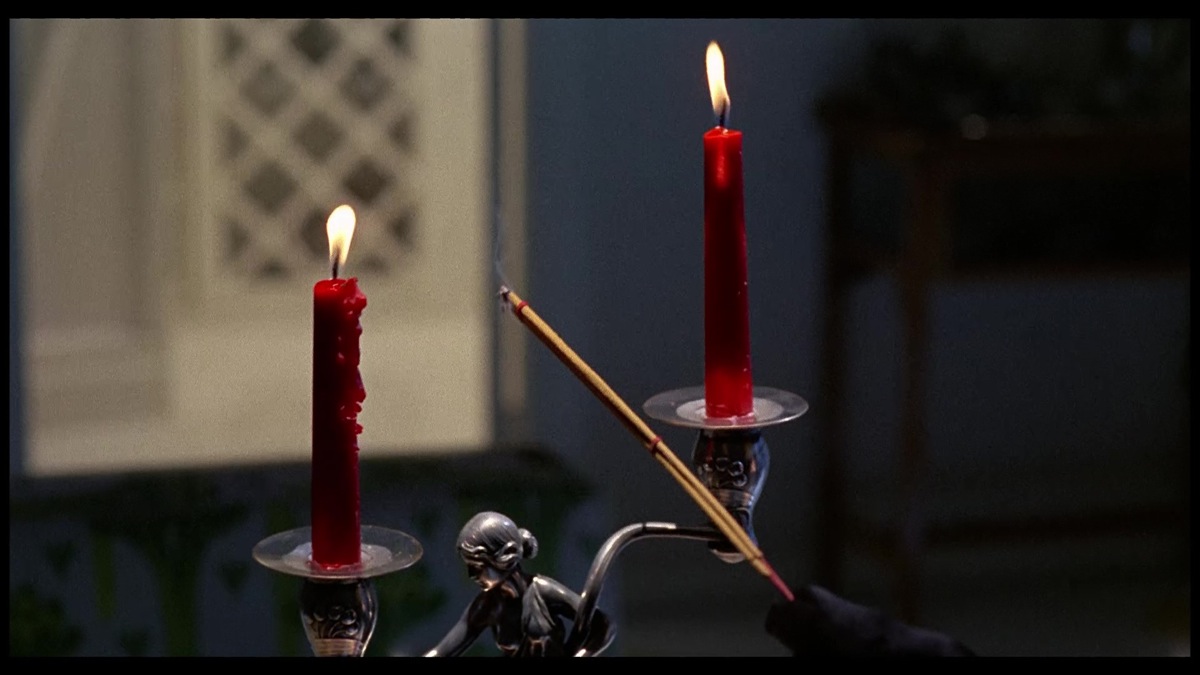
Juliet of the Spirits

juliet01.jpg

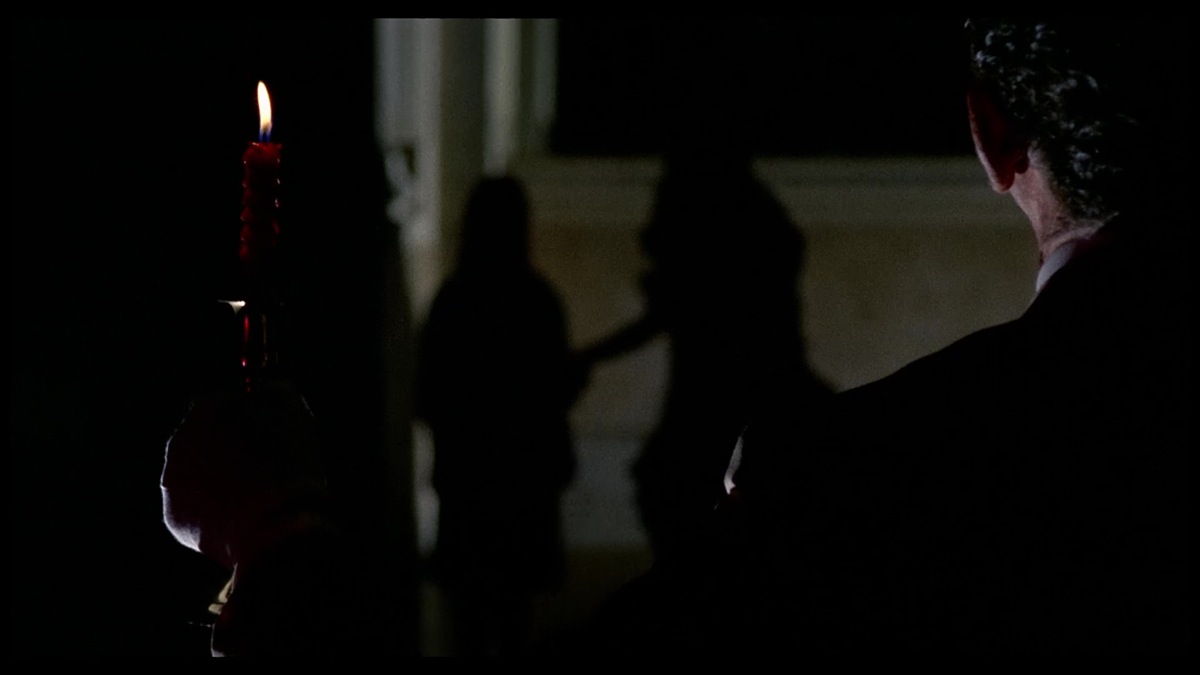
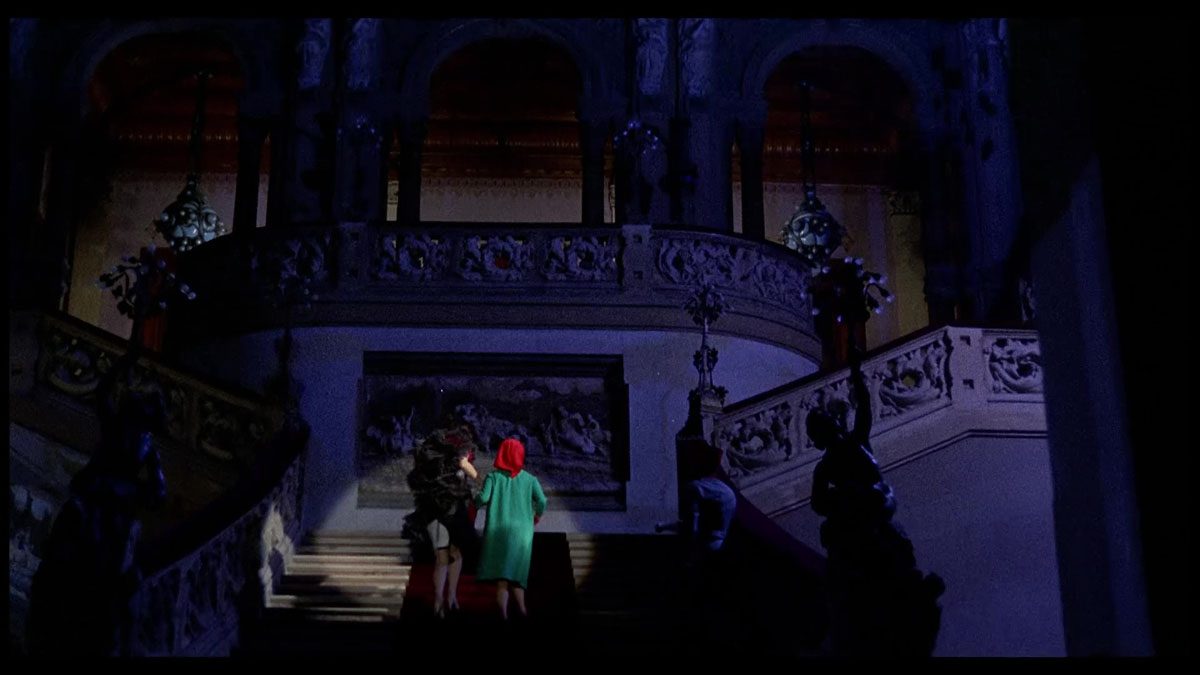
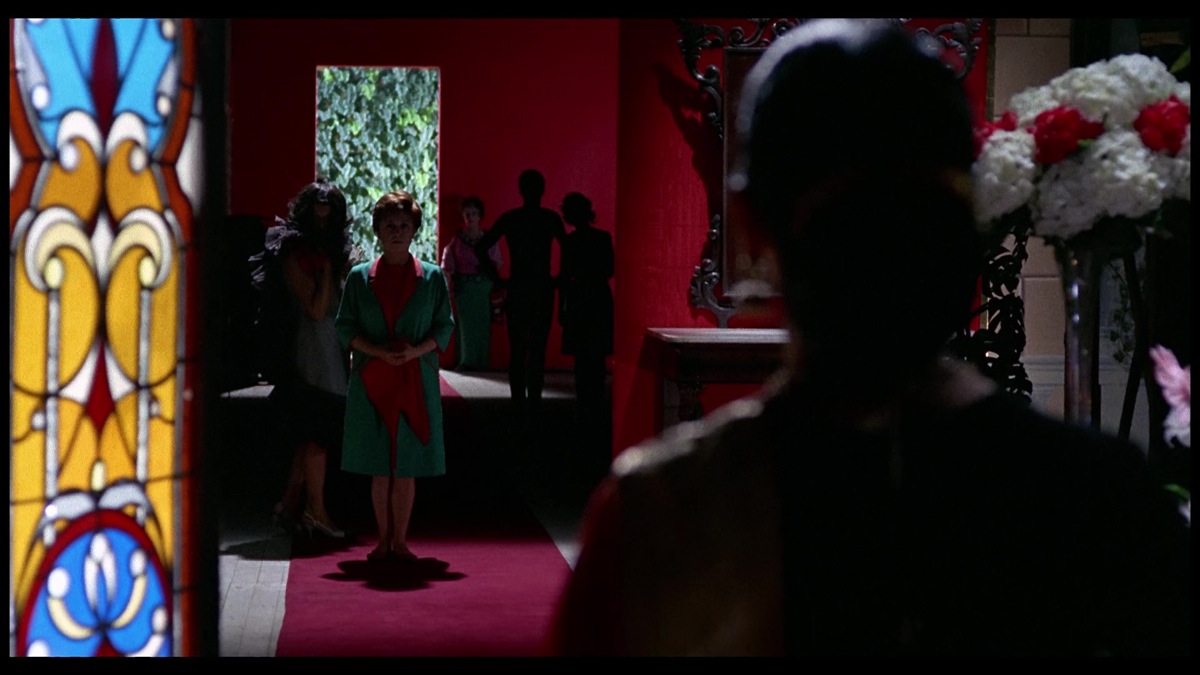
Cinematography by Gianni Di Venanzo; production design by Giantito Burchiellaro, Luciano Ricceri and Emanuele Taglietti; art direction and costume design by Piero Gherardi.

If you’re very selective with the screen-grabs you can make it seem like Fellini’s psychodrama is a lost horror film by Dario Argento: Juliet of the Suspiriorum. The next step would be to stitch together a handful of clips then add a Goblin soundtrack…

juliet02.jpg

juliet03.jpg

juliet04.jpg

juliet05.jpg

Continue reading “Juliet of the Spirits”

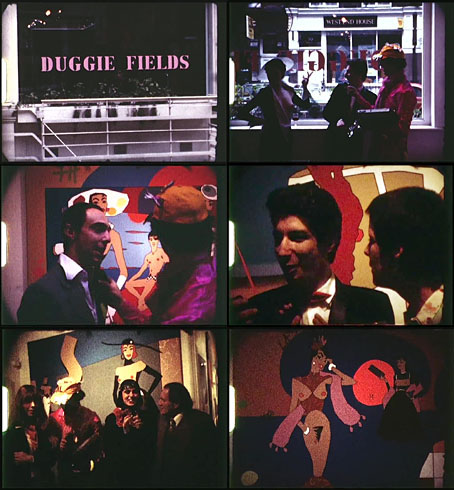
Duggie Fields, 1975

fields.jpg

RIP Duggie Fields, seen here in 1975 courtesy of Derek Jarman’s Super-8 camera. The occasion was an exhibition at the Kinsman-Morrison Gallery of Fields’ paintings, many of which are seen throughout the film, although the low light and poor quality of Super-8 stock doesn’t do them any favours. Fields and Jarman were both constituents of the mid-70s London art crowd known as “Them” so it’s no surprise to see other Them faces at the gallery, notably Andrew Logan interviewing all the attendees (the film is silent, unfortunately), and an insistently bare-breasted Nell Campbell, aka Little Nell, either just before or just after her appearance in The Rocky Horror Picture Show. This wasn’t the first or last time that Fields and Campbell had appeared before Jarman’s roaming lens, they’re both in an earlier Super-8 short, Ulla’s Fete, and in also Jubilee, while Fields may be found reclining in a toga during the opening scene of Sebastiane. For a better look at Fields’ paintings, plus some comment from the man himself, there’s this recent visit to his Earl’s Court studio.

The groovy look

groovy14.jpg

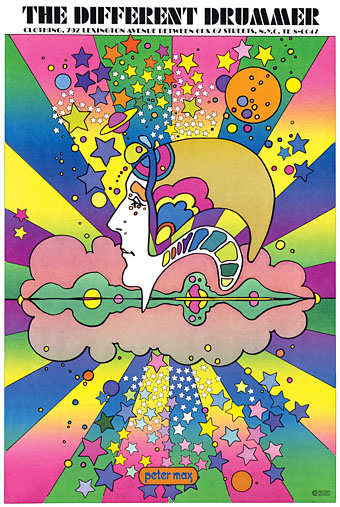
Peter Max, 1968.

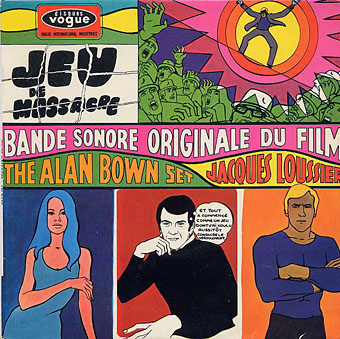
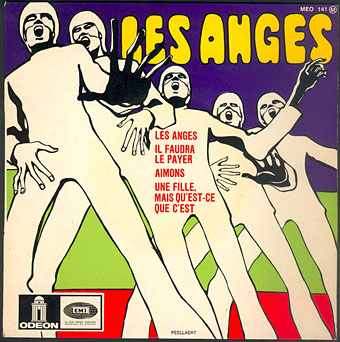
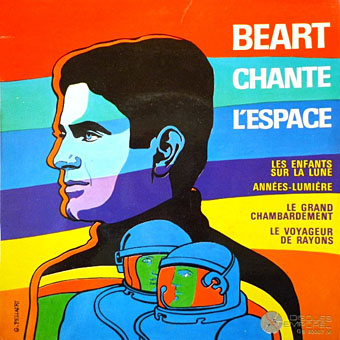
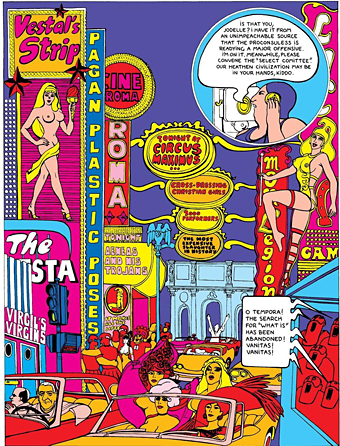
Artists complain justifiably about the constraining effect of labels but sometimes you really do need a label in order to identify a particular idiom. The artwork here is what most people would regard as psychedelic even though the subject matter isn’t always psychedelic at all. I doubt that Citroën intended their new Dyane car to be associated with LSD when they asked Michel Quarez to create a comic book to promote the vehicle, while Quarez’s Mod Love comic is just as hallucinogenically chaste. I tend to think of this style as “groovy”, an unsatisfying term with other associations but “post-psychedelic”, while accurate, feels too cumbersome for such playful graphics. The groovy look is where the purely psychedelic style enters the mundane world, and where the intended audience may be youthful but isn’t always a crowd of experienced lysergic voyagers; a watering down of psych delirium mixed with a dash of Pop Art, all bold shapes, heavy outlines and very bright colours, comic art (or actual comics) with the edges and detail smoothed away and the gain pushed to the maximum. I keep wishing someone would put together a collection of this stuff. There’s a lot more to be found.

Update 1: I knew I’d forgotten somebody. I replaced the book cover by Gray Morrow—an artist who was never really groovy in the manner of these other works—with a contraception poster by Nicole Claveloux, who was very much in the Groove Zone in the 1970s.

Update 2: Added designs by Miguel Calatayud, Mike Hinge, György Kemény, and Tito Topin. Thanks to Vadim for the tips!

• Further browsing: The Peculiar Manicule.

groovy01.jpg

Guy Peellaert, 1967.

groovy02.jpg

Guy Peellaert, 1968.

groovy03.jpg

Guy Peellaert, 1968.

groovy04.jpg

The Adventures of Jodelle by Pierre Barbier and Guy Peellaert, 1966.

Continue reading “The groovy look”

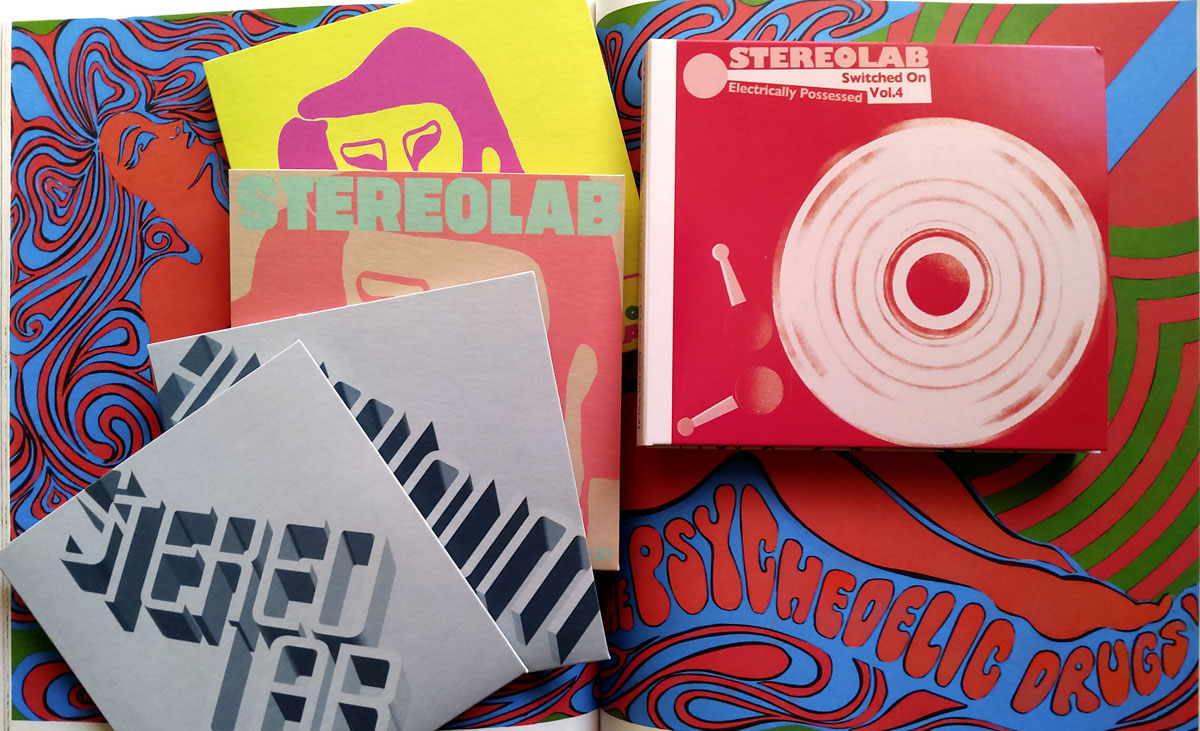
Switched On again

stereolab.jpg

This week I’m electrically possessed by Stereolab, thanks to the arrival of the fourth volume in the Groop’s Switched On series of compilation albums. As with the earlier releases, the new album collects deleted EPs, singles and other scarcities. I already had a third of this one on the First Of The Microbe Hunters EP but it’s good to finally have on disc B.U.A. (aka Burnt Umber Assembly), a previously unreleased piece from the Amorphous Body Study Centre recordings, together with more of the tour singles such as The Underground Is Coming and Free Witch And No-Bra Queen. The latter may well allude in its title and cover art to Pravda, La Survireuse, Guy Peellaert’s freedom-loving biker-hippie whose persona was modelled on Françoise Hardy. (Stereolab’s borrowings are often overt but I’ll give them the benefit of the doubt on this one.) Pravda or not, the animation that Peellaert produced with Gallien Guibert would have made a great video for the song if it was a little longer. Guibert has an updated version of the film here.