The Heat of a Thousand Suns by Pierre Kast

kast1.jpg

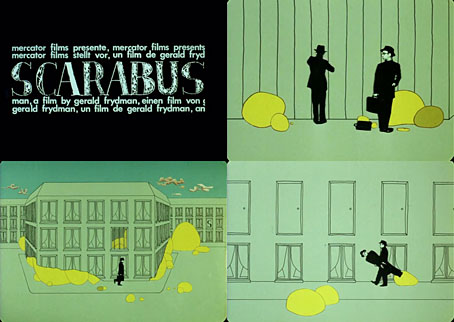
In an earlier post I mentioned how invaluable I’d found Philip Strick’s Science Fiction Movies, a large-format study published in 1976. Like Denis Gifford’s Pictorial History of Horror Movies (1973), the book was intended as a cheap introduction to a popular genre but Strick wasn’t content to limit himself to familiar titles, offering instead a remarkably eclectic list of films, many of which are barely science fictional at all: Last Year at Marienbad, The Saragossa Manuscript, The Hour of the Wolf, Teorema, The Discreet Charm of the Bourgeoisie, and so on. For my teenage self, and no doubt many other readers, this was my first encounter with these and other titles, and it was Strick’s descriptions that kept me on the lookout for them for many years (over 20 in the case of Saragossa). Strick’s equanimity treated cinema as a global medium, not one where Hollywood dominates the marketplace and all the conversation. Other films under discussion were definitely SF but unviewable to those of us who without access to an arts cinema, and little hope of ever seeing them on TV, European obscurities such as La Jetée, Fantastic Planet, Je t’aime, je t’aime and The End of August at the Hotel Ozone. Despite the book’s age, and the relative ease with which anyone can now see films such as these, a few scarcities remain, one of which I watched for the first time last week.
kast2.jpg

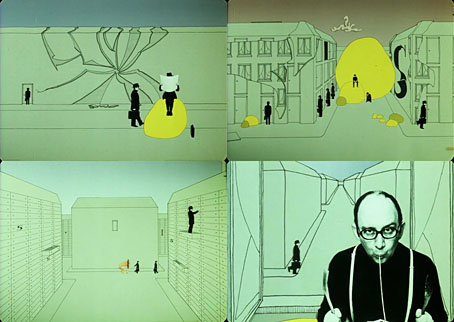
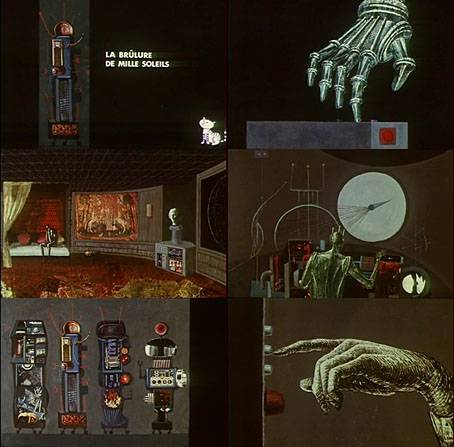
The Heat of a Thousand Suns/La Brûlure de Mille Soleils (1965) is a 25-minute animated film written and directed by Pierre Kast that Strick not only describes but further tantalises the reader with a pair of stills, which may account for its title having lodged in my memory all this time. Strick discusses the film between two other animations that are now very familiar: The Green Planet, an early work by Piotr Kamler, and Les Jeux des Anges by Walerian Borowczyk. (If all this sounds like wilful obscurantism on Strick’s part, on the previous page he discusses a pair of classic Hollywood features, This Island Earth and Forbidden Planet.) Kamler’s film is a humorous one, while Borowczyk’s is strange and disturbing; Kast’s film is pitched somewhere between the two:

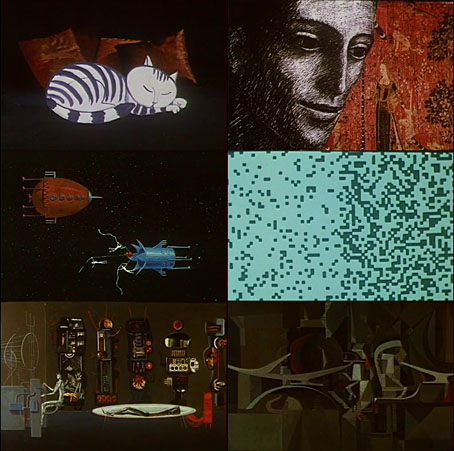
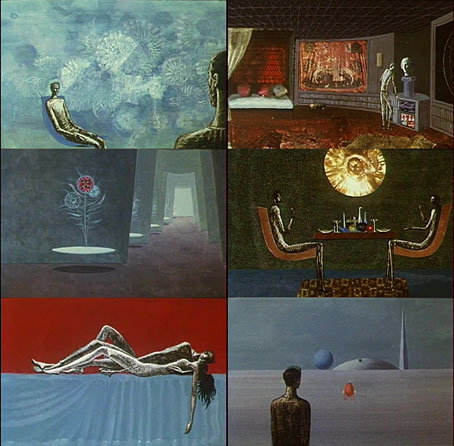
A young man in the far future becomes bored with the solar system he knows too well and goes for an unrepeatable trip to the stars, in the company of his robots and his cat. On a remote planet he encounters a tranquil civilization where something has only to be wished for, and it happens; he meets a girl, they fall in love, and their romance is frustrated by his complete inability to recognize the different standards of her society where sexual groups of eight comprise a family. Put together from paintings by a Spanish surrealist artist, Eduardo Luiz, whose suffused landscapes and delicate tapering figures provide the perfect balance to the gentle melancholy of the hero’s monologue, the film has the same touch of scorn at its centre as was evident in Kast’s other science-fiction works, Amour de Poche (1957) and Les Soleils de l’Ile de Pâques (1971), although its twinkling conclusion is more in keeping with his romantic comedy Vacances Portugaises (1961). It’s one of the most effective screen versions so far of science fiction’s crusade not so much for a better world as for better people on it.

Strick also mentions a detail about the production that I’d forgotten, namely the editing being the work of La Jetée director, Chris Marker. The latter’s credit makes the inclusion of a space-faring cat both funny and fitting although the animal is unconcerned by interstellar travel, and spends most of its time asleep. Another notable name is electronic composer Bernard Parmegiani who provided the score for this and other films by Kast; he also scored several shorts by Piotr Kamler and Borowczyk’s Jeux des Anges.
kast3.jpg

Now that I’ve finally seen Kast’s film I wouldn’t say it was worth the wait but it was definitely worth watching. The animation is very minimal, with most of the shots being still images that the camera wanders over. The SF scenario is very conventional, as are the trappings: a pointed rocket, bleeping robots, aliens that look and behave like Earth people even if they do have eight sexes. The film distinguishes itself much more with its design, the Giacometti-like figures, and the interior of the spacecraft which pre-empts Barbarella with its lavish chambers filled with period decor and artwork. Despite Strick’s praise, Kast’s conventionality seems a missed opportunity when animation can do so much more than ape live-action cinema. Piotr Kamler’s films, in particular Labyrinth (1969) and Chronopolis (1983), offer science-fiction scenarios that are remote from our own lives and preoccupations; so too with Borowczyk’s Jeux des Anges, a film whose industrial nightmare is closer to David Lynch than Barbarella. Kast does have a late surprise, however, although this may only mean anything to those familiar with Chris Marker’s photography.

The Heat of a Thousand Suns is on YouTube but with no subtitles for its French narration. The copy I watched was from this page which includes a subtitle file. I suspect this may be a DVD rip, and therefore immoral, but the same probably applies to the YouTube version as well. The choice is yours.

Previously on { feuilleton }
A Pictorial History of Horror Movies by Denis Gifford
Saragossa Manuscript posters
Marienbad hauntings
Chronopolis by Piotr Kamler
Les Jeux des Anges by Walerian Borowczyk

The Marvellous

melly.jpg

The marvellous is always beautiful. Anything marvellous is beautiful. In fact only the marvellous is beautiful.

George Melly (above) quoting André Breton’s declaration from the first Surrealist Manifesto, 1924

Two posts in one week—quelle surprise. This is partly because I’m trying to get WordPress to post updates to Twitter, something that hasn’t been possible for many years without going through the long-winded process of signing up as a Twitter developer. Anything that limits my involvement with Twitter’s burning café feels like a positive thing at the moment, so thoughts that I previously cast into the flames may find their expression here instead.

svankmajer.jpg

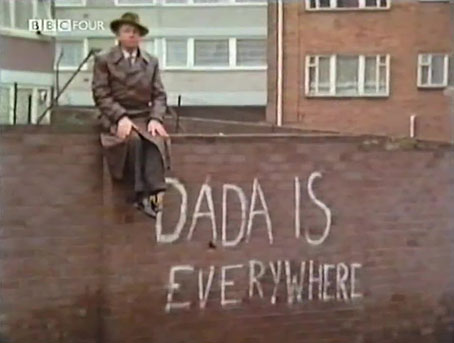
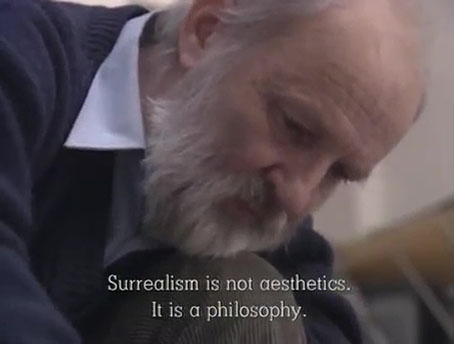
The two screengrabs are from recent re-viewings. George Melly’s short guide to Surrealism for the BBC’s Arena, and Jan Švankmajer’s equally short BBC profile have both been featured here in the past, but my recent purchase of a box of blu-rays from Švankmajer’s shop has prompted a journey back into the Surrealist praxis via whatever books and videos I have to hand. It’s been interesting looking again at René Passeron’s Encyclopedia of Surrealism (1975), a book which for many years was more interesting for the 24-page section devoted to the precursors of Surrealism, all the artist-eccentrics, architects, illustrators, Mannerists, and (especially) the Symbolists whose works I spent most of the 1980s pursuing. Today there are more threads to be followed in the Surrealist section of Passeron’s study so I’m looking forward to seeing where they lead. As for The Marvellous, the Švankmajer discs are this with and without the capital “M”. I recommend them.

Update: And the post didn’t announce itself at Twitter which isn’t so surprising; I’ll keep working at this behind the scenes. Social media is the anti-Marvellous.

Abeceda

nezval26.jpg

This week I’ve started working my way through the filmography of Jan Švankmajer, having finally acquired a blu-ray set of his feature films. I’ve also been reading interviews and rewatching some of the documentaries about the man and his work, which in turn prompted me to look up some of his associates and precursors among the Czech Surrealists. Prague was unusual in being a centre for the early development of Surrealism at a time when the movement (for want of a better term) was centred on Paris. André Breton encouraged this, and cultural exchanges took place, with Breton and Paul Éluard visiting Prague, while Vítězslav Nezval and his colleagues journeyed to Paris. The outbreak of war severed the connection but this also had the inadvertent effect of perpetuating the Czech brand of Surrealism by cutting off Prague from the rest of the European avant garde. While Breton and co were forced to flee to the United States and Mexico, the Czech Surrealists went underground, hiding their illicit explorations first from the occupying Nazis, then from the disapproving Communist authorities. It’s always important to bear this in mind when considering Švankmajer’s films and artwork; his Surrealism is a serious motivation with a long history in Czech and Slovak art.

nezval00.jpg

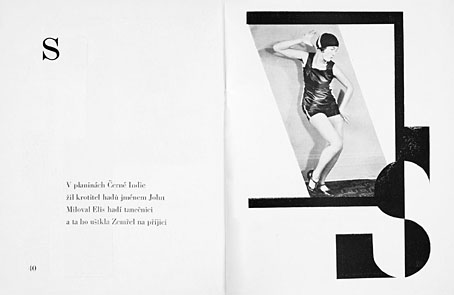
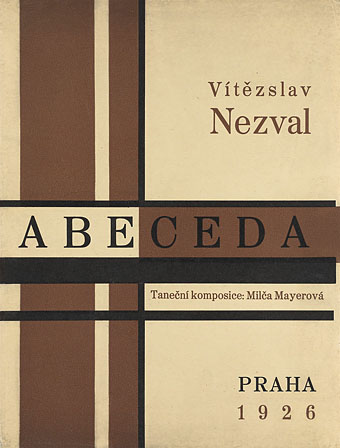
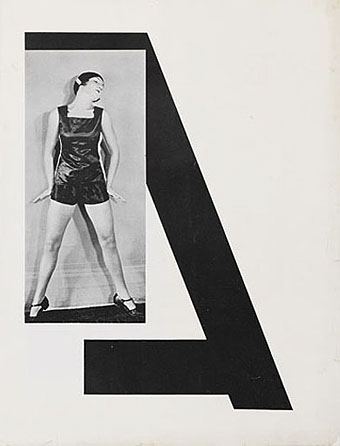
Vítězslav Nezval is best known today for being the author of Valerie and Her Week of Wonders (1935), the source novel for the cult film by Jaromil Jires. Abeceda (1926) is a much shorter work, a Modernist abecedary created by Netzval (who wrote a short verse describing each letter) with Milča Mayerová (who choreographed a series of letterform poses) and Karel Teige (who designed the book and took the photographs). I’ve not seen a complete translation of the verses but I love the page design which is like something the Bauhaus might have produced for the Modernist Children of the Future. The form being used here had a name—Poetism—a Czech variation on similar movements elsewhere such as Constructivism and Futurism but with an intention to create works accessible to all, hence the abecedary. I can imagine Milča Mayerová’s poses being animated by Švankmajer’s staccato edits although his design preferences have always been more florid and baroque. A Surrealist he may be but he also favours Jean Midolle’s Alphabet Lapidaire Monstre.

nezval01.jpg

nezval02.jpg

nezval03.jpg

Continue reading “Abeceda”

Hamfat Asar, a film by Lawrence Jordan

jordan1.jpg

I was reminded of Lawrence/Larry Jordan recently when reading Deborah Solomon’s biography of Joseph Cornell, Utopia Parkway, in which Jordan receives passing mention for helping Cornell with some of his film work in the 1960s. One of Jordan’s short films was featured here in 2014 but I’d not been very diligent in looking for more, a considerable oversight when he was an early and accomplished practitioner of animation using collaged engravings and illustrations. He wasn’t the only animator producing work like this in the 1960s, Harry Smith, Jan Lenica and Walerian Borowczyk also used these methods, but Jordan seemed to favour the idiom more than others.

jordan2.jpg

Hamfat Asar dates from 1965, and is immediately notable for moving its collaged figures over a shoreline landscape which remains fixed for the entire running time. The narrative, such as it is, concerns a stilt-walking figure attempting to cross from one side of the screen to the other but whose progress is continually impeded by a succession of figures, creatures and bizarre assemblages. The film has been described as representing “a vision of life beyond death” although this isn’t very evident at all. Jordan’s films are much more Surreal in the true sense of the word than many other collage animations which tend towards satire or comedy, Terry Gilliam’s work for Monty Python being an obvious example of the latter. The combination of Surreal engravings with black-and-white film stock gives Hamfat Asar a distinct Max Ernst flavour, which is no bad thing. Watch it here.

Previously on { feuilleton }
Carabosse, a film by Lawrence Jordan
Labirynt by Jan Lenica
Science Friction by Stan VanDerBeek
Heaven and Earth Magic by Harry Smith
Short films by Walerian Borowczyk

Weekend links 517

magritte.jpg

Edward James by René Magritte; La Reproduction Interdite (1937).

• “James was filmed in the late 1970s, striding round Las Pozas in a sweater and a tattered dressing-gown, surmounted by parrots (The Secret Life of Edward James can be seen on YouTube). When asked what motivated him, he replied: ‘Pure megalomania!’ He was having his second childhood, he said, though he wasn’t sure the first had ever ended.” Mike Jay on lifelong Surrealist, Edward James (1907–1984), and the concrete fantasia he built in the Mexican jungle.

• “I found the roots of electronic music in a cupboard!” Musician Paul Purgas (one half of Emptyset) on the discovery of early electronic music from India’s National Institute Of Design. Related: Purgas talks about his discovery with Patrick Clarke.

• RIP Phil May. Here’s The Pretty Things in their guise as psych band “Electric Banana” for an appearance in What’s Good for the Goose (1969). A decent moment in an otherwise terrible film.

• Music is a memory machine: David Toop explores how the transmission of music between disparate cultures can be a tool against populism and prejudice.

• Kraftwerk’s remarkable journey, and where it took us: Bob Boilen and Geeta Dayal discuss the tanzmusik of Düsseldorf.

• At Dangerous Minds: Acid Drag & Sexual Anarchy: Fifty years ago The Cockettes turned drag upside down.

Hua Hsu on the secret lives of fungi: “They shape the world—and offer lessons for how to live in it”.

• The great writer who never wrote: Emma Garman on the flamboyant Stephen Tennant.

• Cult 1998 PlayStation game LSD: Dream Emulator is finally playable in English.

Jim Jupp of Ghost Box records talks about the Intermission compilation album.

Jonathan Moodie on psychoactive cinema and sacred animation.

Alex Barrett on where to begin with Akira Kurosawa.

• At Dennis Cooper’s: Skeletons.

Skeleton Makes Good (1982) by Captain Beefheart & The Magic Band | Red Skeletons (1996) by Coil | Kids Will Be Skeletons (2003) by Mogwai