More chimeras

chimera06.jpg

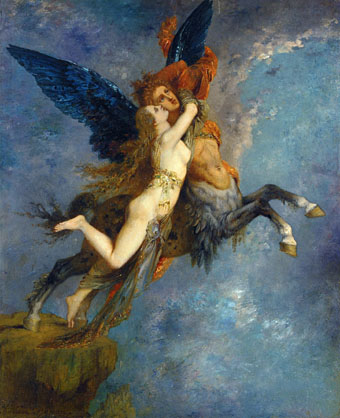
The Chimera (1867) by Gustave Moreau.

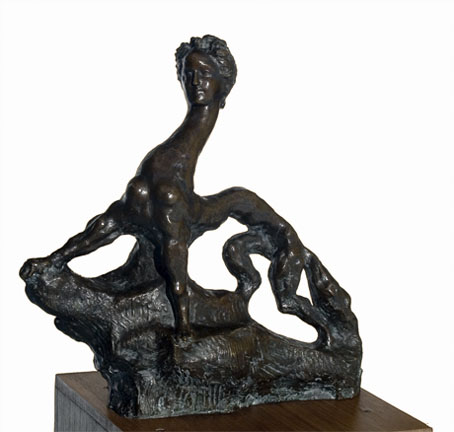
It’s no easy task to catalogue all the chimeras that proliferate between the numerous examples in the work of Gustave Moreau to those produced before the First World War. Consider this a sample, then, and a pointer to further research. Several of these artists—Malczewski, Ernst, Brauner—returned to theme many times.

chimera05.jpg

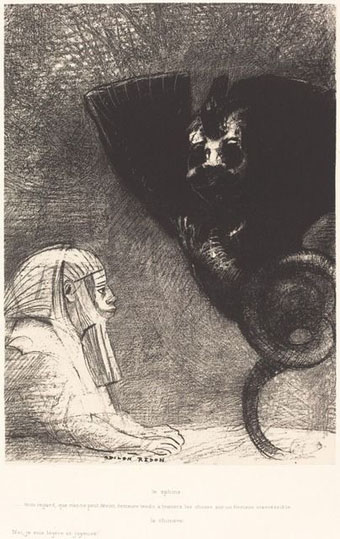
The Sphinx: “My gaze, which nothing can deflect, passes through the things and remains fixed on an inaccessible horizon.” The Chimera: “I am weightless and joyful.” (1889) by Odilon Redon.

chimera08.jpg

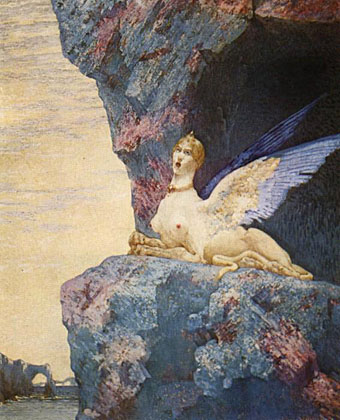
The Chimera’s Despair (1892) by Alexandre Séon.

Continue reading “More chimeras”

The chimeras of Dimitrie Paciurea

paciurea2.jpg

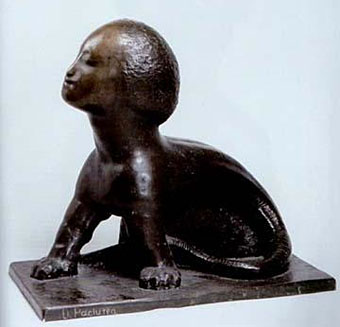
Chimera (1923).

One of the many commendable things about Dreamers of Decadence (1971) by Philippe Jullian is the use of the figure of the chimera to describe the impulse that drove the development of Symbolist art in the late 19th century. A chimera is a fabulous, hybrid creature which is also a metaphor for an unfounded conception or mental phantasm, and chimeras happen to be as popular in Symbolist art as the more familiar sphinx. Both creatures had been given a heady promotion in the fin de siècle imagination thanks to Gustave Flaubert’s extravagant Temptation of Saint Anthony whose final version appeared in 1874; the fluid and metaphoric nature of the chimera, however, makes for a more useful image in art.

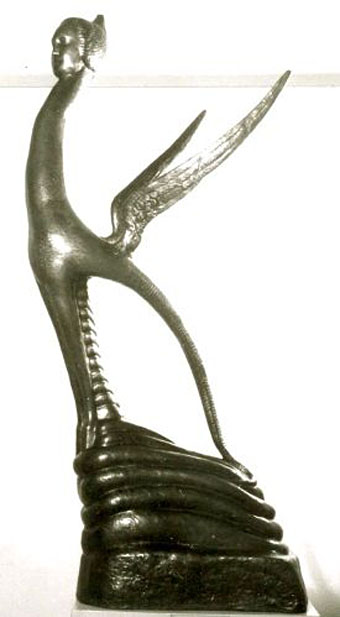
Romanian sculptor Dimitrie Paciurea was born around 1874 (his birthdate is uncertain), and is one of those artists who perpetuated Symbolist themes in the 20th century by which time they were rapidly losing the little grace they once possessed. In addition to the profusion of chimeras seen here Paciurea was also sculpting fauns and Pan figures, further hybrids from the Symbolist menagerie. These photos are from WikiPaintings where the artist is rather fatuously categorised as an Impressionist.

paciurea7.jpg

Chimera of the Earth.

paciurea3.jpg

Chimera of the Sky.

Continue reading “The chimeras of Dimitrie Paciurea”

Conversations with Beckford

beckford.jpg

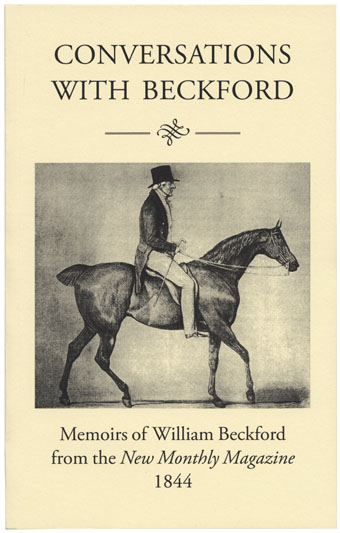
My thanks once again to Sidney Blackmore for sending me this new publication from The Beckford Society. Conversations with Beckford reprints in facsimile Cyrus Redding’s memoirs of William Beckford, a series of essays which were published in 1844 after Beckford’s death.

beckford2.jpg

Of particular interest to this folly enthusiast is a chapter entitled The Tower of the Caliph, in which Redding relates a visit to the newly-constructed Lansdown Tower which stands on Lansdown Hill outside the city of Bath. Beckford’s Tower, as it’s known today, is only half the height of the unsound structure which the fabulously wealthy Beckford built at Fonthill Abbey but it has at least survived, unlike the constructions on his old estate. The Tower and its grounds have had a chequered history since 1844 so Redding’s piece is valuable for the impression it gives of the place shortly after it was built. (The “Caliph” of the title refers to Beckford’s celebrated Gothic novel, Vathek, an Arabian Tale.) The Tower today is a museum housing some of Beckford’s art collection and furniture. Flickr has a great selection of views of the place showing how impressive the gold belvedere can be even on gloomy winter days.

Previously on { feuilleton }
The Beckford Journal
Vathek illustrated
Fonthill Abbey

Gilles Rimbault redux

rimbault1.jpg

My thanks once again to DR Tenge for notifying me of a new post of drawings by French artist Gilles Rimbault. More marvellous work that this time tends to the metamorphic rather than the erotic. No details as to date or provenance but considering how little there is of Rimbault’s work online it’s good to see anything new at all.

rimbault2.jpg

rimbault3.jpg

Continue reading “Gilles Rimbault redux”

Weekend links 197

field.jpg

Posters by Jay Shaw for Ben Wheatley’s A Field in England which receives a US release this month.

Alvin Baltrop’s Gay New York: “the clandestine activities taking place under New York piers between 1975 and 1986”. AnOther samples some of the work on display at the Open Eye Gallery, Liverpool. Meanwhile, BUTT has some shots from Texas Porno Road Trip, a photo series by Mike McLeod. Related: HBO will show you anything but a male erection, says Justin Moyer.

• “[Robert] Desnos quickly proved himself to be one of the most gifted in these experiments – eventually known as ‘the period of sleeping fits’. He was capable of writing, speaking, drawing and composing entire fantastical narratives.” Eugene Thacker on the Surrealist séances of the 1920s.

• “It’s history, not a viral feed,” says Sarah Werner. A complaint about the way the ongoing decontextualisation of images is both pernicious and potentially lucrative.

His prose is a palimpsest of echoes, ranging from Eliot’s Preludes and Rhapsody on a Windy Night (lines like “Midnight shakes the memory / As a madman shakes a dead geranium” are Burroughsian before the fact) to Raymond Chandler’s marmoreal wisecracks and Herbert Huncke’s jive. I suspect that few readers have made it all the way through the cut-up novels, but anyone dipping into them may come away humming phrases. His palpable influence on JG Ballard, William Gibson, and Kathy Acker is only the most obvious effect of the kind of inspiration that makes a young writer drop a book and grab a pen, wishing to emulate so sensational a sound. It’s a cold thrill.

Peter Schjeldahl reviews Call Me Burroughs by Barry Miles.

• “Dance music was born in LGBT communities, but has this been forgotten?” Luis-Manuel Garcia on an alternate history of sexuality in club culture.

• Avant-Grade Hallucinogens: the Poetics of Psychedelic Perception in Moving Image Art by Stuart Heaney.

No Condition Is Permanent: weekly radio shows from Count Reeshard at LuxuriaMusic and iTunes.

The Golem: where fact and fiction collide. David Barnett on 100 years of Gustav Meyrink’s novel.

• Don’t Let Harlan Ellison Hear This: Nick Mamatas on a great writer.

• Mix of the week: the Ela Orleans Mix at A Sound Awareness.

Amon Düül II playing live on French TV, 1971 & 1973.

• A soundmap of London canals and minor rivers.

The Peculiar Underworld of Rare-Book Thieves.

• At Pinterest: William Burroughs and Phalluses.

Architecture of Doom

Hallucinations (1967) by Tim Buckley | Phallus Dei (1969) by Amon Düül II | Hallucinations (In Memory of Reinaldo Arenas) (1994) by Paul Schütze