Of the Monstrous Pictures of Whales

whale1.jpg

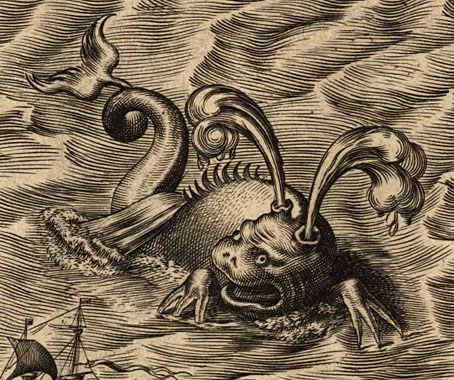
When Herman Melville complains in chapter 55 of Moby Dick about erroneous representations of whales, this is the kind of thing he had in mind. Among those he takes to task, however, I don’t recall any of them having two blow-holes like the creature above.
whale2.jpg

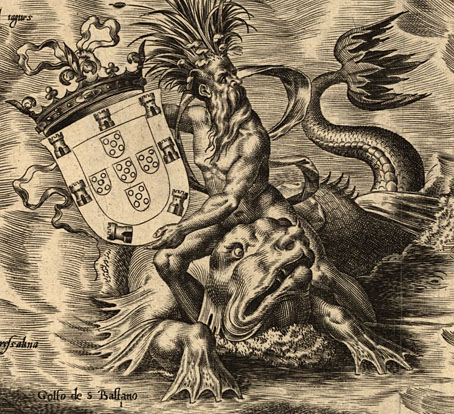
The coat of arms of Portugal.

These fanciful beasts are the work of (no sniggering, please) Hieronymus Cock (1510–1570), an Antwerp engraver, and they populate the seas as part of his marvellous map of America created with the assistance of Spanish cartographer Diego Gutiérrez.

Gutiérrez’s magnificent 1562 map of America was not intended to be a scientifically or navigationally exacting document, although it was of large scale and remained the largest map of America for a century. It was, rather, a ceremonial map, a diplomatic map, as identified by the coats of arms proclaiming possession. Through the map, Spain proclaimed to the nations of Western Europe its American territory, clearly outlining its sphere of control, not by degrees, but with the appearance of a very broad line for the Tropic of Cancer clearly drawn on the map.

The map is described in detail here while another part of the Library of Congress Map Collections site has an incredible high-resolution copy which is a delight to pore over. This is a really big image (10492 x 11908 pixels) but the huge size is just what I love to see. You can not only zoom into the myriad details—cannibals cooking a human feast in Brazil—but also admire the precision of the cross-hatching. Less than forty years separate these generic creatures from Jan Saenredam’s far more accurate rendering of a beached sperm whale.
whale3.jpg

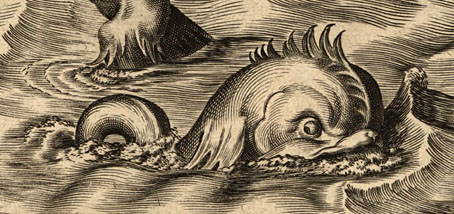
A dolphin (Melville classed dolphins and porpoises as small whales).

Elsewhere on { feuilleton }
The etching and engraving archive

Previously on { feuilleton }
Jan Saenredam’s whale
The Whale again
Rockwell Kent’s Moby Dick

Jan Saenredam’s whale

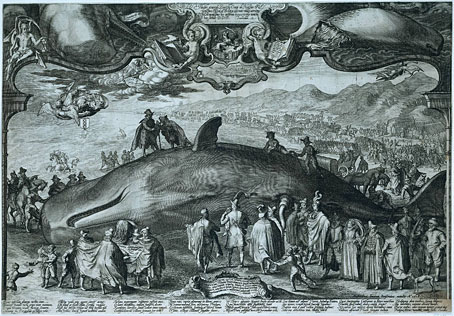
saenredam.jpg

Still reading Moby Dick at a leisurely pace. After finishing Melville’s chapters on the representations of whales I thought I’d see if the pictures he most prefers are online anywhere. A vain search, as it turns out, but I did discover this splendid depiction, Stranded Sperm Whale, by Dutch artist Jan Saenredam (1565–1607).

On 19 December 1601, a sperm whale washed up near Beverwijk. Crowds of people came to see the sight. Among them Jan Saenredam, who made this print. He has depicted himself drawing on the left.

The description continues at the Rijksmuseum site from which this copy originates. Mr Peacay of BibliOdyssey has a very large copy on his Flickr pages which shows more of the fine detail. Melville is highly critical of poor depictions of whales but I suspect he would have liked this one. As well as the local colour and allegorical border elements, Saenredam faithfully renders his dead whale, even leaving space for the drooping scape of cetacean penis. In a similar, if more mundane manner, there’s this engraving by Jacob Matham.

Elsewhere on { feuilleton }
The etching and engraving archive

Previously on { feuilleton }
The Whale again
Rockwell Kent’s Moby Dick

The art of Julien Champagne, 1877–1932

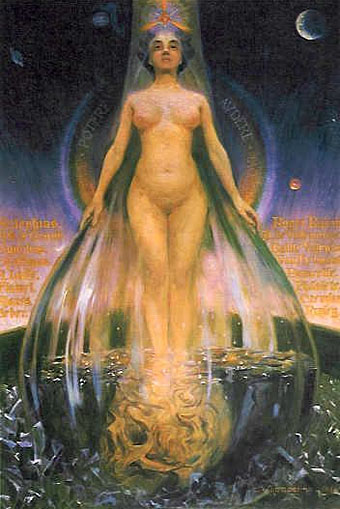
champagne1.jpg

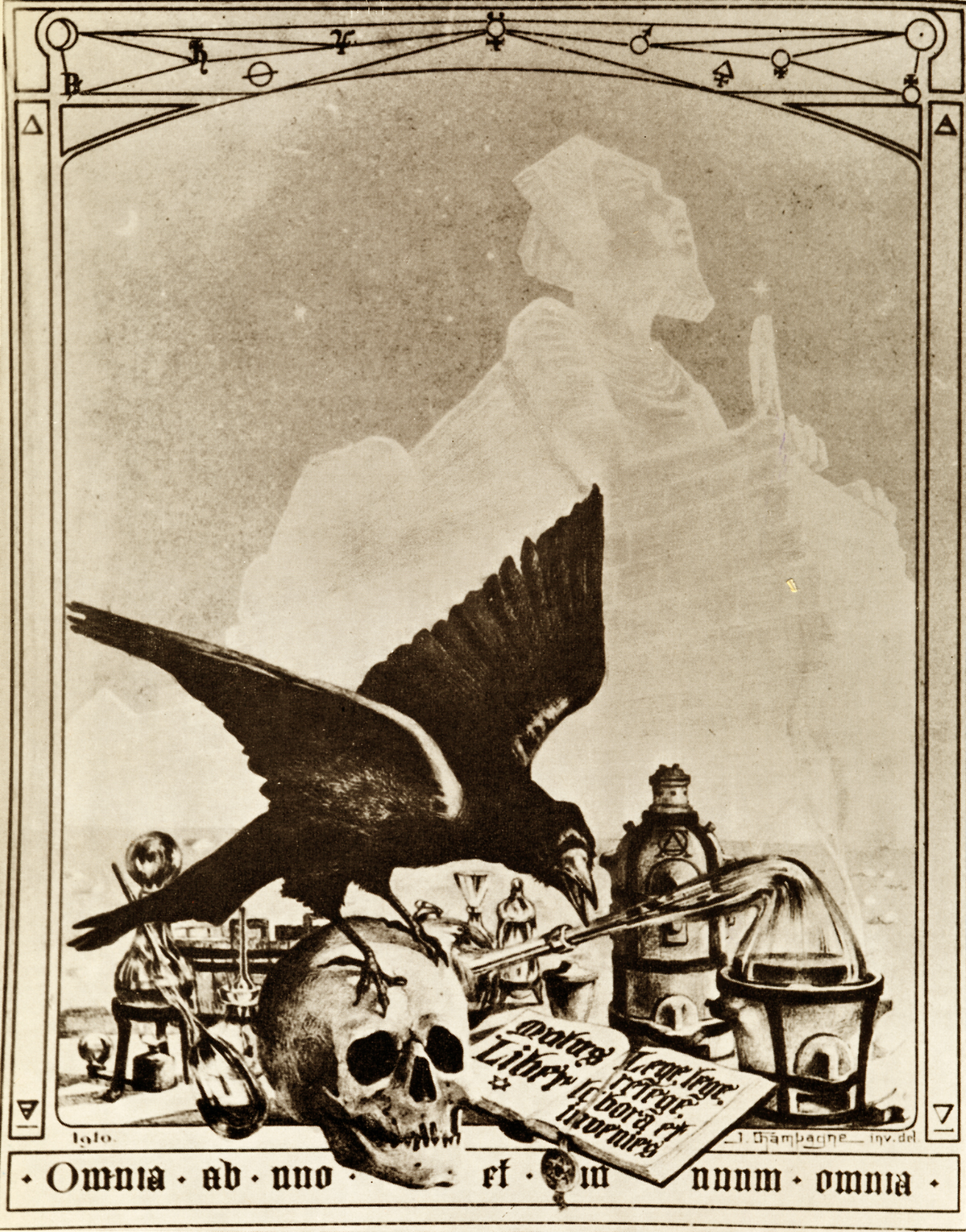
An obscure occult artist even among catalogues of obscure occult artists, Julien Champagne (also listed as Jean-Julian) is known principally for his associations with the persistently elusive 20th century alchemist Fulcanelli. Champagne provided a frontispiece (below) for Fulcanelli’s examination of architectural symbolism, Le Mystère des Cathédrales (1926), and is continually rumoured to have been Fulcanelli himself. Whatever the solution to that mystery, the alchemist’s book is rather more visible than the artist’s distinctly Symbolist paintings. There’s a French blog devoted to his life and works here but little else around. I wouldn’t mind seeing a decent online gallery of his pictures at some point.

champagne2.jpg

Previously on { feuilleton }
Digital alchemy
The art of Pamela Colman Smith, 1878–1951
The art of Andrey Avinoff, 1884–1949
The art of Cameron, 1922–1995
Austin Osman Spare

Shared Worlds 2009

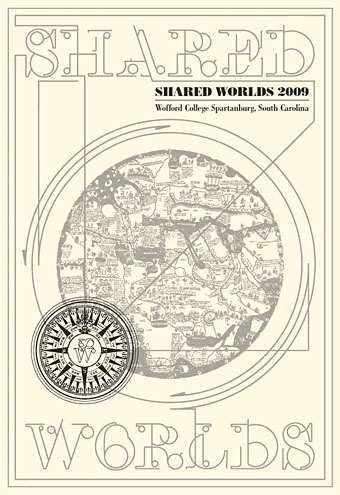
shared_worlds.jpg

Shared Worlds is a fantasy writing-oriented summer camp for teenagers created by Jeremy Jones and Jeff VanderMeer, and hosted at Wofford College, South Carolina. Jeff asked me to design a small booklet to be printed at the end of this year’s activities as a means of showcasing examples of the writings produced during the various events. He’s posted photos of the printed booklets, including pictures of the young authors autographing pages for each other, and should be writing more about Shared Worlds later.