Kwaidan

kwaidan1.jpg

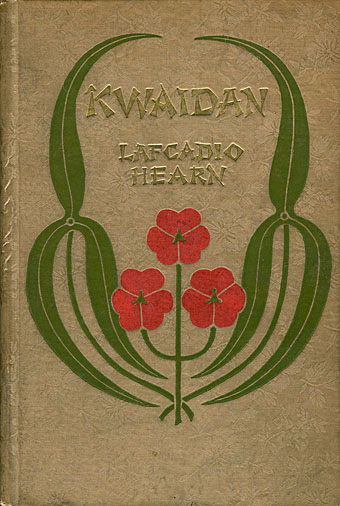
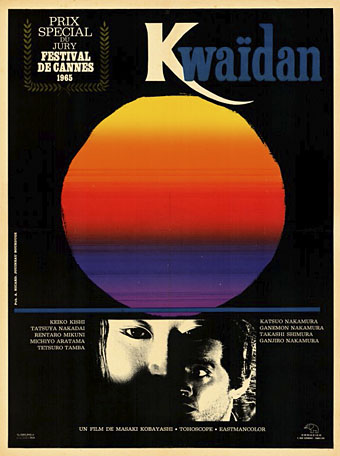
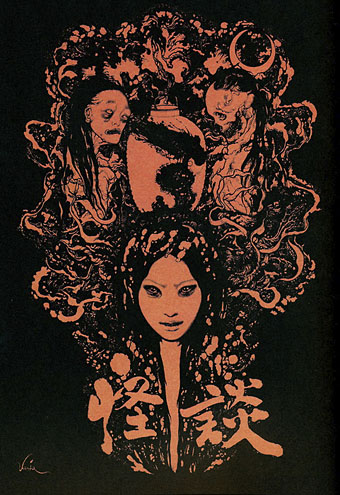
Kwaidan: Stories and Studies of Strange Things (1904), a book by Lafcadio Hearn retelling Japanese ghost stories. Later an incredible film by Masaki Kobayashi and a drawing by Vania Zouravliov.

kwaidan2.jpg

Kwaidan (aka Kaidan; 1964).

kwaidan3.jpg

Kwaidan by Vania Zouravliov (no date).

Kwaidan, Stories and Studies of Strange Things by Lafcadio Hearn with an introduction by Oscar Lewis (1932).

Previously on { feuilleton }
The art of Bertha Lum, 1869–1954
The Boy Who Drew Cats
The art of Takato Yamamoto

Tite Street then and now

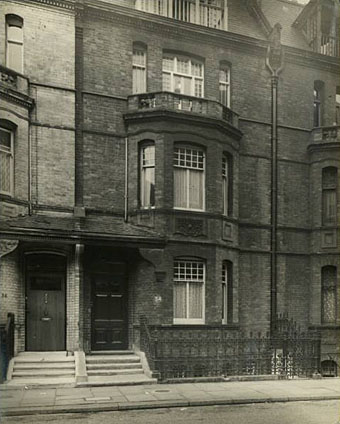
tite1.jpg

This LIFE magazine photo of Oscar Wilde’s home at 34 Tite Street, Chelsea, is fascinating for Wilde aficionados in being a far more detailed view of the “House Beautiful” exterior than one ever finds in books about the writer. No information as to when it was taken but from the look of the print it was probably some time just before or after 1900.

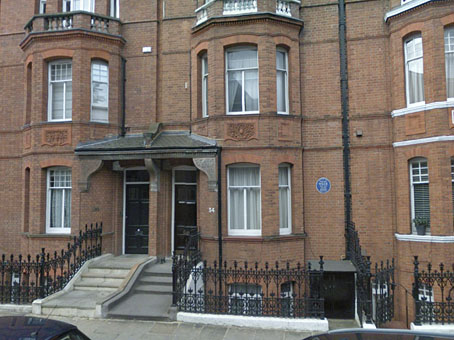
tite2.jpg

Google Earth lets us examine Tite Street as it is today, with Oscar’s house looking relatively unchanged aside from the blue plaque which informs people that he once lived there. What you can’t see in this picture is the opposite side of the street which now contains a particularly dreary housing development from the 1960s. Oscar and his contemporaries in the area—many of whom were artists—wouldn’t have been impressed at all.

Elsewhere on { feuilleton }
The Oscar Wilde archive

Salomé posters

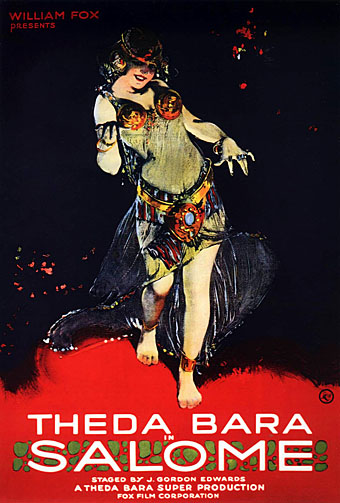
salome_p1.jpg

Salome (1918).

You can’t keep a bad girl down… Attempting to gather all the painted representations of Salomé would be a foolish enterprise, there are far too many especially when you reach the 19th century, an age whose misogyny found an ideal expression in the emasculating temptress. Searching through 20th century adaptations yields some interesting works, however.

Theda Bara’s film pre-dates the more flamboyant Nazimova version by five years, and since I haven’t seen it I’ve no idea how it holds up today. But from the look of the stills and posters it seems far closer to the usual historical fare than the stylised version which followed.

Continue reading “Salomé posters”

Lovecraft: Fear of the Unknown DVD

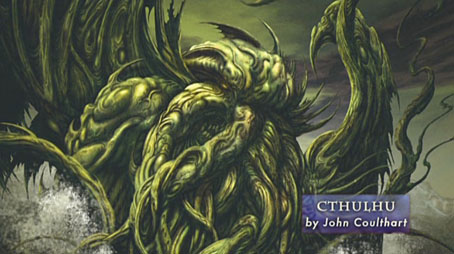
cthulhu_dvd.jpg

It’s that thing again…

There’s much to loathe about this time of year—the short and dismal days whose appalling weather will persist until mid-March, the trees denuded at last of their leaves, the Chinese Water Torture of Xmas trivia—but the post this week at least brought some compensations. As well as the copies of Dodgem Logic there was a box of Penguin book cover postcards which I won in a Guardian Books giveaway, and also the long-awaited arrival of Frank Woodward’s documentary Lovecraft: Fear of the Unknown on DVD. I’ve mentioned this latter work before, of course, but I’ll repeat that it’s the best documentary to date concerning the life and career of HPL, and features several pieces of my own artwork as well as contributions from other fine Lovecraftian illustrators. Among the interviewees are Neil Gaiman, John Carpenter, Guillermo Del Toro, Caitlin R Kiernan, Peter Straub, Ramsey Campbell and Lovecraft scholar ST Joshi. The DVD is only Region 1/NTSC at the moment, but is available also as a Blu-ray disc if you need to see the aforementioned in high-definition. The film runs for 90-minutes and the disc includes an additional 70-minutes of interviews, a Lovecraft art gallery and more. Essential viewing for all aficionados.

Elsewhere on { feuilleton }
The Lovecraft archive

The art of Sydney R Jones, 1881–1966

jones1.jpg

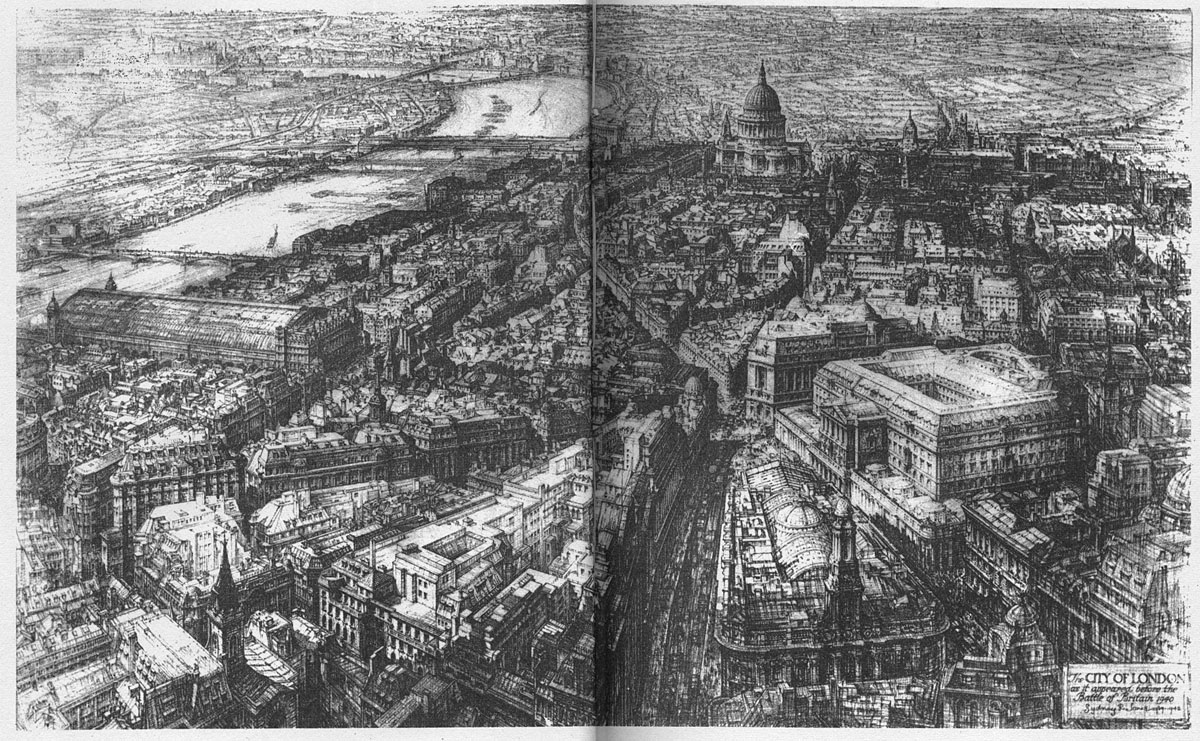
Church of St Michael Paternoster Royal and Innholder’s Hall (1927).

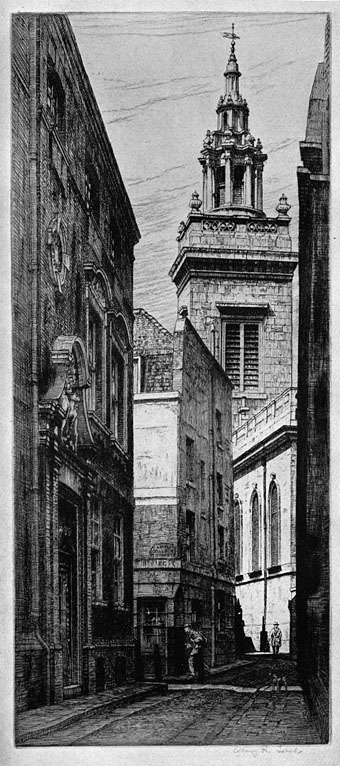
One of the better secondhand book discoveries of the past couple of years was London Triumphant, a collection of etchings and pencil drawings of the city’s streets and buildings by Sydney R Jones. The etchings immediately seized my attention, being the kind of closely-hatched architectural renderings which I enjoy, but the book as a whole is very good as it details the artist’s wanderings with a young student friend through the city. Jones established himself as an illustrator of books with titles like The Manor Houses of England and The Charm of the English Village. His London book appeared in July 1942 and collected many of his earlier views of the city as a deliberate morale boost for the populace who were watching the capital’s historic buildings yield to the bombs of what he calls “the foul Hun”. Jones catalogues the destruction with dismay as he recounts the history of the city from Roman times but ends on a note of defiant optimism, wondering what new metropolis might rise from the destruction. He mentions in passing that cult locale of mine, the Essex Street Water Gate, but doesn’t provide a drawing unfortunately. The book proved to be very popular, and the copy I found is a fifth printing from 1947.
jones2.jpg

Serjeant’s Inn, Fleet Street (1926).

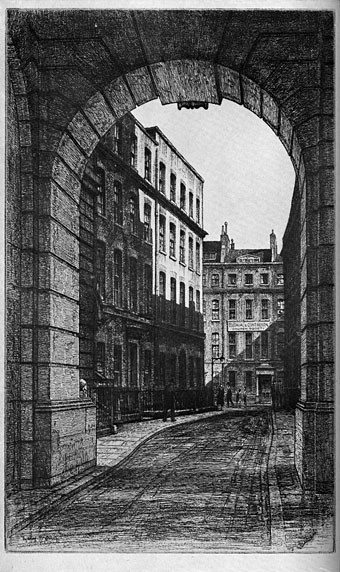
This week’s book purchase was a welcome find, then, being London Triumphant‘s sequel, Thames Triumphant, in which Jones follows the course of the river from its spring at Coberley, through Oxford and on down to Greenwich. There aren’t as many dramatic views this time, and many of the country scenes have that kind of polite blandness about them which you find in much book illustration of the period. But Jones does provide a couple of his speculative and spectacular views over the city, including the one below which shows the City of London as it was in 1939. Much of the foreground was bombed flat during the war so a drawing such as this provides a valuable record of how London’s financial centre looked before the arrival of the Luftwaffe and the office blocks. Jones lived to see much of the subsequent reconstruction—I can’t help but wonder what he made of it all.
city.jpg

The City of London, 1939; click for a bigger view.

Elsewhere on { feuilleton }
The etching and engraving archive
The illustrators archive

Previously on { feuilleton }
Pite’s West End folly
Jessie M King’s Grey City of the North
Architectural renderings by HW Brewer
The Essex Street Water Gate, London WC2