Weekend links: fifth anniversary edition

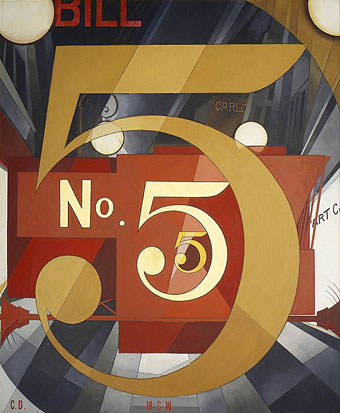
demuth.jpg

The Figure 5 in Gold (1928) by Charles Demuth.

It’s a little surprising to find I’ve been doing this for five whole years yet here we are. Having seen a number of blogs call it quits at the five-year point I should note that I don’t feel quite that exhausted although maintaining a discipline of daily posting can be a chore at times, especially when you’re pressured by work. On the whole the advantages continue to outweigh the disadvantages. Some of the discoveries here have fed back into things I’ve been working on or opened avenues for future exploration. Researching something for an audience (however slight that audience or the resulting post) encourages you to look more deeply into a given subject; sometimes you learn more as a result and occasionally make surprising discoveries. Obsessions are teased out which might otherwise have lain dormant. Yes, it’s an extra bout of work but I’ve spent much of my life saying to people “if you like that, you may like this”, and that’s all many of these posts are doing.

This year promises to be an interesting one so watch this space. And, as always, thanks for reading!

John x

On to the links…

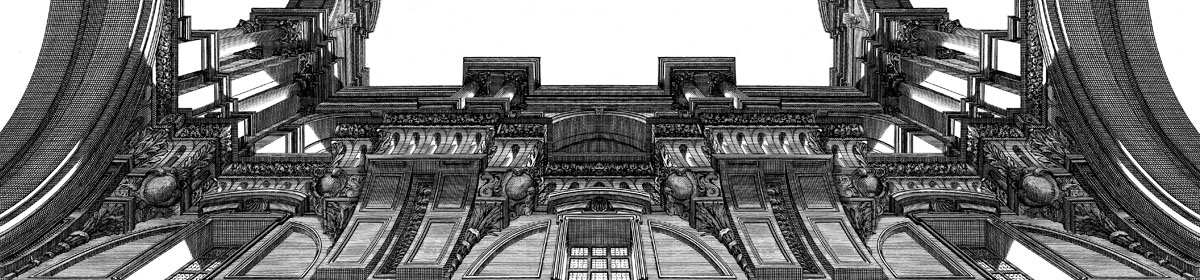
Cathedral Scan translates the architectural plans of Gothic cathedrals into open-ended musical scores via custom software. There’s more at Blake Carrington‘s website.

Forty-three William Burroughs recordings (tape experiments and readings) at the Ubuweb archives.

• The opening scene of Deadlock (1970), an obscure German film with a theme by the mighty Can.

Strange Lands: A Field-Guide to the Celtic Otherworld, a new book by Andrew L Paciorek.

• The enduring nature of Frankenstein, currently on stage at the National Theatre, London.
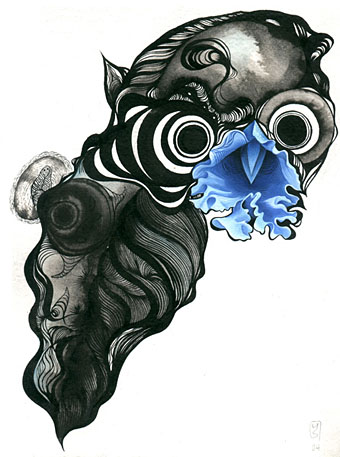
shimojo.jpg

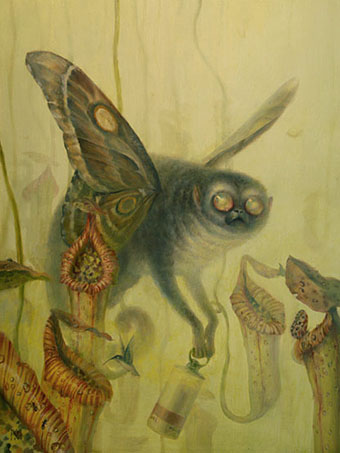
Owl One (2004) by Yuri Shimojo.

¡Activista! by Sonny Smith: Drag Queens, Borders, Rivers, Death and Transformation.

• Estonian sculptor Mati Karmin makes furniture out of Russian anti-submarine mines.

Alan Moore’s contribution to the Save Our Libraries campaign.

• Innsmouth Free Press is raising funds for their running costs.

A history of queer street art (Facebook link, unfortunately).

Illuminated book design for Heston’s Fantastical Feasts.

Physica Sacra, an engraving set at Flickr.

Egypt (1985) by Tuxedomoon | Egyptian Basses (1998) by Coil | Soleil D’Egypte (2001) by Natacha Atlas.
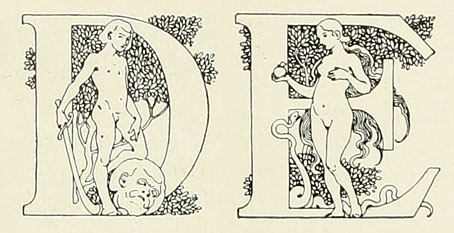
Deutsche Kunst und Dekoration #7

dkd07-01.jpg

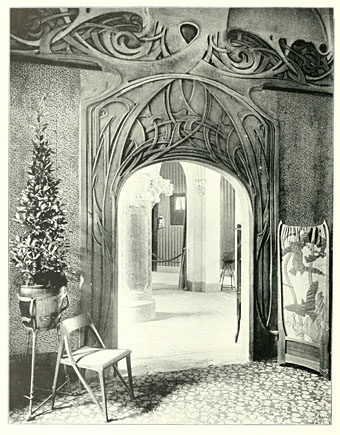
Continuing the delve into back numbers of Deutsche Kunst und Dekoration, the German periodical of art and decoration. Volume 7 covers the period from October 1900 to March 1901 and features a set of ornamental capitals throughout this edition designed by Karl Lürtzing, part of a presentation of typefaces in the Art Nouveau style. The figures in Lürtzing’s alphabet all seem to be Biblical or mythological (as with David and Eve above) although some are easier to decipher than others. Volume 6 paid a visit to the Exposition Universelle in Paris and there’s a few more examples from that event here, along with further examinations of the best in German art and design. As usual, anyone wishing to see these samples in greater detail is advised to download the entire volume (which comprises over 300 pages) at the Internet Archive. There’ll be more DK&D next week.

dkd07-02.jpg

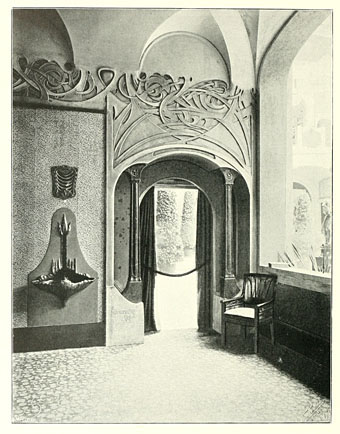
Remarkable interiors by Richard Riemerschmid.

dkd07-03.jpg

Continue reading “Deutsche Kunst und Dekoration #7”

Deutsche Kunst und Dekoration #6

dkd06-01.jpg

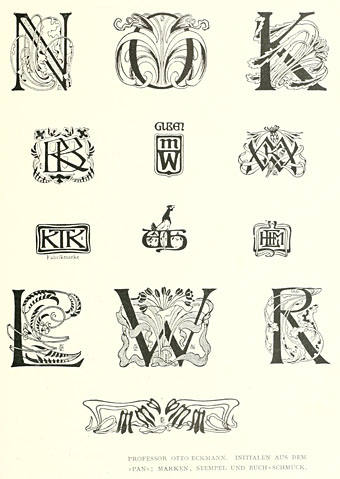
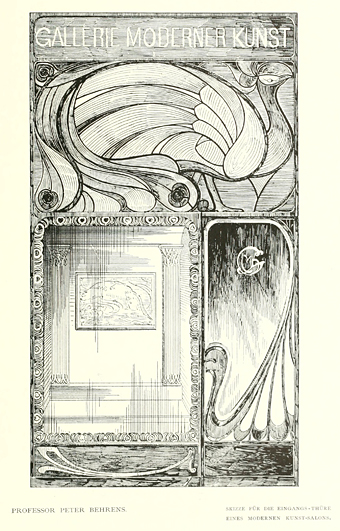
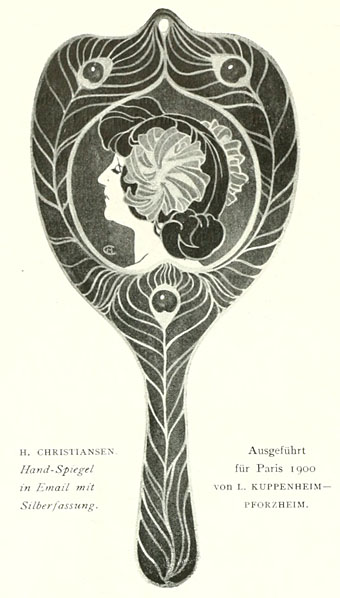
Continuing the delve into back numbers of Deutsche Kunst und Dekoration, the German periodical of art and decoration. Volume 6 covers the period from April to September 1900, and the content is still Art Nouveau all the way, with a dash of Symbolism. Among the contributors in this edition there’s Otto Eckmann and more work from Hans Christiansen, both frequent contributors to Jugend magazine There are further examples of stylish Art Nouveau interiors, and of considerable interest to this Exposition Universelle obsessive, a look at the Paris exposition of 1900 from the German side of things. As before, anyone wishing to see these samples in greater detail is advised to download the entire volume at the Internet Archive. There’ll be more DK&D next week.

dkd06-02.jpg

The ubiquitous peacocks were never far away in 1900.

dkd06-03.jpg

Continue reading “Deutsche Kunst und Dekoration #6”

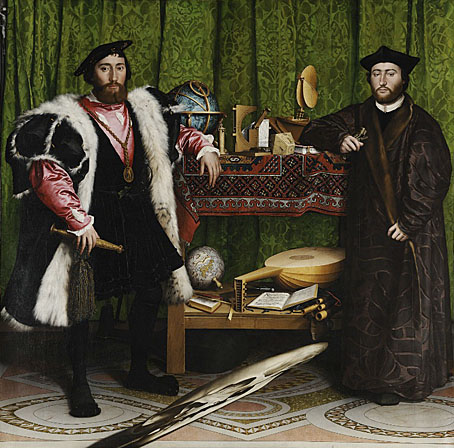
The Ambassadors in detail

holbein1.jpg

Some revelations courtesy of a new venture, the Google Art Project, in which we’re given the opportunity to wander some of the world’s great art galleries and examine a selection of paintings in detail. Holbein’s 1533 masterpiece, The Ambassadors, is the default work for the collection from the National Gallery, London, and it’s a great place to start, being painted in a quite astonishing hyper-realist style. I’ve seen this work in situ and despite its being a large picture it’s difficult to offer it any kind of careful scrutiny. This is partly because the more famous works in that gallery always draw an impatient crowd eager for you to get out of their way, but also because the staff there don’t like people getting too close to the paintings; I was once reprimanded by a staff member for gesticulating too closely to one of the pictures whilst discussing it with a friend.

holbein2.jpg

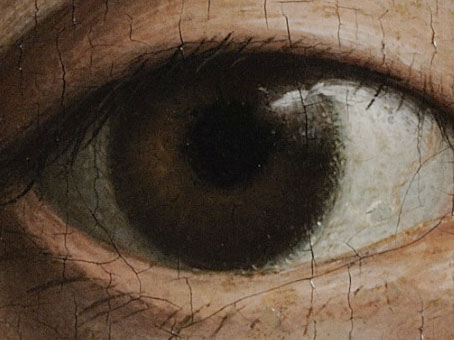
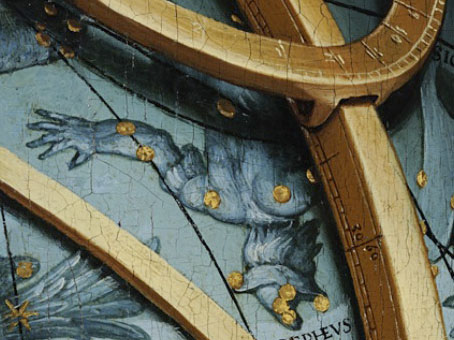
The Ambassadors is celebrated for its anamorphic vanitas skull (gallery visitors usually take turns viewing this from the side of the picture) and its collection of very carefully painted objects and instruments. Thanks to Google we’re now able to examine these to a degree we wouldn’t have been able to do before unless we worked for the gallery. Holbein astonishes even more when you can see how carefully he rendered so many different materials and textures. And this is only one of the works available from one of the galleries…

holbein3.jpg

Of the paintings I’ve looked at so far not all allow such ultra-magnified views but then not all paintings require this. Artists such as Titian and Turner don’t benefit from scrutiny with a magnifying glass. An initial gripe would be the lack of any thumbnail view of the paintings on offer but it seems unfair to complain, this is a great development for art lovers. I’m hoping now that the project will evolve the way Google Earth has, with the addition of other galleries and paintings. A few more details follow.

Continue reading “The Ambassadors in detail”