Sticks

1: Illustrations by Lee Brown Coye
coye1.jpg

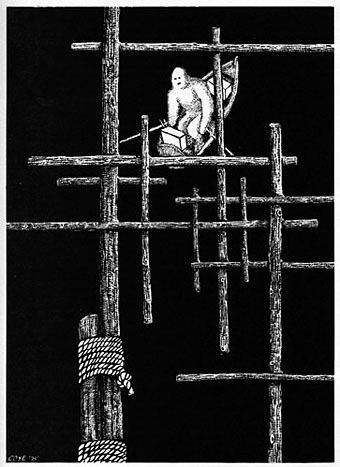
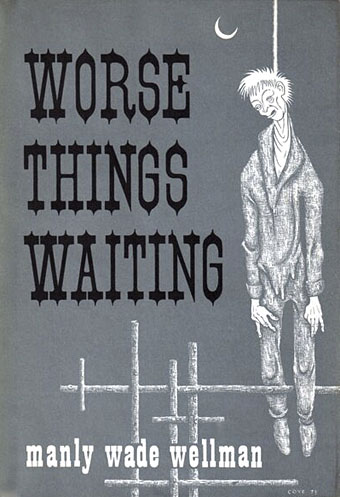
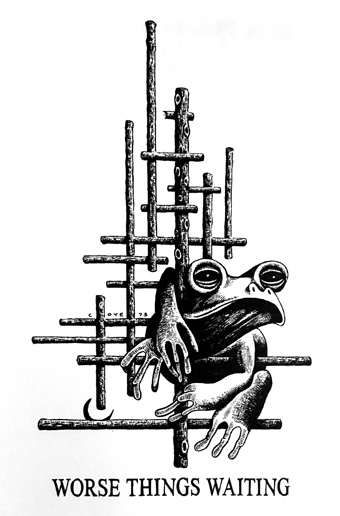
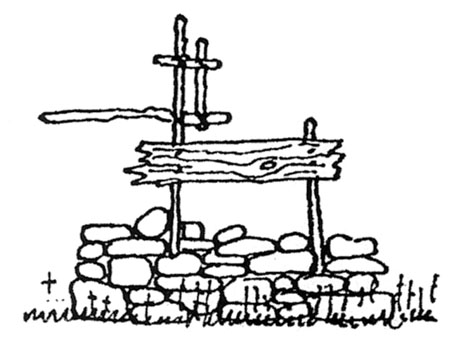
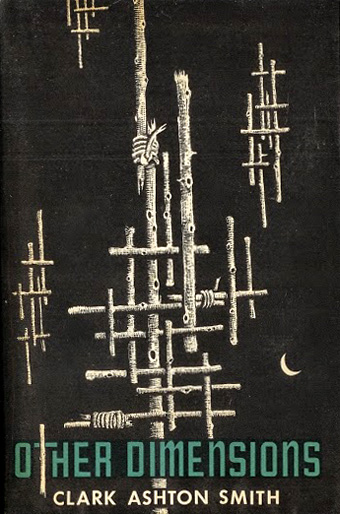
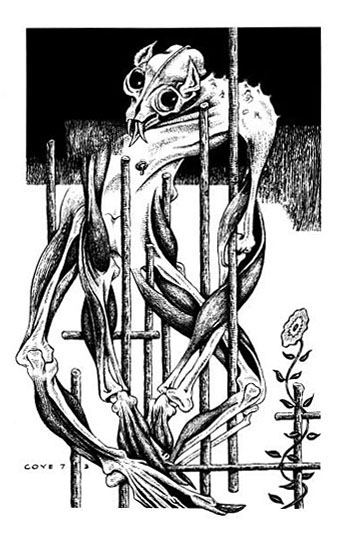
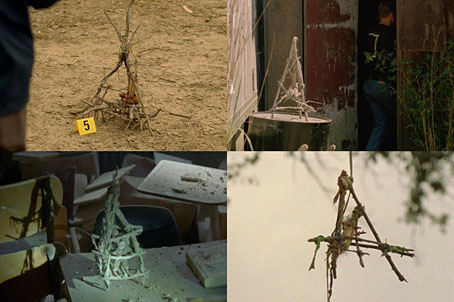
One recurring feature in Coye’s work is the motif of wooden sticks, often in latticework-like patterns. This was inspired by a 1938 discovery in an abandoned farmhouse.

Coye had returned to the North Pitcher, New York, area where he spent much of his childhood. While wandering deep in the woods, Coye discovered an abandoned farmhouse. Boards and pieces of wood which had been set perpendicular to one another surrounded the site. Neither inside nor out could Coye find an explanation for the presence of these crossed sticks. In the years following, Coye remained interested in the significance of his discovery.

When Coye returned to the site in 1963, there was nothing left of the building or the sticks (the area had suffered severe flooding), and he never found out why the sticks were there or who it was that had arranged them in such a manner. Because of the strangeness of the entire experience, these forms never left Coye, and they appear in many of his paintings and illustrations. [Via]
coye4.jpg

coye2.jpg

coye3.jpg

coye6.jpg

coye5.jpg


2: A short story by Karl Edward Wagner
whispers.jpg

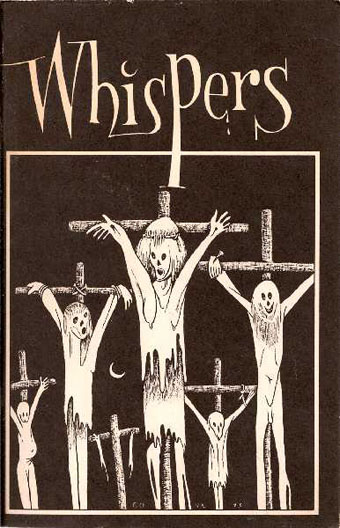
Whispers #3, March 1974. Cover art by Lee Brown Coye.

The story [Sticks] is really Lee Brown Coye’s and is about Lee Brown Coye, as the Afterword [in Whispers #3] explains. Coye had described the events upon which Sticks was based to me, and when Stuart David Schiff decided to bring out a special Lee Brown Coye issue of Whispers, I stole time from my final few months of medical school to write a story inspired by Coye’s experiences. Sticks is shot through with in-jokes and references which the serious fantasy/horror fan will recognize. I wrote the story as a favour and tribute to Lee, and I never expected it to be read by anyone beyond the thousand or so fans who read Whispers. To my surprise, Sticks became one of my best known and best liked stories. It won the British Fantasy Award and was a runner-up in the World Fantasy Award for best short fiction. The story has been anthologized numerous times and translated into several languages. It was broadcast on National Public Radio on Hallowe’en 1982 and was to have been produced for the short lived television series, Darkroom. Not bad for an in-joke. [Via]


3: Season one of True Detective
truedetective.jpg


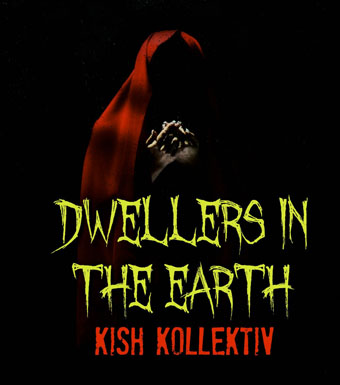
4: An invented soundtrack album by Kish Kollectiv
dwellers.jpg

Produced for UK television in 1982 by ATV, the undeservedly obscure Dwellers in the Earth is a loose adaptation of the late Karl Edward Wagner’s short story Sticks (itself an inspiration for The Blair Witch Project). The film—thought lost for many years until a somewhat degraded can of film reel turned up in a private collection in Hong Kong in 2009—has been routinely described as one of the scariest made-for-television horror movies of all time. It was directed by the late Freddie Francis and starred Robert Powell and Jenny Agutter with Michael Ironside, Ian McCulloch and Linda Hayden in supporting roles.

With the kind permission of the composer’s widow, Nadezhda Mastandrea, Kish Kollektiv has painstakingly recreated Staszek Korolenko’s long lost soundtrack score for the mysterious film. The UK-based Kollektiv gratefully acknowledges Mr. Korolenko’s huge influence on its own work. The Anglo-Belarusian composer died at the age of only 43, while the master recordings of many of his scores were later destroyed when the cellar of his family home flooded in 1989. [Via]

Previously on { feuilleton }
Owls and flowers
In the Key of Yellow

Weekend links 644

binnie.jpg

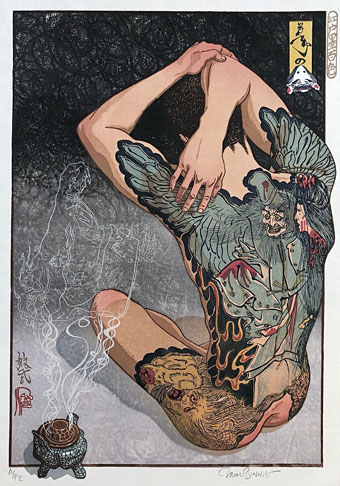
Yoshitoshi’s Ghosts (2004) by Paul Binnie.

• “The later Grand Etteilla series, printed well into the nineteenth century, and the present-day proliferation of Tarot decks, following ephemeral fads and fashions, all trace their origins to this beautiful and beguiling creation from the enigmatic Egyptophile at 48 Rue de L’Oseille.” Kevin Dann on the Livre de Thot Tarot (ca. 1789) by Jean-Baptiste Alliette, better known as “Etteilla”.

• “Death is not a subject he has ever shied away from, in his fiction or conversation. Indeed, he has measured other writers by how seriously they address it.” Richard B. Woodward on his friend, Cormac McCarthy, and McCarthy’s new novels. There’s an exclusive extract from The Passenger here.

• “…addicts, psychopaths, lovelorn outsiders, cult leaders, lesbian and gay icons…you name it, the vampire has become it.” Christopher Frayling on the perennial popularity of the vampire, and a new book collection of vampire film posters.

Robert Wilson‘s new production of Ubu Roi by Alfred Jarry is “a sinister, multilingual pantomime bathed in red light and looped in noise…fittingly violent, absurd, ominous and infantile”.

• “What kind of music goes with a show that originates in deep space?” Aquarium Drunkard on Sonny Sharrock’s final recordings, the soundtrack music for Space Ghost Coast To Coast.

• At Wormwoodiana: Mark Valentine takes a fresh look at the health of secondhand bookshops in Britain.

• Tokyo nightlife photographed by Hosokawa Ryohei.

• New music: Approach by Lawrence English.

The Passenger (1977) by Iggy Pop | The Passenger (1987) by Siouxsie And The Banshees | The Passenger (1997) by Lunachicks

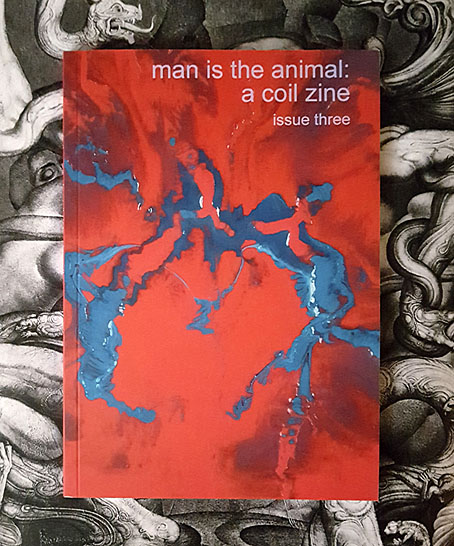
Man is the Animal, issue three

coil.jpg

In the post this week, the third issue of the Coil zine, Man is the Animal. 72 pages of esoteric exploration which this time includes a written contribution of my own. The cover art is Fire of the Mind (2013) by Mead McLean.

Contents
Singularities of Art and Nature by John Coulthart
“There’s a Man Laying Down in a Grave Somewhere” Poem for Jhonn Balance by Joseph Breitman
“Shadows only exist when the spotlight is on” An Interview with Mead McLean
“In Perpetual Motion”: The Coil Manifesto as Theory in Practice by Nick Soulsby
Coil’s Fano Concert by Kiefer Gorena
Peter Christopherson Is Alive And Well And Living In Parentheses! by Nick Hudson

Previously on { feuilleton }
Man is the Animal, issue two
Man is the Animal: A Coil Zine

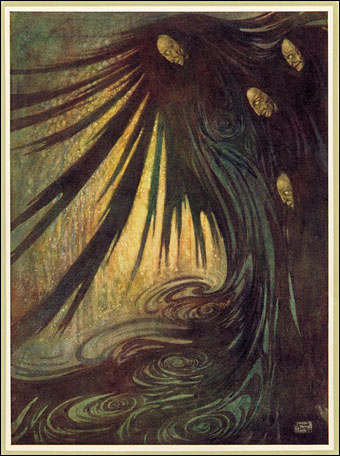
Edmund Dulac’s illustrated Poe

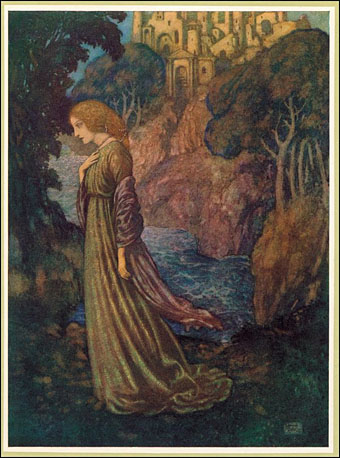
dulac10.jpg

The Haunted Palace.

There’s always more Poe. Which means, in the context of these pages, there’s always another illustrated edition to be found. It’s good to finally discover a complete edition of The Bells, and Other Poems; I’d seen a few of these paintings before—Alone was used on the cover of a biography of Poe by Wolf Mankowitz—but the collection tends to be overshadowed by Dulac’s other books. The Internet Archive has had a scan available for several years but most of the colour plates are missing, picture theft being a common hazard for library books. These copies are from a more recent addition to Project Gutenberg.

dulac01.jpg

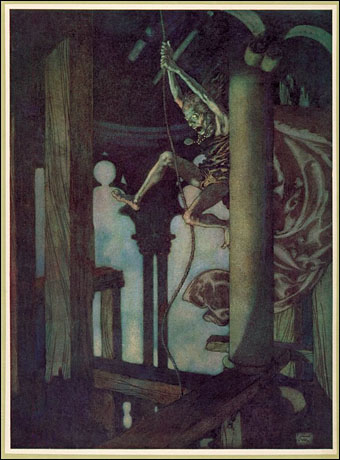
The Bells.

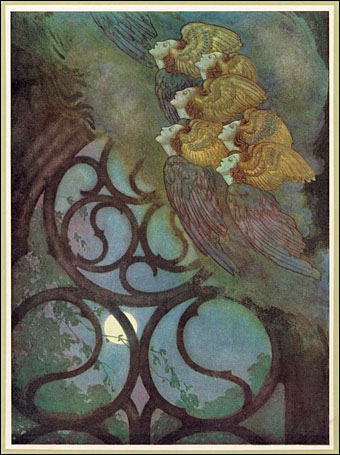
The Bells was published 12 years after W. Heath Robinson had produced his own illustrated edition of Poe poems in 1900. The two books complement each other more than you might expect; all of Robinson’s illustrations are line drawings with an Art Nouveau quality that soon vanished from his work, and was long gone by the time he found a popular audience for his drawings of whimsical inventions. Dulac’s edition includes a few monochrome drawings but these are little more than spot illustrations scattered among the watercolour plates. Several of the paintings, especially the one for Israfel, are Symbolist art as much as they’re illustration. This might seem inevitable given the Symbolist tendencies of Poe’s verse but not all illustrators manage to reflect these qualities.

dulac02.jpg

The Bells.

dulac03.jpg

The Bells.

dulac04.jpg

Annabel Lee.

Continue reading “Edmund Dulac’s illustrated Poe”

Weekend links 643

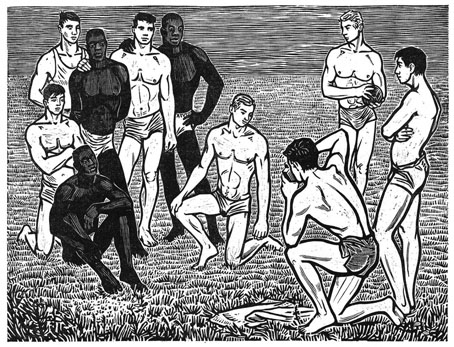
wittdorf.jpg

Freundschaftsfoto (1964) by Jürgen Wittdorf.

• “It’s truly astonishing how Laswell collided with vastly divergent musicians and genres while somehow still representing complementary musical spheres.” Yes, indeed. Mixes of the week: Bill Laswell Research Institute: Vol I & II, two 90-minute collections at Aquarium Drunkard dedicated to the career of the indefatigable musician/producer/catalyst.

• “These pieces are created using custom developed software and laser specialised machines resulting in highly detailed laser cut works on layered paper with some works comprising over a thousand individual parts.” Works in paper at Studio Ibbini.

• “The visual history of polyhedra is littered with false starts, poignant failures, and allegories unable to convey the weight of their subject matter.” Noam Andrews explores the history of rendering polyhedral objects in art.

• “When it came to homosexuality, the east was as bourgeois as the west.” Homoerotic art from the communist era by Jürgen Wittdorf (1932–2018) receives a reappraisal.

• More MR James: All of James’ ghost stories in a single volume at Standard Ebooks, the home of free, high-quality, public-domain texts.

• More mixes: A mix for The Wire by NikNak, and XLR8R Podcast 769 by The Sun Ra Arkestra.

• At Spoon & Tamago: Tracing the history of railways in Japan through art.

• At Dennis Cooper’s: Marie Menken Day.

Angeline Morrison‘s favourite albums.

Ghost Train (1961) by Virgil Holmes | Ghost Train (1961) by Electro-Tones | Ghost Train (1962) by The Partners