L’Amour Fou: Surrealism and Design

manray2.jpg

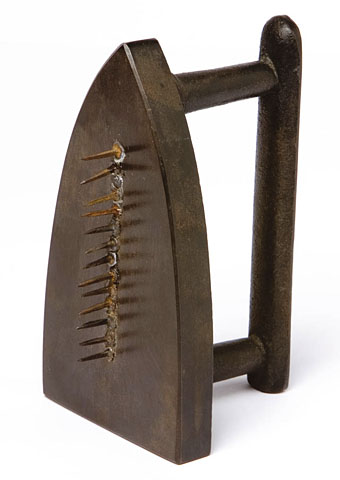
Cadeau Audace by Man Ray (1921).

L’amour fou by Robert Hughes
Fur teacups, wheelbarrow chairs, lip-shaped sofas … the fashion, furniture and jewellery created by the Surrealists were useless, unique, decadent and, above all, very sexy.

The Guardian, Saturday March 24th, 2007

THE VICTORIA AND Albert’s big show for this year, Surreal Things: Surrealism and Design, is—well, maybe we don’t much like the word “definitive”. But it’s certainly the first of its kind.

Everyone knows something about surrealism, the most popular art movement of the 20th century. The word has spread so far that people now say “surreal” when all they mean is “odd”, “totally weird” or “unexpected”. No doubt this would give heartburn to André Breton, the pope of the movement nearly a century ago, who took the title from his friend, the poet Guillaume Apollinaire, who had called his play The Breasts of Tiresias, “a surrealist drama”. But too late now. The term is many years out of its box and, through imprecision, has achieved something akin to eternal life. Surrealist painting and film, that is. In fact, some surrealist images have imprinted themselves so deeply and brightly on our ideas of visual imagery that we can’t imagine modern art (or, in fact, the idea of modernity itself) without them.

Think Salvador Dalí and his soft watches in The Persistence of Memory. Think Dalí again, in cahoots with Luis Buñuel, and the cut-throat razor slicing through the girl’s eye, as a sliver of cloud crosses the moon (actually, the eye belongs to a dead cow, but you never think this when you see their now venerable but forever fresh movie An Andalusian Dog, 1929). Think of photographer Man Ray’s fabulous Cadeau Audace (‘Risky Present’, 1921), the flatiron to whose sole a row of tacks was soldered, guaranteeing the destruction of any dress it would be used on. Think of Rene Magritte’s The Rape, that hauntingly concise pubic face, with nipples for eyes and the hairy triangle where the mouth should be. Think of the shock, the horniness, the rebellion, the unwavering focus on creative freedom, the obsessive efforts to discover the new in the old by disclosure of the hidden…

Continues here

Previously on { feuilleton }
The Surrealist Revolution
Surrealist Women
Las Pozas and Edward James
Surrealist cartomancy

The art of Félicien Rops, 1833–1898

rops1.jpg

Pornokrates (1878).

After Mr Peacay’s comments regarding Félicien Rops I thought it time to devote a post to this impious artist.

Rops, a Belgian working in Paris, is curious even by the standards of the disparate group who comprised the Symbolists and with whom he had some connections. Whereas many artists of the time might hint at a fashionable blasphemy or Satanism, Rops’ dealings with these subjects were unequivocal, as was the outright pornographic tone of many of his drawings. This can make much of his work seem modern in a way few artists of that period achieve today, and it’s a good bet that many Christians (especially those of the puritan American variety) would still find his pictures offensive. These weren’t the only works that Rops produced, there were plenty of landscapes and society portraits, but it’s these that he’s remembered for. Once again, posterity favours the forthright and the unique over uniformity and compromise.

The Félicien Rops Museum
Les Diaboliques by Barbey d’Aurevilly (1874): 8 illustrations
Gallery of pornographic drawings at Arterotismo

Continue reading “The art of Félicien Rops, 1833–1898”

Cocteau at the Louvre des Antiquaires

orphee.jpg

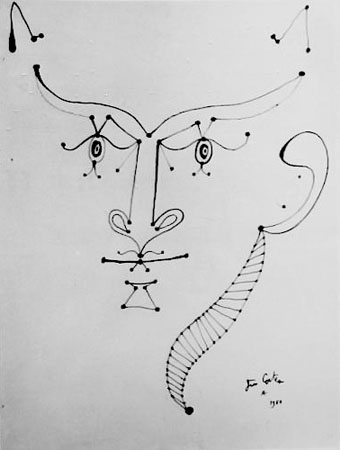
Orphée aux points by Jean Cocteau (1950).

An exhibition of Cocteau drawings from the collection of
Dominique Bert opens today at the Louvre des Antiquaires, Paris.

Jean Cocteau (1899–1963): Collection privée de Dominique Bert
23rd March–22nd April 2007
Le Louvre des Antiquaires
2, Place du Palais Royal
75001 PARIS

Previously on { feuilleton }
Fantômas
La Villa Santo Sospir by Jean Cocteau

The Illustrators of Alice

alice1.jpg

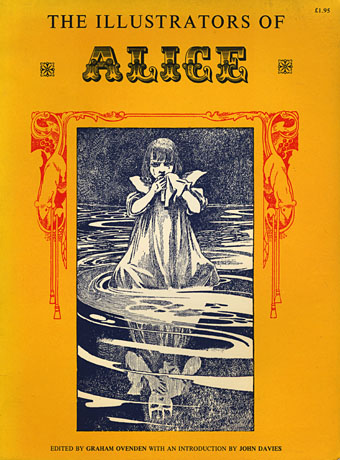
Latest book purchase is this large format volume from 1972, one of a number of interesting art books produced by Academy Editions in the early seventies. I also have their monographs on Odilon Redon, “insane” painter Richard Dadd, and their collection of Félicien Rops‘ pornographic and “Satanist” drawings which remains one of the few Rops books published in English.

alice2.jpg

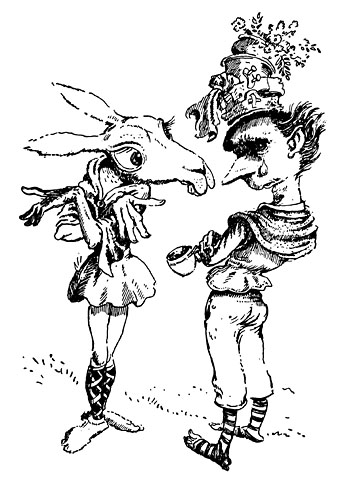
Through the Looking-Glass by Mervyn Peake (Allen Wingate, London, 1954).

This collection is worth seeking out if you’re interested in minor Victorian and Edwardian illustrators. The book goes through each chapter of the Alice stories showing examples of illustrated editions by a wide range of illustrators and artists, from Lewis Carroll’s original drawings, Tenniel’s inimitable renderings, then on through the twentieth century, featuring artists such as Peter Blake, Ralph Steadman and even a picture by Max Ernst. The cover drawing is one of my favourites, from Charles Robinson, brother of the more famous William Heath. I also like the pictures by the great Mervyn Peake, one of the few illustrators who seemed able to overcome Tenniel’s dominance and show us something new.

The Alice books are one of the great “standards” (in the jazz sense) of illustration although I can’t say I’ve ever felt the temptation to approach them myself. Loathsome monstrosities from hideously-angled dimensions beyond space and time, yes; small Victorian girls and white rabbits, no.

Elsewhere on { feuilleton }
The illustrators archive

R. Crumb’s Underground

crumb.jpg

A substantial Robert Crumb exhibition opened this week at the
Yerba Buena Center for the Arts, San Francisco.

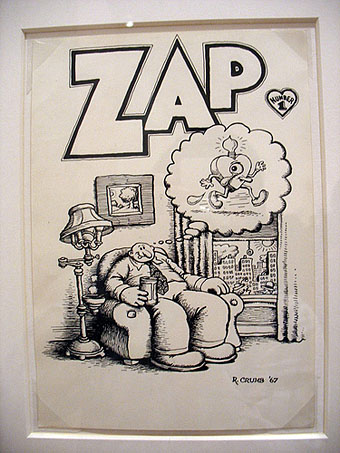
YBCA salutes local treasure R. Crumb with an eclectic exhibit of early work, collaborations old and new, and the world premiere of his “spool” drawings. Universally acknowledged as the founder of the underground comic scene, Crumb gained cult popularity for his pioneering Zap Comix and stardom with the Terry Zwigoff documentary Crumb. Extending far beyond comics, the YBCA exhibit shows how his work has grown in philosophical complexity, and highlights his collaborative work, including intimate confessions produced with wife Aline Kominsky-Crumb.

For those of us who can’t make it, there’s this Flickr set from Buenaventura Press.
Via Boing Boing.

R. Crumb?s Underground
Mar 17th?Jul 8th, 2007
First Floor Galleries
YBCA
701 Mission St. at Third
San Francisco, CA