Derek Jarman album covers

sexgang.jpg

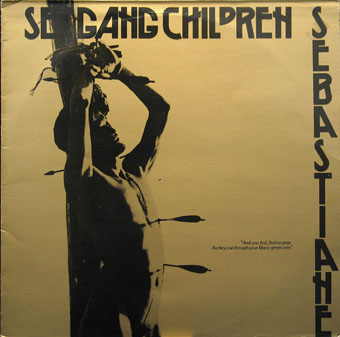
Sebastiane (1983) by Sex Gang Children. A 12″ single using a still from Jarman’s film.

A final post for this Jarman week. Derek Jarman sustained his film career with regular music promo commissions (see this earlier post) but he never produced any album covers as such. What you have here are music releases which happen to feature his artwork or stills from his films. One thing I like about these cover art posts is the disparate music lists they create; the process of investigation also turns up surprises such as a Jayne County album for which he supplied the lettering.
coil.jpg

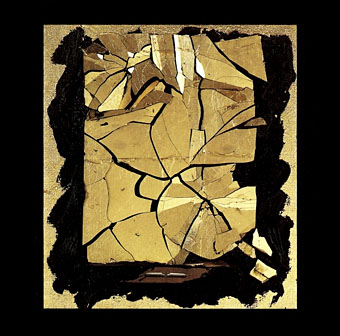
How To Destroy Angels (1992) by Coil. Painting: Fine Balance (1986).

Coil’s album of remixes and digital mangling of one of their earliest recordings. A great collection of rumbling ambience, some of which I used in my Night Music mixes.
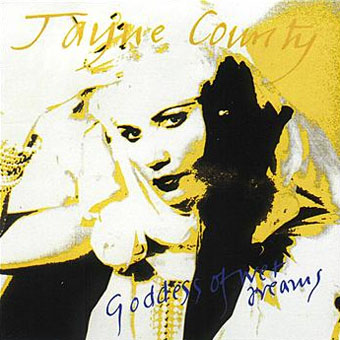
county.jpg

Goddess Of Wet Dreams (1993) by Jayne County. Graphics by Derek Jarman, painting by Michael Spencer Jones, design by Warren Heighway.
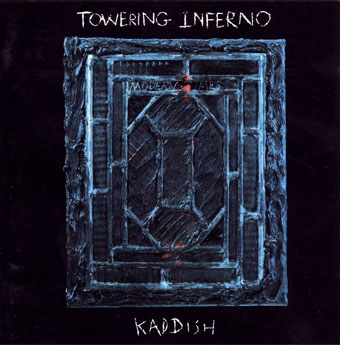
towering.jpg

Kaddish (1993) by Towering Inferno. Painting: Modern Times.

An odd album. Towering Inferno were Richard Wolfson and Andy Saunders, who on this album are joined by a large cast of musicians including well-known names such as Márta Sebestyén, Jocelyn Pook, Elton Dean, Chris Cutler, and others. The album is described as “a dream history of Europe in the wake of the Holocaust”, and received great praise on its release although I wonder how often anyone listens to it today. Beautiful pieces of music spoiled throughout by surprisingly hamfisted use of vocal samples.
Continue reading “Derek Jarman album covers”

The Salivation Army, a film by Scott Treleaven

salivation1.jpg

I think of the area of magic as a metaphor for the homosexual situation. You know, magic which is banned and dangerous, difficult and mysterious. I can see that use of magic in the Cocteau films, in Kenneth Anger and very much in Eisenstein. Maybe it is an uncomfortable, banned area which is disruptive, and maybe it is a metaphor for the gay situation.

Derek Jarman, in conversation with Simon Field and Michael O’Pray, 1985

Derek Jarman’s face appears briefly in The Salivation Army (2002), a short history/memoir by Canadian artist Scott Treleaven concerning This Is The Salivation Army, a zine Treleaven produced with a small group of friends from 1996 to 1999. The film itself is credited as the ninth issue, and makes me sorry to have missed the zine in its original incarnation.

salivation2.jpg

The season of Jarman films which is currently running in London is entitled Queer Pagan Punk, and will include a screening of Treleaven’s film next month, along with Glitterbug (1994). The phrase “Queer Pagan Punk” encapsulates the ethos of This Is The Salivation Army, and Treleaven’s narration describes the origin of his zine in a familiar sense of unfocused rage, and also the alienation he and his friends felt towards the vapidities and conformity of contemporary gay culture. Being someone who’s always loathed clubbing, and the consumerist drivel that fills so many gay magazines, this is music to my ears; I just wish the zine been around in the 1980s. The shadow of the Temple of Psychic Youth—which was around in the 1980s—hangs heavily over this project; Derek Jarman had his own connections with PTV/TOPY, of course, being an ally of Throbbing Gristle, and later of Coil. The fanzine may have run its course but Treleaven continues to explore queer paganism in his artwork. The Salivation Army can be seen at Vimeo.

Previously on { feuilleton }
Just the ticket: Cabaret Voltaire
Abrahadabra
The art of Scott Treleaven

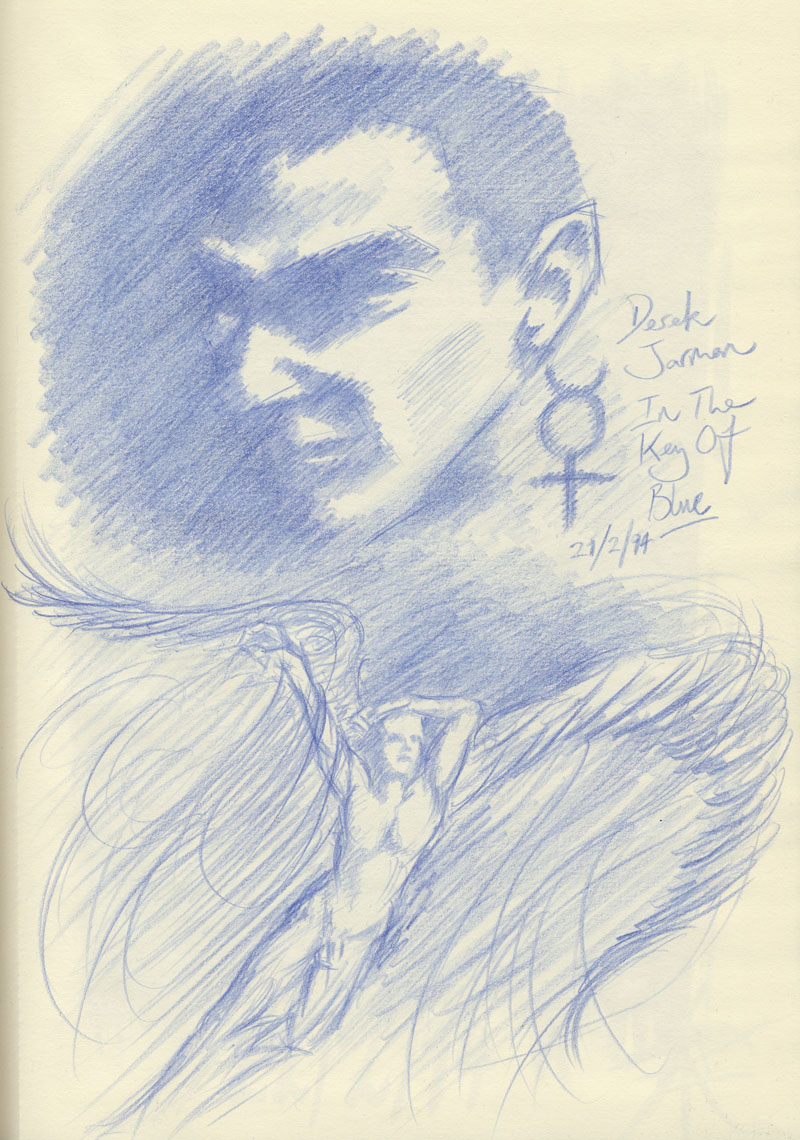
Derek Jarman In The Key Of Blue

jarman.jpg

Derek Jarman died 20 years ago today. I was keeping a sketchbook at the time, something I’ve seldom bothered with before or since, and this was my reaction to the news a couple of days later, possibly drawn whilst watching one the TV documentaries which were being screened at the time.

Some current news items:
England’s alchemist, a piece by Philip Hoare
Unseen nightclub film to get London premiere
‘So Mum covered me in cooking oil. Then Dad came home’
Queer Pagan Punk, a season of films by Jarman and others, is currently running at the BFI Southbank.

Previously on { feuilleton }
The Dream Machine
Jarman (all this maddening beauty)
Sebastiane by Derek Jarman
A Journey to Avebury by Derek Jarman
Derek Jarman’s music videos
Derek Jarman’s Neutron
Mister Jarman, Mister Moore and Doctor Dee
The Tempest illustrated
In the Shadow of the Sun by Derek Jarman
Derek Jarman at the Serpentine
The Angelic Conversation
The life and work of Derek Jarman

The Dream Machine

dreamachine1.jpg

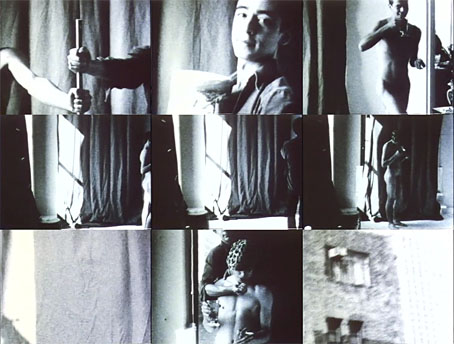
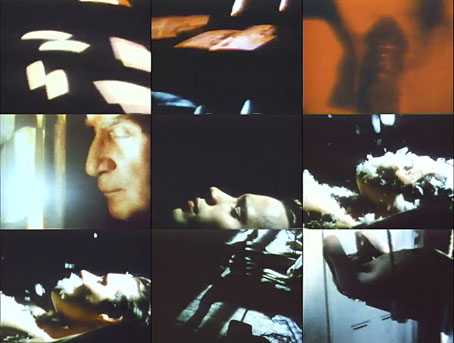
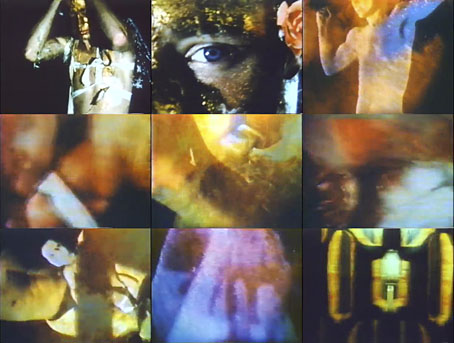
This is a 35-minute anthology film from 1986 with a very painterly, poetic (for want of a better term) quality of a kind I’ve not seen for some time in queer cinema. The reasons for this can be debated at greater length than I care to attempt, but it’s notable that a feature of the work of Derek Jarman—one of the featured directors—was an approach that was always happy to dispense with naturalism and the aping of familiar film and television narratives. In place of Jarman’s visionary approach we now have the “ordinary gay lives” of Weekend and Looking. This may satisfy those eager to see their own lives reflected on the screen but I’m usually expecting more from my cinema than another mirror held up to mundane reality. (And a very circumscribed reality, at that.)

dreamachine2.jpg

The theme of The Dream Machine is Bryon Gysin’s hallucination-inducing artwork of the same name. Brief clips by Tim Burke of Gysin sat with eyes closed in front of his flickering cylinder form the connective tissue between sections by directors Jarman, Michael Kostiff, Cerith Wyn Evans, and John Maybury. We can take these as either the dreams of those behind the camera or perhaps the visions seen by Gysin behind his eyelids. Needless to say there’s a fair amount of naked male flesh on offer, presented in a matter-of-fact manner or as the embodiments of some personal symbolism. The film can be seen here in not very flattering quality. Both Cerith Wyn Evans and John Maybury started out as assistants on Jarman’s films. Wyn Evans appears briefly in Caravaggio (1986) but is now better known as an artist, while Maybury went on to direct another excellent artist biopic, Love Is the Devil: Study for a Portrait of Francis Bacon (1998).

dreamachine3.jpg

Previously on { feuilleton }
Jarman (all this maddening beauty)
Sebastiane by Derek Jarman
A Journey to Avebury by Derek Jarman
Derek Jarman’s music videos
Derek Jarman’s Neutron
Mister Jarman, Mister Moore and Doctor Dee
The Tempest illustrated
In the Shadow of the Sun by Derek Jarman
Derek Jarman at the Serpentine
The Angelic Conversation
The life and work of Derek Jarman

Paul Schütze: Silent Surface

schutze3.jpg

Something for people living in the Thames Archipelago formerly known as London (okay, it’s not that bad but give it a couple of years…): Paul Schütze adds to the list of his polymathic accomplishments with the launch of a book, a new series of prints, and a perfume (or aroma) at Maggs Gallery. Details below. Paying attention to the aesthetics of scent only seems unusual in this context because it’s relatively rare. As Schütze insists: the eyes and ears are routinely flattered while the nose is ignored. Supermarkets exploit the power of scent; isn’t it time for artists of all varieties to follow suit?

schutze1.jpg

schutze2.jpg

Previously on { feuilleton }
Silent Engine
Schütze and Unstable at Maggs Bros
The art of scent revisited
Paul Schütze online
Perfume: the art of scent