John Batten’s Book of Wonder Voyages

batten01.jpg

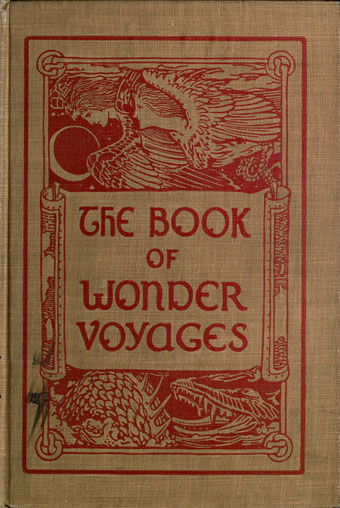
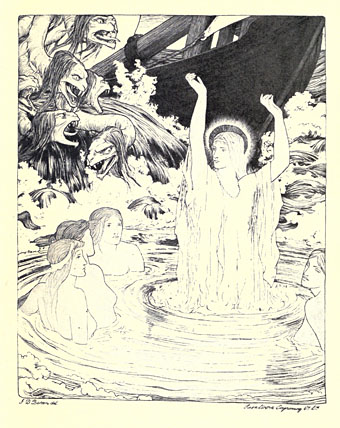
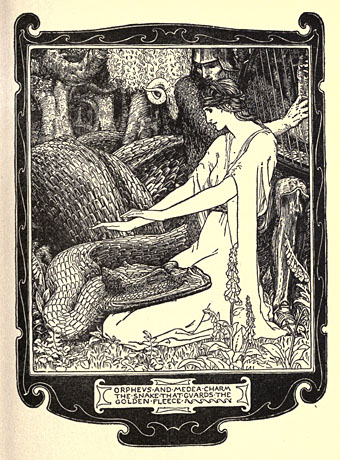
The book illustrations of John Dickson Batten (1860–1932) turn up in collections of Victorian and Edwardian art but his name isn’t as familiar as that of his contemporaries, possibly because he was also pursuing a career as a painter. Prior to finding this volume I’d only seen a couple of his drawings before.

The Book of Wonder Voyages (1919) was one of several collaborations with writer Joseph Jacobs, a retelling of mythic seafaring which includes Jason and the Argonauts but surprisingly omits other well-known examples such as Odysseus and Sinbad. In their stead we have The Voyage of Maelduin, Hasan of Bassorah, and The Journeyings of Thorkill and Eric the Far-Travelled. Batten’s drawings remind me of Patten Wilson, especially in the full pages, although Wilson was the more dedicated stylist. This isn’t necessarily the best of Batten’s work, however. Browse the rest of the book here or download it here. There’ll be more Batten tomorrow.

batten02.jpg

batten03.jpg

batten04.jpg

Continue reading “John Batten’s Book of Wonder Voyages”

Aubrey Beardsley in The Studio

ab1.jpg

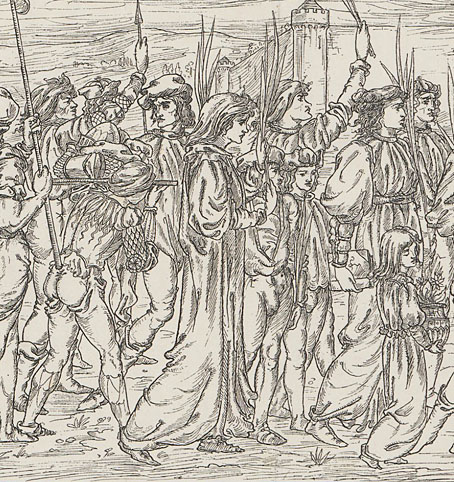
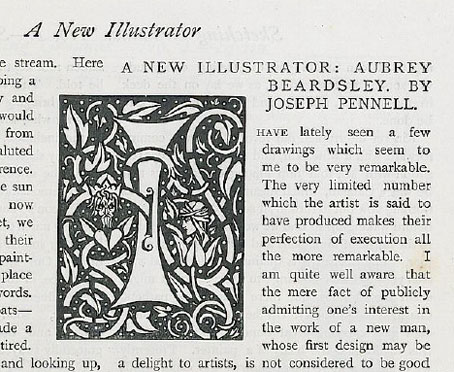
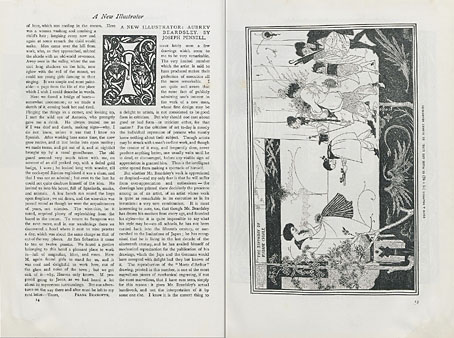
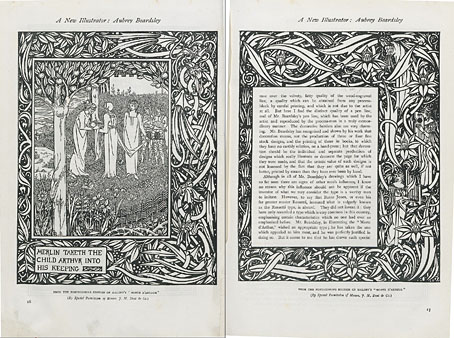
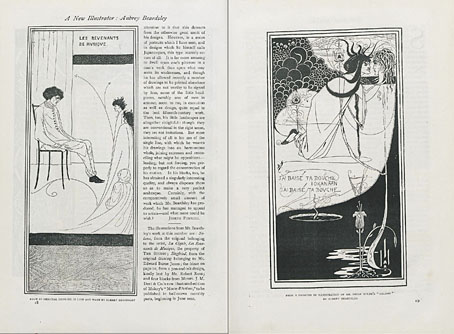
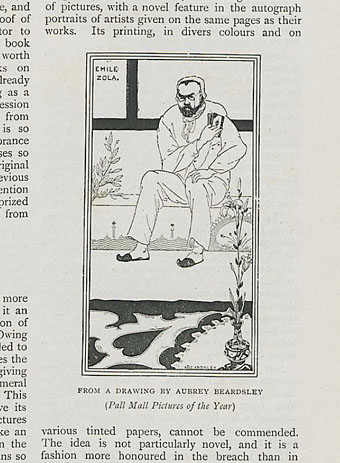
Aubrey Beardsley in the year 1893 was 21, and on the threshold of being catapulted to fame (and notoriety) via his illustrations for Oscar Wilde’s Salomé. Some of Beardsley’s drawings in the distinctive style he called “Japanesque” had already appeared in The Pall Mall Magazine, and he was hard at work on some 600 illustrations and embellishments for Dent’s Le Morte D’Arthur which began publication in 1894. Some of those illustrations are featured in the glowing introduction by Joseph Pennell which appeared in the first issue of The Studio magazine in April 1893 (when Beardsley was still only 20), a title that became the leading showcase for the British end of the Art Nouveau movement in the 1890s. Pennell’s appreciation also included Beardsley’s Joan of Arc’s Entry into Orleans, a piece which showed how much the artist’s early work owed to Mantegna, and the first drawing of Salomé which later helped secure the Wilde commission. The Joan of Arc picture was reproduced as a fold-out supplement in the magazine’s second issue.
ab2.jpg

All the major Beardsley books refer to Pennell’s article but I’ve never had the opportunity to see it in full until now, thanks to the excellent online archives at the University of Heidelberg. There are many volumes of the international editions of The Studio at the Internet Archive but for some reason these don’t include the early numbers; at Heidelberg we can now browse the missing issues. In the first volume in addition to Beardsley there’s a piece about Frederic Leighton’s clay studies for paintings and sculptures, illustrations by Walter Crane and Robert Anning Bell, and an article on whether nude photography can be considered art. In this last piece several of the examples happen to be provided by Frederick Rolfe aka Baron Corvo, and Wilhelm von Gloeden, two men who we now know had other things on their mind when they were photographing Italian youths.

The collected volumes of The Studio from 1893 to 1898 may be browsed or downloaded here. I’ve not had time to go through the rest of these so I’m looking forward to discovering what else they may contain.
ab3.jpg

ab4.jpg

ab5.jpg

Detail from Joan of Arc’s Entry into Orleans.
ab6.jpg

Elsewhere on { feuilleton }
• The Aubrey Beardsley archive

Tenniel’s Fables

tenniel01.jpg

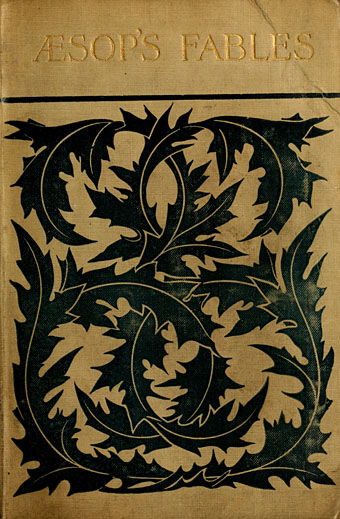
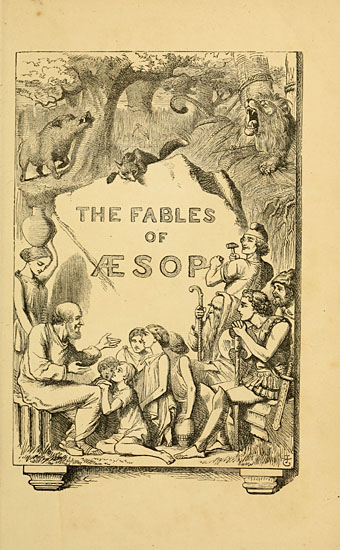
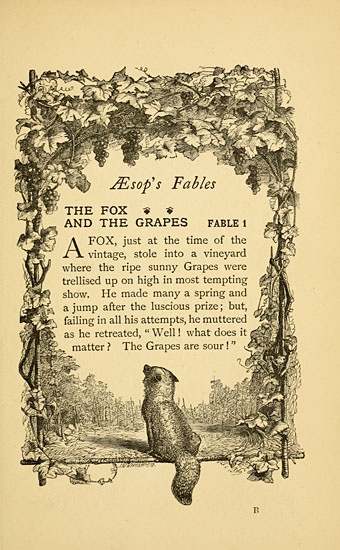
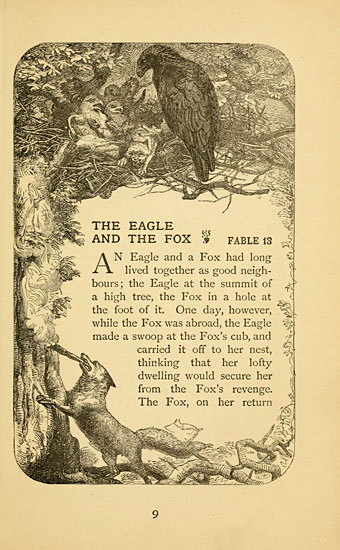
Everyone knows John Tenniel’s illustrations for Lewis Carroll’s Alice books, two volumes which have overshadowed the rest of his career. In addition to being a popular artist at Punch magazine Tenniel illustrated a number of other books including a collection of Aesop’s Fables in 1848. The copy from which these pictures are taken is a later edition from 1898, with text by Thomas James. The drawings lack the indelibly memorable quality of the Alice illustrations but that’s partly a result of the content which for Aesop is always going to lack the invention of Wonderland. Browse the rest of the book here or download it here.

tenniel02.jpg

tenniel03.jpg

tenniel04.jpg

Continue reading “Tenniel’s Fables”

Andrey Avinoff revisited

avinoff1.jpg

(My apologies for the recent downtime. The hosting for this site has been a bit more unstable than usual.)

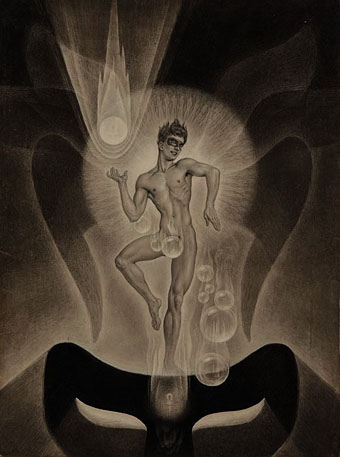
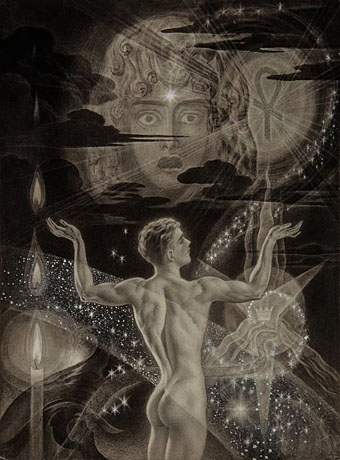
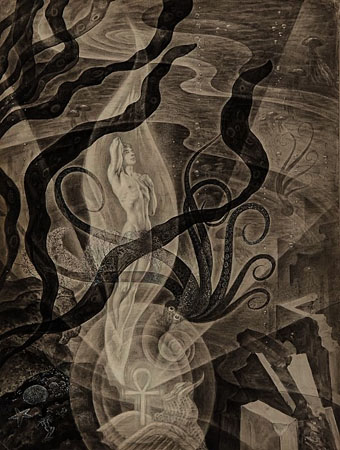
At a time when various Russians are trying to rewrite their nation’s gay history, there’s hardly been a better moment to remind ourselves of some of the people who contributed to that history. When I discovered the art of Andrey Avinoff (1884–1949) in 2007 most of the online examples of his work were in the collection of the Kinsey Institute. Avinoff was a friend of Kinsey’s (the artist escaped the revolution to live in the USA), and the professor no doubt took an interest in the evident homoeroticism of the drawings.

avinoff2.jpg

The homoerotics (mostly male nudes in fantasy scenes) are combined with some remarkable occult designs in Avinoff’s 21 illustrations for The Fall of Atlantis, a book-length poem by George Golokhvastoff published in 1944. The book was a limited edition, and a complete set of the drawings wasn’t forthcoming in 2007 so it’s been great to find Javier at Bajo el Signo de Libra posting the complete set. These are stunning illustrations which really ought to be seen by a wider audience; Avinoff isn’t a name you find very often in either the gay or the occult art world yet his draughtsmanship and imagination demand attention from both.

avinoff3.jpg

Elsewhere on { feuilleton }
• The gay artists archive

Elsewhere on { feuilleton }
• The art of Andrey Avinoff, 1884–1949

Old New Orleans

neworleans01.jpg

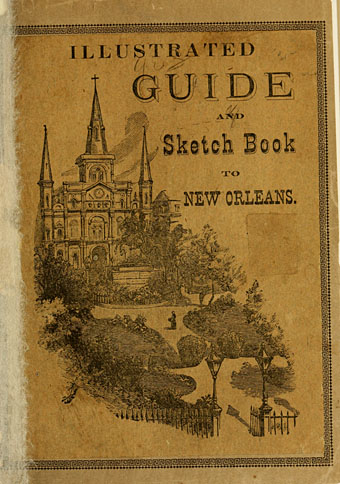
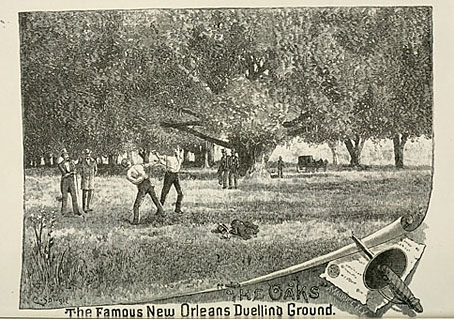
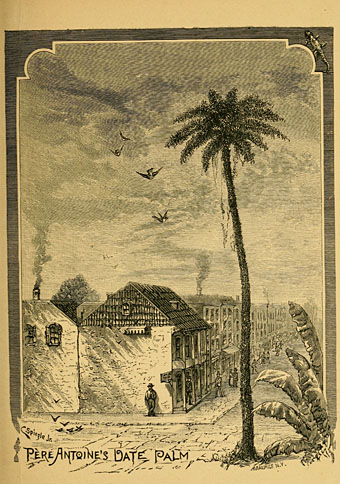
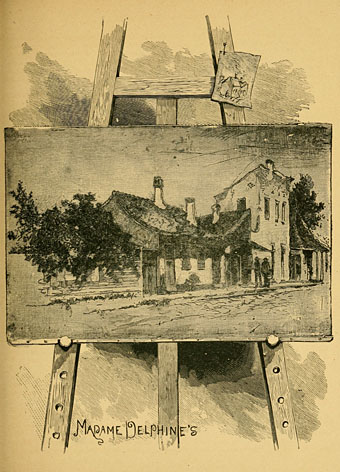
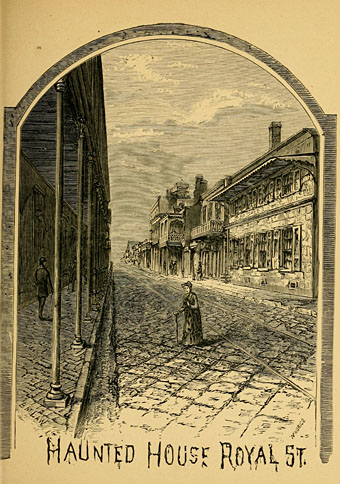
If you know the names Lafcadio Hearn and Joseph Pennell it’s surprising to see them brought together for this 1885 guide to the city of New Orleans. Hearn is better known for his many books about the folklore of Japan and China, while Pennell was a highly regarded artist and illustrator with a predilection for impressionistic cityscapes. The book is part of the Internet Archive so details are scant but it looks like a gathering together of prior work about the city with no single author—Hearn and others are credited inside. The deteriorated glamour of New Orleans means the illustrations are more picturesque than usual. Hearn had a fascination with ghost stories so he’d no doubt appreciate the view of the Haunted House on Royal Street. Browse the rest of the book here or download it here.

neworleans02.jpg

neworleans03.jpg

neworleans04.jpg

neworleans05.jpg

Continue reading “Old New Orleans”