Images of Nijinsky

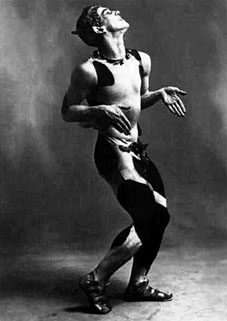
nijinsky_faun.jpgI have an abiding fascination with the Ballets Russes, Sergei Diaghilev‘s company which electrified the art world from 1909 up to the impressario’s death in 1929. One of the reasons for this—aside from the obvious gay dimension and the extraordinary roster of talent involved—is probably Diaghilev’s success in carrying the Symbolist impulses of the fin de siècle into the age of Modernism without losing any richness or exoticism along the way. Diaghilev’s arts magazine, Mir Iskusstva (1899–1900), was as much a product of fashionable Decadence as The Savoy, and its principles were easily transported into the world of ballet.

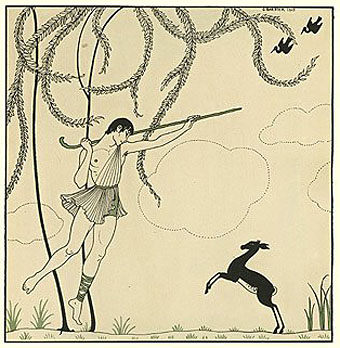
A big subject, then, that’ll no doubt be returned to in later postings. Looking around for images of dancer and choreographer Vaslav Nijinsky in his celebrated (and notorious) role in L’Après-midi d’un Faune turned up not only Leon Bakst’s luscious drawing but some marvelous Beardsley-esque pictures by George Barbier (1882–1932). I’d seen some of Barbier’s work before but didn’t realise he’d created a whole book devoted to the dancer. Artists like Bakst, Erté and Barbier show how Aubrey Beardsley’s art might have developed had he not died prematurely in 1898. You can see the full set of book plates here.
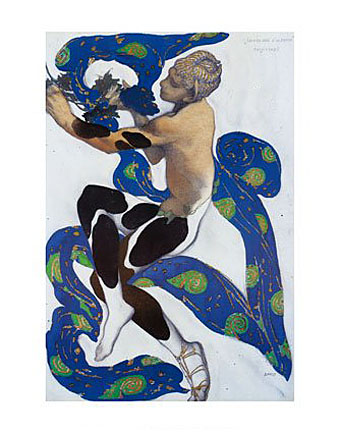
nijinsky_bakst.jpg

Nijinsky as faun by Leon Bakst (1912).
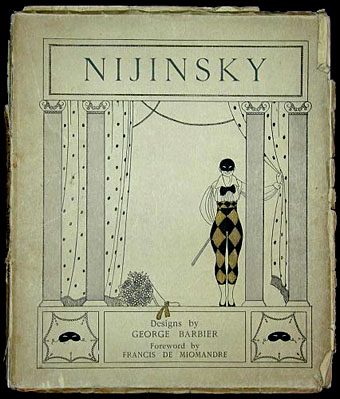
nijinsky_barbier0.jpg

Designs on the Dances of Vaslav Nijinsky (and below) by George Barbier (1913).
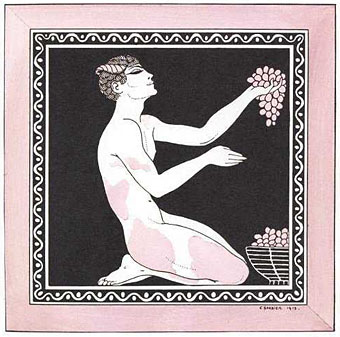
nijinsky_barbier1.jpg

L’ Apres-midi d’un Faune.

nijinsky_barbier2.jpg

Narcisse.

Elsewhere on { feuilleton }
The gay artists archive
The illustrators archive

Previously on { feuilleton }
The art of Nicholas Kalmakoff, 1873–1955

Wladyslaw Benda

benda1.jpg

The American Magazine, May 1933.

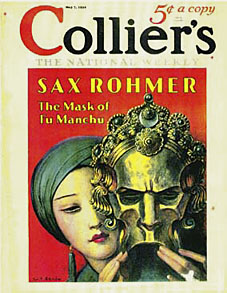
An atypical piece by Wladyslaw Theodor Benda (1873–1948), a Pole who moved to the US to work for the magazines. His illustrations are rarely this splendid but he gained a later reputation as a mask-maker, a talent that would have helped with his cover depicting the Mask of Fu Manchu for Collier’s.

benda2.jpg

Collier’s, May 7th 1932.

This page has a great succession of images showing how Benda’s original mask design managed to survive reinterpretation by subsequent Rohmer illustrators—what you might call a case of visual Chinese whispers.

Elsewhere on { feuilleton }
The illustrators archive

Previously on { feuilleton }
Vintage magazine art II
Vintage magazine art

The Codex Seraphinianus

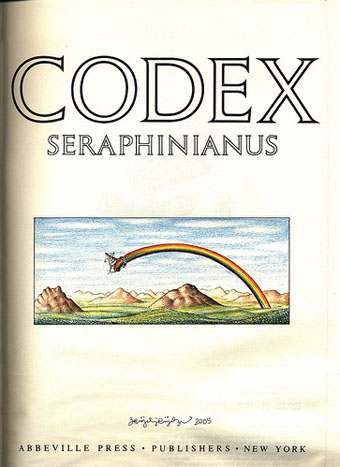
codex.jpg

It had to happen…the entirety of Luigi Serafini’s masterpiece (US edition, 1983) scanned and Flickr-ised for your viewing pleasure.

See also
The unofficial Codex site
My 2002 article about the book
Giornale Nuovo

Elsewhere on { feuilleton }
The fantastic art archive

Previously on { feuilleton }
Tressants: the Calvino Hotel
Surrealist cartomancy

Metropolis posters

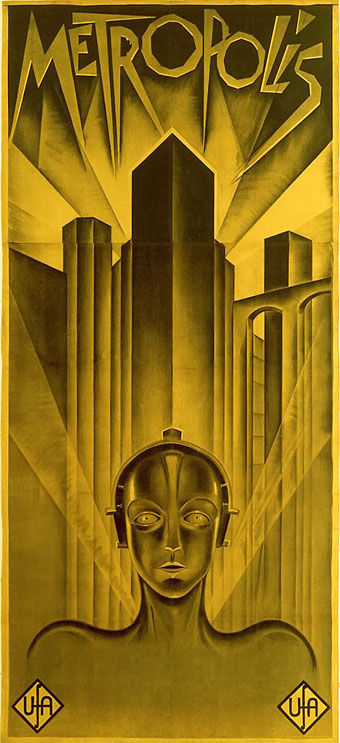
Fritz Lang’s masterpiece via some of its posters, all from 1927.
This site is a great source of information about the film.

metropolis01.jpg

Designer: Heinz Schulz-Neudamm.
As of 2005, the world’s most expensive film poster, selling for $690,000.

Continue reading “Metropolis posters”

Angels 4: Fallen angels

delville_satan.jpg

The Treasures of Satan by Jean Delville (1894).

Some more favourite paintings today. Jean Delville produced a splendidly strange portrayal of Satan as an undersea monarch lording it over a sprawl of intoxicated, naked figures. When Savoy Books decided to put together the definitive version of David Lindsay’s equally strange fantasy novel, A Voyage to Arcturus, I felt this was the only painting adequate to the task of filling out the cover. That was in 2002; a year later Gollancz used the same painting on the cover of their Fantasy Masterworks paperback edition of the book. Lindsay’s book has been plagued by bad cover art for years so we managed to raise the bar for future editions. Delville was one of the great painters of the Symbolist school, all his work is worth looking at.

There are numerous representations of Lucifer but Franz Stuck’s is especially striking and apparently caused viewers to cross themselves before it when it was first exhibited.

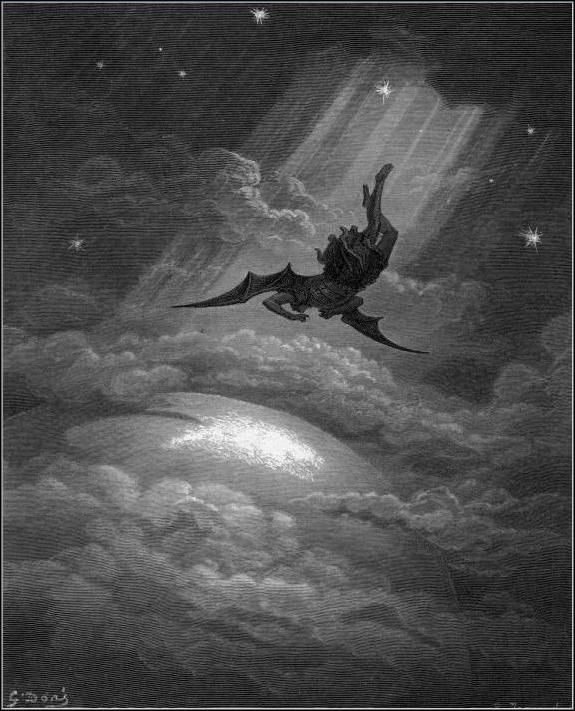
Gustave Doré’s tumbling figure is from his illustrated edition of Paradise Lost, a book full of armour-clad, spiky-winged angels. Some of those wings have even found their way into my work via the miracle of Photoshop.

stuck_lucifer.jpg

Lucifer by Franz Stuck (1890).

dore_lucifer.jpg

Paradise Lost by Gustave Doré (1866).

Elsewhere on { feuilleton }
The etching and engraving archive

Previously on { feuilleton }
The art of Thomas Häfner, 1928–1985