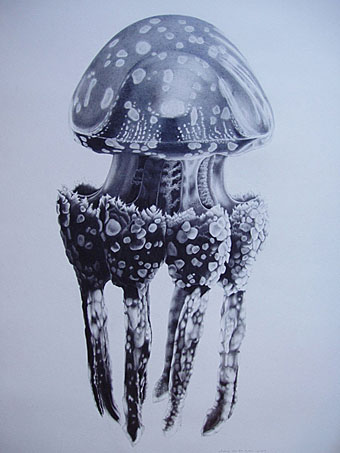
The art of John Hurford

hurford.jpg

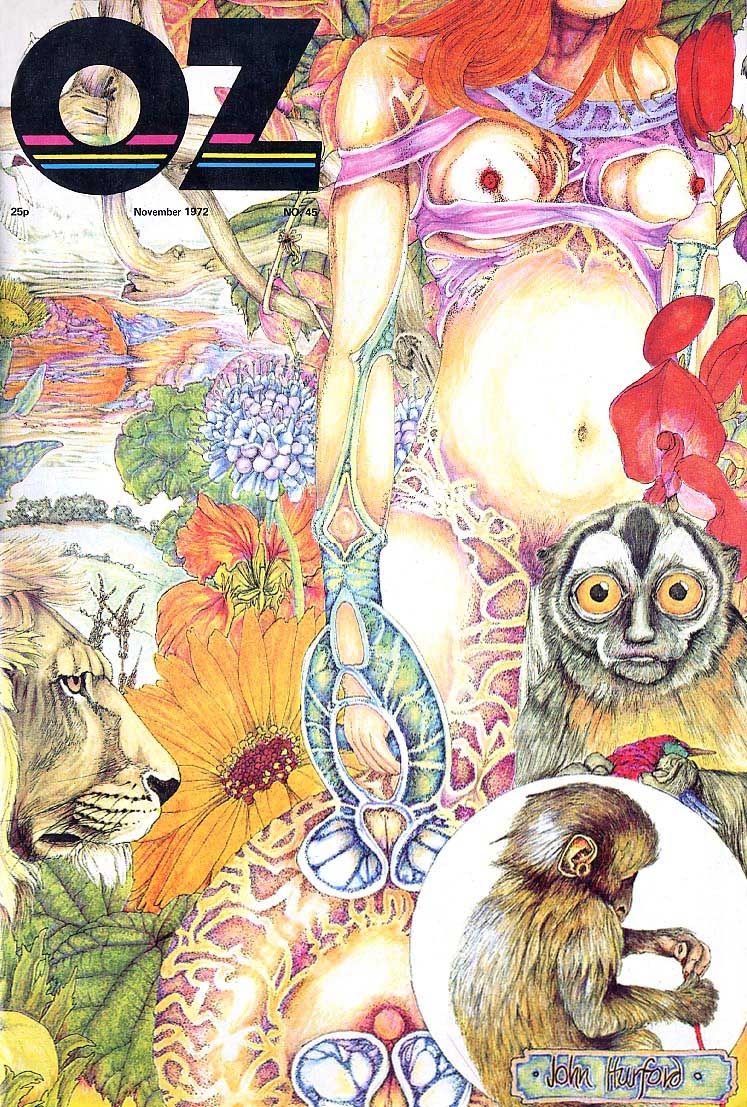
Oz #45, November 1972.

This large-format issue of Oz magazine with John Hurford’s cover was one of the last published and is also one of the few issues I own. Hurford provided many interior illustrations for Oz and other magazines, as well as producing poster art and other graphics. Unlike many artists of the period he’s still active and has his own site with examples of recent work. For more Oz covers, go here.

Elsewhere on { feuilleton }
The illustrators archive

Previously on { feuilleton }
The art of Bertrand
Barney Bubbles: artist and designer
Oz magazine, 1967–73

La belle sans nom

orazi1.jpg

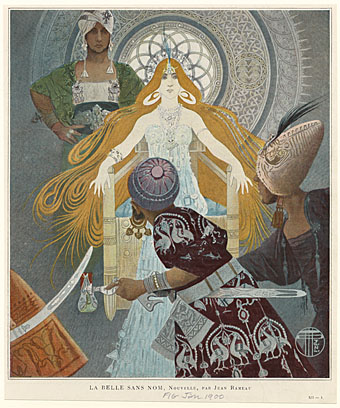
La belle sans nom (1900).

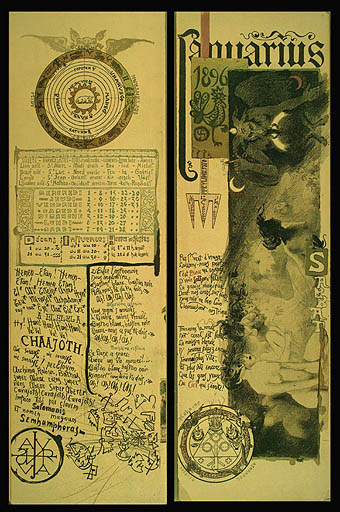
An illustration by French artist Manuel Orazi (1860–1934) from Figaro illustré for a story by Jean Rameau. Via NYPL Digital Gallery. It’s good to see something else by Orazi other than advertising illustration. His astonishing work for Austin De Croze’s 1895 Calendrier Magique (below) can be seen in full at the Cornell collection. Great graphics for Halloween.

orazi2.jpg

Elsewhere on { feuilleton }
The illustrators archive

Previously on { feuilleton }
The Feminine Sphinx
Le Monstre
Carlos Schwabe’s Fleurs du Mal
Empusa

Alan Aldridge: The Man With Kaleidoscope Eyes

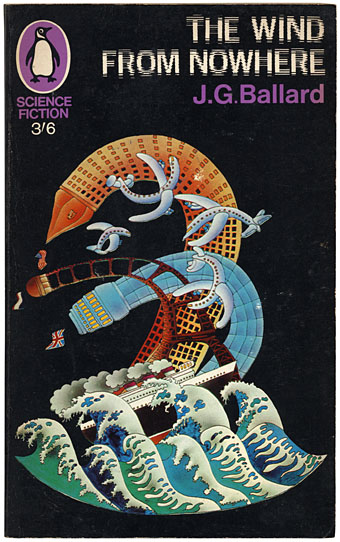
wind_from_nowhere.jpg

I’ve never been all that keen on Alan Aldridge‘s brand of psychedelic art but it’s worth noting here the (London) Design Museum retrospective which runs from 10 October to 25 January, 2009. Aldridge’s work as a designer and illustrator for Penguin Books in the Sixties impresses me more than his subsequent illustrated Beatles lyrics and The Butterfly Ball and the Grasshopper Feast (1973), a pair of books which seemed ubiquitous in the 1970s. Flickr has a decent selection of his book covers which included a run of sf paperbacks in 1967. Ballard’s The Wind from Nowhere is the very slight debut novel which the author prefers to forget. Where Ballard in Penguin is concerned, David Pelham’s work a few years later was a far more suitable match.

Seeing Aldridge honoured with a big retrospective make me wonder why Roger Dean hasn’t yet been given the same accolade. Dean for me is by far the better artist in terms of distinctive and memorable imagery; he’s also a better draughtsman and far more imaginative designer (not to mention having always been a speculative architect). I suspect Dean’s reputation is still blighted by his associations with Yes and the general antipathy which that band’s name generates in a certain middle-aged sector of Britain’s cultural commentariat. Ballard’s name was equally blighted in literary circles by his science fiction associations and it was Barcelona, not London, which honoured him with a major exhibition recently. There may be some home-grown reappraisals in the offing but I won’t hold my breath.

Elsewhere on { feuilleton }
The book covers archive
The illustrators archive

Previously on { feuilleton }
Ballard in Barcelona
The New Love Poetry
Penguin Labyrinths and the Thief’s Journal
Penguin designer David Pelham talks
Barney Bubbles: artist and designer

The art of Pierre Clayette, 1930–2005

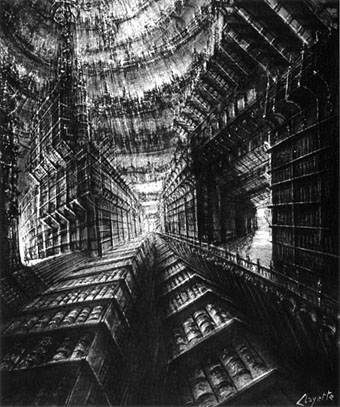
clayette1.jpg

The Library of Babel (no date).

Another French artist who specialised in fantastic architecture, Pierre Clayette’s work came to my attention via the picture above which illustrates a Borges story. This leads me to wonder once again what it is about French and Belgian artists which attracts them more than others to this type of imagery.
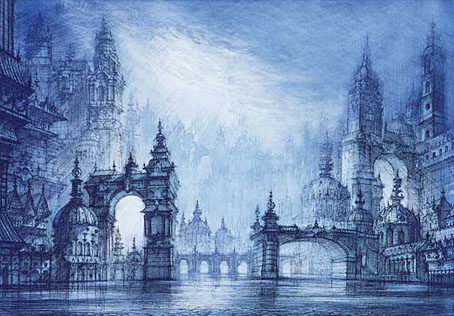
clayette2.jpg

Whatever the reason, there isn’t a great deal of Clayette’s work online and biographical details are few. This page (the source of the untitled picture above) reveals that he worked as an illustrator for Planète magazine, the journal of “fantastic realism” founded by Jacques Bergier and Louis Pauwels in the early Sixties. Some readers may know that pair as the authors of a { feuilleton } cult volume, The Morning of the Magicians (1960), whose vertiginous blend of speculative and weird fiction, occultism and futurology Planète was intended to continue.
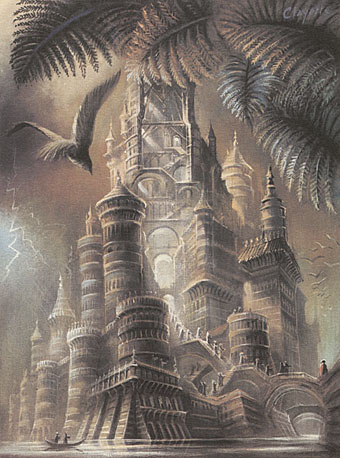
clayette3.jpg

Clayette also worked as a theatre designer and book illustrator. Le Chateau (above) is an illustration from Songes de Pierres, a 1984 portfolio depicting scenes from Pierres by Roger Caillois. That writer has his own significant Borges connection, being responsible for introducing Borges’ work to France via his editorship of the UNESCO journal, Diogenes. (Pauwels and Bergier later published Borges in Planète.)

Finally, there’s a less extravagant Flickr collection of some Clayette covers for Penguin Shakespeare editions. All of which only scratches the surface of what was evidently a prolific career; I’ll look forward to more examples of his work coming to light.

Elsewhere on { feuilleton }
The fantastic art archive
The illustrators archive

Previously on { feuilleton }
The art of Michiko Hoshino
The art of Erik Desmazières
The art of Gérard Trignac
The Absolute Elsewhere