The art of Sydney R Jones, 1881–1966

jones1.jpg

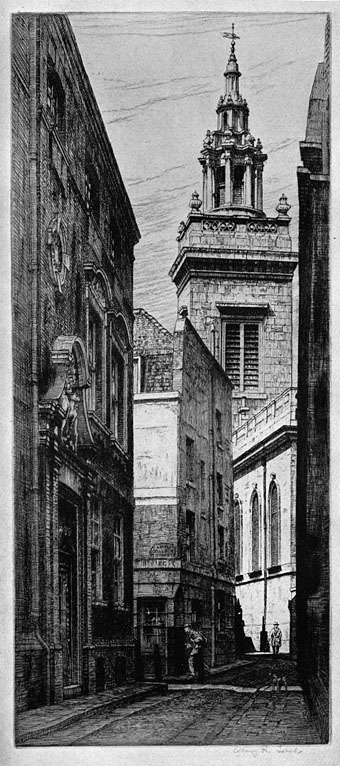
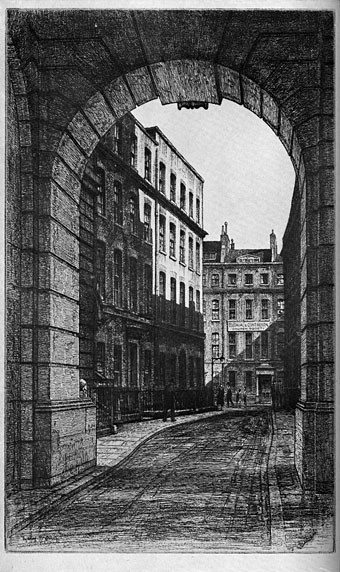
Church of St Michael Paternoster Royal and Innholder’s Hall (1927).

One of the better secondhand book discoveries of the past couple of years was London Triumphant, a collection of etchings and pencil drawings of the city’s streets and buildings by Sydney R Jones. The etchings immediately seized my attention, being the kind of closely-hatched architectural renderings which I enjoy, but the book as a whole is very good as it details the artist’s wanderings with a young student friend through the city. Jones established himself as an illustrator of books with titles like The Manor Houses of England and The Charm of the English Village. His London book appeared in July 1942 and collected many of his earlier views of the city as a deliberate morale boost for the populace who were watching the capital’s historic buildings yield to the bombs of what he calls “the foul Hun”. Jones catalogues the destruction with dismay as he recounts the history of the city from Roman times but ends on a note of defiant optimism, wondering what new metropolis might rise from the destruction. He mentions in passing that cult locale of mine, the Essex Street Water Gate, but doesn’t provide a drawing unfortunately. The book proved to be very popular, and the copy I found is a fifth printing from 1947.
jones2.jpg

Serjeant’s Inn, Fleet Street (1926).

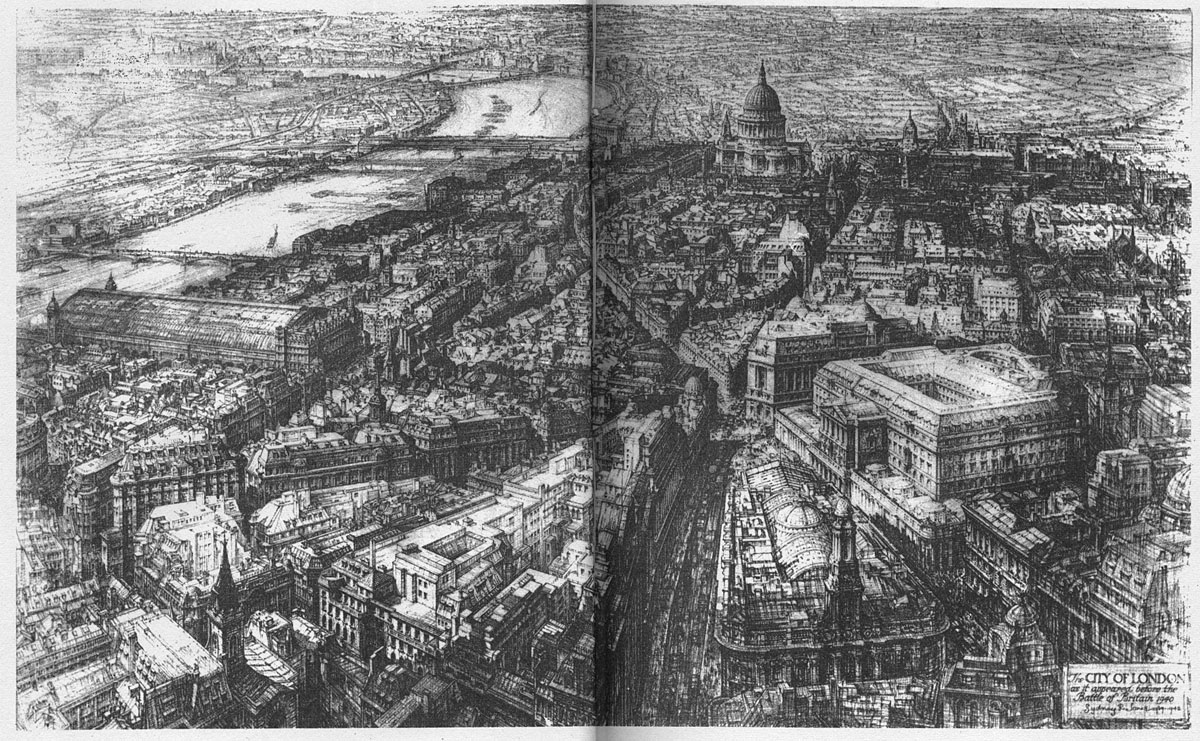
This week’s book purchase was a welcome find, then, being London Triumphant‘s sequel, Thames Triumphant, in which Jones follows the course of the river from its spring at Coberley, through Oxford and on down to Greenwich. There aren’t as many dramatic views this time, and many of the country scenes have that kind of polite blandness about them which you find in much book illustration of the period. But Jones does provide a couple of his speculative and spectacular views over the city, including the one below which shows the City of London as it was in 1939. Much of the foreground was bombed flat during the war so a drawing such as this provides a valuable record of how London’s financial centre looked before the arrival of the Luftwaffe and the office blocks. Jones lived to see much of the subsequent reconstruction—I can’t help but wonder what he made of it all.
city.jpg

The City of London, 1939; click for a bigger view.

Elsewhere on { feuilleton }
The etching and engraving archive
The illustrators archive

Previously on { feuilleton }
Pite’s West End folly
Jessie M King’s Grey City of the North
Architectural renderings by HW Brewer
The Essex Street Water Gate, London WC2
More book covers

cthulhu.jpg

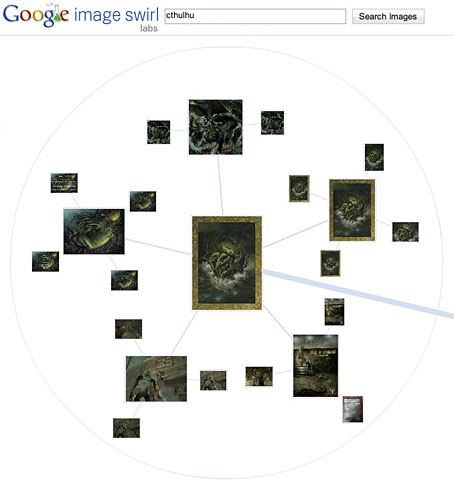
One of my Cthulhu portraits as it appears in Image Swirl, a new Google feature-in-search-of-a-purpose. Yes, I own a portion of the Googleverse, or the Googleverse owns a portion of me; the latter seems more likely. As well as being the cover of my Lovecraft volume, that picture appeared earlier this year on a reprint of The Call of Cthulhu from Barnes & Noble.

While we’re on the subject—and book covers are never far away, as yesterday’s post demonstrates—I was asked to contribute to this week’s Mind Meld discussion at SF Signal, answering the question “Which are the most memorable book covers in science fiction and fantasy?” Some of the entries in my list have been discussed here in the past. Compared to the other responses I come across like I’m giving a lecture… And there was further sf cover discussion at io9 this week. Good to see older generations of artists and designers still receiving enthusiastic attention.

Previously on { feuilleton }
Science fiction and fantasy covers

Wildeana

wilde1.jpg

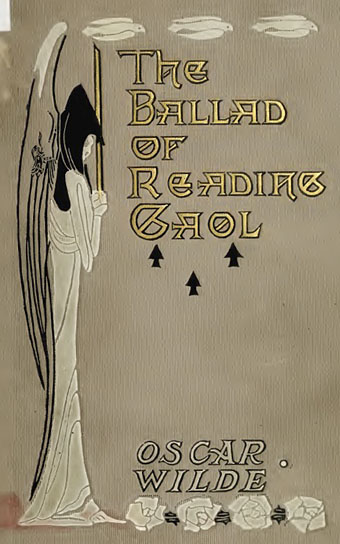
The Ballad of Reading Gaol (1907).

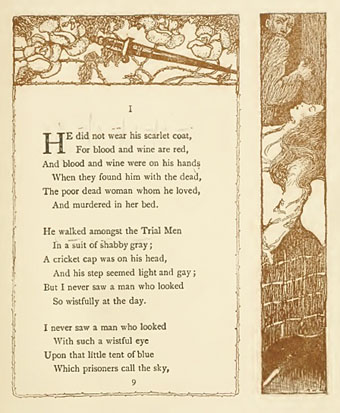
I finished reading Neil McKenna’s excellent biography recently, The Secret Life of Oscar Wilde, a book which makes an ideal companion to Richard Ellmann’s 1987 life of Wilde. Whilst reading about the two trials I remembered that among five pages of digitised Wilde volumes at the Internet Archive there’s a 1906 book, The Trial of Oscar Wilde: From the Shorthand Reports whose contents are what you’d expect from the title. Browsing through the other files there revealed further items of note such as this edition of The Ballad of Reading Gaol published a year later and illustrated throughout by J Latimer Wilson. The page layout of text plus a narrow picture is uncommon, and from the date of publication it’s interesting to see that despite Wilde’s shattered reputation there was still money to be made printing his books.

wilde2.jpg

The Ballad of Reading Gaol (1907).

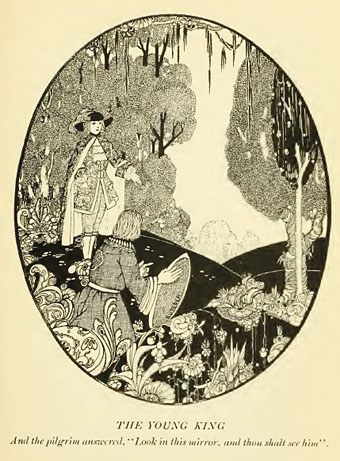
Among the other volumes are two finely illustrated editions of his short stories. The edition of A House of Pomegranates below comes with drawings by Ben Kutcher, an artist about whom I know nothing other than his style is very similar to that of the great Harry Clarke. The introduction is a surprise, a serious appraisal of Wilde’s life by HL Mencken who admired the way the author stood against the prevailing morality of the day. There’s also an edition of The Happy Prince and Other Tales from 1920 illustrated by Charles Robinson.

wilde3.jpg

The House of Pomegranates (1918).

These books are mainly of note for their decoration, however. Of more interest to Wilde enthusiasts is a first edition of Robert Hichens’ The Green Carnation from 1894. Hichens was a friend of Wilde and Lord Alfred Douglas and, according to McKenna’s book, a fellow Uranian (ie: gay) who knew the pair well enough to be able to pen a scandalous roman à clef based on their relationship, helping to confirm for public opinion much that was suspected about Wilde’s outrageous lifestyle. Both Wilde and Douglas disowned Hichens and repudiated the novel but, coming a year before the Queensbury libel trial, it did neither of them any favours. Those curious to read the exploits of “Esmé Amarinth” and “Lord Reginald Hastings” may download a copy here.

Elsewhere on { feuilleton }
The Oscar Wilde archive
The book covers archive
The illustrators archive

Dalí in Wonderland

dali1.jpg

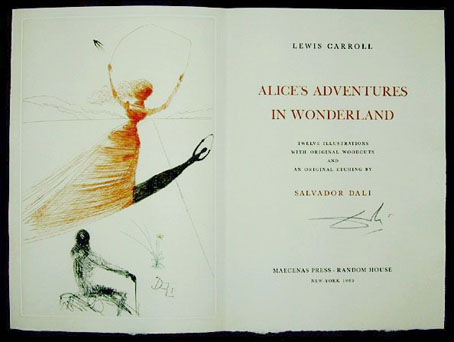
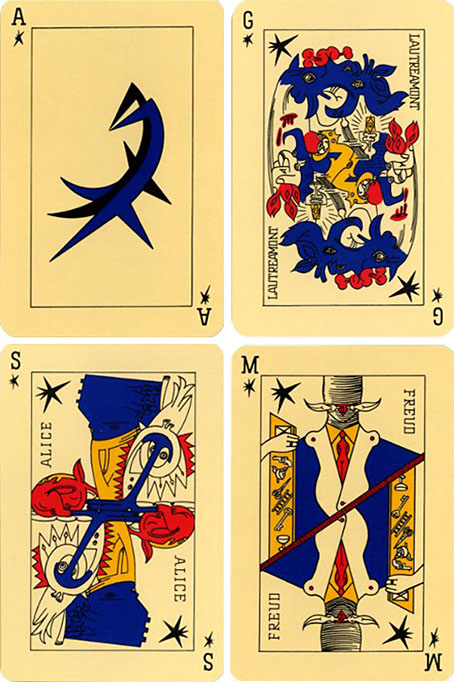
I’d only seen one or two of Salvador Dalí’s illustrations for Alice’s Adventures in Wonderland before but you can see the complete (?) set here. These date from 1969 when Dalí was well past his prime as an artist but they’re still worth a look to see how he tackled each chapter, using the skipping girl motif from earlier paintings as his Alice figure. The attraction of the Alice books for the Surrealists is no surprise; Max Ernst produced a rather enigmatic series of Alice-themed lithographs while André Breton had earlier made Alice the “Siren of Stars” in the set of Surrealist playing cards he designed in the 1940 (below). I’d imagine there are other connections I’ve missed; leave a comment if you know of any. (Thanks to Charity for the tip!)

For more Dalí, here’s something I neglected to link to a while ago, the legendary Dalí meets Disney short, Destino.

stars.jpg

Elsewhere on { feuilleton }
The illustrators archive

Previously on { feuilleton }
Virtual Alice
Psychedelic Wonderland: the 2010 calendar
Charles Robinson’s Alice’s Adventures in Wonderland
Humpty Dumpty variations
Alice in Wonderland by Jonathan Miller
Dalí and Film
The Illustrators of Alice
Surrealist cartomancy

Beardsley at the V&A

abva.jpg

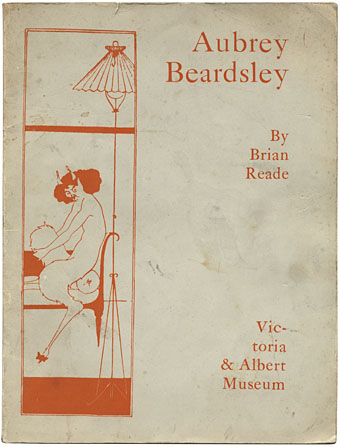
This battered item is my copy of the V&A guide to the landmark Aubrey Beardsley exhibition held at the museum from May to September 1966. That exhibition introduced Beardsley to a new public and made his work very trendy for a while, helped by the Beardsley-styled sleeve of the Beatles’ Revolver album which was released the same year, and a general resurgence of interest in fin de siècle style. Aside from a rare unfinished drawing, there isn’t anything in the booklet which hasn’t been reprinted many times elsewhere but it does contain an excellent overview of the artist’s career by Beardsley scholar Brian Reade.

abva2.jpg

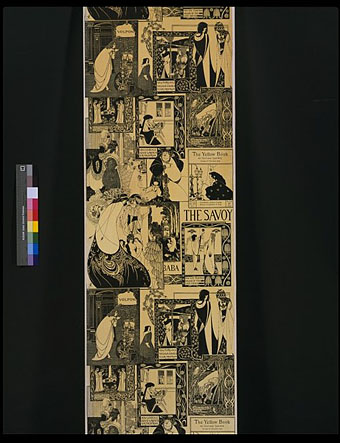
The V&A website has gained a new feature recently which allows you to search their collections with either a specific search or a random browse. The results don’t give the kind of high-resolution results which I’d like (unlike the British Museum) but the Beardsley works can now be seen in something like their actual condition, edge of the paper and all. Also present is the above piece of Beardsley trivia, a yellowed sheet of wallpaper manufactured by Arthur Sanderson & Sons Ltd in 1967. The Deansgate office of Savoy Books was once covered in this stuff but had unfortunately been papered over by the time I arrived on the scene.

Elsewhere on { feuilleton }
The Aubrey Beardsley archive