The art of Anton Pieck, 1895–1987

pieck1.jpg

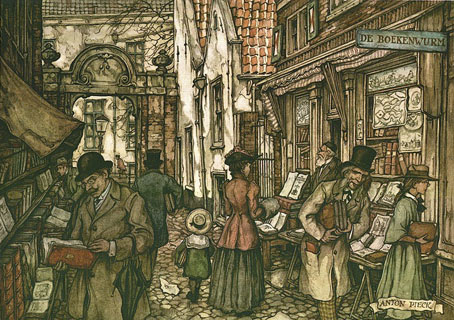
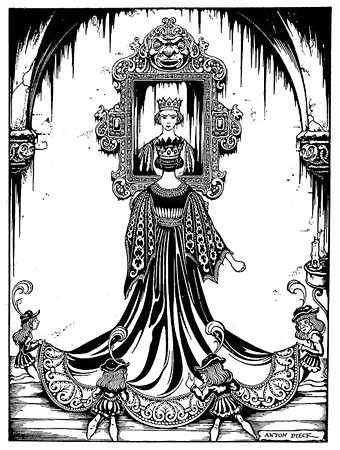
The drawings of Dutch artist and illustrator Anton Pieck are very good for their finely-rendered architectural detail when they’re not being too comic or whimsical. Flickr has a few sets of the artist’s work which is useful since his museum site is rather lacking. The bookselling picture above comes from this set of watercolours while the black-and-white piece is from an edition of Grimm’s fairy tales published in 1930. There’s also a page of smaller drawings here.

pieck2.jpg

Elsewhere on { feuilleton }
• The illustrators archive

Liceti’s monsters

liceti1.jpg

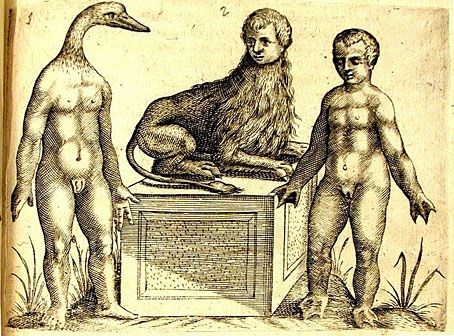
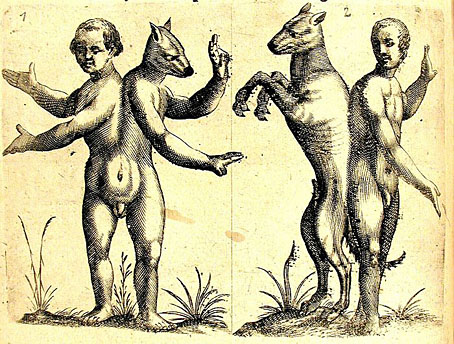
Illustrations from De monstrorum natura, caussis, et differentiis libri duo (On the nature, causes and differences of monsters, 1616) by Italian scientist Fortunio Liceti who we’re told has a crater on the Moon named after him. Further images from Liceti and his contemporaries can be found at Les Monstres de la Renaissance à l’âge classique, an online exhibition of assorted teratisms, prodigies and abominations. Via Monsieur Peacay, no monster he.

liceti2.jpg

Elsewhere on { feuilleton }
• The etching and engraving archive

The fetish art of Taylor Buck

buck1.jpg

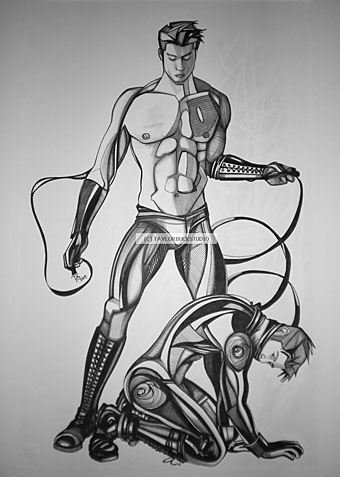
A couple of examples of fetish and bondage art by American artist Taylor Buck. An interesting technique is always welcome in gay art and I like the the stylised quality of these pictures. Bondage art especially lends itself to black-and-white renderings. Taylor Buck is open to commissions and also requests any photos from interested parties that might provide inspiration.

buck2.jpg

Elsewhere on { feuilleton }
• The gay artists archive

Julius Klinger’s Salomé

klinger1.jpg

Salomé (1909).

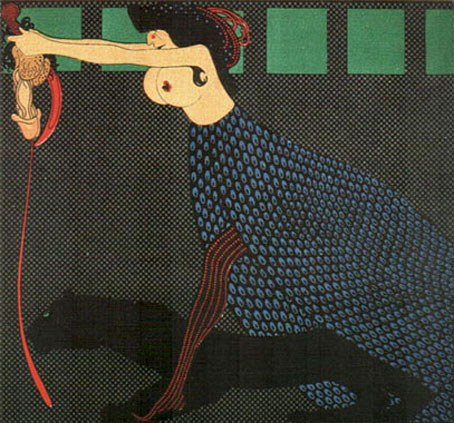
I thought this current thread was finished yesterday but it seems not. Julius Klinger (1876–1942) was an Austrian artist and designer whose early work can be found in the first numbers of Jugend magazine. Subsequent work includes a number of erotic illustrations such as top-heavy Salomé here, a depiction which startles when you notice she’s carrying a set of severed genitals in place of the more usual human head. Given that many feminist and Freudian art critics tend to see the Salomé story as an emasculation metaphor this is perhaps appropriate.
klinger2.jpg

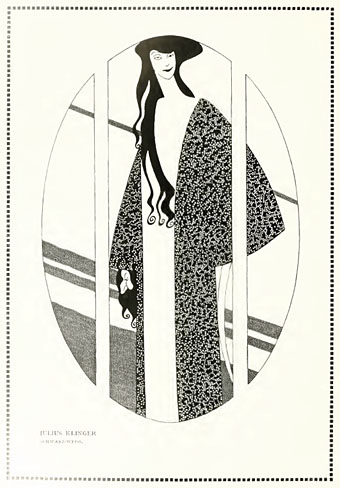
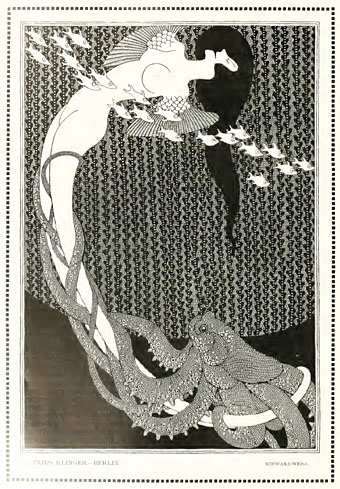
This pair of untitled pieces are from a feature on Klinger’s black-and-white work in #21 of Deutsche Kunst und Dekoration (1907), the entire edition of which can be downloaded here. The picture above may be another Salomé but is more likely that other decapitating heroine, Judith, with the head of Holofernes. The picture below, meanwhile, is entirely mysterious, and another fine addition to the artistic sub-genre of human/cephalopod encounters. Thanks to billy for pointing the way to all of these.
klinger3.jpg

Elsewhere on { feuilleton }
• The illustrators archive
• The Salomé archive

René Bull’s Salomé

bull.jpg

An illustration by René Bull (1872–1942) from The Russian Ballet (1913) by AE Johnson. Bull seems to be primarily known as one of the many illustrators of that Golden Age staple, The Arabian Nights, although his interpretation is a little too comical for my taste. You can judge for yourself here.

Other Salomés turning up recently include a George Barbier picture in this BibliOdyssey post, Salomé, la Gran Diva at Bajo el Signo de Libra, and the Guardian’s review of David McVicar’s Pasolini-esque opera production.

Elsewhere on { feuilleton }
• The illustrators archive
• The Salomé archive