Weekend links 608

timlin.jpg

The Temple, an illustration from The Ship that Sailed to Mars (1923) by William Timlin.

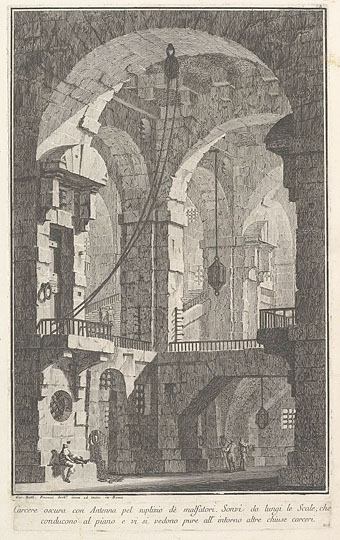
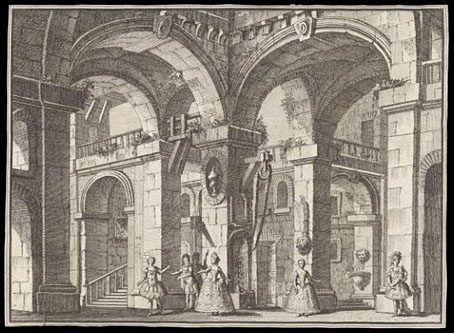
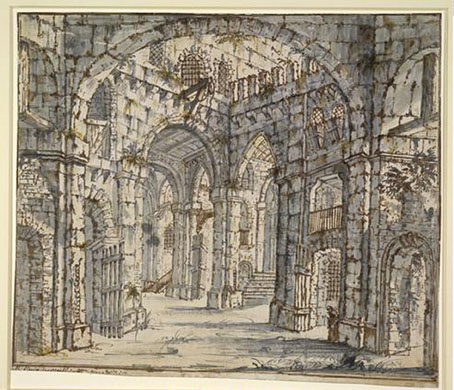
• “With the grotteschi, Piranesi produced hybrid forms of ornament juxtaposed in an array without regard to single-point perspective. With his capricci, he brought disparate structures into a landscape that existed only within the borders of the plate. Perhaps because of his early fidelity to accuracy and the long tradition of printmaking as a medium for the measured representation of antique forms, Piranesi’s capricci take on a particularly fantastic aura.” Susan Stewart on the ruinous fantasias of Giovanni Battista Piranesi, one of whose etchings happens to be providing the page header this month.

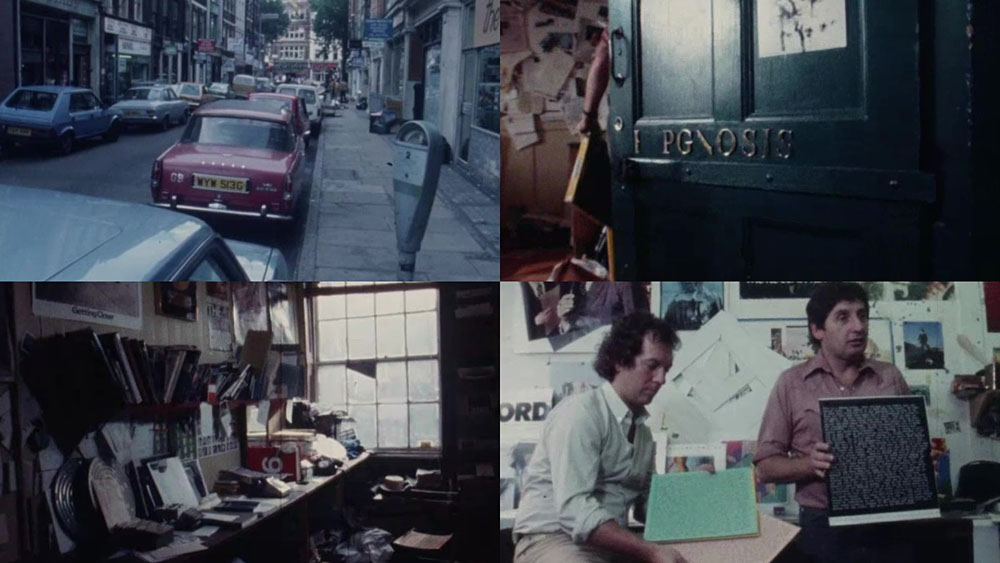
• At Dangerous Minds: 23rd Century Giants, the incredible true story of Renaldo & The Loaf! Oliver Hall conducts a long and very informative interview with two of Britain’s strangest music makers.

• New music: Nightcrawler by Kevin Richard Martin, recommended to anyone who enjoys the nocturnal doom of Bohren & Der Club Of Gore; and Murmurations by Lea Bertucci & Ben Vida.

“Throughout the book, McCarthy writes as if he knows something that more conventional historians aren’t always keen to accept: that the past doesn’t always make sense, that it’s often cruel and irrational, and that some things aren’t so explainable. History is not a book waiting to be opened so much as a Pandora’s box that might curse us and leave us chastened by what we find inside.”

Bennett Parten on Cormac McCarthy’s baleful masterpiece, Blood Meridian

• “Inside me are two wolves and they are both paintings by Kazimierz Stabrowski.” S. Elizabeth‘s latest art discoveries.

• At Wormwoodiana: Mark Valentine on Arthur Machen and the mysteries of the Grail.

• RIP Betty Davis and Douglas Trumbull.

• At Dennis Cooper’s: Tobe Hooper Day.

Temple Bells (1959) by Frank Hunter And His Orchestra | Temple Of Gold (1960) by Les Baxter | Temple (2018) by Jóhann Jóhannsson

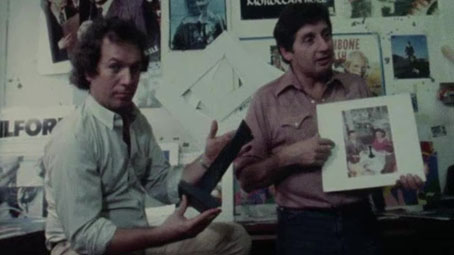
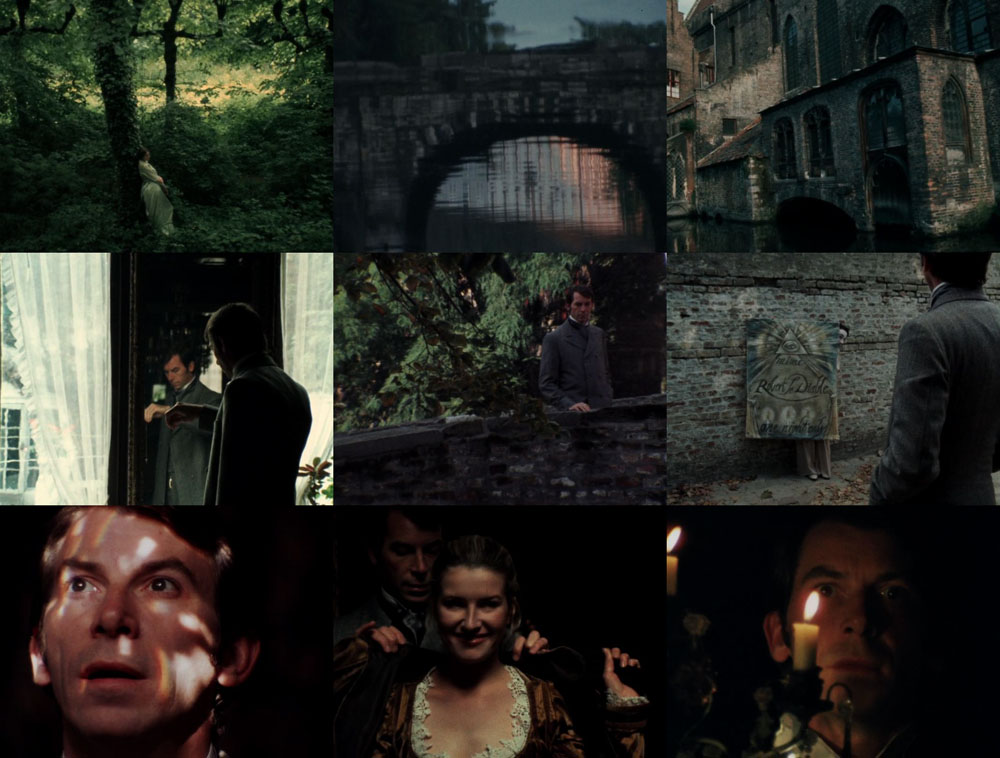
Bruges-la-Morte, 1978

blm1.jpg

What we have here is a very creditable 67-minute film adaptation of the Symbolist novel by Georges Rodenbach. Ronald Chase directed, co-wrote the screenplay with Pier Luigi Farri, and also photographed the production with a small company of English actors in the city of Bruges. The film has recently been given a high-definition restoration and made available on the director’s Vimeo page. Chase describes his adaptation as a low-budget affair, the footage being originally intended for screening during performances of Die Tode Stadt by Eric Korngold, but it doesn’t come across as cheap or amateurish thanks to a professional cast and authentic locations. Rodenbach’s novel is distinguished by its early use of photographic illustrations, most of which are views of the canals of Bruges. Here we get to see the church steeples and crow-step gables from the viewpoint of a camera drifting along the same swan-filled waterways.

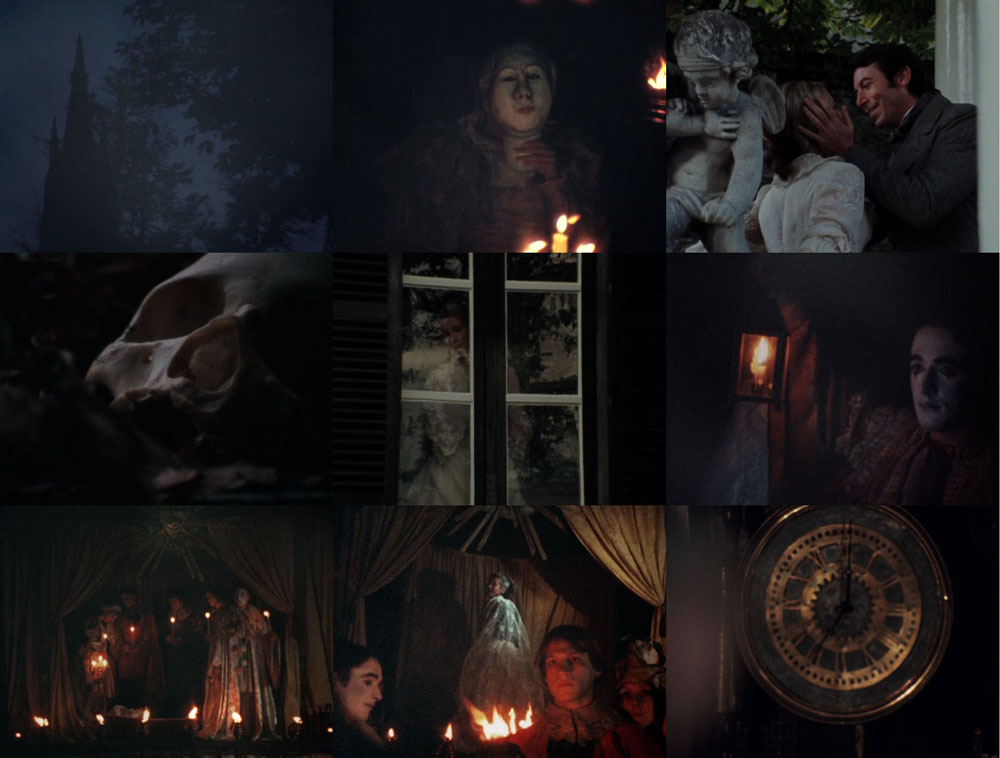
It’s a long time since I read Rodenbach’s novel so I can’t judge this version in any detail although my memories are of a dreamier narrative than the one the film delivers. Chase credits the story as being “suggested” by the novel but the broad outline follows Rodenbach, with a grieving widower (Richard Easton, whose character is unnamed in the film) meeting a dancer (Kristin Milward) who seems to be the double of his recently deceased wife. The dancer works with a troupe of performers who stage a nocturnal masque for the tormented man, an event which fails to alleviate his confusion or his anguish.

blm2.jpg

Chase’s film resembles one of the literary adaptations the BBC used to make throughout 1970s and 80s, modest and serious, and certainly of a quality that it could have been broadcast as a part of the Omnibus arts strand or in a late slot on BBC 2. Among the performers are a Pierrot character played by Anthony Daniels, an actor most people will know for his role as a gold robot in a space opera, and Nickolas Grace, who appeared as Oscar Wilde a decade later in Ken Russell’s Salomé’s Last Dance. There’s a touch of the diabolical Russell (and James Ensor) in the later masque scenes when the performers don papier-mâché masks, and a nun gets chased around a church. The mask-making is credited–very surprisingly–to Winston Tong, an artist and musician best known for his association with Tuxedomoon. I was hoping we might see more of the gloomy canals and equally gloomy architecture but the buildings and bridges that we do see look just as they would have done in Rodenbach’s day. If you want more there’s always the paintings and drawings of Fernand Khopff and Lucien Lévy-Dhurmer, or the photographs in the novel itself.

Previously on { feuilleton }
Bruges in photochrom
Bruges panoramas
Bruges-la-Morte

Ten views of the Itsukushima Shrine

itsukushima07.jpg

Aki Province: Itsukushima, Depiction of a Festival, from the series Famous Places in the Sixty-odd Provinces (1853) by Utagawa Hiroshige.

The most recognizable and celebrated feature of the Itsukushima shrine, is its fifty-foot tall vermilion otorii gate (“great gate”), built of decay-resistant camphor wood. The placement of an additional leg in front of and behind each main pillar identifies the torii as reflecting the style of Ryobu Shinto (dual Shinto), a medieval school of esoteric Japanese Buddhism associated with the Shingon Sect. The torii appears to be floating only at high tide. When the tide is low, it is approachable by foot from the island. Gathering shellfish near the gate is also popular at low tide. At night, powerful lights on the shore illuminate the torii. Although the gate has been in place since 1168, the current gate dates back only to 1875. [more]

itsukushima06.jpg

Torii at Itsukushima (1896) by Kobayashi Kiyochika.

itsukushima08.jpg

Deer and Torii (1910) by Shoson Ohara.

itsukushima01.jpg

Miyajima in Snow (1934) by Tsuchiya Koitsu.

itsukushima02.jpg

Snowy Miyajima (1936) by Tsuchiya Koitsu.

Continue reading “Ten views of the Itsukushima Shrine”

Weekend links 603

weird.jpg

Weird Tales (Canada), May 1942. Cover art by Edmond Good.

• “…in 1968, seven years after the MOMA retrospective, Orson Welles appreciatively got in touch and suggested that Bogdanovich do a book-length set of interviews with him like the one that Bogdanovich had just done with Ford. The resulting book, This Is Orson Welles (which took a winding path to publication, in 1992, seven years after Welles’s death), is a classic of the literature of movies.” Richard Brody on the late Peter Bogdanovich. The book of Welles interviews is one of my favourite film books, as good in its way as Hitchcock/Truffaut, and like Truffaut’s book you wish it was twice as long.

• At Public Domain Review: Paloma Ruiz and Hunter Dukes on Johann Caspar Lavater’s frog-to-human physiognomies. If you reverse the sequence, as I did for one of the illustrations in Lovecraft’s Monsters, you approach The Shadow Over Innsmouth.

• The week in virtual exploration (via MetaFilter): Mini Tokyo 3D and Explore the Soane Museum, London.

• Submissions are open for the 16th issue of Dada journal Maintenant which will have the theme “Nyet Zero”.

• At Spoon & Tamago: Artists and artisans collaborate on exhibition of 144 maekake aprons.

• DJ Food unearths flyers and posters for the Million Volt Light & Sound Rave, 1967.

• Mix of the week: Isolatedmix 116 by Chris SSG.

• At Dennis Cooper’s: Stephen Dwoskin Day.

The Little Blue Frog (1970) by Miles Davis | Jail-House Frog (1972) by Amon Düül II | Tree Frog (1995) by Facil

Weekend links 600

window.jpg

My kind of window. From a collection of machine-learning images by Unlimited Dream Co. Via Bruce Sterling.

• “I will never call myself a queer. That word is one of the things that I detest that has happened, and it’s almost being forced now. For me, you cannot separate that word from the hatred and violence that once accompanied it. When I read it being used in The New York Times, I think, ‘It’s their word and they can fucking have it all they want.’ I will never use ‘queer.’ It’s an ugly word.” John Rechy, still active at the age of 90, talking to Jeff Weiss about hustling, social opprobrium, and his pioneering books.

• “At a time when we are being constantly told that humanity is destroying the planet, it is somehow comforting to see nature not merely outlasting, but triumphing over humanity’s constructions—as nature does in many of Piranesi’s Views of Rome.” Alasdair Palmer on Piranesi’s peerless renderings of Roman ruins.

• “The magical aspect of Get Back is its total refusal to adhere to the standard tropes of music documentaries. There are no talking heads commenting on the Beatles’ greatness, no continual barrage of quick edits and highlights.” Geeta Dayal on Peter Jackson’s resurrection of the Fab Four.

But men are not traditionally meant to be objects of art. “Men look at women,” John Berger wrote. “Women watch themselves being looked at.” When men look at men, however, they break rules. “I didn’t set out to be radical,” says Miller. “But I was at a fair and I had a huge nude on a stand by Michael Leonard. I’d only been open ten minutes and a woman started having a go and saying it’s filth. What I found fascinating is she’d walked past a whole span of female nudes. I think society is just immune to female nudity. People don’t see it. If you take this to the straight world of an art fair, it provokes reactions other dealers don’t get. There isn’t anyone else like me.”

Tony Wilkes talks to Henry Miller, owner of an art gallery devoted to the male form

• “I imagine men with starched collars, horrified by an animal with no hard edges to grab onto, no solidity to venerate. Something low, lateral, creeping.” Fiona Glen on “Devil Fish”, Cthulhu and cephalomania.

• I like glowing things so Brian Eno’s glowing record turntable has an immediate appeal. A shame it’s a very limited production which is almost certainly sold out by now.

• The next release on the Ghost Box label will be A Letter from TreeTops by Pneumatic Tubes.

• At Dangerous Minds: A Sight for Sore Eyes Vol. 1, a visual history of The Residents.

• At Wormwoodiana: Mark Valentine on the supernatural thrillers of Archie Roy.

• Mix of the week: A reflection on 2021 at A Strangely Isolated Place.

Swan River Press looks back over a year of book production.

• New music: Spherical Harmonics by Joseph Hyde.

Octopus’s Garden (1969) by The Beatles | The Kraken (2006) by Hans Zimmer | Kraken (2017) by Dave Clarkson