Wolf Man, Dracula and the beasts that gave birth to cinematic horror | David Thomson on Universal and its stars.
Author: John
The Mask of Fu Manchu
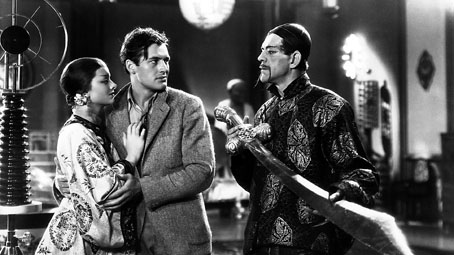
Myrna Loy, Charles Starrett and Boris Karloff.
Los Alamos ranch school where they later made the atom bomb and couldn’t wait to drop it on the yellow peril. The boys are sittin’ on logs and rocks eating some sort of food there’s a stream at the end of a slope. The counsellor was a southerner with a politician’s look about him. He told us stories by the camp fire culled from the racist garbage of the insidious Sax Rohmer. “East is evil, west is good.”
William Burroughs
More pulp, and yes, it’s still racist garbage but Charles Brabin’s 1932 film which stars Boris Karloff as Sax Rohmer’s Oriental super-villain has its pleasures if you look past the severely dated attitudes. Together with The Black Cat (1934), where Boris plays a Satan-worshipping Modernist architect (!), this is one of the best non-Frankenstein Karloff films of the 1930s, as I was reminded this weekend when re-watching it along with several Sherlock Holmes episodes.
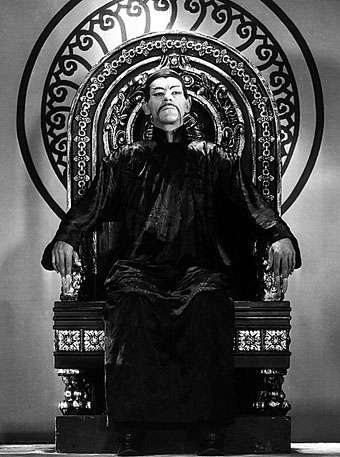
Christopher Lee is elegantly diabolical in the later Fu Manchu films but their cheap budgets force him to skulk around in dismal underground lairs. Karloff’s Doctor has a lavish Art Deco pad whose huge rooms are furnished with a noisy Van de Graaff generator and other scientific apparatus, plus a series of torture rooms where his guests may endure death by encroaching spikes (the “Slim Silver Fingers”), being lowered into an alligator pit, or driven mad by the incessant tolling of a giant bell. I happened to notice that the Doctor’s throne is quite possibly the same one (with a fresh coat of paint) as was used a decade earlier by a notoriously unclad Betty Blythe in The Queen of Sheba (1921), a lavish silent epic which is now unfortunately lost.
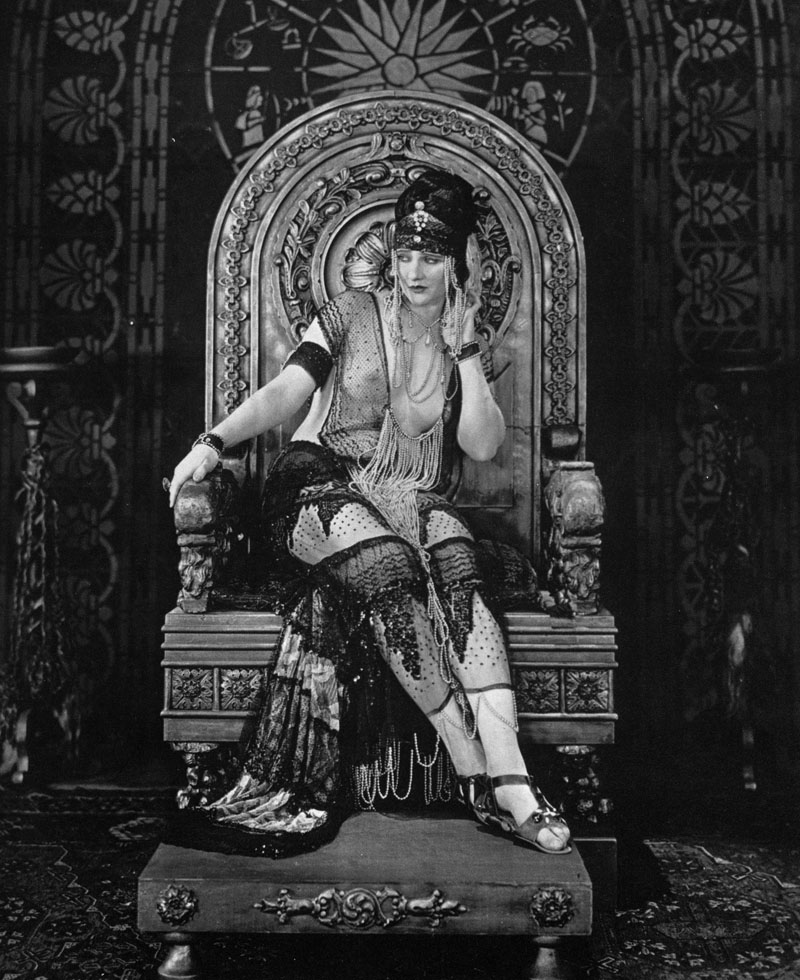
Betty Blythe as the Queen of Sheba.
The flaunting of Ms. Blythe’s breasts were one of the many occurrences which led to Hollywood’s adoption of the Hays Code in the 1930s, although the Code’s full effects weren’t felt until later in the decade. The notable scene in The Mask of Fu Manchu where hunk Charles Starrett appears strapped to a table dressed in nothing but a skimpy loin cloth (having previously been thrashed by Fu’s lustful daughter) would have been toned down considerably had the film been made a few years later. All the more reason to watch it today, such scenes only add to the fun.
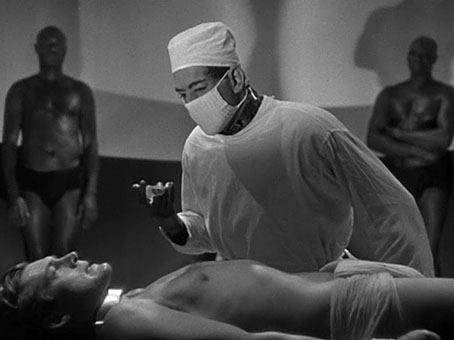
The Doctor prepares to inject his captive with a serum which will turn the man into a compliant slave.
• The Mask of Fu Manchu | A page about the original serial, the subsequent novel and its illustrators.
Previously on { feuilleton }
• Wladyslaw Benda
The Dark Ledger
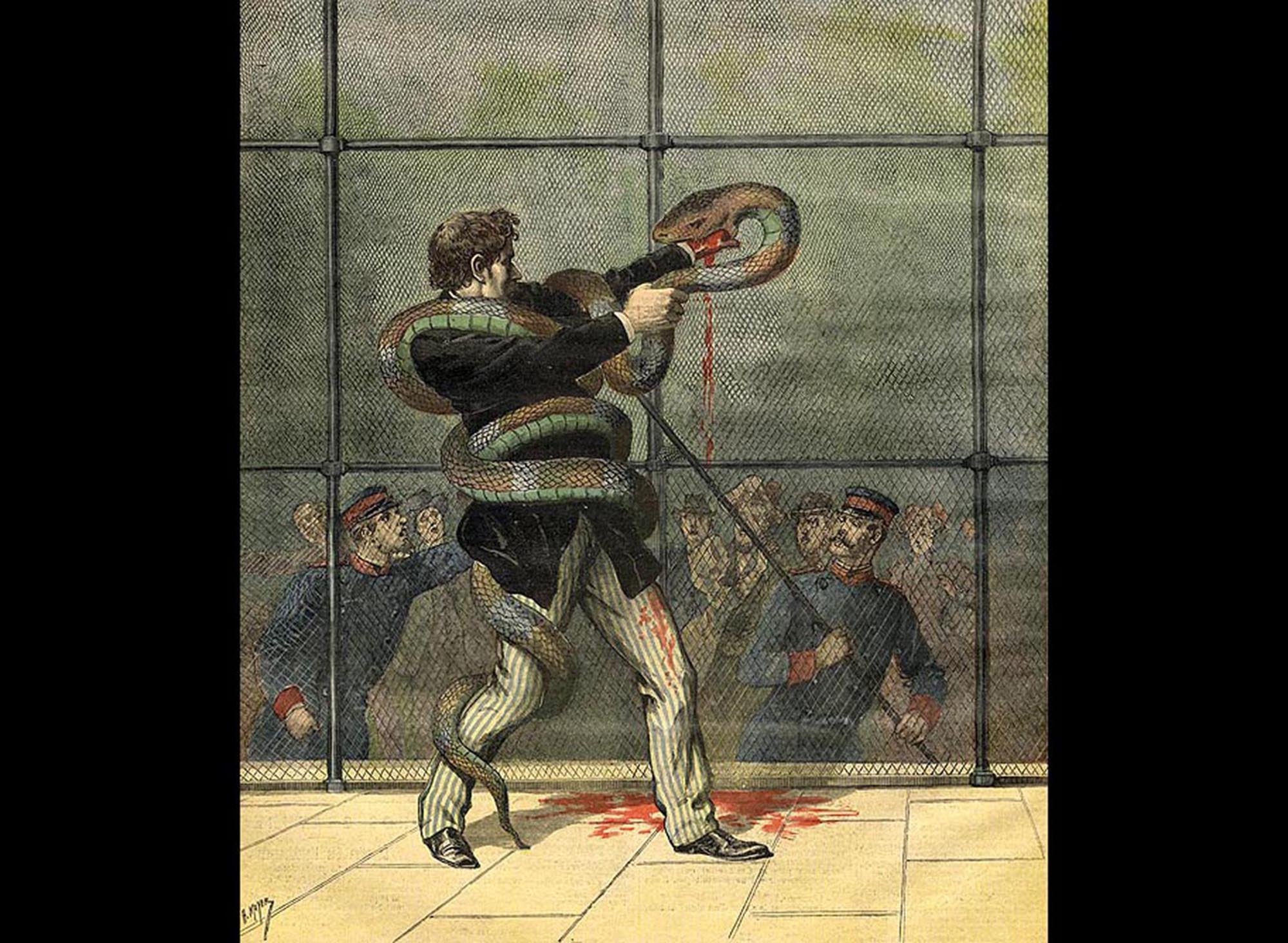
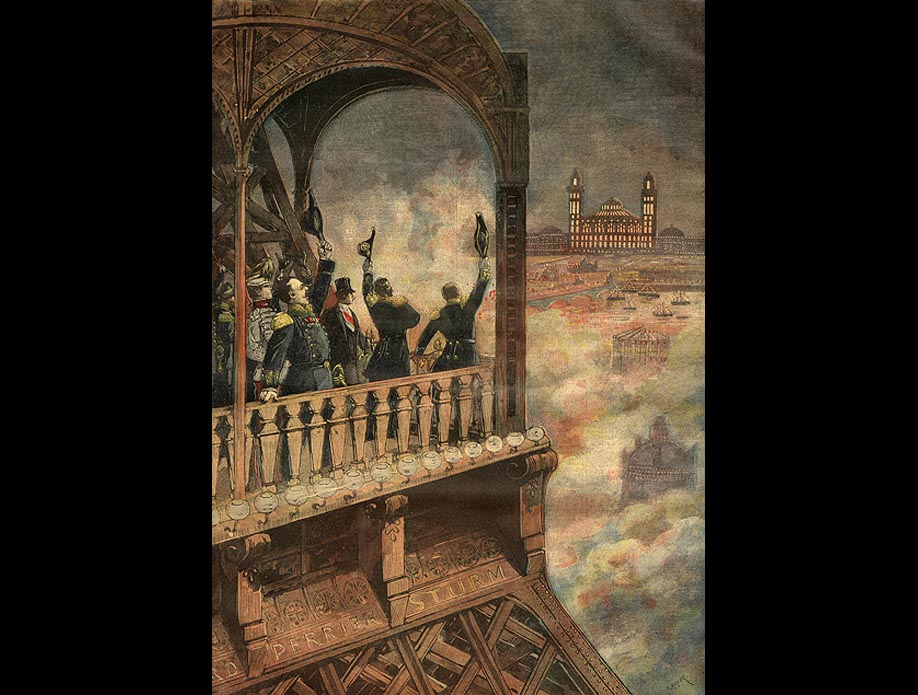
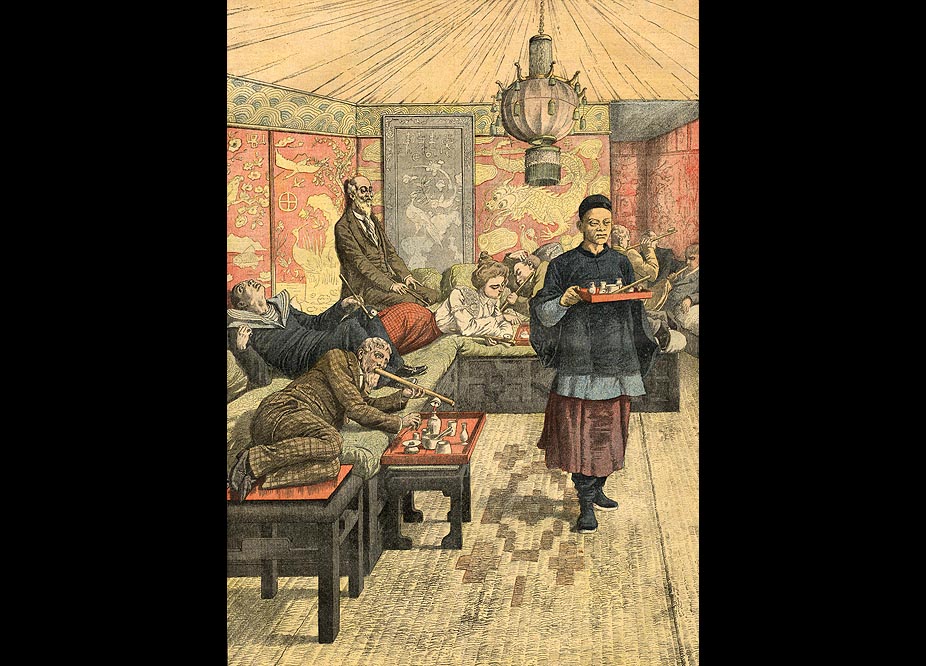
The boundless depths of Chris Mullen’s VTS site continue to yield treasures. The documentation for these pictures is somewhat vague but they seem to be illustrations for Fantômas stories which Mullen has grouped under the title The Dark Ledger, part of a larger selection of pages devoted to the Lord of Evil. The depiction of the Eiffel Tower is of interest here for its showing a view over one of the Paris expositions, possibly the Exposition Universelle of 1900. The opium den, on the other hand, seems remarkably overlit and well-appointed compared to the more customary renderings of such places.
Previously on { feuilleton }
• Exposition Universelle publications
• Exposition cornucopia
• Return to the Exposition Universelle
• The Palais Lumineux
• Louis Bonnier’s exposition dreams
• Exposition Universelle, 1900
• The Palais du Trocadéro
• The Evanescent City
• Judex, from Feuillade to Franju
• Fantômas
Weekend links 1
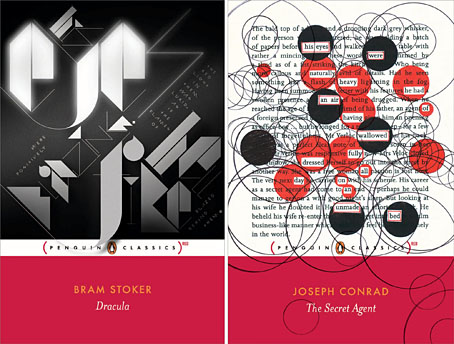
• Two covers from a new range of Penguin reprints for the AIDS awareness fund (RED), all of which are based around quotes from the books in question. Non-Format‘s stylised extract concerns the blazing red of the Count’s eyes while Coralie Bickford-Smith plays some Tom Phillips games with the text of The Secret Agent. The random circles no doubt relate to those which the doomed Stevie Verloc occupies his time in drawing. More at Caustic Cover Critic.
• Artspeak? It’s complicated. Jon Canter at The Guardian makes a blazingly obvious point which few in the art world would ever admit: that the specious pronouncements of many galleries and contemporary artists are the worst kind of bullshit.
• I helped judge the Ballardian/Savoy Microfiction competition whose winners were announced last week.
• Designer Jonathan Barnbrook enjoys Neu! and Wendy Carlos.
• Nuit Blanche, a short film by Spy Films.
Elsewhere on { feuilleton }
• The book covers archive
Under the weather
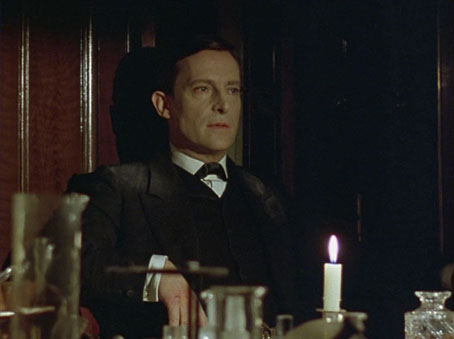
“He is the Napoleon of crime, Watson.” Jeremy Brett as Sherlock Holmes in The Final Problem (1984).
As well as chasing a deadline this week I’m now suffering badly from a cold, always a dismal combination if you can’t take time off. So this picture of the wonderful Jeremy Brett is all you get today. I started re-watching the 1980s Holmes TV adaptations a week or so ago and for the moment they provide an excellent means of taking the mind off clogged sinuses and sneezing fits. My earlier appraisal of the series is here.
Previously on { feuilleton }
• John Osborne’s Dorian Gray
• The World’s Greatest Detective
• “The game is afoot!”